Hlinka Gretzky Cup Standouts: Liam Pue, Jonah Neuenschwander raise their stocks



EDMONTON, Alberta – The Hlinka Gretzky Cup is where the NHL Draft cycle starts to feel real.
For one week in August, many of the best draft-eligible players on the planet are dropped onto the same ice. The sample is small, the hockey is early, and conclusions should be treated accordingly. But first impressions matter, and every year this tournament gives us our first real chance to begin sorting through a new draft class.
This year, Canada didn't leave much sorting to be done at the top.
The Canadians ran the table from start to finish, culminating in a thorough thumping of the Americans in the gold medal game. Their stars played like stars, but the dominance ran much deeper than the names at the top of the lineup. To a man, Canada was bigger, faster, and more skilled than its competition.
Finland overcame an early 2-0 deficit against Slovakia to claim bronze. Switzerland knocked off Czechia for fifth place, while Sweden finally woke up over the final 20 minutes of its tournament to beat Germany and avoid an embarrassing last-place finish.
Elite Prospects had boots on the ground in Edmonton and scouts watching from home throughout the week. Collectively, we've logged well over 300 game reports from the tournament, with plenty of debate along the way about who impressed us most.
Now the real work begins.
The 2027 NHL Draft campaign is underway. Here are our hand-picked standouts from each nation at the Hlinka Gretzky Cup.
Canada
Liam Pue, RW (2028-Eligible)
What a tournament for Liam Pue.
The shot was always going to be the calling card, but the Hlinka showed just how many ways Pue can get himself into position to use it. He consistently found soft ice, read the routes of his linemates and arrived ready to uncork one of the quickest releases in the tournament. Give him space off the rush, and he could punish you there, too.
The chemistry with Maddox Schultz wasn’t a surprise, but how dominant they were as underagers was. Pue’s offensive intelligence, quick touches and ability to create his own shooting lanes continually stood out.
"There’s an argument that Pue was the most dynamic quantity on the ice against Slovakia", wrote Lead Crossover Scout Daniel Gee in his August 5th game report. “He’s a genius-level processor that toys with pressure, flexing elite scoring tools.”
Pue's five goals and nine points put him in some absurd company. He bested Sidney Crosby's Canadian U17 Hlinka goal record and finished behind only his running mate, Schultz, for the most points by a U17 Canadian all-time.
This has all the markings of a special player.
Maddox Schultz, C (2028-Eligible)
When Pue broke down defences with his high-end skill, Maddox Schultz was right there with him, boasting absurd details in all three zones while acting as the line's prime facilitator.
Schultz's wall game and cycle offence generation were among the very best on this stacked Canadian roster. He bulldozed through checks down low, overloaded wall battles to secure possession, and always got the jump to the inside to create off the wall, attacking gaps before opposing defencemen even knew they were there.
All of Schultz's tools project as high-end NHL assets. His lower-body power makes him a strong skater; he can separate his hands and feet to dangle in tight and create lanes, and from there, his playmaking and goal-scoring take over, allowing him to do damage in areas others can't access. He never missed a chance to showcase them, and easily could've doubled his point totals with a little more puck luck.
As he continues to fill out physically, there won't be much doubt about Schultz's ability to handle pro bodies. He looked utterly dominant at this tournament.
Landon DuPont, D (2027-Eligible)
To no one's surprise, Landon DuPont was the tournament's top scorer among defencemen, and one of Canada's most important players.
Leading every defensive effort from the back end, he looked like a top-tier NHL shutdown defenceman at times, working hard physical stops along the wall, effortlessly clearing the net front, and suppressing rushes with elite-level stick discipline.
DuPont's offensive game flowed through his processing and his ability to activate with impeccable timing. He burst down the walls right as teammates rotated up the zone, catching pucks in flight and threatening from below the dots. When the situation demanded it, however, he was just as capable of launching missiles from a distance.
DuPont is easily the most polished defenceman in this draft class — and possibly the most polished 17-year-old blue-liner we've seen in years. While a couple of prospects made a push early on, the latter games of DuPont's tournament only further cemented his status as a first-overall pick.
Jaakko Wycisk, RW/C (2027-Eligible)
Jaakko Wycisk already thinks like a high-level NHLer, and he leveraged that processing to decimate opposing structures off the cycle in this tournament, scoring 10 points in five games on a checking line.
In a chaotic, high-paced environment, Wycisk brought much-needed control; he grabbed pucks off the wall, dragged defencemen out of position with patient low-to-high protection, and then spun off contact to connect with teammates in the middle. Off the puck, he showed just as much savvy, timing his routes to perfection to arrive in the right areas with the flow of play.
We saw flashes of elite playmaking in Wycisk's draft-minus-one tape this past spring, but his checking and defensive games were fully unleashed in this checking role, allowing him to showcase his B game. He formed Canada's identity line with Veitch and Kayden Stroeder, and was the key dictator of that line.
We're seeing the beginning of a potential top-10 campaign for the 6-foot-1 winger.
Brock Cripps, D (2027-Eligible)
Brock Cripps started the tournament off wired for efficiency, but as the week rolled on and he faced better competition, he let loose his creativity and dynamism, ending the tournament with six points in five games.
“Probably Cripps' best game in the tournament so far, at least, his most dynamic one offensively,” wrote Crossover Scout Simon Desjardins on Cripps' August 5th performance against Sweden. “He was in constant movement, layering fakes, manipulation, cutbacks, and unpredictable on-puck activations. There are too many great plays to choose from.”
Beyond the offensive skill, Cripps showed impressive defensive chops, managed contact incredibly well despite his size, and wowed us with his ability to always find the right play in transition and on retrievals.
While DuPont was locking down the top pair, the top power play, and the top spot on most 2027 NHL Draft boards, Cripps made the most of his second-pair role and erased a lot of doubt about his projection. He should earn himself a top-10 spot on our preliminary rankings.
Benjamin Veitch, LW/C (2028-Eligible)
Benjamin Veitch looked like exactly the kind of player who becomes a problem in a tournament like this.
The 2028-eligible checks a lot of boxes: Big body, good mover, heavy along the walls, and constantly engaged.
His semifinal showing against Finland provided a great look at the full package. Two goals, two assists and involvement in just about everything.
Beyond his clear physical presence, what stood out most was how much trust Canada placed in him. He was out late protecting leads, including with Finland’s goalie pulled. He killed penalties. He threw pucks on net. He took faceoffs on his strong side when needed and adapted to the wing the rest of the time.
Veitch won pucks, drove lanes, played off his linemates and consistently made himself difficult to handle. Five goals and seven points is a very strong tournament.
For a 2028-eligible forward, it feels like the start of a much bigger conversation.
Malik L'Italien, D (2027-Eligible)
The semifinals and gold medal game forced our hand at the very last minute: Malik L'Italien was arguably Canada's most important defenceman in both games.
A dominant skater with a tremendous wingspan, L'Italien effortlessly erased gaps, clogged the offensive-zone blue line with surfed step-ups, and kept offence flowing down the opponent's end. He activated into every sequence offensively, showing tremendous confidence in his means.
“This was, by far and away, L’Italien’s best game,” wrote Lead QMJHL Draft Scout Hadi Kalakeche on L'Italien's semifinal bout against Finland. “He made a lot of the same plays in this game that he did in previous viewings, activating into seemingly every sequence, driving the net off the rush, and forcing stops through tremendous stick discipline and entry defence composure, but he played with much more control."
Adding more situational awareness and composure away from the puck will be key, but L'Italien's last two games of the tournament showed important progression in these areas when it mattered most. Early on, he has made a strong case for a top-20 spot on our preliminary board.
USA
Gavin Burcar, C (2027-Eligible)
Gavin Burcar came to Edmonton and made a statement.
Five goals and nine points in five games put him atop the American attack and among the top U.S. goal scorers all-time at this event, but it was the way he generated offence that caught scouts’ attention.
“Dominant game from Burcar in this one, the best player on the ice from start to finish”, wrote Dir. of USA Scouting Whittaker Heart on Burcar's August 3rd performance against Czechia. “Scored three goals, all from different body positions. The most impressive one, to me, was a backhand-forehand far side finish off his weak side, all in motion. A goal-scorer’s goal, one that’s equally translatable and impressive.”
Burcar plays with power. He can push defenders back off the rush, take pucks toward the middle and get a heavy shot off while moving. There is enough handling skill to alter his route and create his own lane, and when he gets downhill, there is some real force behind the attack.
That package translated immediately. He scored three times in the opener against Czechia and never really stopped producing from there.
There were flashier players on this American roster, but none were more effective. Burcar consistently turned his physical tools into offence and ended the tournament tied for third in scoring.
Joey Cullen, C (2028-Eligible)
As USA's first-ever underage prospect at the Hlinka Gretzky Cup, Joey Cullen had a standard to set.
And boy did he ever.
With five points in five games, Cullen tied for fourth among Americans in scoring, but his in-game performances only cemented his status as one of the 2028 NHL Draft's very best prospects.
“Cullen was clearly the most dynamic quantity on this United States roster", wrote Lead Crossover Scout Daniel Gee in an August 2nd game report. ”He’s uber-patient, possesses higher-end handles, and while he’s overly daring, his baseline hockey sense is extremely impressive. […] Dynamic cutbacks, slippery board play – the only thing Cullen is missing is size and strength, which will come in time. He looks like a top prospect for his draft. "
The son of longtime NHLer Matt Cullen and brother of recent 10th-overall pick Wyatt Cullen appears to be setting himself up for a top-three selection in a 2028 NHL Draft class already overflowing with phenomenal talent.
Ethan Sung, RW/C (2027-Eligible)
Our scouting team quickly fell in love with Ethan Sung's small-but-mighty game at this tournament — an identity that earned him four goals and two assists in five games.
A clear high-end processor bolsters Sung's puck skills. He takes every puck in full flight, accelerating through receptions to prepare his next play. In this tournament, that was a major difference-maker; he chained plays and controlled possession with impressive ease, allowing the Americans to create meaningful, direct offence with him on the ice.
He also leveraged impressive physicality for his size, using his compact frame and motor to secure inside positioning on defenders along the wall, before finding an outlet, reloading in space, and attacking the slot.
At his size, he'll need to get even more dynamic to project to the NHL, but his contagious effort and awareness made us hopeful that he'll carve out a role somewhere.
Jake Prunty, D (2027-Eligible)
Jake Prunty was USA's most consistent creator from the back end. The scoresheet reflected that, as the defenceman earned five assists in five games, finishing tied for fourth on the team in scoring.
A polished blend of sense and skating drives Prunty's effectiveness as a puck mover. Fluid edgework, explosive crossovers, and deep hip flexion allowed him to seamlessly chain together pivots and strides; he used that mobility to support his team on breakouts, finding the most efficient play with striking ease.
In the offensive zone, while Prunty mainly made plays from the top of the zone rather than activating vertically, he constantly adjusted angles through lateral movement, creating breaches in coverage which he exploited cleverly through well-timed point shots and seam passes.
He'll need to develop a physical dimension to further bolster his effectiveness on retrievals and around his own net, but Prunty showcased the full extent of his foundation of processing and footwork; stacking more advanced skills on top of that foundation could make him a top-end puck-moving defenceman.
Sweden
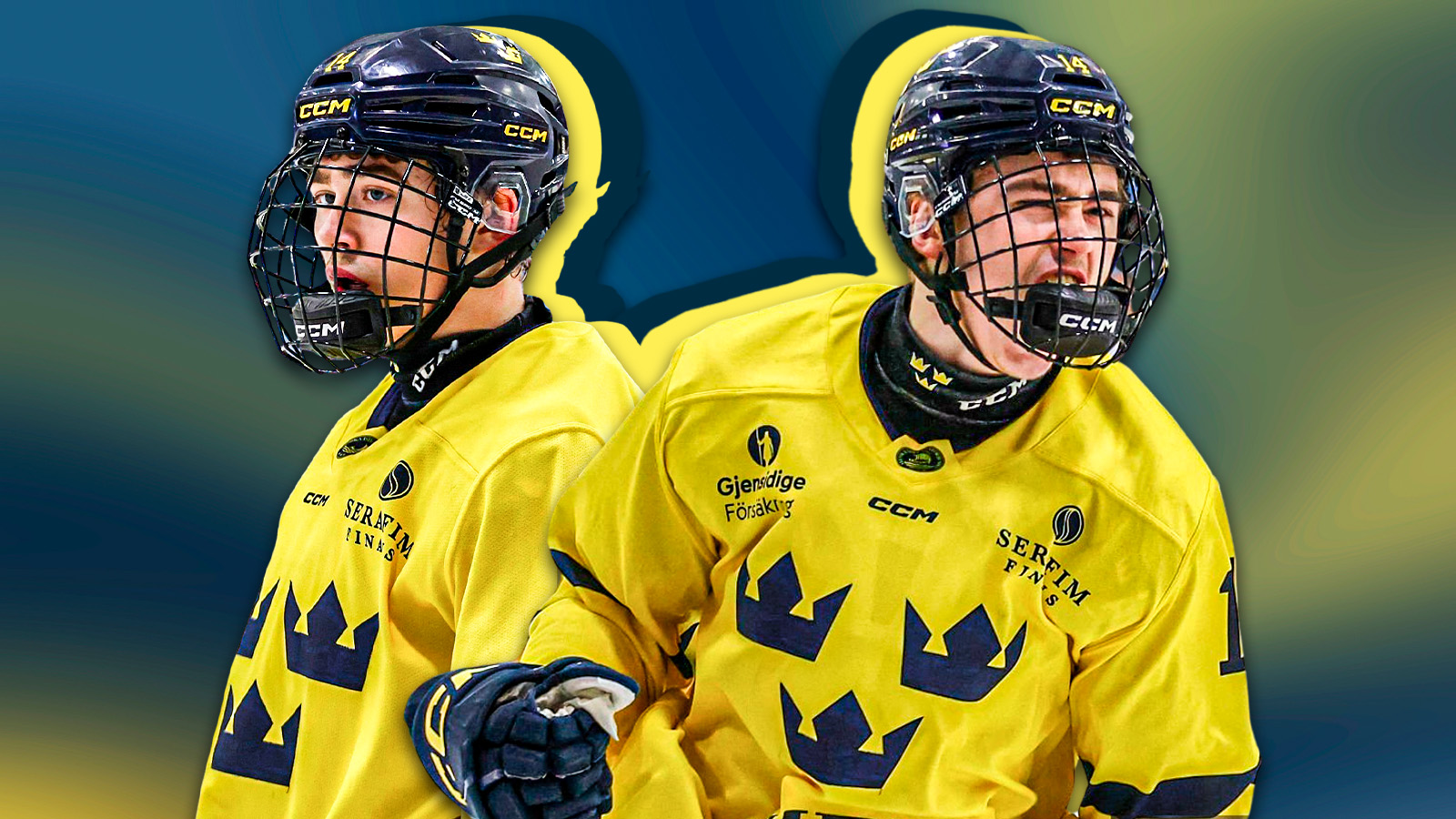
Milan Sundström, C (2027-Eligible)
There were some uneven moments for Milan Sundström, but plenty to like in the totality of his tournament.
The physical foundation is appealing. Sundström is strong along the walls, difficult to knock off pucks, and already understands how to use his frame defensively. His positioning was generally excellent, and he showed a knack for arriving on the backcheck, stripping possession and immediately turning play the other way.
There is skill there, too. The 17-year-old flashed the ability to create off the wall, attack the slot after moving pucks low and facilitate on the power play. He finished with two goals and six points despite Sweden struggling to generate consistently at even strength and underwhelming overall en route to a seventh-place finish.
The pace and occasional overambitious puck decisions will need refinement, but the Hlinka offered a good look at the ingredients. Size, strength, intelligence, competitiveness and enough offensive touch to keep pushing the projection forward.
Dorian Eklund Aspe, C/LW (2027-Eligible)
At his size, Dorian Eklund Aspe's appeal starts with the power game. He was difficult to handle along the walls, extended his stick effectively on the forecheck and consistently looked to disrupt before getting a piece of the body. Around the crease, he could create space and then actually do something with it.
That's where the tournament became interesting.
Eklund Aspe showed more puck skill than you might expect from the frame. His hands were functional in traffic, he created chances from possession and showed some legitimate playmaking touch. A one-goal, six-point tournament was a nice reward.
The feet remain the project. They can look sluggish and will dictate how high the eventual ceiling reaches. But big forwards who can protect pucks, forecheck, create and produce are always going to get long looks.
Finland
Paavo Fugleberg, LW (2028-Eligible)
Paavo Fugleberg was Finland's offensive engine.
There wasn't much question about it when watching them live. When Finland needed someone to transport the puck, break down coverage or manufacture something from very little, Fugleberg was usually the one doing the work.
His hands were among the best we saw all week. Soft, deceptive and incredibly functional in traffic. He could handle away from his body, incorporate his feet, delay defenders and then slip pucks through seams once coverage shifted.
What I liked most was that the skill didn't keep him outside. Fugleberg attacked the home-plate area, worked around the net and competed despite a slight frame.
Three goals and six points in five games is a fine result, but it doesn’t fully capture his impact. For an October 2009-born player competing up at this event, the performance was a substantial statement heading toward 2028.
Luca Santala, C/W (2027-eligible)
As far as the Finns go, no player showed more maturity and polish than Luca Santala.
The 6-foot-2 centre dominated in all phases, playing inspired defensive hockey while boasting some of the best positional offence we saw at this tournament.
“His positioning is absurd,” wrote Lead QMJHL Draft Scout Hadi Kalakeche about Santala's performance in the semifinal against Canada. “He’s always set ahead of the play, cutting off exit attempts along the wall, separating into space before opponents can react, and instantly setting up for return passes. He’s so polished for his age, and at this level, against Finland’s greatest opponent yet, it was a major difference-maker.”
While his skating mechanics are inconsistent, Santala did flash some speed, deepening his stride to win races to the back wall and get to the inside off the boards. He'll need to develop more skill to unlock top-six upside, but early on, he looks like an easy middle-six projection to the NHL.
Lenni Kokkonen, D (2027-Eligible)
Lenni Kokkonen was Finland's best defenceman at this tournament.
The 6-foot-2 right-shot defenceman never missed a chance to jump in on the offence, earning himself a goal in the bronze medal game against Slovakia to finish the tournament with six points in four games.
“As a skater, he's looking the like best of the bunch", highlighted our Dir. of European Scouting Lassi Alanen in his game report on the bronze medal game. ”Offensively involved, his active mindset combined well with his shooting, dangerously curling the puck around the opponent multiple times and being rewarded for it with a goal, too, sprinting into the high slot before beating the goalie through traffic."
Kokkonen also showed glimpses of a refined rush defending game, as he kept his feet engaged to match carriers' routes through the neutral zone, baited them wide with his stick, and erased gaps effortlessly.
With more refined tools to support his processing, skating, and breakout game, Kokkonen could make a push for the first round this year.
Czechia
Maxmilian Mareš, C/W (2027-Eligible)
No player was more efficient in a six-foot-radius around the crease than Maxmilian Mareš at this tournament.
The hulking 6-foot-7 centre played with unbelievable coordination and timing at the net front. He timed his spinoffs from checks down low with precision, caught hard bounces without even dusting them off, and either finished off the catch or moved to his backhand around netminders.
Mareš has the profile to be the ultimate play-supporter in the QMJHL; he rotates well in coverage, identifies and creates overloads along the wall, moves pucks quickly, and repositions before opponents can get their structures in order.
While he comes with big-man clunkiness and a suboptimal baseline of transition skill which limit his projection as a play-driver, his size, strength, intelligence, and hand-eye coordination could prove to be integral building blocks for a bottom-six NHL role further down the line.
Lukáš Kachlíř, D (2027-Eligible)
Lukáš Kachlíř already has 13 pro games under his belt, and this tournament helped him showcase the extent of that experience.
As a 5-foot-8 defenceman, Kachlíř needs to be extremely dynamic to be effective. Thankfully, that's exactly what he is. An effortless skater with tremendous explosiveness out of receptions, he constantly drove at structures, beating layers before finding teammates in open ice to create in transition.
The offensive zone is where Kachlíř shone the brightest at this tournament; highly engaged in rotations, he dove down the boards, caught pucks in stride, and attacked the net vigorously. From the point, he never missed a chance to take available space through lanes to the mid slot, leveraging his edgework to beat opposing checkers to the middle off of low-to-high passes.
At his size, he has an uphill battle to the NHL, but the glimpses of advanced offence and contact skills we saw at this tournament might just be enough to get him there.
Dominick Byrtus, D (2027-Eligible)
Committed to the WHL's Lethbridge Hurricanes for the 2026-27 campaign, Dominick Byrtus took advantage of his passage in Edmonton to leave a lasting impression on our scouts.
A precise defender with great in-zone stopping ability and shutdown reads, Byrtus' hockey sense was a major part of his appeal at this tournament. When opponents try to manipulate and misdirect him, he stands his ground, seeing right through their deception attempts to cut off their true motives.
Byrtus was also Czechia's most physical defenceman, laying a handful of thunderous checks in this tournament — one of which came against 6-foot-7 Trevor Shorter. Despite his smaller stature, the 5-foot-10 blue-liner handled contact extremely well on retrievals, and managed to stand out as a breakout specialist as a result.
While he showed glimpses of advanced offensive reads, Byrtus' tools will need to take a step to see his NHL hopes materialize; regardless, this tournament kicks off a crucial draft year for him in great fashion.
Slovakia
Tomáš Selič, RW (2027-Eligible)
Tomáš Selič was one of Slovakia's most potent offensive weapons throughout the tournament, and distinguished himself with a six-point effort against Switzerland, in which he showcased the full extent of his processing and awareness.
Where most 6-foot-3 17-year-olds rely more on their natural size advantage to create space, Selič was much more nuanced at this tournament. He timed his off-puck routes into space, swinging out of corners with just the right pace to arrive in pockets to receive passes. Along the wall, he leveraged cutbacks and delays to create lanes, showing glimpses of manipulation ability.
“His positioning and sense play a huge part in his effectiveness as a scorer," wrote Lead QMJHL Draft Scout Hadi Kalakeche on Selič's game against Switzerland. “He anticipates passes early, uses his reach to jump into lanes, and quickly finds pockets in space on the ensuing turnovers […] He’s highly intelligent, and a refined physical player already.”
While his puck skills looked a step behind the processing that drives them, Selič showed enough in the way of physicality and sense to earn himself a C grade early in our draft cycle.
Oliver Botka, D (2027-Eligible)
Slovakia's best prospect at this tournament, Oliver Botka stood out as an incredibly smooth and dynamic defenceman with skill.
Placed in a creative role on the top pair and top power play, Botka's deep stride, tremendous hip mobility, and powerful edgework made him a constant threat from the point, but what came as a pleasant surprise was the effectiveness of his retrieval and breakout sequencing.
“He generated clean exit after clean exit in this game, even when heavily pressured," wrote Lead QMJHL Draft Scout Hadi Kalakeche on Botka's performance against Switzerland. “Even inviting that pressure at times with his posture before escaping with a pass or hip pivot. […] He looks dominant at this level — a clear A-grade defender with high-end mobility, offensive upside, and unshakable poise on retrievals."
The offence didn't come at the cost of defence, either, although Botka could develop more strength to bolster his stopgapping ability. With more of a physical edge to his game and a solid draft year overall, Botka could push himself into top-20 conversations down the line.
Jakub Husár, G (2027-Eligible)
In a tournament that often makes it difficult for netminders to stand out, our goalie scouting team couldn't stop talking about Jakub Husár.
The 6-foot-2 netminder flashed tremendous athleticism and body control throughout the tournament, looking especially promising in Slovakia's August 4th bout against Switzerland, as our goaltender scout David Phillips reported:
“Husár’s glove hand was on fire this game too, quickly reacting to shots and making countless high-end saves with his glove hand. Along with the athleticism and glove, Husár’s a devoted competitor. He battles for every puck and won’t back down easily against any situation.”
With good size, strong footwork, and a great technical base, Husár’s on track to get drafted this year. With better tracking and reads on passing plays, he could become a top-end goaltending talent for this year's draft.
Switzerland
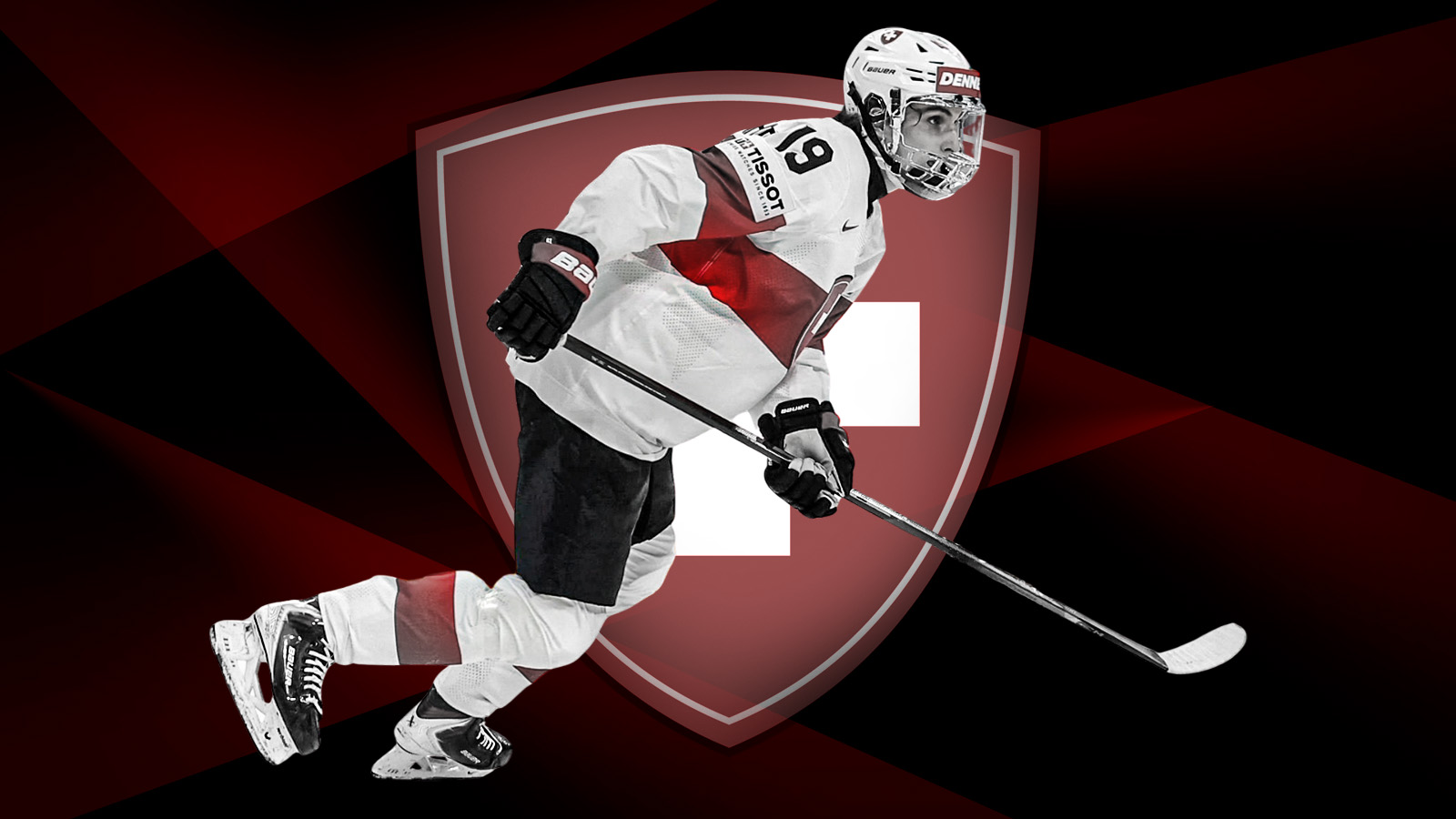
Jonah Neuenschwander, C (2027-Eligible)
For a while in this tournament, Jonah Neuenschwander made a push for first overall. No prospect did a better job putting themselves on the map in Edmonton, and none did it with less support.
Neuenschwander's game against Canada was a wake-up call for the entire scouting world. With size and tremendous skating, the centre already has an NHL foundation of physical tools. In this tournament, he showed just how lethal a half-wall shooter he can be; his wrists fold instantly and violently, creating lethal downforce with little warning and allowing him to pick corners with ease.
Beyond the tools, Neuenschwander's mentality is irreproachable. He was a relentless competitor in this tournament, while maintaining a level-headedness worthy of a captain. He never gave up on a single shift, outworked some of the best defencemen in this tournament down low, and pulled teammates out of needless scrums when the situation arose.
Neuenschwander has already expressed that he'll be staying in the National League for his draft-year campaign, facing off against professionals and some former NHLers. For a prospect with such a refined game already, continuing to test his limits against the best level of competition possible is a massive advantage.
One thing is certain: Neuenschwander will have lots of visitors from overseas this season, eager to get a look at who could be their No. 1 centre in the near future.
Leo Ulrich, LW/C (2028-Eligible)
Neuenschwander's winger for most of the tournament, Leo Ulrich, also came to play, scoring six points and looking the part of a premium waterbug checker.
Ulrich had his best game against Slovakia, as he constantly supported battles, won races, drove the net, rode checks out of corners, and created passing lanes through constant adjustments along the wall.
“Ulrich was phenomenal in this one, showcasing his rapid feet and endless energy on a consistent basis,” wrote Lead QMJHL Draft Scout Hadi Kalakeche on Ulrich's game against Slovakia. “He supported Neuenschwander with constant second-man engagement in battles, won icing races leading directly to high-danger chances — and even a goal — and took defencemen wide with impressive ease.”
Not available to be drafted until 2028, Ulrich has time to add layers to his game. If he can get inside more often and more efficiently, while adding more diverse skill to his arsenal, there's a chance his size doesn't prevent him from hearing his name called at the NHL draft.
Alessandro Domenichelli, RW (2027-Eligible)
Alessandro Domenichelli was also a standout for Switzerland, scoring seven points in four games and showcasing the full extent of his stickhandling ability.
An impressive handler with tonnes of creativity, Domenichelli was working first-touch dekes under pressure, taking bad pucks and turning them into clean zone entries through clever usage of his backhand to solve problems.
On top of the handling skill, Domenichelli showed some compete and physicality, throwing reverse hits along the wall to separate before dragging opponents on his back into high-danger areas.
While his skating mechanics, consistency, and overall coordination limit his projection, there are bright flashes of pro-calibre offence in Domenichelli's game. He could very well develop a more fluid skating foundation and unlock NHL-level offence through his processing and inventiveness.
Germany
Max Calce, LW/C (2027-eligible)
Max Calce was Germany's best player, shining in bright contrast thanks to his incredibly polished positional game and habits.
“He plays at breakneck pace and has such a refined base of habits,” wrote Lead QMJHL Draft Scout Hadi Kalakeche on Calce's opener against Czechia. “Every puck is taken in stride, he constantly follows his passes into space, and quickly identifies the next play.”
On top of the refined habits, Calce also showcased impressive handling foundations; he adjusted his reach to catch bad pucks in full stride, placed his first touches past defenders' sticks instinctively, and quickly leveraged stutter-step dekes to solve neutral-zone problems.
While his overall playmaking and goal-scoring didn't get much of a chance to stand out, Calce has already displayed NHL-level details. The more he adds to that foundation this season, the higher he'll go on draft day.
 Aug 5th, 15:082027 NHL DraftChoosing Switzerland: How Jonah Neuenschwander is carving his own path to the 2027 NHL DraftThe story behind the Swiss centre's journey to becoming a top NHL Draft prospect.
 Aug 6th, 14:352027 NHL DraftException to the rule: How Milan Sundström earned his chance among Sweden's best juniorsHow one of the youngest U20 Nationell players last season made the most of his opportunity.

