Sweden Stock Watch: Montreal Canadiens prospect Oliver Kapanen lighting it up in SHL



We are heading into the final quarter of the Swedish regular season. There is a lot of anxiety among management, players, and fans with tight standings and a lot at stake. If your team falls into a slump at this time of year, it can cost people their jobs. Many teams add veteran journeymen to their roster instead of placing trust in young talent, but I have focused on players who have a relatively secure spot on their team. This situation isn’t entirely bad for young players, as they gain valuable experience learning how to handle high-pressure situations and adversity.
Stock Rising 📈
Oscar Fisker Mølgaard, C, HV71 (Seattle Kraken)
Oscar Fisker Mølgaard is a solid top-six centre in the SHL. His point production comes in clusters, followed by stretches of non-productive games. This inconsistency is partly due to playing on an underperforming team that continuously struggles near the bottom of the standings, facing the risk of relegation. Production or not, he rarely plays a bad game. He is always engaged in the play with strong skating and sharp passing. He reads the game well and is consistently in a good position to make plays. He is a strong playmaker but could still improve his shot. While he doesn’t shy away from physical play, he isn’t a dominant force either and remains relatively small in stature. He is best suited to playing down the middle, using his speed and high hockey IQ to make plays in motion. I am convinced he has an NHL future as a speedy third-line centre with a strong two-way game, which would be great value for a 52nd overall pick.
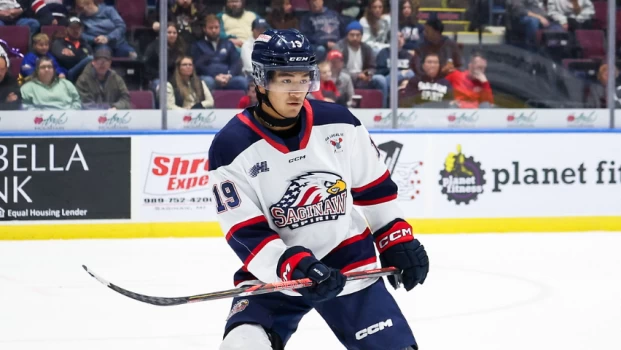
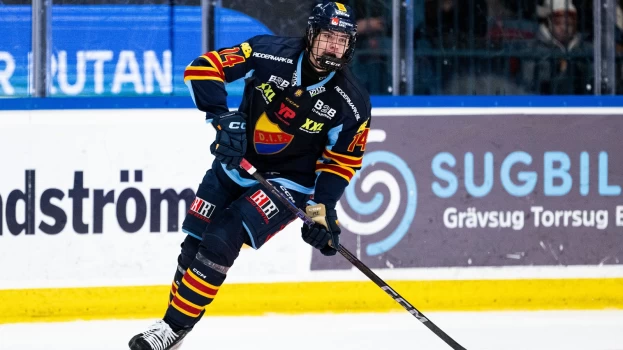
Oliver Kapanen, C, Timrå IK (Montreal Canadiens)
Oliver Kapanen is on the verge of a long-term NHL career, having already played 12 games this season. Returning to Europe to play in the SHL has been beneficial for him. He has been close to a point-per-game player in a league where that is a rarity. He has an excellent shot, is strong on the puck in traffic, wins key faceoffs, and plays a solid two-way game. His physical play has been particularly impressive, as he gets under his opponents’ skin every night. He battles aggressively in front of the net and stands up for himself and his teammates. He plays in all situations and is the top centre on both the power play and the penalty kill.
Offensively, he primarily plays a net-front role and serves as the bumper on the power play. However, he does not display a particularly dynamic offensive game. His play-driving in transition relies on skating and give-and-go plays rather than puck control or manipulation. His offensive game has skill, but it is most effective when combined with his strength and intensity. In the NHL, I see him developing into a third-line centre or a complementary winger. His physicality, faceoff skills, and shot make him well-suited for such roles.
Lucas Pettersson, C, Modo Hockey/Östersunds IK (Anaheim Ducks)
Lucas Pettersson is playing very well, often logging over 20 minutes per game as a top-line centre in HockeyAllsvenskan. Given his current form, he probably should have been on Sweden’s World Junior Championship roster last month. Despite playing for a struggling team at the bottom of the standings, he is still producing points.
Lucas is a fast-skating centre who contributes in all three zones. He looks much stronger this season and possesses intriguing physical skills, such as using reverse hits effectively and maintaining strong puck protection along the boards. He wins puck battles with inside-driven stick checking. Offensively, he reads space well, knowing where to place the puck and when to slow down a play. He is always intense and covers a lot of ice. He isn’t an elite offensive talent but is a competent playmaker who can carry and protect the puck at high speed. His speedy two-way game suggests he has a future as a third-line NHL centre.
Stock Steady ↔️
Noel Fransén, D, Färjestads BK/Västerås IK (Carolina Hurricanes)
Noel Fransén is performing well in HockeyAllsvenskan this season. Recently, he logged over 26 minutes of ice time in a game. He is an offensive-minded defenceman who plays on the power play and is among his team’s top point producers. He plays a very active offensive game, frequently joining the rush and challenging opponents at the offensive blue line. He has added some skill and can create space with well-timed dekes. His skating and puck control allow him to carry the puck effectively.
However, his defensive game is still a work in progress, likely the reason he was left off the World Junior Championship roster. He gets beaten too easily in battles and struggles to win puck duels in the corners and in front of the net. His puck management under pressure in his own end also needs improvement. At his best, Fransén is an exciting player to watch, but he needs to refine his defensive strategies and improve his retrieval game under pressure to take the next step. As a 2024 third-round pick with a low-end top-four defenceman ceiling, he is developing accordingly. If he can round out his game, he still has a chance to make it.
Michael Brandsegg-Nygård, RW, Skellefteå AIK (Detroit Red Wings)
Michael Brandsegg-Nygård’s SHL season has yet to take off. He isn’t putting up big numbers, and his defensive game hasn’t been as dominant as it was last season. He plays responsibly in his own zone, consistently taking smart routes and shutting down passing lanes, even if he isn’t generating many turnovers. When forechecking, he pressures opposing defencemen effectively, often limiting their breakout options.
Offensively, he isn’t driving play much, and his shot remains an underused weapon in Skellefteå’s system. He averages fewer than two shots on goal per game. Despite playing on the top power-play unit, he has only one power-play goal and three power-play points in total. His bumper role is often underutilized, as he remains covered while his teammates create plays. While his skills may be underused at the moment, his potential remains unchanged. He projects as an NHL player with smart forechecking habits and goal-scoring ability in a top-nine role.
Stock Falling 📉
Dominik Badinka, D, Malmö Redhawks (Carolina Hurricanes)
From a pure athletic standpoint, Dominik Badinka looks fine. He is a fast straight-line skater, and when he retrieves the puck first and can skate his way out of danger, he is highly effective in breakouts. His reach and speed are impressive. However, what hasn’t improved much this season is his decision-making with the puck once he exits danger. He rarely plans his actions in advance or scans the ice effectively while carrying the puck. His puck management under pressure remains inconsistent.
Defensively, he plays a physical game and is difficult to beat when he angles opponents properly in rush defence. However, his lateral skating remains sluggish, and if he is slightly out of position, he gets beaten. He has spent the season as a sixth or seventh defenceman on Malmö’s roster and has struggled to earn more trust from the coaching staff.
I expect he will move to North America to develop his game in a more defined role in the AHL. He needs to improve in all areas—offensively, defensively, and in transition—to become an NHL defenceman. While he has the athletic foundation to succeed, I currently see him as having a low probability of becoming a top-six NHL defenceman.