How Does Overtime Work in Hockey? NHL, Olympics & More
Image: Bildbyrån
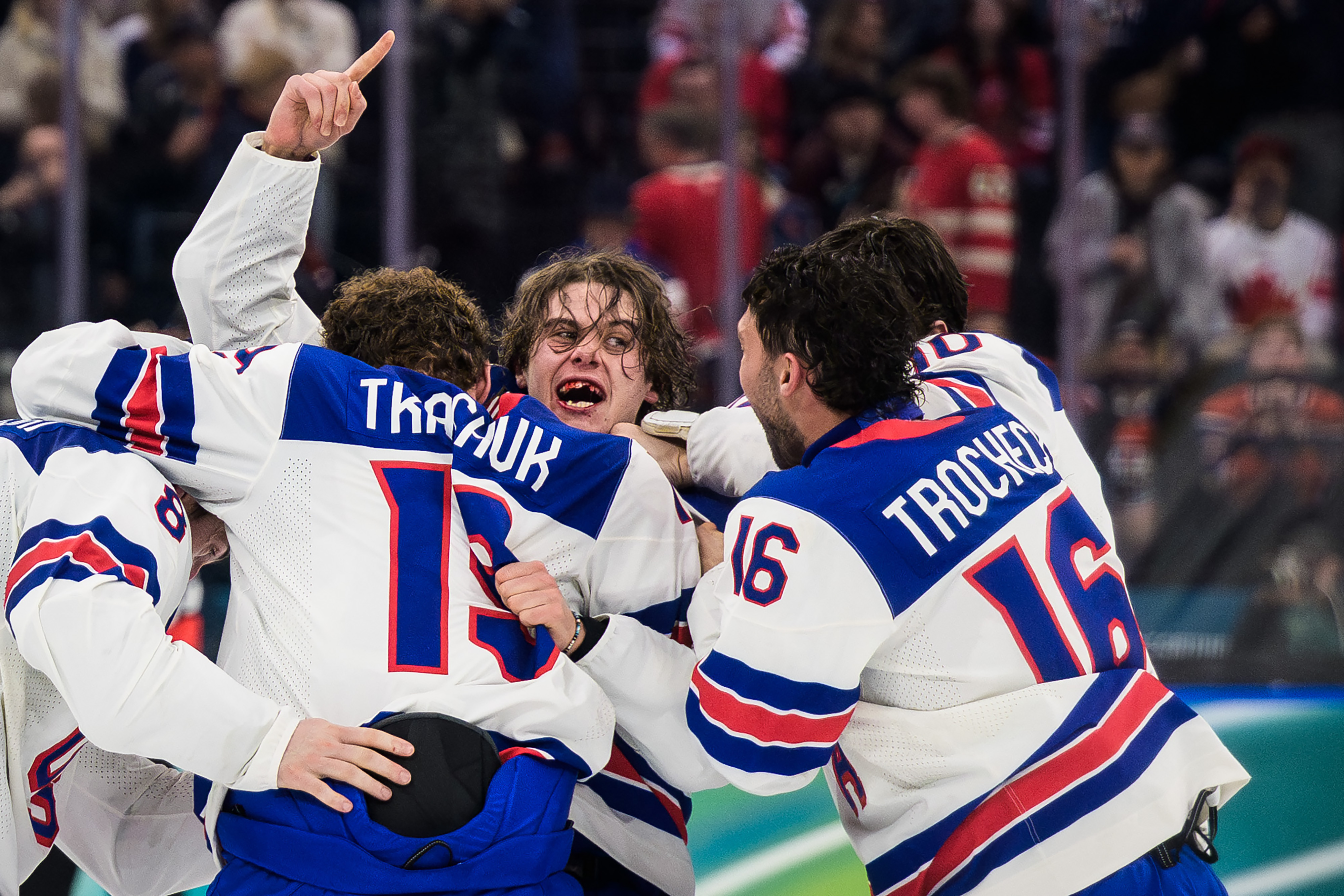
Hockey has no patience for draws. Since the sport's earliest professional days, ties have been treated as a problem to solve, and the solutions have evolved dramatically over a century of rule-making. Today, overtime formats differ not just between leagues, but between different stages of the same tournament. What works for a Tuesday night regular-season game in November has no business deciding a Stanley Cup or an Olympic gold medal.
Here is a complete breakdown of how overtime works in hockey, from the NHL to the Winter Olympics to the top European leagues.
How Does NHL Overtime Work?
Overtime was introduced in the NHL in 1921, beginning as an additional 20-minute sudden-death period of five-on-five action before being trimmed to 10 minutes in 1927 and five minutes in 1983. The road from there to today's format is a story of the league chasing entertainment, repeatedly finding what it wanted, and then slowly watching teams figure out how to neutralize it.
From 1983–84 through 2003–04, the NHL used a five-minute, 5-on-5 sudden-death overtime period that ended in a tie if no one scored. The 2004–05 lockout changed everything. The shootout was introduced in 2005–06 as part of a comprehensive package of rule changes, finally eliminating the possibility of a tied game in the regular season. From 2005–06 through 2014–15, teams played a four-on-four overtime period before going to the shootout. The feeling eventually was that too many games were still ending in shootouts, and so the NHL moved to three-on-three overtime ahead of the 2015–16 season.
The current format works like this: if two teams are tied at the end of regulation in the regular season, the game goes to a sudden-death overtime period lasting up to five minutes, with only three skaters per side on the ice. If neither team scores, the game goes to a three-round shootout, continuing in sudden-death rounds if still tied.
The three-on-three format was an immediate hit. By opening up enormous amounts of ice and forcing end-to-end play, it generated breakaways and odd-man rushes at a rate five-on-five could never match. In the 1997–98 season, just 25 percent of overtime games were decided before the shootout. In 2014–15, that number was 44 percent. After the shift to three-on-three, the NHL was on track to have roughly 70 percent of overtime games end without a shootout.
The one quirk worth understanding: the NHL uses a points system where teams earn two points for a win, one point for an overtime or shootout loss, and zero for a regulation loss. The extra point for overtime and shootout losses was introduced in 1999. The effect is standings that stay compressed deep into March, which is part of the design.
Penalties in overtime work differently as well. A team cannot have fewer than three skaters on the ice, so a penalty results in a four-on-three power play rather than a traditional five-on-four.
How Does Overtime Work in the NHL Playoffs?
The playoffs strip everything back down to hockey in its purest form. Gone is the shootout. Gone is the reduced player count. If a postseason game is tied after regulation, teams play five skaters a side in a standard 20-minute sudden-death period. The first team to score wins. If the first overtime ends scoreless, the teams play another period. This continues until someone scores, however long that takes.
The contrast with the regular season is stark and intentional. The NHL playoffs have been criticized over the years for many things, but this one thing is non-negotiable: a playoff series cannot end on a shootout.
The longest game in NHL playoff history was played on March 24, 1936, between the Detroit Red Wings and the Montreal Maroons. Rookie Mud Bruneteau scored at 16:30 of the sixth overtime period, giving Detroit a 1–0 win after 176 minutes and 30 seconds of total play. Goalie Normie Smith reportedly made 92 saves in the shutout. The marathon spanned two calendar dates and ended at 2:25 in the morning. As a direct consequence, the NHL wrote a new rule requiring mandatory ice resurfacing between periods.
The format creates something regulation hockey never can: a game where every player on the ice knows that one mistake ends their season. That pressure, stretched across potentially two hours of extra play, is what makes playoff overtime unlike anything else in professional sport.
How Does Overtime Work in Olympic Hockey?
The Olympics adds another layer of complexity. Because the tournament uses a different structure than a professional league, the overtime format changes depending on which stage of the competition you are watching.
In preliminary round games, the format mirrors the regular-season NHL: five minutes of three-on-three sudden-death overtime, followed by a shootout if no goal is scored. The Olympic shootout uses five rounds rather than the NHL's three, and after those five rounds, coaches can select the same player to shoot repeatedly if they choose. That rule enabled American forward T.J. Oshie's famous performance against Russia at the 2014 Sochi Games, when he took six attempts and scored four times.
Quarterfinal and semifinal games use ten minutes of three-on-three sudden-death overtime, still followed by a five-round shootout if necessary.
The gold and bronze medal games are different. Medal games that are tied after regulation go to 20-minute sudden-death overtime periods with full ice resurfacing between them, and the game continues until a goal is scored. There is no shootout. The format ensures that Olympic champions are crowned with a goal scored in live play.
This medal-game format was introduced at the 2019 IIHF World Championship and has applied to all IIHF championships including the Olympics from 2022 onward. Prior to that change, even gold medal games could end in a shootout. The 2018 Olympic women's final between the United States and Canada was famously decided by a shootout, a format the IIHF subsequently determined was not an appropriate way to crown an Olympic champion.
One important distinction: unlike NHL playoff overtime, which is played five-on-five, Olympic overtime at every stage is three-on-three. That includes the gold medal game's unlimited periods. The NHL has acknowledged this is not the format the league would choose, but the IIHF governs the Olympics and applies its own rulebook.
The three-point standings system also differs from the NHL. Olympic round-robin standings award three points for a regulation win, two for an overtime or shootout win, one for an overtime or shootout loss, and zero for a regulation loss. This creates stronger incentive to win in regulation, which shapes how teams approach the final minutes of tied games.
How Does Overtime Work in the World Championship and European Leagues?
The IIHF World Championship follows the same tiered overtime structure used at the Olympics. Preliminary round games use a five-minute three-on-three overtime, followed by a five-round shootout if needed. Knockout games through the semifinals use a ten-minute three-on-three period before the shootout. The gold medal game uses unlimited 20-minute three-on-three periods with no shootout.
Europe's top professional leagues share the same underlying philosophy as the NHL when it comes to regular season overtime: a short extra period to force a winner, falling back on a shootout if necessary. The specific parameters vary.
The SHL in Sweden uses five minutes of three-on-three sudden-death overtime in the regular season, then a three-round shootout with sudden-death rounds if still tied. Points are distributed on the same three-point system used in international hockey: three for a regulation win, two for an overtime or shootout win, one for an overtime or shootout loss, and zero for a regulation loss. In the playoffs, overtime shifts to unlimited 20-minute five-on-five periods until a goal is scored, with no shootout.
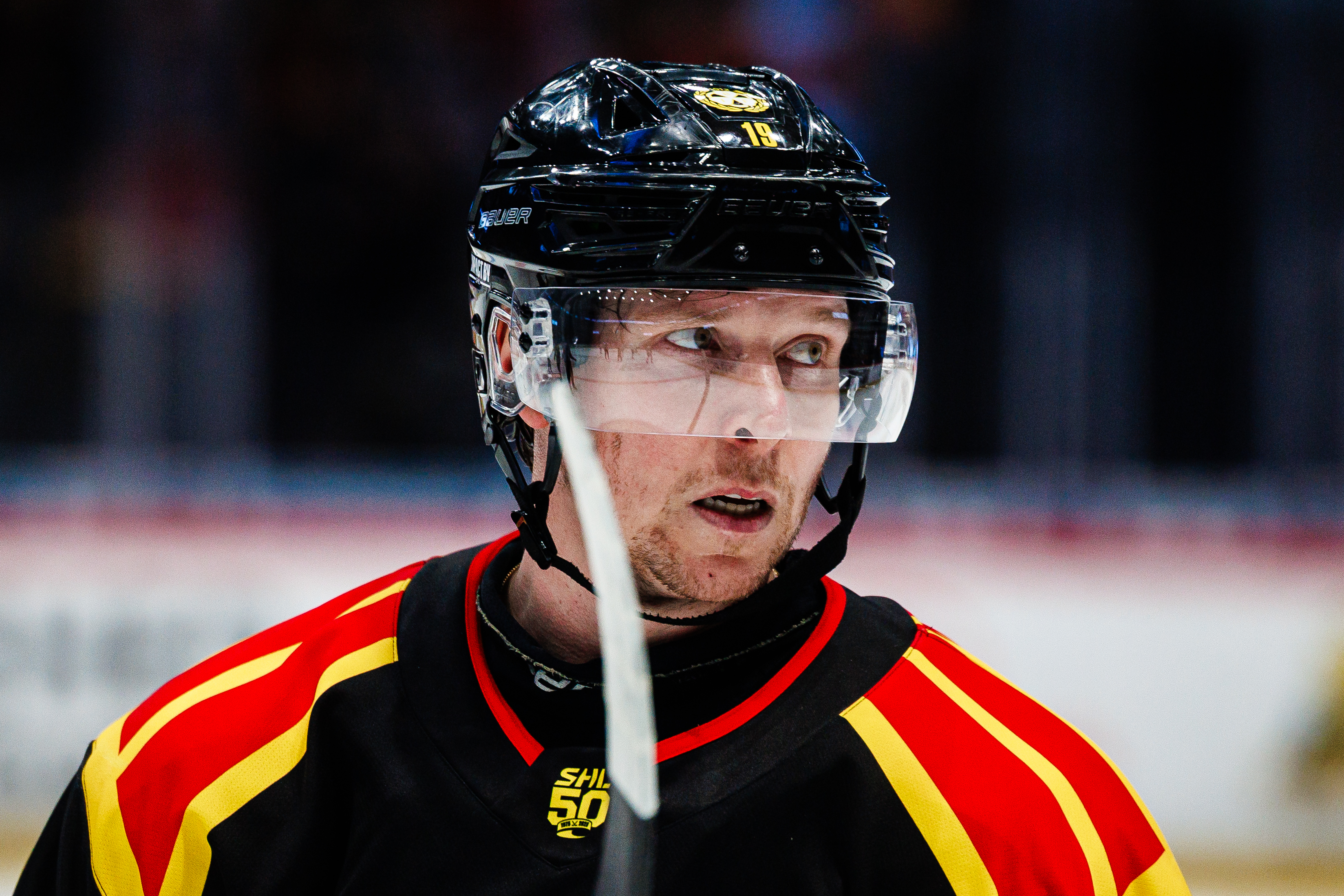
Image: Bildbyrån - Niclas Bäckström with Brynäs IF in SHL
The Liiga in Finland uses an identical structure: five minutes of three-on-three sudden-death overtime in the regular season, with ties decided by a shootout. In the playoffs, extra time becomes unlimited 20-minute five-on-five sudden-death periods.
Germany's DEL follows broadly the same model. Regular season overtime is a five-minute three-on-three sudden-death period, proceeding to a three-round shootout if needed. Playoff games use 20-minute sudden-death periods until a team scores. The DEL also applies the three-point standing system.
Across all three major European leagues, the split between regular season and playoff overtime is essentially the same as the NHL's approach: a compact, high-intensity extra frame to produce entertainment and a result in the regular season, replaced by full-length sudden-death hockey once the stakes are high enough to demand it.
The one significant structural difference from the NHL is the points system. All three European leagues award three points for regulation wins. The NHL still operates on a two-point system for wins, which creates the well-documented "loser point" and consistently bunched standings. European leagues and international hockey have effectively resolved that problem, even if the NHL has resisted following suit.
One curiosity worth noting: the longest SHL game was played on March 23, 1997, in a semifinal between Leksands IF and Färjestad BK. Andreas Karlsson scored the winner for Leksand after 59 minutes of overtime, nearly three full extra periods, in front of 6,012 spectators. In the NHL, Mud Bruneteau's goal 61 years earlier still stands alone.