-ep.webp)
-ep.webp)
-ep.webp)

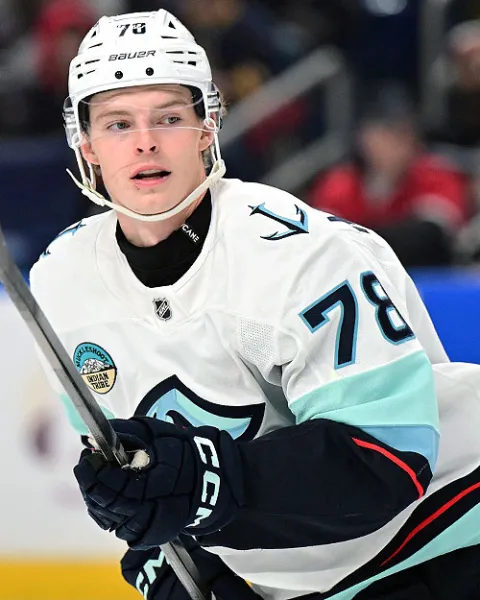
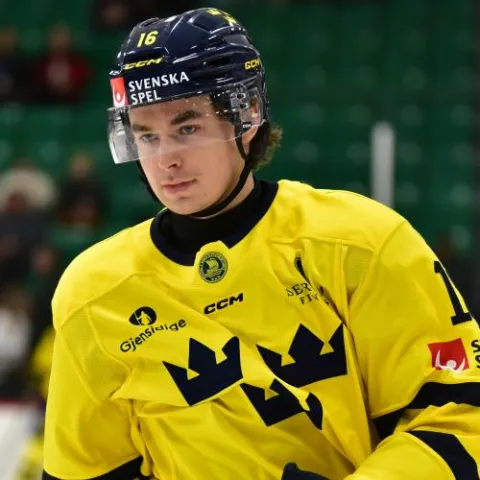
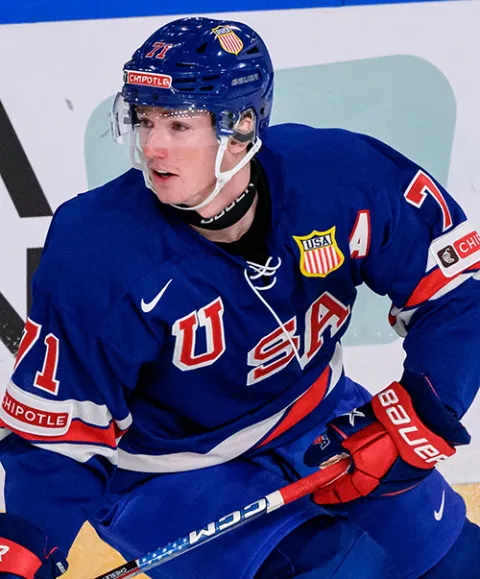
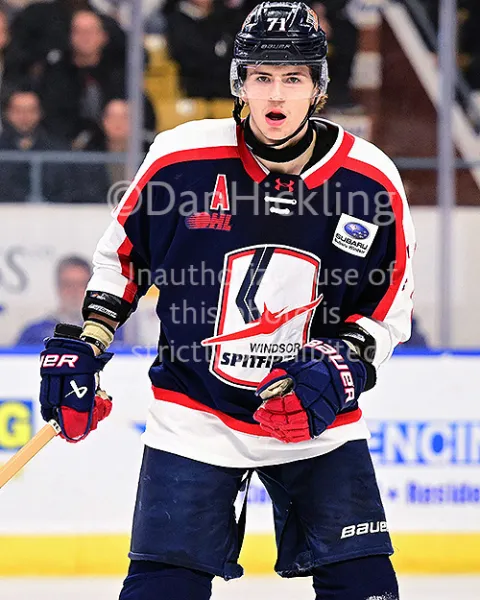
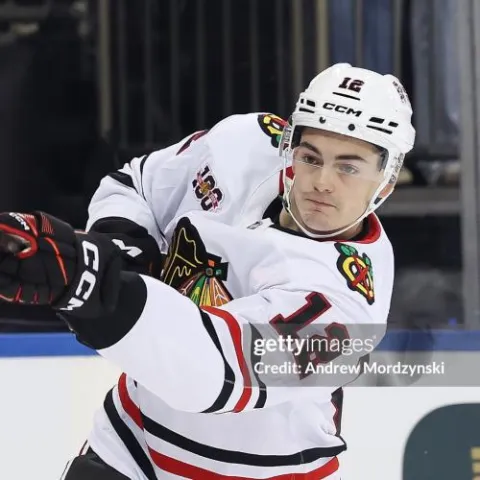
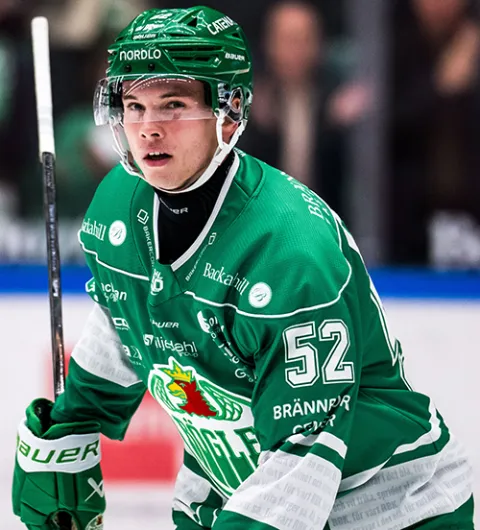
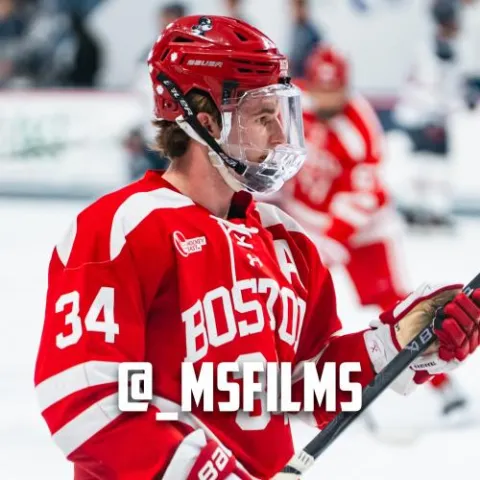
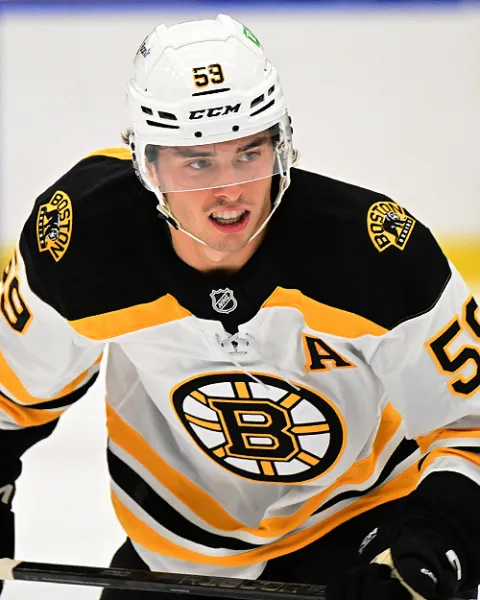
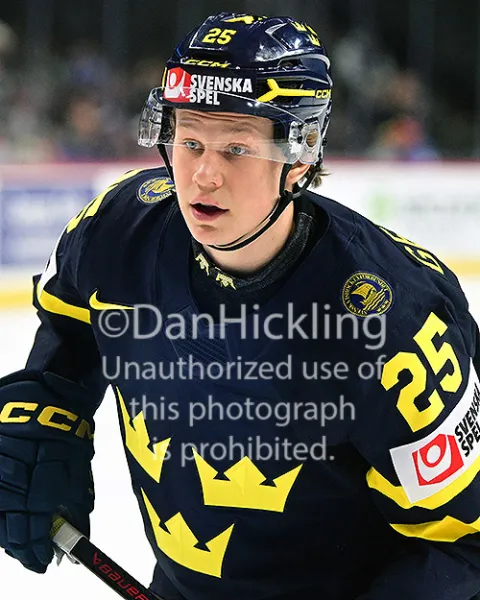
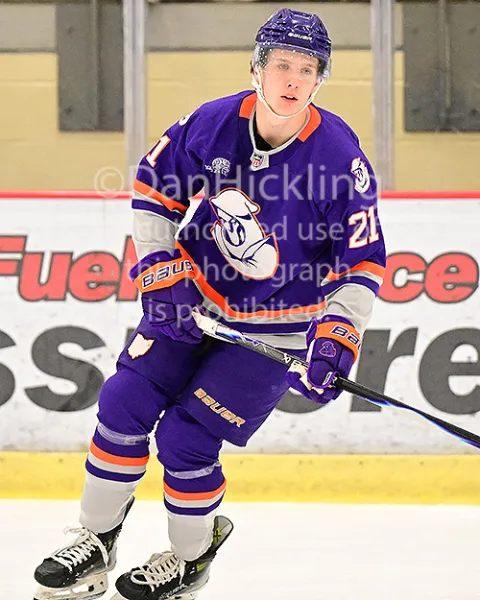
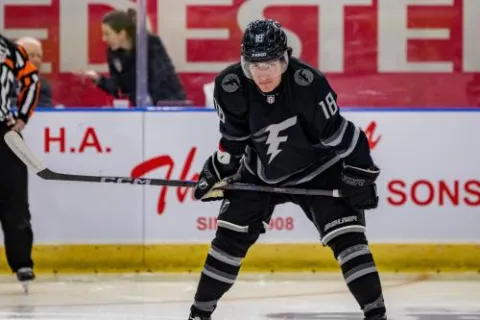
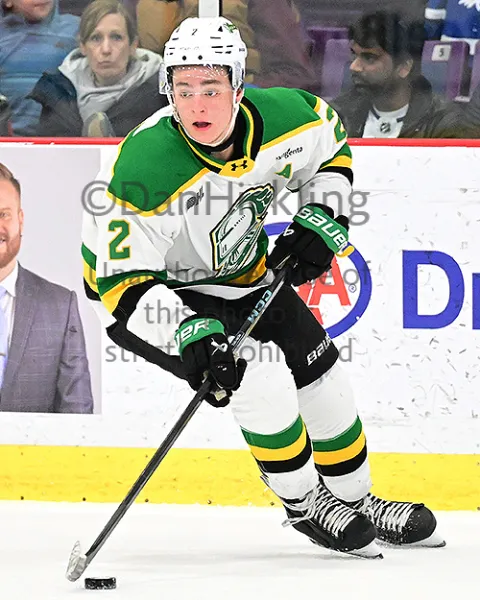
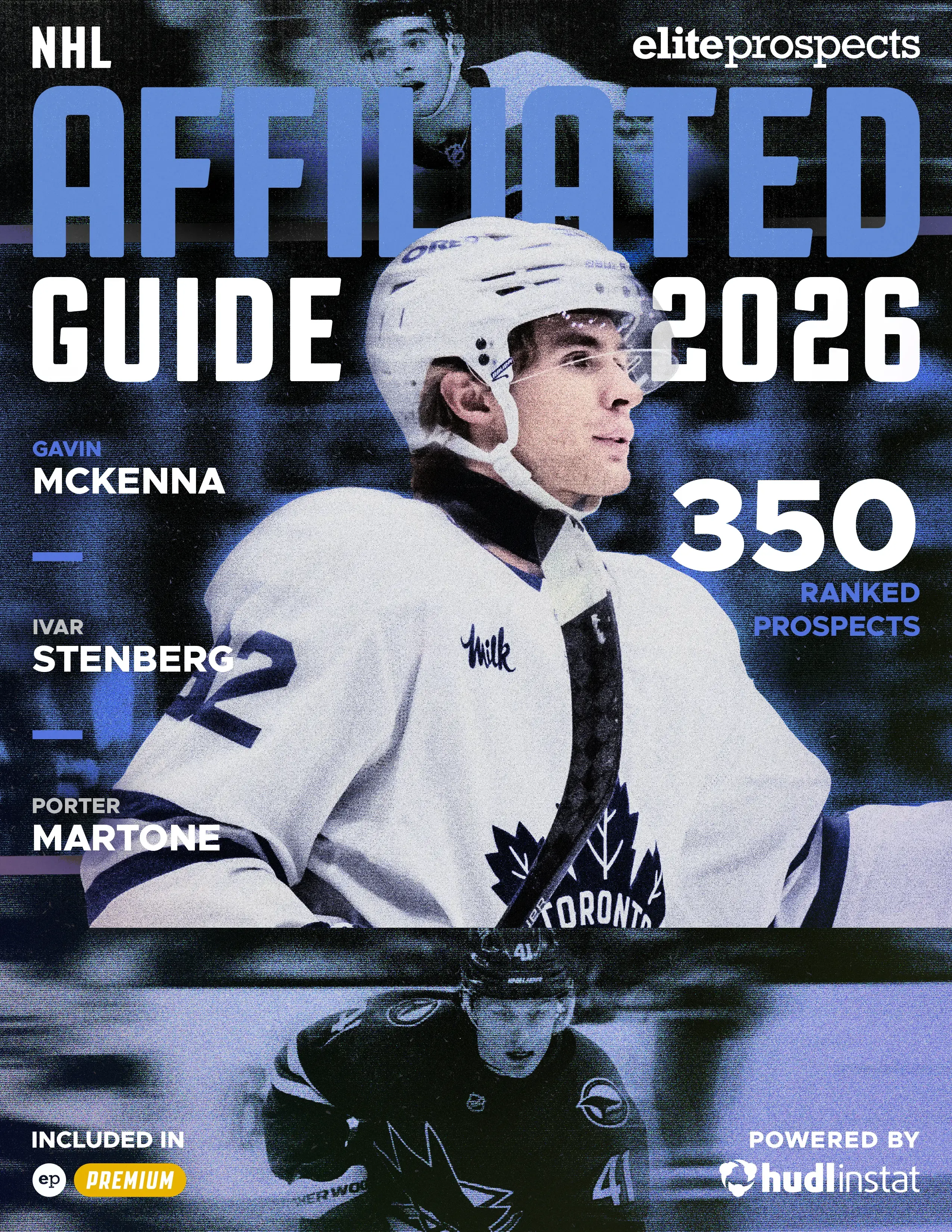
Welcome to Elite Prospects’ 2026 NHL Affiliated Guide, a complete look at the NHL's incoming wave of talent. Premium subscribers get the full guide, 350 players deep, with profiles, grades, and more for each. Filter for your favourite team, sort, and jump straight to player pages and more.
First, a special thank you to the entire Elite Prospects team, from all the scouts who contributed game reports and opinions to this project, to the tech and vision from Tobias Calminder, Janis Skalins, Joakim Ekendahl, Jakob Silfverswärd, and more.
Lead Scout
Based out of Trois-Rivières, Quebec, David St-Louis is the Lead Scout for Elite Prospects. A machine who consumes games and produces content at record rates, he’s watched more hockey than probably everyone in your life combined, and that just accounts for this season’s work. In the rare instance that he’s not watching hockey, he’s writing articles and producing videos for the Elite Prospects YouTube channel.
Head of Scouting & Pro Content
Becoming our Head of Scouting & Pro Content in Fall 2024, Mitchell Brown has been with Elite Prospects since 2019. Based out of Canmore, Alberta, he can be found climbing in the summer and shooting high, wide, and high and wide at many local outdoor rinks and frozen lakes in the winter. Possessing an equal amount of scouting and culinary skills, if he weren’t spending 12 hours a day tracking games from every major league in North America, he’d be running his own pizza place.
Dir. of Goalie Scouting
Joining the team in Summer 2024, Jacob Titus has been a monumental addition, quickly rising through the ranks. Originally hired as an Ontario U16 scout, his passion for goalies quickly became our secret weapon to building a legitimate goalie scouting staff at Elite Prospects. After overhauling our goalie scouting, he now leads a passionate group of goalie scouts as they attempt to debate, project, and master the most mysterious and inexplicable position of all.
NHL Affiliated Prospects Scout
Born and raised in Calgary, Alberta, you can usually find Kareem Elshafey at the beloved Saddledome taking in games. In his role as an Affiliated Scout, Kareem dabbles in all leagues with drafted prospects, tracking the progress of the future of NHL clubs. When he’s not watching the top prospects around the sport, he’s spending his time getting his heart broken by the Dallas Cowboys and Toronto Blue Jays.
Sweden Regional Scout
Based in Jönköping, Sebastian Orre is in his second year with Elite Prospects. Alongside covering European youth hockey and Swedish junior leagues, he also works as a local news reporter. He spends the remaining time improving his skills in the kitchen while listening to the alternative rock band Kent.
Eastern Europe Regional Scout
Based out of Wisconsin, Dylan Griffing is our Eastern Europe Regional Scout. He spends his time playing Football Manager, doing puzzles, and then staying up until four in the morning watching every level of Russian junior hockey, determined to be the first to discover the region’s next superstars. He is very grateful for his four cats, Lulu, Pandy, Phoebe, and Jesper, who constantly distract him while he tries to get work done.
Goalie Scout
Fredericton, New Brunswick native Liam “Ace” Crouse has done video coaching work for both Hockey New Brunswick and the University of New Brunswick’s women’s hockey team. He was once on track to become an MJAHL goaltender, had injuries not forced him into an early retirement. When he’s not scouting goaltenders across the world, he can be found creating content for his YouTube channel, Crease Analysis. He’s an integral part of our team, but we wouldn’t trust him with a metal water bottle.
Goalie Scout
Goalie Scout Max Lee once posted a perfect season between the pipes in Illinois high school hockey, and also holds the penalty minutes record for a goalie. We’re serious. When he’s not working as an engineer in medical devices or scouting netminders, you may find him hiking the rivers of Northern Minnesota or expanding his knowledge of geopolitics.
NCAA (ECAC) and Northern Europe Regional Scout
A new arrival on our team this season, Justine Kang is a born-and-raised New Yorker who covers the NCAA and Northern Europe. One man’s undrafted prospect is another man’s college free agent… or however the saying goes. When not watching hockey or attempting to play it, Justine can be found dancing about College Hill.
EP Pro Scout & NCAA Scout
With a passion for covering the NCAA, J.D. Burke knows just about every player across every conference – first liners to 14th forwards and everyone in between. His work has appeared previously on The Athletic, Sporting News, and The Nation Network. Burke is an established name in the amateur scouting community, with nearly a decade of experience covering the NHL Entry Draft and prospects in at least some capacity.
NHL Affiliated Prospects Scout
In his second season with the Elite Prospects team, Austin Broad is an NHL Affiliated Prospects Scout, focusing mostly on the AHL and NCAA. Outside of hockey, he is an avid NFL and NCAA Football fan, spending his weekends watching or constantly checking on score updates. On the odd occasion he is not working, or consuming sports in some manner he helps out his daughter’s U10 travel soccer team despite knowing absolutely nothing about the sport of soccer.
Players eligible for this ranking are players who are Calder Eligible this season. To recap: Eligible players must not have played more than 25 regular-season games in a single preceding season, six or more regular-season games in any two preceding seasons, and must have been younger than 26 by September 15th, 2026.
Grades are a short-form, accessible way to convey complex information. Not everything will be covered appropriately by them!
Our grades aren’t for where the player is now, though that’s a major component. Instead, they are a projection of how each individual tool will stack up in the professional ranks.
The midpoint, 5, represents a confident NHL-calibre projection for that grade, albeit on the lower end of the lineup. Each successive step moves up the lineup:
3: Pro-calibre
4: AHL & top-flight pro-calibre
5: NHL-calibre
6: Top-six, top-four, and 1B goalie-level
7: High-end
8: Elite
9: Arguably the best in the NHL
Adaptability: Mental flexibility; the ability to find another play when one closes.
Advantage creation: Plays made with the intention of maximizing the next player’s time, space, and options, usually through drawing pressure before passing.
Angling: The ability to hold the middle of the rink and push opponents to the outside, usually by winning the inside.
Anticipation: The ability to fill in the gaps of perception based on knowledge, experience, and structure.
Awareness/Scanning: How often, when, and where a player scans the ice.
Body positioning: A player’s ability to put their body between the puck and an opponent, often by cutting through the opponent’s hands.
Change-of-pace/delay game: Ability to attack at varied speeds, usually combining skating and handling skill. A delay game sees the puck carrier regularly cut back off the rush to gain access to the back layers of the attack.
Details: Catch-all term to describe a myriad of subtle skills, including, but not limited to: Stick placement, poke check ability, first touch plays on the forecheck, net-front skills, faceoffs, angling, and gap control.
Gap control: The management of distance between the defender and attacker; though not exclusively, tighter is usually better.
High cycle: Modern offensive strategy where carriers cycle along the half wall, instead of behind the net, to create time, space, and opportunities to get inside.
Manipulation: The use of movement, puck positioning, passing, and deception to move defenders away from the player’s desired space or lane.
Mechanical ability: The combination of skating and handling ability; the ability to stack weight, move freely, and make movements with opposing momentum.
Off-puck offence: The movement a player makes into pockets of space to support the offence or to become a scoring threat.
Off-puck defence: How a player defends away from the puck, including net-front defence, gap control to deny passes, and rotations.
Pace: Divided into mental and physical. Mental is the speed at which a player makes reads and executes. Physical is the consistency of feet moving: Keeping feet moving through open space, receptions, and while stickhandling.
Proactive contact: The ability to initiate contact before the opponent, usually before touching the puck on a retrieval; the player who initiates first has a much higher percentage of winning the ensuing battle.
Processing: The speed at which a player picks up on the details of a play, including the speed, direction, momentum, and more of teammates and opponents.
Puck acquisition: A player’s ability to get the puck, broken into two categories: Supporting plays to get pucks through passes and winning pucks in battles. The latter becomes increasingly important the higher the level of competition.
Surfing: A rush defence strategy that sees the defender pivot early to skate forwards and skate across using shuffle steps, closing the distance while keeping their stick in the middle. Commonly used among USA Hockey defenders and off neutral zone turnovers to re-gap.
Tactical awareness: A player’s ability to play within their team’s structure at even-strength and on special teams; a high level of tactical awareness leads to more predictability for teammates and better play outcomes since decisions can be made faster.
Timing: The ability to organize movements to be in position to make the next play at the right time.
Weight shift: The ability to stack weight over a single leg and push off, leading to more explosion and separation.
-ep.webp)
-ep.webp)
-ep.webp)


-ep.webp)
-ep.webp)
-ep.webp)


-ep.webp)
-ep.webp)
-ep.webp)
-ep.webp)
-ep.webp)
-ep.webp)
.webp)
.webp)
.webp)


-ep.webp)
-ep.webp)
-ep.webp)


-ep.webp)
-ep.webp)
-ep.webp)
-ep.webp)
-ep.webp)
-ep.webp)


-ep.webp)
-ep.webp)
-ep.webp)
-ep.webp)
-ep.webp)
-ep.webp)


-ep.webp)
-ep.webp)
-ep.webp)


-ep.webp)
-ep.webp)
-ep.webp)


-ep.webp)
-ep.webp)
-ep.webp)