Elite Prospects 2026 OHL Priority Selection midseason top 50 ranking





It feels like there's no better time to debut our first ranking for the 2026 OHL Priority Selection. We're approximately halfway to the draft on June 12th and 13th, and most of the season’s major tournaments have been played. Over the next two days, 80 of Ontario's top OHL draft-eligible players will travel to Peterborough to participate in the inaugural U16 AAA Top Prospects Showcase, and a handful of teams will play at the Oakville Rangers Winter Classic this weekend, as well. After that, it's a race to the postseason, and the OHL Cup.
In similar fashion to last year, 2026 appears to be another wide-open draft, particularly at the top of the class. The 2010-born group of OHL draft-eligible players has intrigued and excited in league play and at major tournaments in the first half. Our team of nine scouts (listed at the end of this article) discussed upwards of five players for first overall.
To add another intriguing layer, this is the first OHL draft taking place after the NCAA rule change. Given the breadth of elite OHL draft-eligible American talent in this age group, and the influx of U.S. players heading to play major junior, our scouts had even more players to consider for this year's ranking. As such, it was a challenge to decide where to draw the line on eligible candidates.
Ultimately, to keep things as simple as possible, while still featuring a wide-range of players, our scouts decided to narrow the list down based on the following criteria: Ontario-born players playing in the province and the United States (which include the likes of Colin Kennedy, John Montanino, and Spencer Greenhalgh), and OHL-eligible American-born players who have played major tournaments in Ontario this season, including those on teams like Little Caesars, Honeybaked, and Bishop Kearney.
Other top Americans Drew Daley, Alec Walker, and Chase Schulberger were also initially – and heavily – considered for this ranking. All three are first overall calibre prospects available to OHL teams this June. While Daley and Walker likely won't ever be ranked on our list given the established criteria above, if the Woodbridge Wolfpack earn a spot at the OHL Cup in the spring, Schulberger could debut on our final list.
However, there's no more intriguing player at the U16 Ontario level right now than 2011-born Kade O'Rourke. The Toronto Jr. Canadiens' number one defenceman won't turn 15 until the end of this month, but he has wowed scouts all season with his poised, steady play. The Texan-born O'Rourke could be eligible to be drafted into the OHL as soon as this year, should he apply for and become the tenth player granted exceptional status.
Notably, O'Rourke was the only 2011-born player to be invited to the aforementioned U16 AAA Top Prospects Showcase. While it would be premature of us to rank O'Rourke before he is deemed eligible for this year's draft, make no mistake: he would be our No. 1-ranked player on this ranking, and could be ranked there on our final board in June.
Our team has watched over 250 OHL draft-eligible prospects so far this season, with scouting reports published across hundreds of EP player pages. This ranking was compiled based on which players we anticipate will provide the most value in the OHL, a combination of upside and the likelihood of filling a top-six forward or top-four defenceman role. Each player's skills and tools have been evaluated, graded, and factored into this ranking, including skating, the ability to make plays at speed (pace), motor, details, and long-term growth potential.
With all of the housekeeping out of the way, here is our first ranking for this year's OHL Priority Selection, featuring the Top 50-ranked players and several honourable mentions.
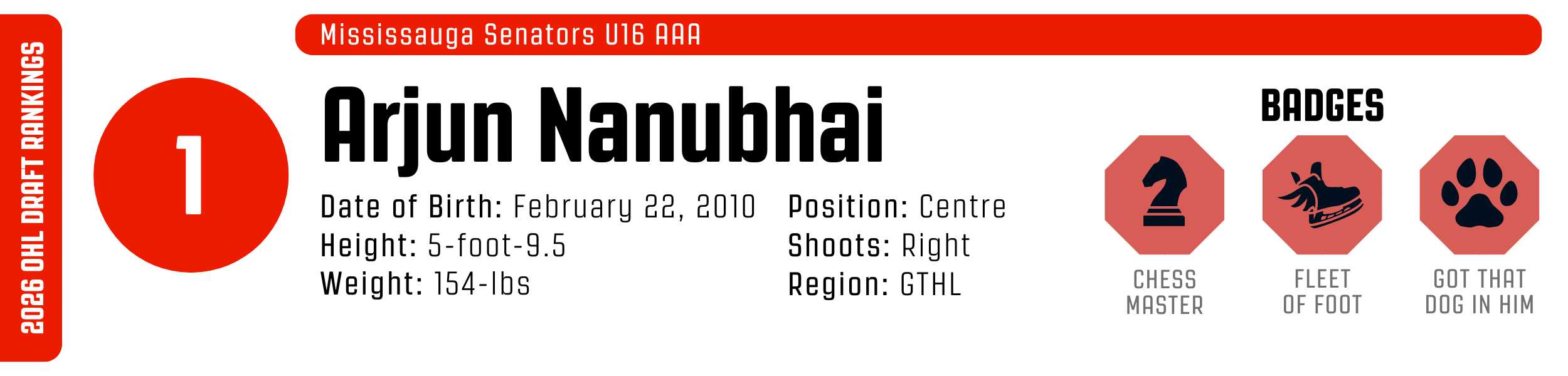
It was a tight race for first overall on this board, but Arjun Nanubhai sits in the pole position at the midseason point, and for good reason: there's a highly enticing mix of hard skills and finesse in his game.
Attacking loose pucks in the wall and pushing through checks, the forward gets off the wall, spinning off defenders and using their shoves on his back as extra momentum to get to the slot. He spots open teammates instantly around the net, relaying deft passes for tap-in goals or firing missiles to the top of the net.
Capable of shooting in-strides, changing the angle on his release at the last second, and beating goalies with straight power, Nanubhai could accumulate goals rapidly at the OHL level, especially because he seems to always be in the right spot to receive passes, slingshotting them instantly on net.
Add an ability to rush the puck up the ice with rapid crossovers, deceive opponents, and use teammates all around him as he attacks and you get a player who could impose his will over games. Nanubhai has all the elements of a top-line forward: hockey sense, passing and scoring tools, and physical abilities.
Read More: Arjun Nanubhai shines at Titans Early Bird
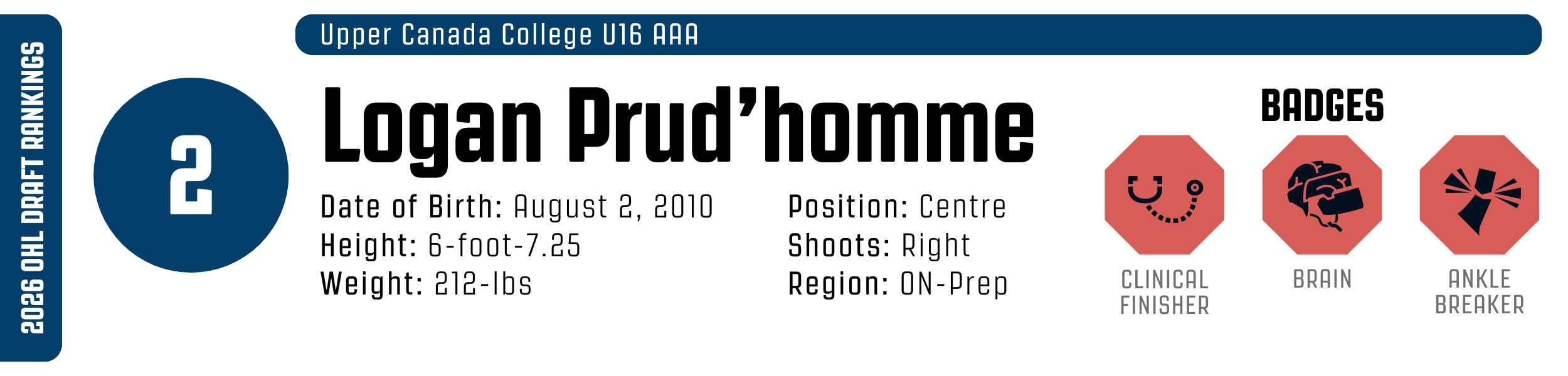
Logan Prud’homme is the kind of prospect scouts dream of adding to their franchise. Not only is he skilled on top of boasting a good tactical understanding of the game, but he’s 6-foot-7. Uniquely gifted, he could become a pillar of his team as he evolves and discovers all the ways his physical gifts could allow him to influence the game.
At the moment, Prud'homme may be best at hunting space in the offensive zone. Capable of sneaking in the slot, behind the backs of defenders despite his imposing size, he catches passes and places his shots well, firing pucks past the goalie.
Give him some space in the neutral zone, a runway, or a numbers advantage, and Prud’homme’s skill comes out. Using his longer range to attack sticks and some timely feints, he shifts through defences to get to the net or connects with teammates, enabling them to do the same. When the opportunity arises, the physical side of Prud'homme's game resurfaces. With hits or by slipping in between opponents and the puck, he wins back or keeps possession for his team.
One can easily believe that with time, skating development, and physical maturation, the flashes of higher end skill in Prud'homme's game will become more consistent. Taking the puck away from him may be a difficult task. Moving cleverly in support of teammates, shielding possession, keeping it outside of others reach, and passing it back to the interior, he could become a nightmare for the opposition to handle, and a top-line play-driver.
Read More: Logan Prud’homme cements top prospect status at Silver Stick
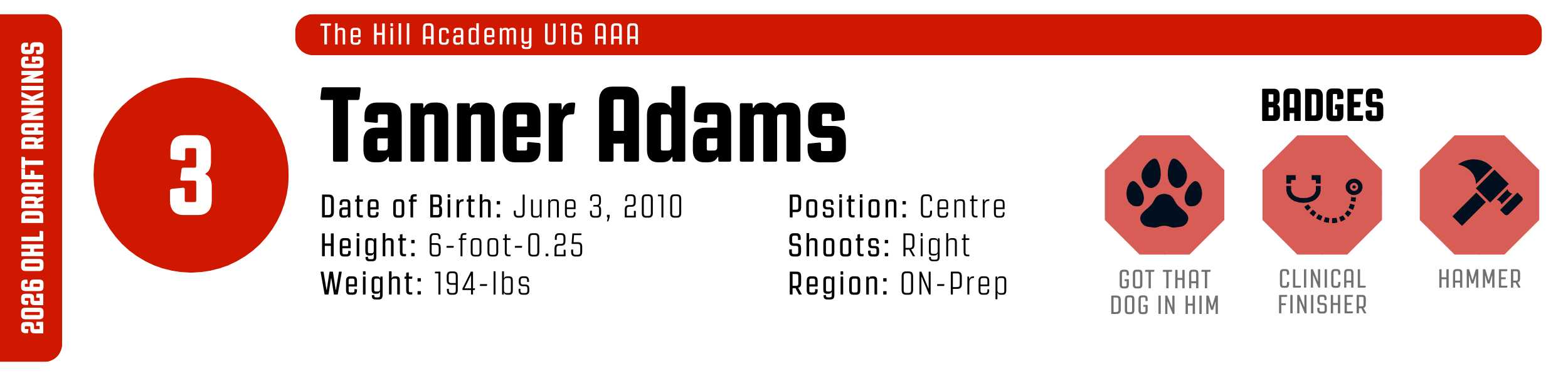
No moment is too big for Tanner Adams, the draft's ultimate competitor and top power forward.
Armed with one of the best toolkits in the entire class, Adams is a weapon on his shifts. Playing at a breakneck pace, he hits to hurt, bullies opponents in board battles, and destroys defensive zone structures. But Adams' game isn't just burying players with bone-crushing hits; it's how he leverages his elite physical skills to create advantages and space for himself and his linemates. With a motor likened to a diesel engine, he attacks the inside in relentless waves, overwhelming defenders.
Although a shoot-first player who can beat goaltenders cleanly with lethal precision, Adams' playmaking continues to improve. He's more frequently deceiving defenders and manipulating gaps to connect with linemates on intricate passing plays. When all else fails, he's crashing the net to battle for rebounds, and, unsurprisingly, he brings that same effort and intensity to the defensive zone, too.
There are no holes in Adams' game. He combines overwhelming power and physicality with handling finesse and manipulation in one of the most projectable and translatable skillsets. As he continues to develop his dynamism and playmaking to become an even more impactful player, he could very well emerge as the best forward by the end of the season. Given his combination of upside and certainty, there was no doubt in these ranks: Adams could step into the OHL tomorrow and thrive.
Read More: Tanner Adams leads Marlies Holiday Classic standouts
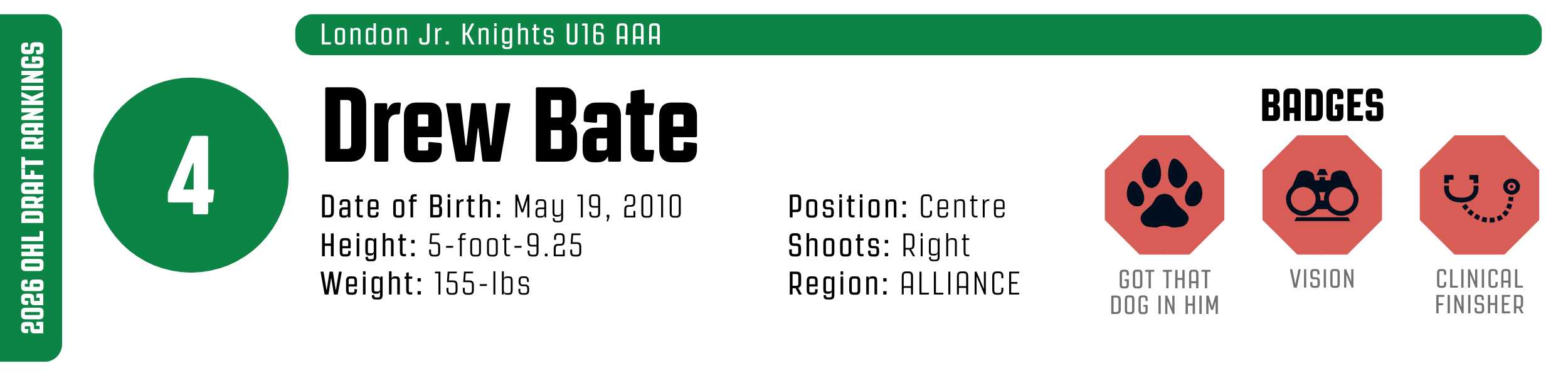
When the London Jr. Knights need a spark, expect that Drew Bate will deliver. The elite playmaker controls the game at high speeds, constantly seeking the highest-value play and executing with masterful precision.
Impressively dynamic, Bate already manipulates defenders regularly at this level, baiting opponents into coverage mistakes. When space closes in on him, Bate never panics. His handling under pressure and high awareness allows him to hook, thread, and slip difficult passes through seams, oftentimes across the grain. He’s also an elite finisher who can shoot off the pass and beat goalies from mid-range or when parked in the crease.
While most of Bate’s offence is generated off the rush, he’s becoming a more effective cycle creator – an important improvement for a player of his current stature. More frequent drives off the wall to the inside will add to his translatability. And far from just a deadly scorer, Bate is an impressive off-puck and defensive player, too, bringing pace, engagement, and effort to win back possession.
Oftentimes, Bate makes it look too easy on his shifts, and his dynamism and vision make him a worthy first-overall candidate. Continuing to add strength will be critical, but Bate has the potential to become one of the OHL’s best dual-threat scorers.
Read More: Drew Bate headlines Wendy Dufton standouts
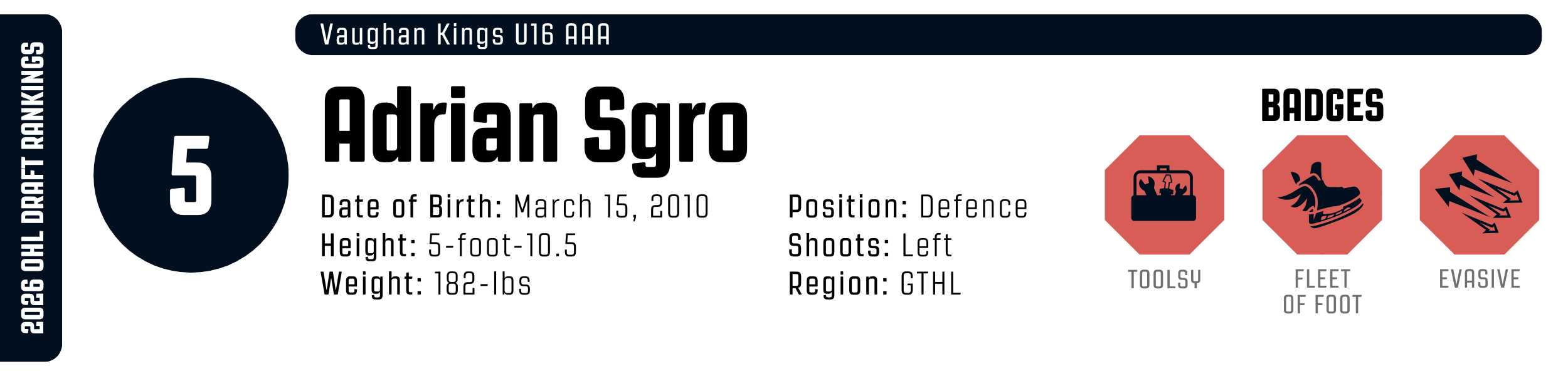
The do-it-all, versatile Adrian Sgro is an all-situations minute muncher for the Vaughan Kings. Ranked first overall on several of our scouts' individual lists, Sgro’s mobility and ability to create odd-man opportunities with his multi-zone stretch passing, combined with outstanding play in transition played a big role in him closing out our initial top-five.
Sgro is at his best when his handling is calm, and his decision making is a product of reacting to the game as it comes to him. He draws in forecheckers, escapes around them with ease and he’s just as happy to play a physical brand of hockey, where his compete shines bright on the walls, and in open-ice soaking shots.
While a lot of Sgro’s production comes from his transition game, his dynamic activations and dangerous release from the point offer him the ceiling to become a high-level power play quarterback at the next level.
Sgro flew onto the scene early in the season at the Titans Early Bird and in the GTHL’s regular season, and has continued that strong level of play thus far. As the season moves along, our team will be excited to see if Sgro adds any new layers or levels to his game that could see him rise to the top of our final board.
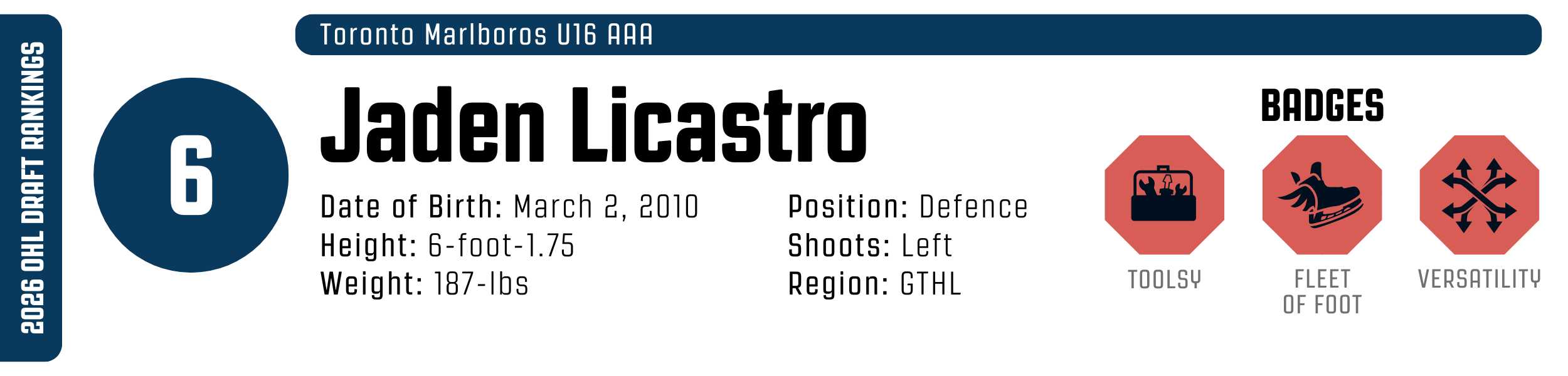
When the stakes of the game elevate, so does the play of Jaden Licastro. The 6-foot-2 defender from the GTHL’s Toronto Marlboros boasts an outstanding package of size, speed, and poise.
Always engaged in transition, Licastro is one of the best in the class at turning defensive stops into exciting offensive chances. He defends with his eyes, and angles attackers to the perimeter while keeping plays in front him. His skating, and agility in all directions allow him to match the speed of those attacking his side, while never getting beat wide or to the middle.
After defensive zone disruptions, Licastro has so many tools in his kit to create successful exits, and eventual positive offensive sequences. He pairs small stick and head fakes with elite puck protection and the ability to separate from opponents, all leading to zone entries with speed. He can skate the puck into the offensive zone, make a crisp play cross ice, or hand the puck off and win routes to open ice, in order to regain possession in more favourable areas.
With so many different tools that are paramount to success at the OHL level already apparent in his game, it’s not hard to see Licastro thriving at the major junior level.
Read More: Jaden Licastro, the best defender at Marlies Holiday Classic
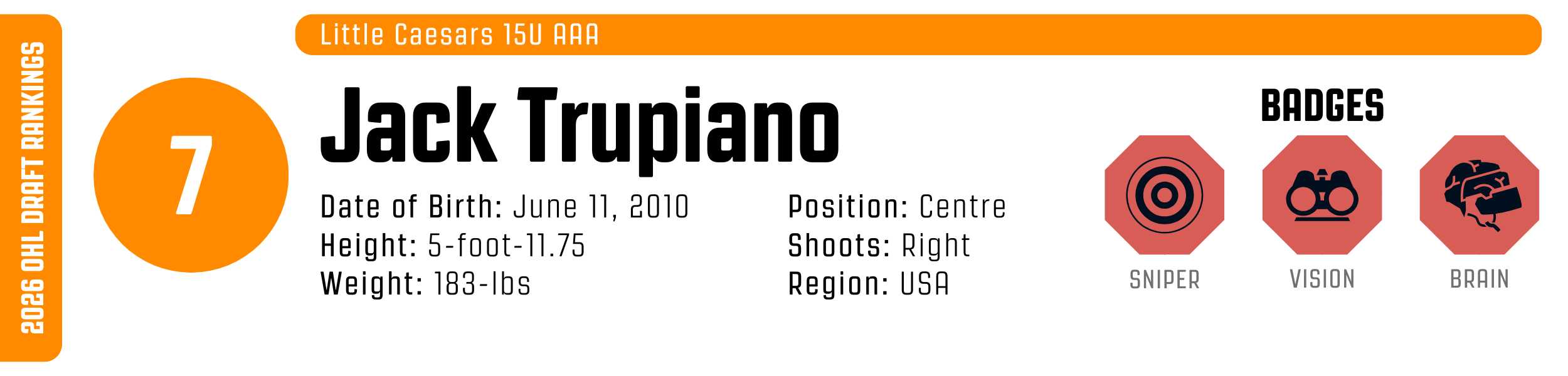
Jack Trupiano’s hockey sense defines his game.
Playing on an all-star team where everyone can fill the highlight-reel, Trupiano seems to always find a way to complement others, moulding himself to fit his teammates' strengths and connecting plays toward scoring chances. It’s reflected in his production, too, as Trupiano leads Little Caesars in scoring this season.
His plays range from one-touch passes to elaborate one-on-one feints. He wins pucks on the wall with a hard shoulder, dangles through pressure in the slot, and fires one-timers from the flank.
At his best, he’s slipping passes into space through defensive layers, displaying vision and touch that rivals top NHL prospects, and hitting lanes that even observers in the stands can’t spot. If he adds more pace to his game and builds on his elite playmaking foundation, Trupiano could become one of the very best players in his age group.
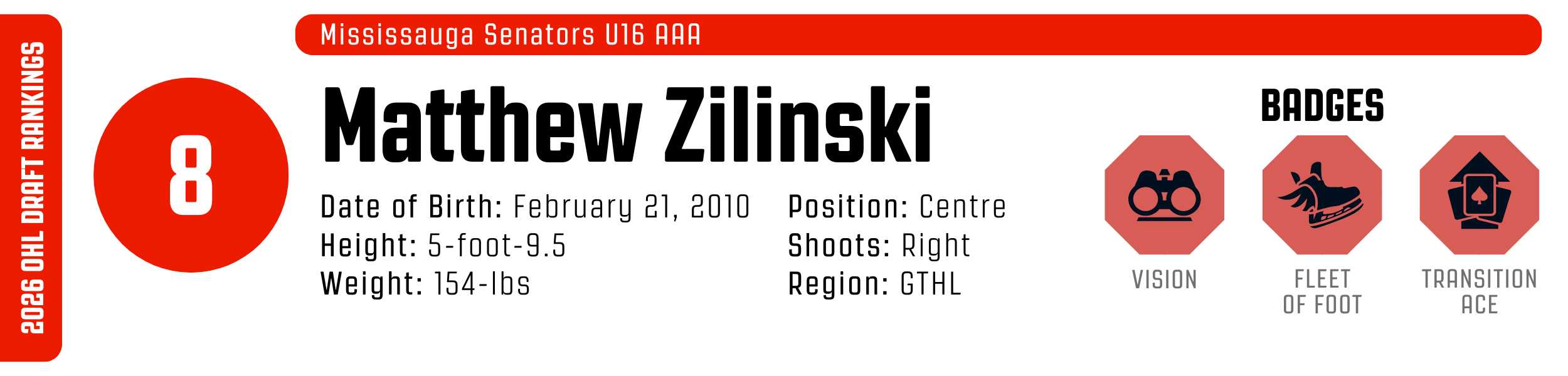
Everything Matthew Zilinski does is rooted in speed and energy. On the puck or off, his movements are intense and purposeful. Zilinski is a hound on the puck all over the offensive zone, and has proven to be a dangerous playmaker whenever he finds himself with the puck.
Given his smaller stature, it’s been impressive to see the way Zilinski can pivot off defenders, open space below the goal line and on the walls, and get himself or the puck into safe, middle-ice. Off-puck, we love the way Zilinski consistently scans, and his immediate intensity when he uncovers an avenue to disrupt a puck and get his team headed in the right direction.
The Mississauga Senators will be in contention to take part in the OHL Cup, and will rely heavily on Zilinski as they attempt to navigate what expects to be a competitive GTHL postseason. As we hit the stretch run, we’ll continue to monitor Zilinski’s placement on our board, but he figures to finish the year as an elite prospect for the 2026 OHL Draft.
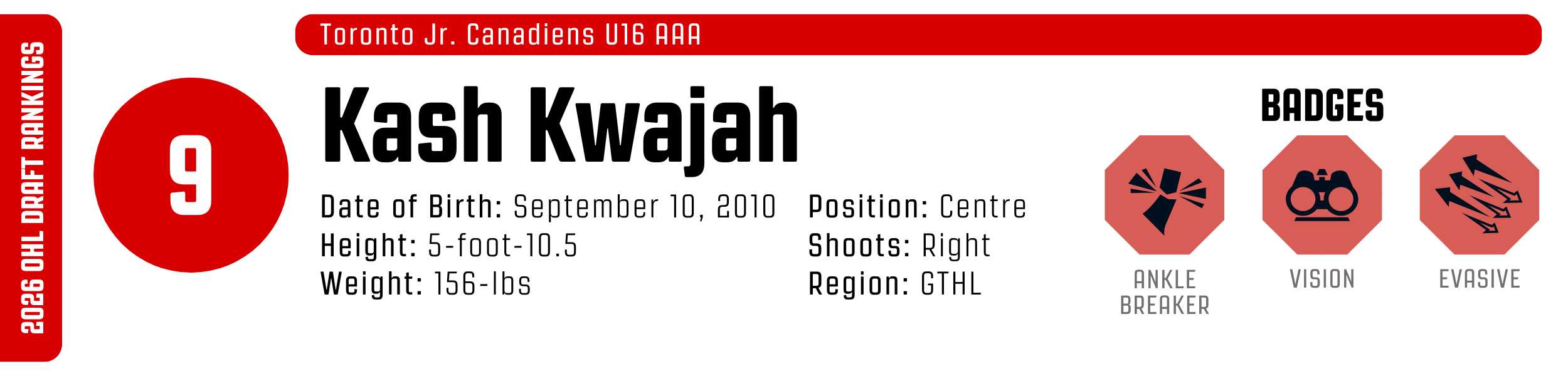
Kash Kwajah cuts through defences with a variety of skills, dangling, cutting across, and slipping the puck under sticks, his mind racing to find openings. He changes speed, involves teammates in his plays, and protects the puck with his body.
With his stickhandling moves and give-and-goes, he creates scoring chance after scoring chance, adapting to defences, manipulating them, and beating pressure. His in-the-moment processing speed stands out, but many of his moves also seem planned in advance, like he knows the opposition's movements better than they do.
Engaged, disruptive, pacey, and a creator, Kwajah should also drive the play at a high level in an OHL team's top-six. Adding power to his skating stride and honing its mechanics would help his transition.
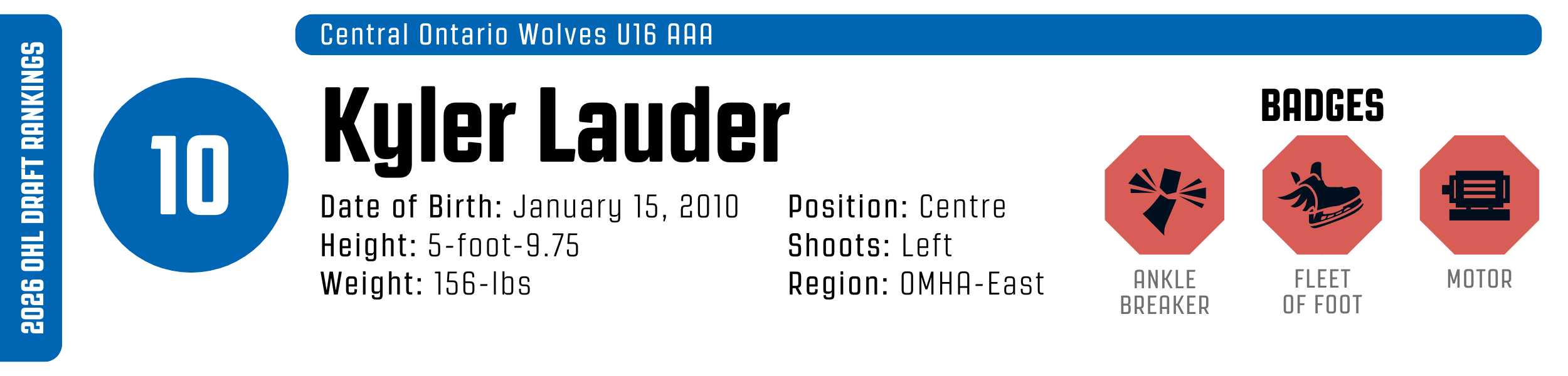
One of the best pure rush creators in the entire class, Kyler Lauder will leave opponents in his dust. It’s not just raw speed that puts Lauder’s skating amongst the best, but his ability to layer crossovers, cutbacks, and pace and direction changes.
What separates Lauder from other dynamic rush creators is his ability to handle and make plays at such high speeds. As he charges up ice with possession, Lauder reaches into his bag of tricks to manipulate defenders: changing lanes, using the middle, delaying and feinting, working fast give-and-gos, and accelerating in an instant to catch defenders off guard.
It also isn’t uncommon to see Lauder barrelling down the ice on a breakaway, sometimes several times in a game after jumping on a misplay at the top of the defensive zone. He’s a threatening shooter, particularly at full flight, able to release with velocity and in stride. His playmaking abilities can fly under the radar as a result, but he’s a capable distributor from the walls and a dominant play driver for his Central Ontario Wolves team.
With high-end tools across the board, Lauder’s advanced transition game gives him a leg up on his peers. Factor in his dual-threat scoring potential, and he could also develop into one of the OHL’s best rush creators.
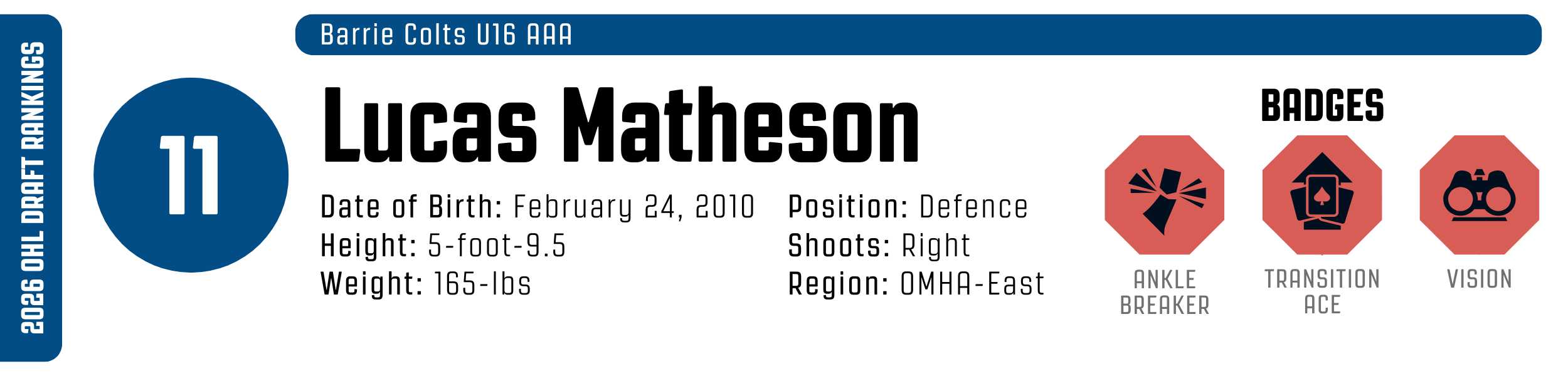
The top offensive defenceman in this class, Lucas Matheson creates scoring chance after scoring chance. Making pinpoint passes, changing speed and lanes, faking plays, and moving along the blue line, he's manipulating defenders, shifting them out of position, and opening up lanes. His size could be a concern, but his skating ability compensates for his lack of range, enabling him to stop opposing rushes, mirror opponents, and evade pressure. He could become a top power play quarterback in the OHL.
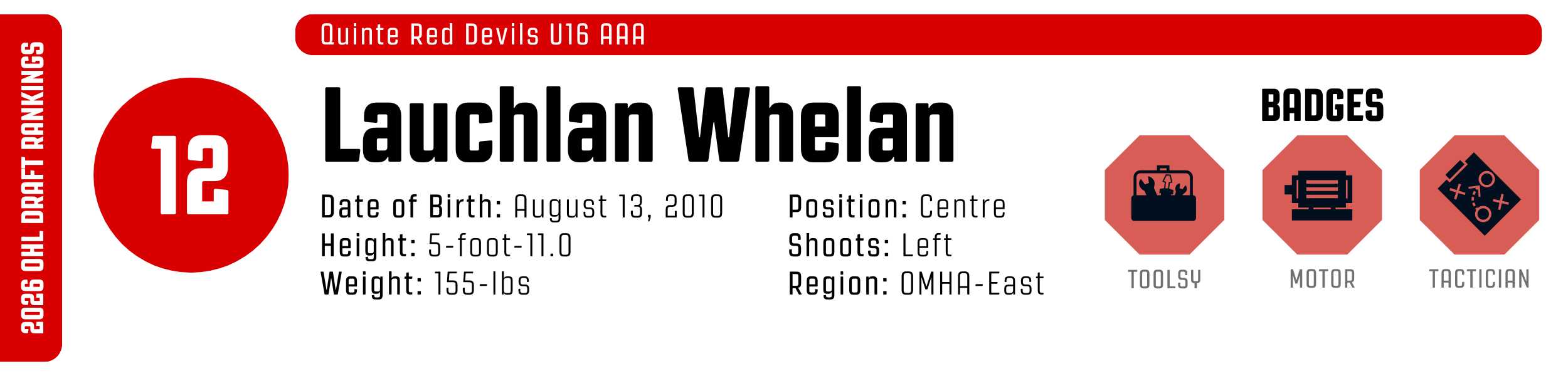
Lauchlan Whelan’s off-puck positioning game may be the best in this class. He sneaks between defenders, runs the right routes at the right time, avoids coverage, gives passing options to teammates, and removes them from the opposition. In possession, he speeds up the ice, weaves in the neutral zone, drives inside, fires hard shots, and connects passing plays. A well-rounded scoring threat, his overall game will become exponentially better with added strength.
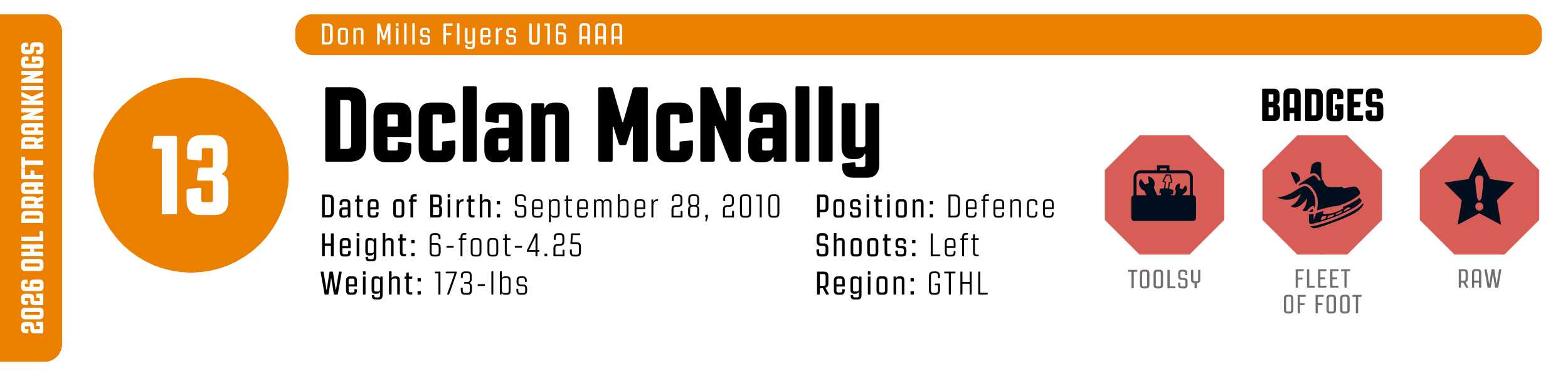
In a couple of years, Declan McNally could be on an OHL team’s first-pair, defending the neutral zone with his range, landing some big hits, moving the puck, and firing hard shots from the half-wall. While McNally is further away from such a role and his projection requires more imagination than most top prospects in this class, he has the foundation necessary to develop that kind of game: the size, skating ability, and offensive confidence.
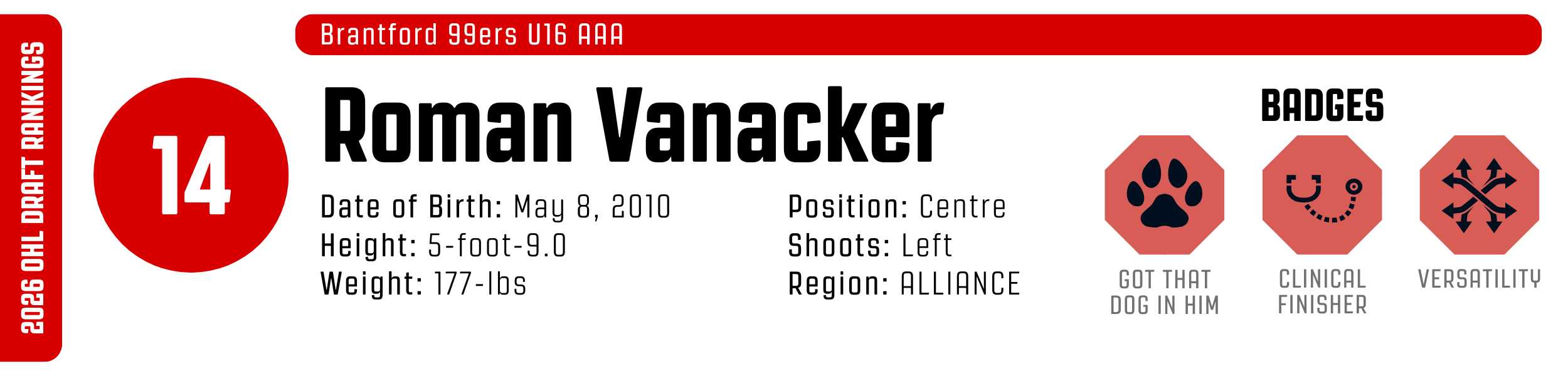
An inside-driven power forward, it’s easy to envision Roman Vanacker translating his skilled, intense game to the OHL. The shoot-first forward has just about every release in his arsenal, the ability to shoot off the pass, and finish from anywhere on the ice. He charges into the offensive zone with a full head of steam, disrupting coverage on his attacks. Physical and pacey, he knocks opponents to the ice, wins battles, speeds past coverage, and overwhelms on the forecheck. Capable of creating space, linking passing plays, and executing more advanced passing plays, Vanacker is a good bet to play a top-six role next season.
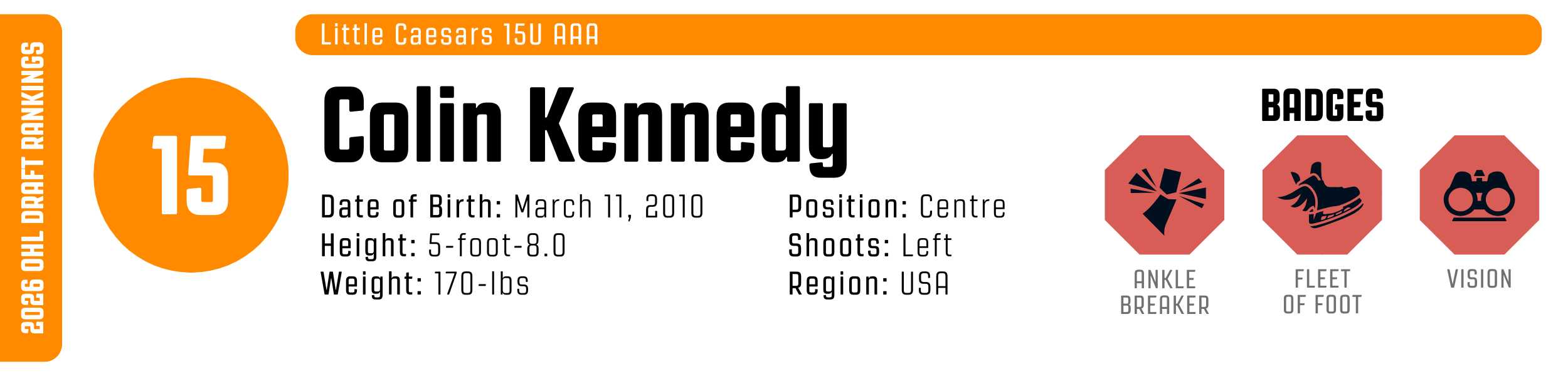
One of the fastest players we've scouted at this level, Colin Kennedy seemingly teleports all over the ice, pressuring multiple opponents at once, winning every loose puck, and flying into them at the other end of the ice. His hands more than keep up with his feet. He also processes the unfolding play fast enough to hit passing targets as they appear, feinting vulnerable defenders and driving into seams. While he's often attacking with similar patterns, his tricks should all translate well to the next level. His physical engagement, stickhandling skills, and the playmaking potential his speed provides could transform him into a scoring machine next season.
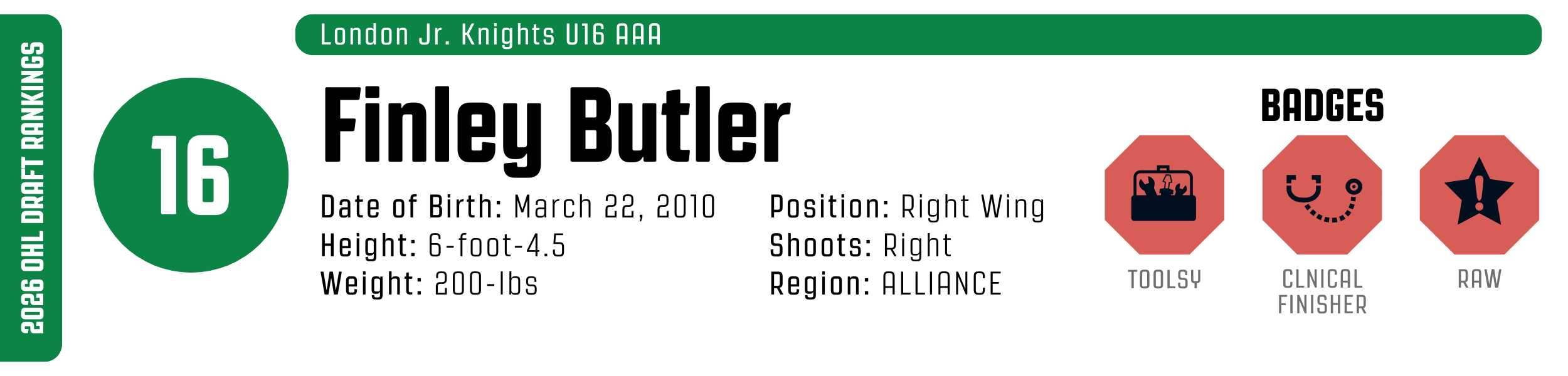
It’s becoming more common to see giant, skilled forwards find offensive success in the OHL, and we’re betting that Finley Butler will one day follow in the footsteps of Kieron Walton and Nathan Aspinall. In fact, we were tempted to push Butler even higher on this board, given his combination of size, high-end skating, and exciting flashes of skill. He’s a skilled passer in transition, a deft finisher in space, and his wall play and physical skills have improved with every viewing. Consistently linking those elements of his game together with more inside-drives will be critical in the second half, but he brings a tantalizing package of tools and has significant developmental runway.
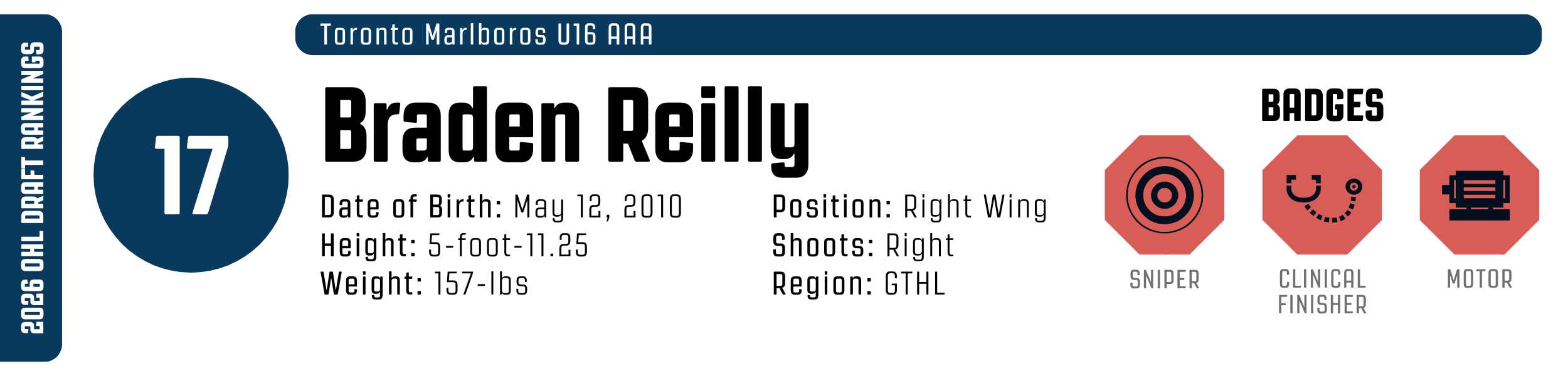
Braden Reilly slots in towards the end of our first round on this list, and carries an extremely attractive profile. One of, if not the best pure shooters in this class, he can rip it off the pass, corral missed feeds and not sacrifice any power, and most importantly, does the best job reading the goaltender. He uncovers deficiencies in goaltenders’ positioning and can pick his spots while tricking goalies with his eyes. For Reilly to climb our board, we’ll look for him to layer his offensive game with more consistency. He has shown the ability to play the delay game and create from down low, which are promising signs. We expect him to keep developing and growing as a future offensive force.
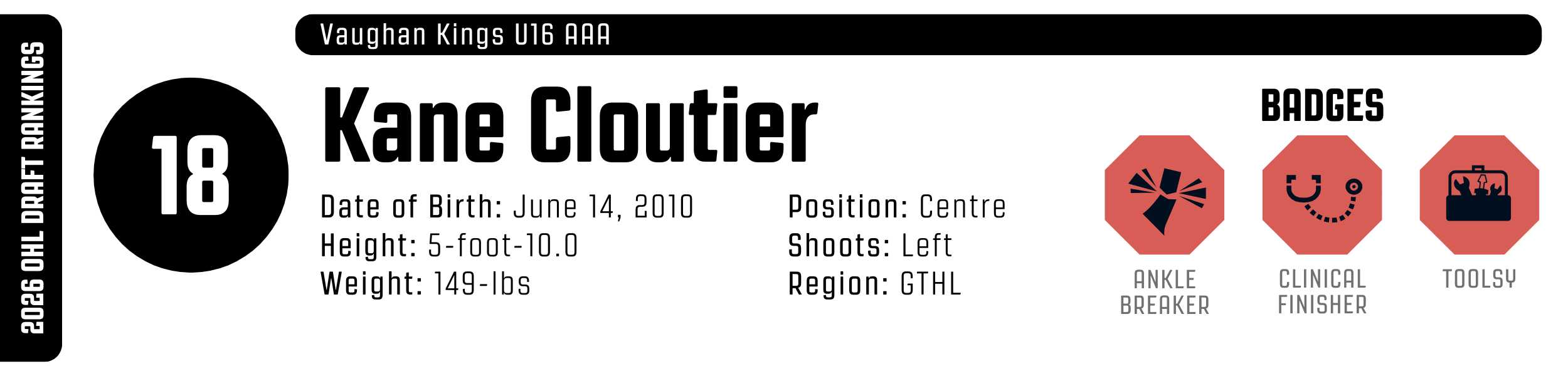
Kane Cloutier is one of the most technically refined players in this class. High-end skating, elite agility, and slick handling ability allow him to traverse the ice at an effortless pace, weaving in and around coverage, drawing pressure, and opening up lanes. A deceptive passer and lethal shooter, the dual-threat Cloutier disguises his attentions to fool defenders and generate scoring chances. Increasing the frequency of his inside-lane attacks and bringing more consistency to his shifts will be key to watch in the second half. When it all comes together, Cloutier looks every bit a dynamic, top-six, play-driving forward.
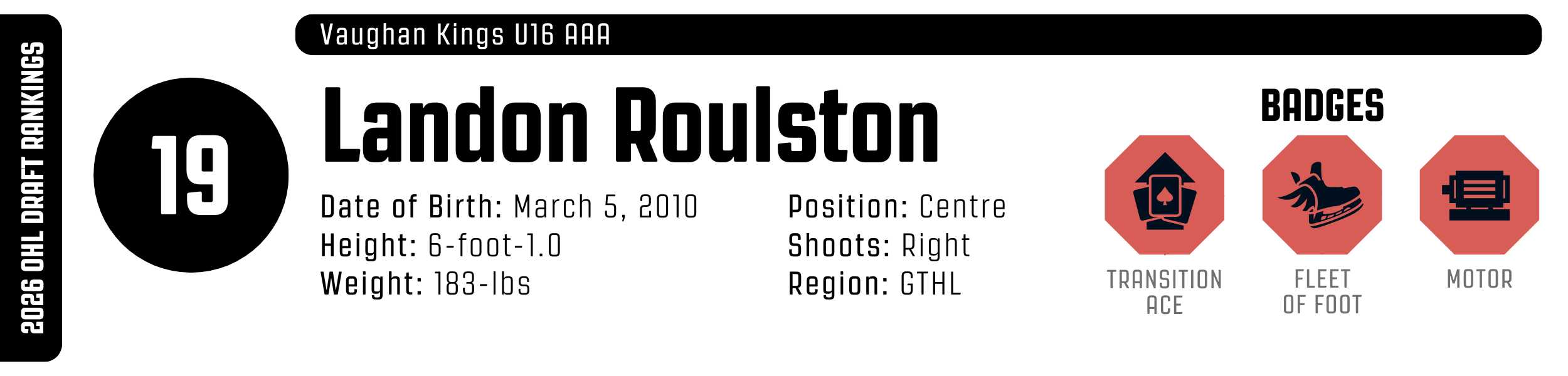
Skating, physical skills, and well-rounded tools are the foundation of Landon Roulston’s game. The versatile power forward attacks with speed and pace off the rush, wearing down defenders in a plethora of ways. A strong puck protector who can play through checks, Roulston is just as capable of powering pucks to the net as he is at delaying and opening up lanes before threading the needle. His motor, inside-driven mentality, and well-rounded puck skills should allow him to fill a top-six role at the next level. As one of the more physically developed players in this class, it’s easy to see Roulston establishing himself quickly in the OHL next season.
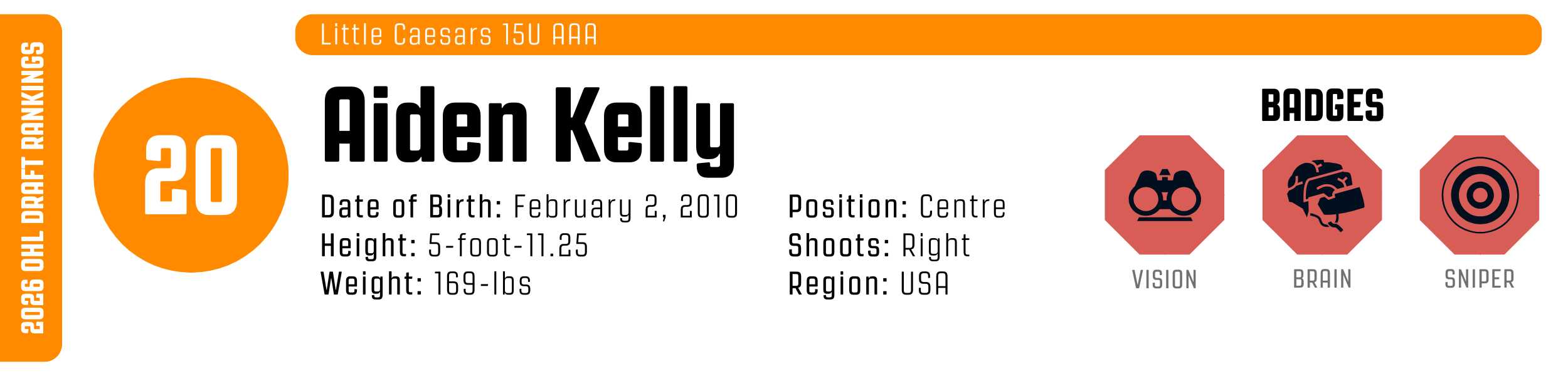
Crafty and clever, Aiden Kelly’s versatile skillset perhaps doesn’t get enough recognition on this deep and dominant Little Caesars team. He’s an impressive rush creator and elite playmaker who combines speed with high-end passes to drive play. There’s not a seam he can’t find, nor a pass he can’t execute. Though assists power his statline, don’t mistake that for a lack of goal scoring. He’s a lethal shooter from distance, and it’s the threat of his finishing prowess that allows his passing vision to shine, as defenders will cheat to cover him, and he can zip a pass across the grain to an open teammate. Steadily emerging as one of the top dual-threat scorers in this age group, Kelly has all the makings of a top-six, play-driving forward.
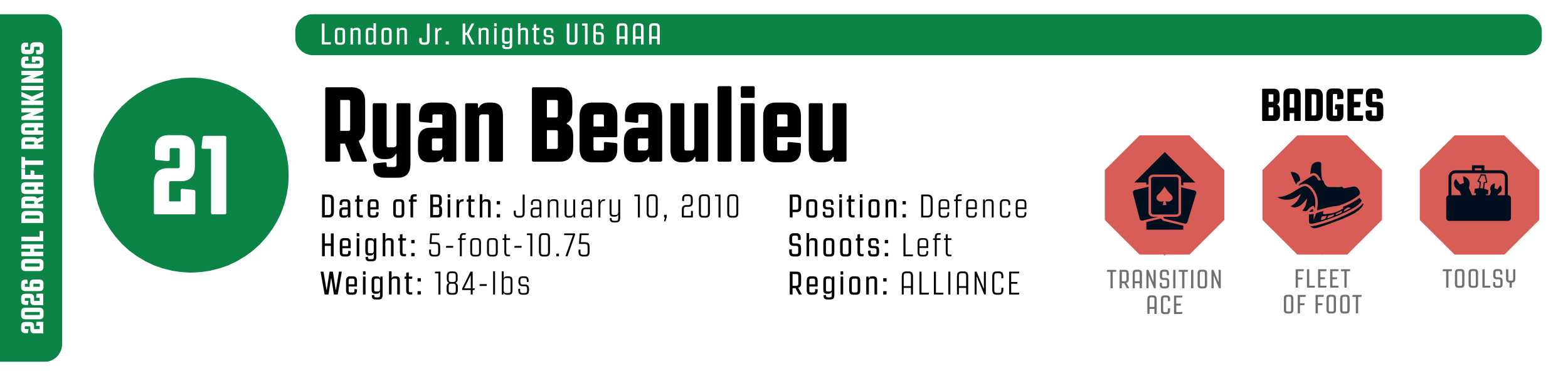
One of the most projectable defencemen in the class, Ryan Beaulieu impacts all facets of the play. Absorbing opposing rushes, erasing opponents on the wall, anticipating and cutting opposing plays, and making timely breakout passes, he restarts his team's attack before jumping up with them, displaying higher-end mobility. With pump fakes, down wall incursions, and well-placed shots, he quarterbacks offensive zone plays. An all-around effective defenceman and potential top-pair OHLer, he’s a candidate to move up our board with a strong second half.
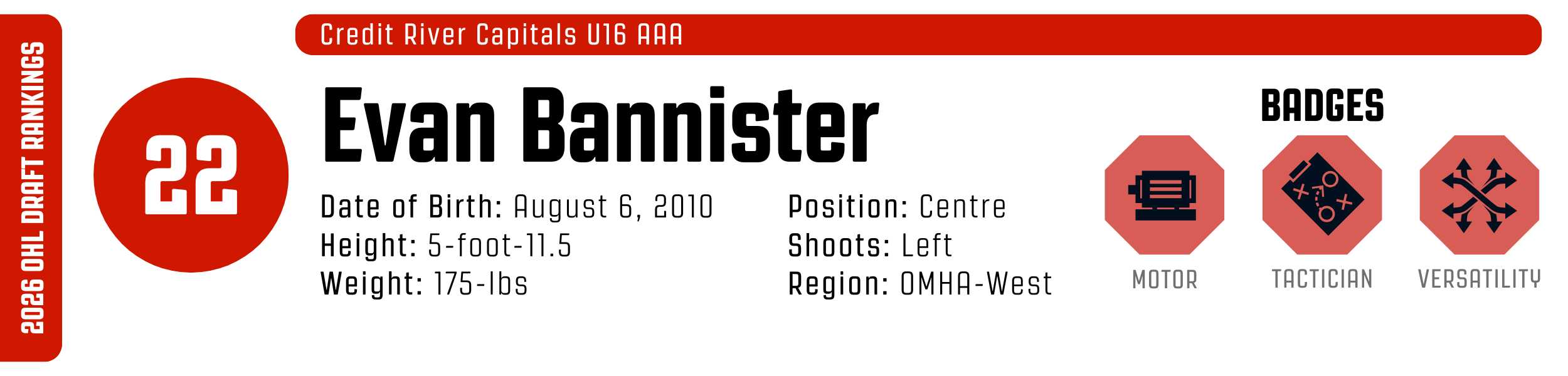
Evan Bannister supports the play extremely well, with the right spacing, timing, and caution, like a developed centre. He provides a second layer of protection in his zone, short-passing options on breakouts, and carries the transition play, kicking pucks to teammates and pushing back defenders. He wins the puck back and forechecks from all the right angles. Both a shooter and a playmaker, Bannister is a versatile player with a mature game and all-around projectable tools.
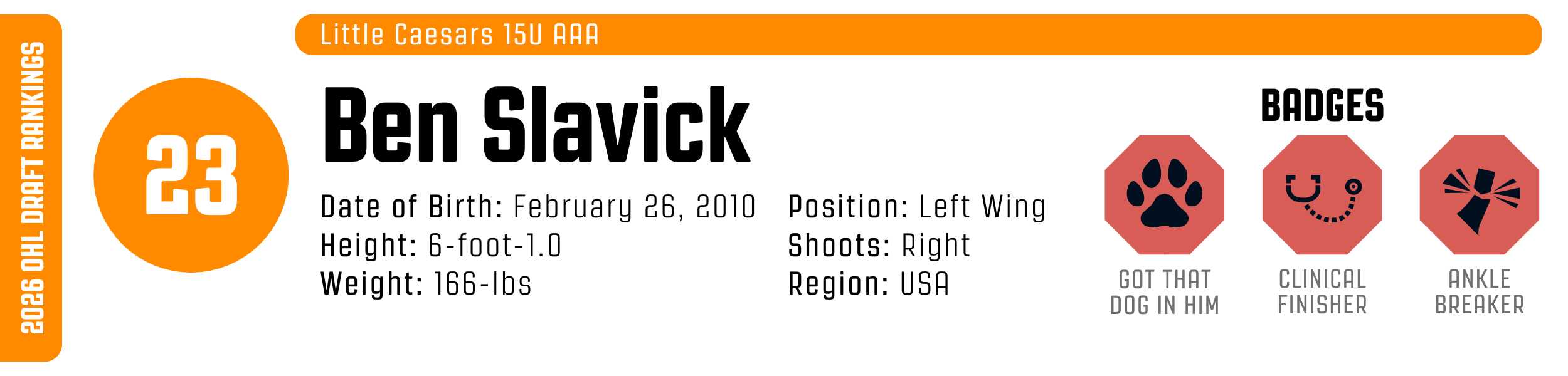
Ben Slavick weaves around defenders, using his larger frame and smooth stickhandling motions to get the puck from the wall to the inside. As soon as he feels a passing lane opening, he takes it, sending precise passes to teammates waiting on shooting positions. His ability to pressure opponents, nudge them off the puck, and make plays in small areas, combined with his vision and own scoring tools, could make him an enticing prospect for the NHL draft down the line. He should continue to dominate scoring leaderboards on his way there.
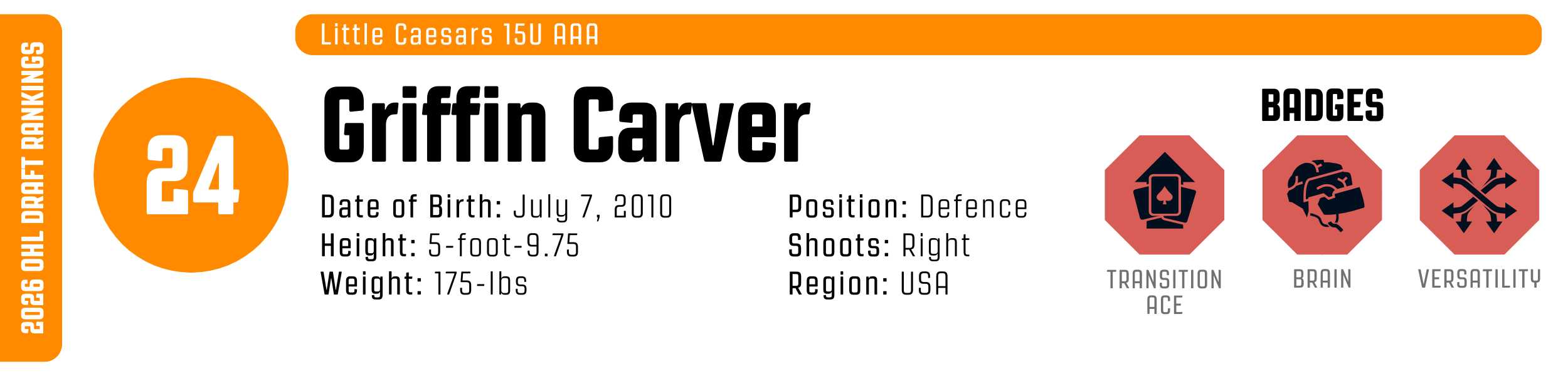
Griffin Carver brings everything teams are looking for in a versatile, reliable, two-way defender. Starting with deployment, he plays in all situations, and dominates in every scenario. Consistently shutting down teams’ top units with strategic angling that eliminates attackers from the play, Carver also uses those lanes to routinely move pucks up quickly. Given the talent up front on Carver’s Little Caesars team, this quality cannot be understated. He’s a beast on the penalty kill as well, and logs a ton of minutes at the end of tight games.
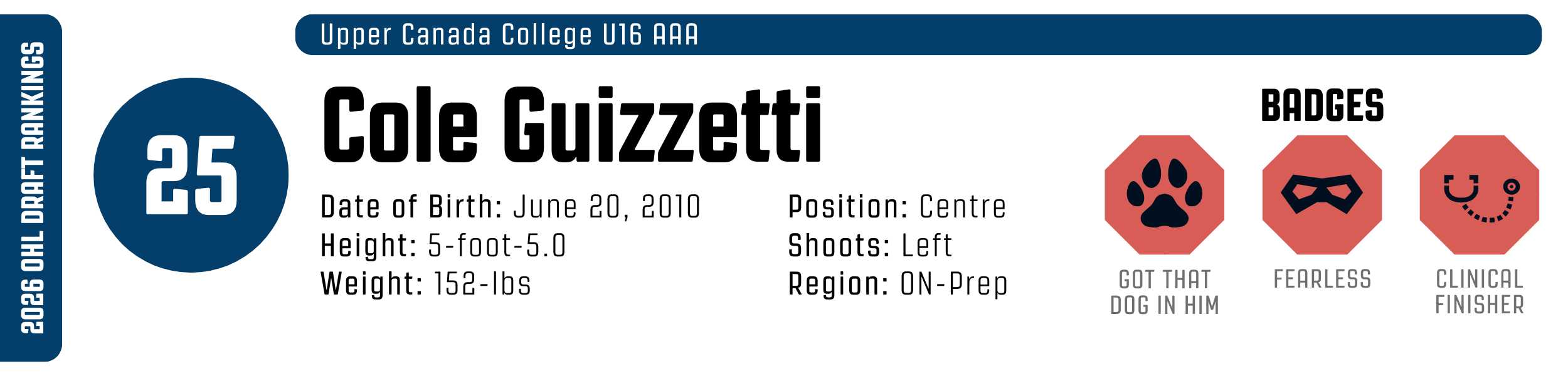
There are very few players who are able to impact the game from the interior at the size of 5-foot-5 Cole Guizzetti. When evaluating a player at this size, there needs to be a baseline of strong hockey sense. Accompanying that, we’re looking for a player to have a strong lower half that supplies elite balance and ability to stay on the puck while playing through contact. Guizzetti has displayed all these characteristics in spades. He has taken his fair share of big hits, but not let it affect his next move with the puck. At times he will take knocks from opponents with serious size advantages and display the balance to stay on his skates. Additionally, Guizzetti loves to play in and around the netfront, having scored many goals in high-stakes games from that area. To put it simply: he’s got that dog in him, and we’re betting on him finding a way.
.png)
Shane Roche is the total package, and exactly what teams are looking for in today’s day and age. He’s a rangy, toolsy defender who can make plays in open ice and while under pressure. Most impressively, Roche controls the pace of the game when he’s out there, speeding it up and creating off the rush when the Marlies need a tally, and slowing the pace while they attempt to shut it down. He has continued to add layers to his offence by displaying deception and manipulation up top, and if that side of his game is consistently shown in the second half, don’t be surprised to see him rise into first round contention.
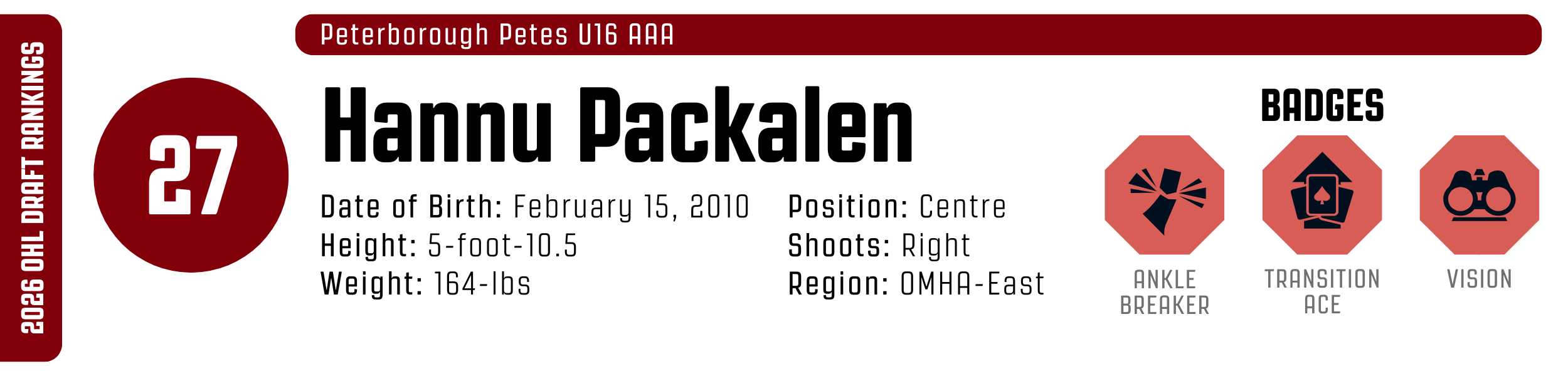
If you’re looking for the top playmaker in the draft, chances are that you will have stumbled upon Hannu Packalen at some juncture. He may not have the skating that some of the other prospects in this range have, but he makes up for it with his vision and ability to manipulate defenders off the rush. He can attack wide or to the middle with crossovers, opening up defenders and allowing him to work off them in the opposite direction. Although not explosive at an elite level, he does enough to win open ice, and gives himself time to uncover that next passing lane and generate a grade-A chance.
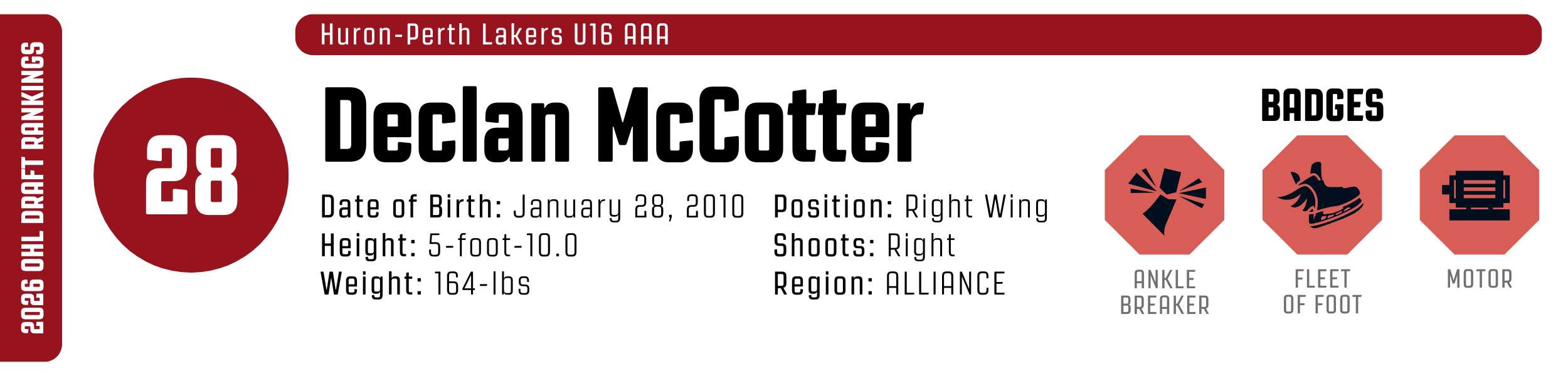
There is a lot to like in Declan McCotter’s game. He attacks everything with speed and intensity. Loose pucks, forecheck, play with the puck, it doesn’t matter: McCotter is coming at you. In the offensive zone, his tool kit is pretty robust. His handling coming out of explosive edgework is impressive, and his desire to make plays to the middle resonates with our group. The key to this is his ability to keep pucks away from opponents’ sticks and pressure. Off the rush, or while set up in the offensive zone, McCotter is always handling in space, and can divert a larger portion of his attention to scanning and finding that next play.
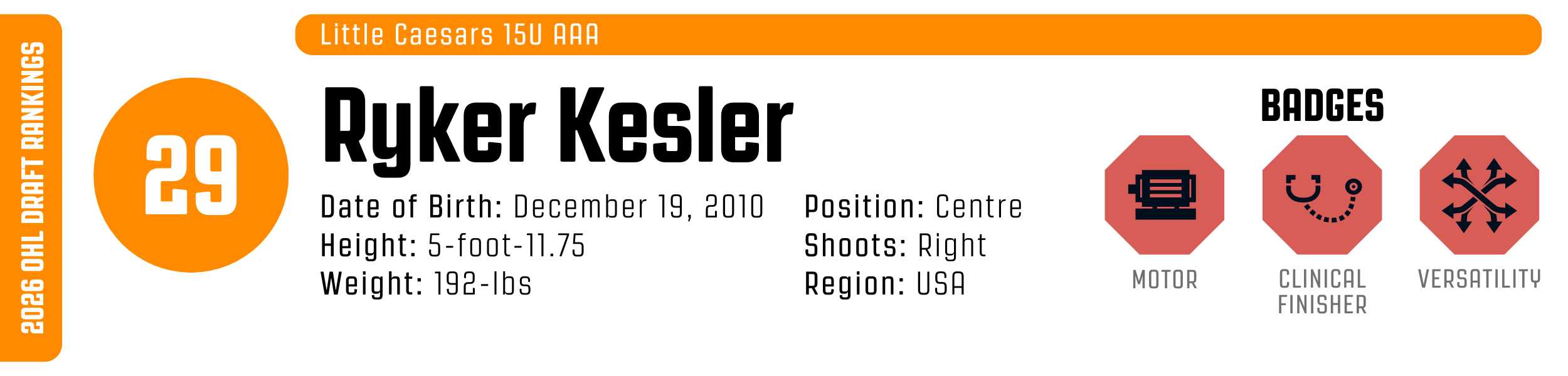
Ryker Kesler can dangle in a phone booth, bypassing sticks, keeping the puck for precious seconds, and buying time for teammates to get in position for his passes. His vision complements his stickhandling, making him a deft playmaker and compensating for his limited skating stride. Kesler also has parts of his father's game. His flashes of physical play will help him translate his next game to the next level. If he can improve his pace and mobility, he will become a highly valuable power playmaker.
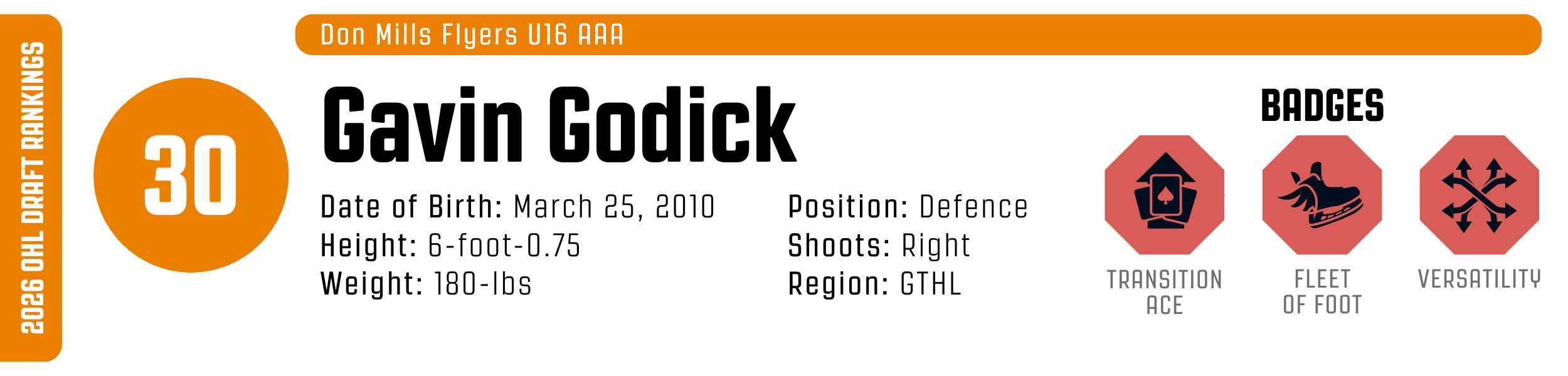
Looking for a steady, two-way defender in the second round? Gavin Godick checks every box. The patient, smooth-skating defender never overcommits on a play, reads and anticipates puck carriers, and then steps up to engage. With a long reach and great mobility, he angles, gaps, and cuts down space with textbook efficiency. His refinement and poise on breakouts and retrievals sees him calmly evade forecheckers before carrying the puck up ice. In the offensive zone, he shoots for deflections and spots teammates between layers. Never one to sacrifice defence for offence, Godick is an excellent game-manager. Diversifying his playmaking could improve his upside, but he projects as a top-four defenceman.
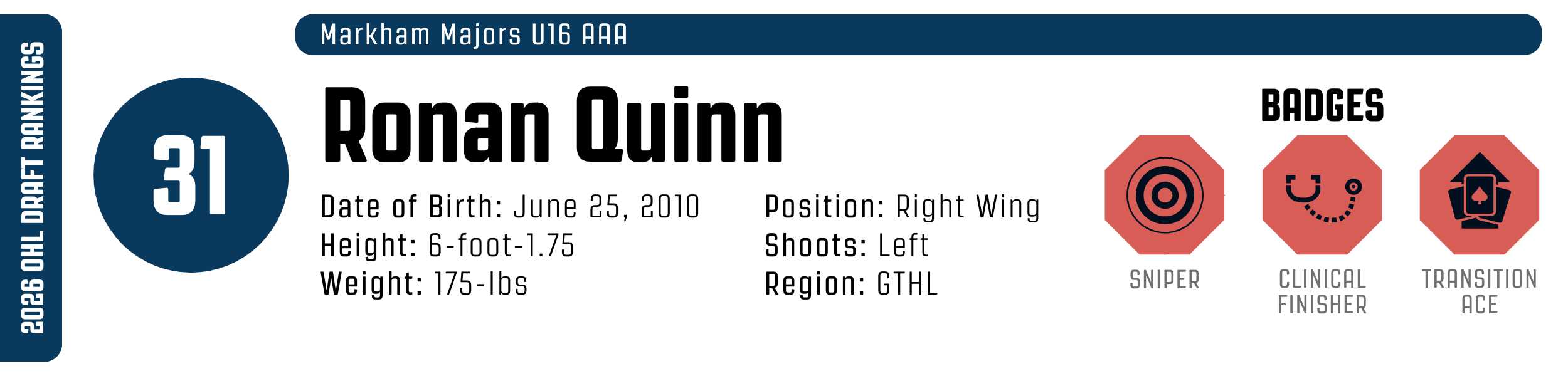
As the season has gone along, the winning details in the game of Ronan Quinn have kept getting better. The size obviously stands out right away, but the excitement comes from his ability to use that frame to his advantage. Quinn’s ability to work the wall is high-end, and as a result, he often finds himself coming off the exterior with some ice to work with, where he can display his playmaking ability. Whether cross-ice or down low on the give and go, Quinn has flashed some high-end passing skills. Additionally, Quinn has shown flashes of what is already an OHL-level release.
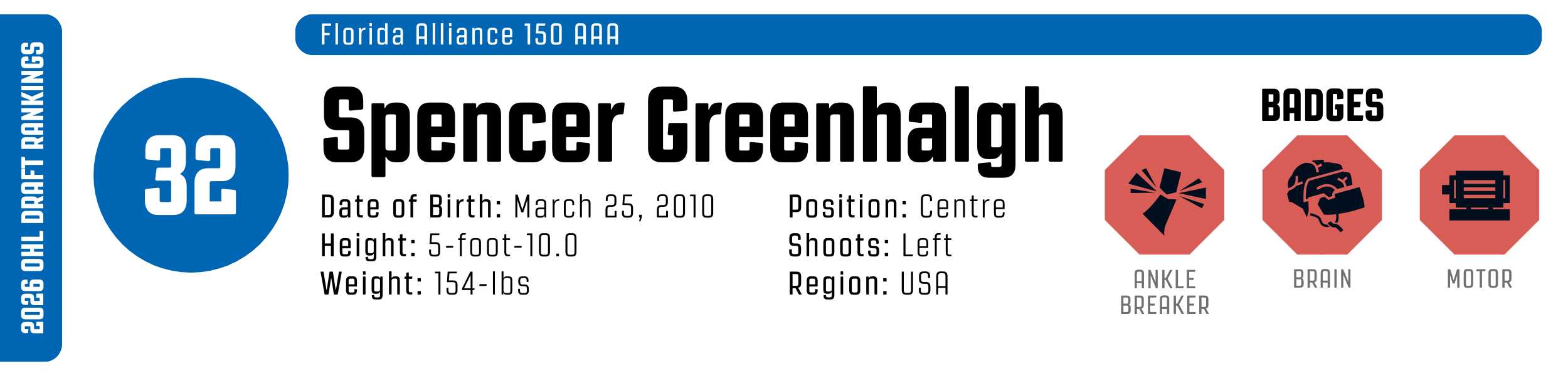
Ottawa-born Spencer Greenhalgh has spent the last three seasons playing south of the border, with the aforementioned Alec Walker. However, Greenhalgh isn’t overshadowed by his 6-foot-5 teammate; in fact, he’s the line’s dynamic play driver. He fearlessly attacks the offensive zone, setting picks, laying hits, and playing much larger than his 5-foot-10 build. High-end handling and skating, flashes of manipulation, and passing vision make him a dangerous rush creator, but his willingness to initiate contact also gives him an edge on the cycle, as he protects pucks, extends possessions, and makes plays off the wall. Greenhalgh will be an intriguing prospect to follow in the second half as the Florida Alliance pushes towards USA Nationals, but he has top-six scoring potential.
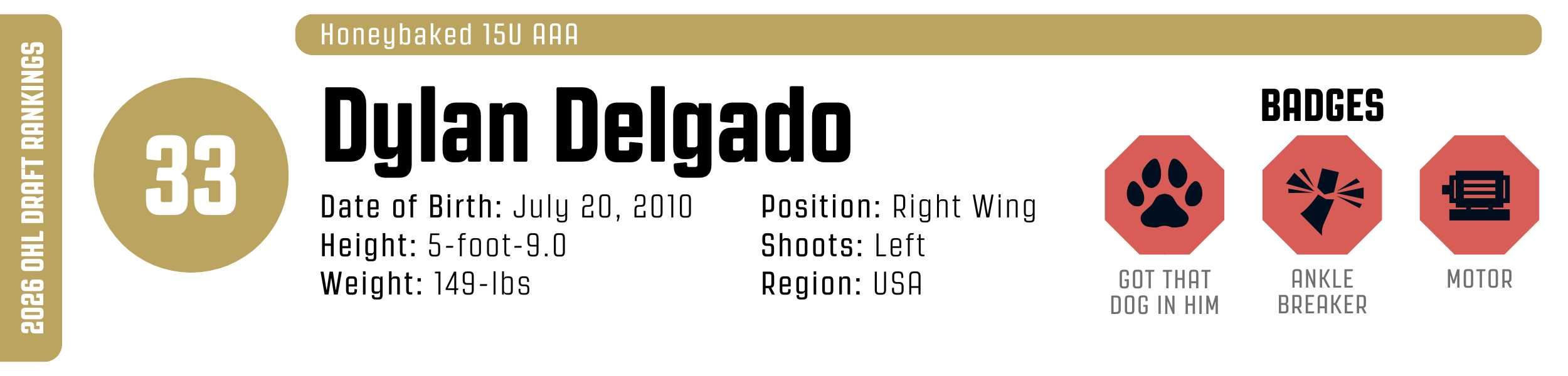
Dylan Delgado controls the game with a confidence few others in this class possess. He’s a slick puck carrier who constantly challenges and beats opponents 1-on-1. He uses fakes, cutbacks, and fast pace changes to attack space, dragging pucks in and around skates and sticks. He’s a smart puck protector with a sturdy base and powerful, quick edges, which allow him to fend off pressure and play through checks while dangling his way to the slot. While tremendously creative, Delgado also understands when to opt for simpler plays with the puck, uses his linemates effectively, and he has an advanced supporting, off-puck game as well. We anticipate that Delgado’s offensive style will round out over time, and he has enough of a fallback game to play a middle-six role at the next level.
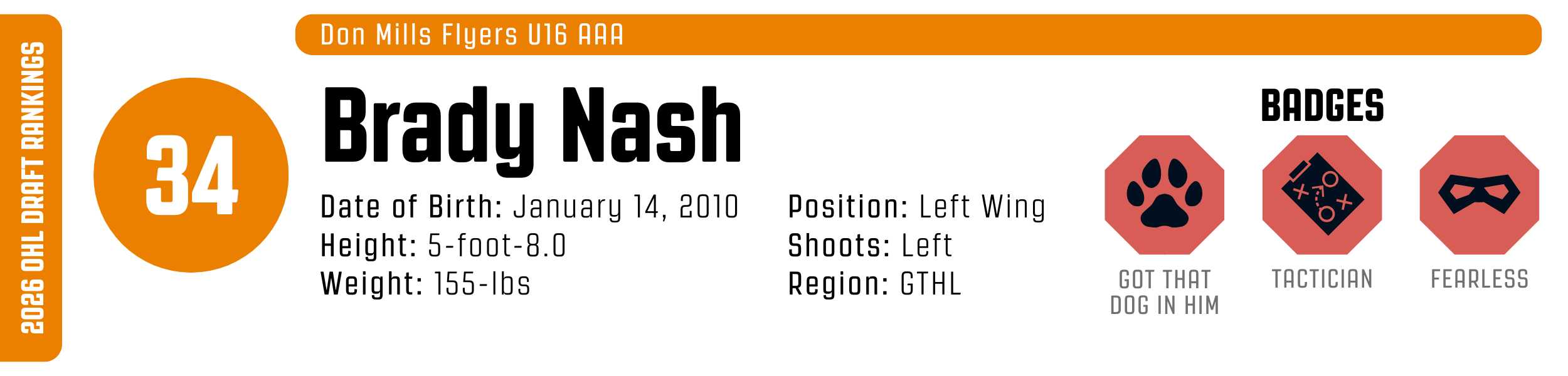
A master at turning puck steals into scoring chances, Brady Nash stands out every shift, as a worker bee with the skills to complement his forechecking game. He creates just as effectively off the rush and from the wall, instantly dangling defenders on his first touch and escaping pressure to link up with teammates or attack the slot. He also landed some of the largest hits we’ve seen this season. Normally, a player of his size would slide down the board, but Nash has all the elements necessary to become an outlier with his physicality, pace, playmaking, and rush game.
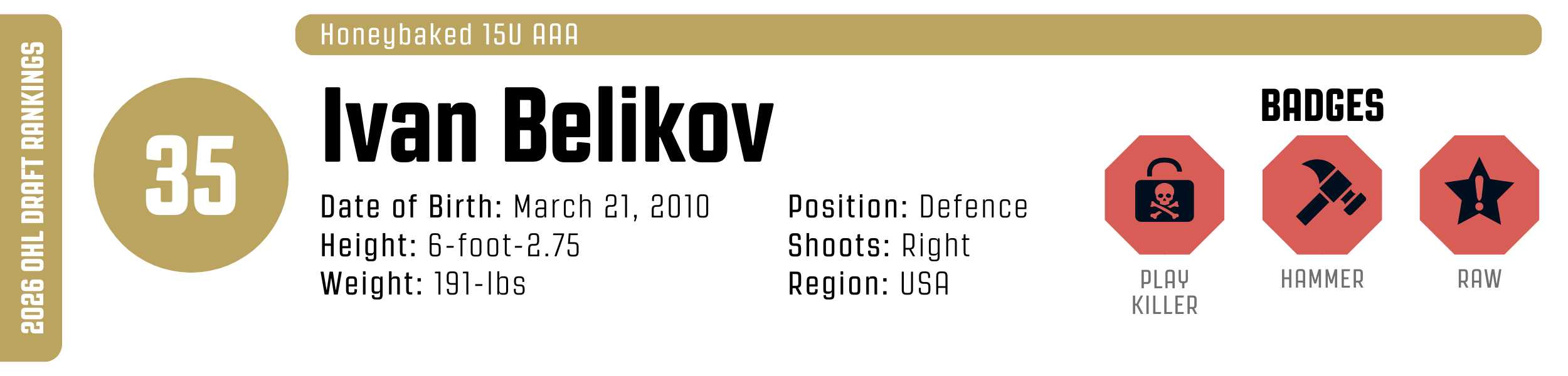
Ivan Belikov is a rangy, toolsy defender who embodies a lot of the characteristics that make up an OHL level defenceman. He uses his length to smother attackers in their tracks, quickly recover the puck, and use his quick feet to wheel into open ice. His ability to bank passes off the wall and open up additional lanes on the breakout are necessary for advancing levels, and this is an area of his game that shines brightly. He takes on massive matchup ice time, and is the anchor for a Honeybaked penalty kill that was tested all tournament long at the Whitby Silver Stick.
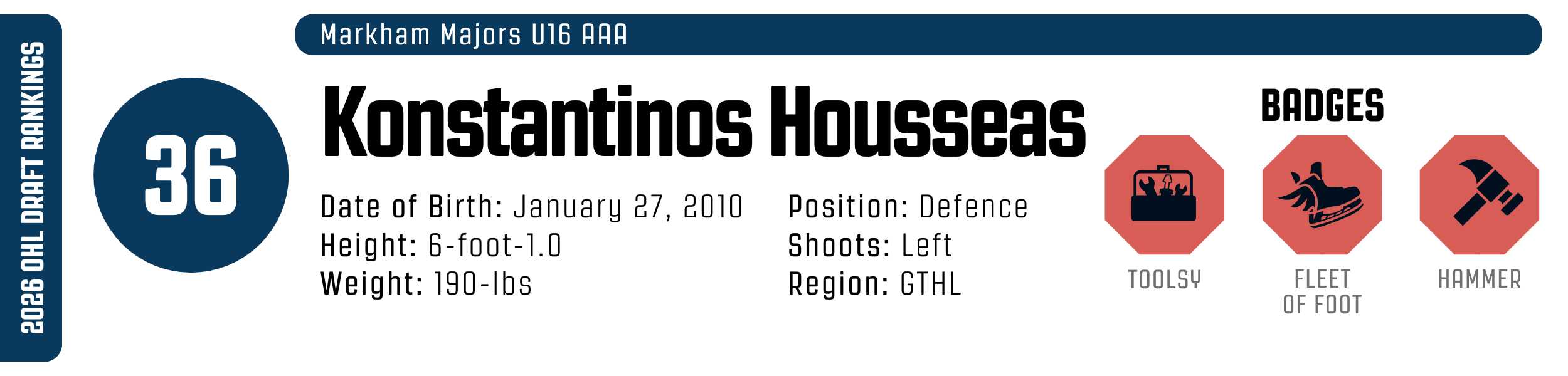
Konstantinos Housseas is one of the best stoppers in this class. Walling off the slot and the blue line, and closing fast on opponents on the wall with his mobility, he makes it hard for the opposition to organize the offence. There’s likely another level to his offensive game, too. He’s already activating in the play, distributing passes, and getting shots through the defensive box. If he can mix even more deception into his play, taking available space and challenging defenders, he could become an even better play driver and project as a two-way defenceman in the OHL.
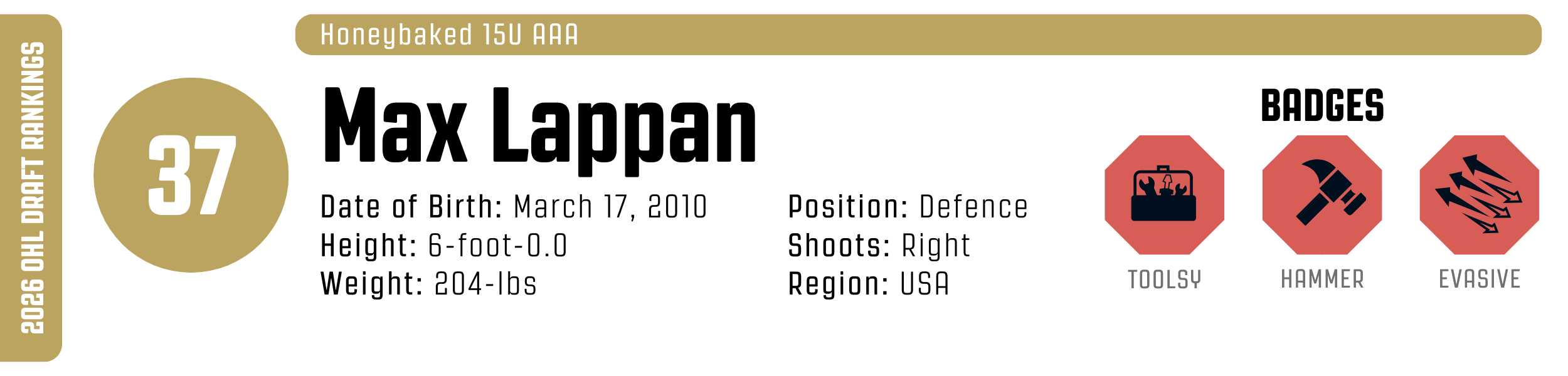
His game may not fly off the page, but Max Lappan has so many little details in his game that make him a reliable projection. Weighing in at 204-lbs, Lappan has the ability to lean on attackers while retrieving the puck, and leave them in the dust with his precision at pulling pucks off the dasher. On the topic of precision, Lappan supplies a very accurate and disruptive stick while defending the rush, which is set up with his ability to explode with his edges. In transition, Lappan can support the offensive unit, and has shown flashes of dynamic activations and sustaining offensive sequences.
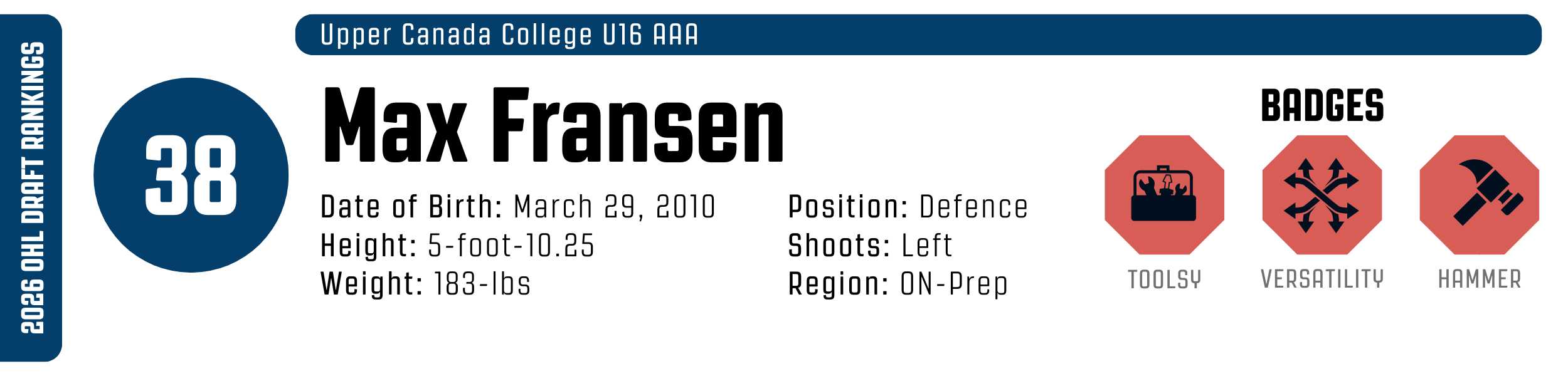
A versatile leader is the most succinct way to describe Max Fransen. Outside of his skillset, his on-ice communication is incredible. Not only is he constantly on the same page as his defence partner, but also with his supporting forwards and goaltender. It’s no surprise given those attributes that Fransen is one of the better defenders when it comes to retrieving pucks and getting them headed north. He uses edge fakes and his shoulders to lose the forecheckers, and open lanes out on either side of the ice. He also loves to join the rush, and play off give and go with his centres, with the goal of setting up clean offensive zone entries.
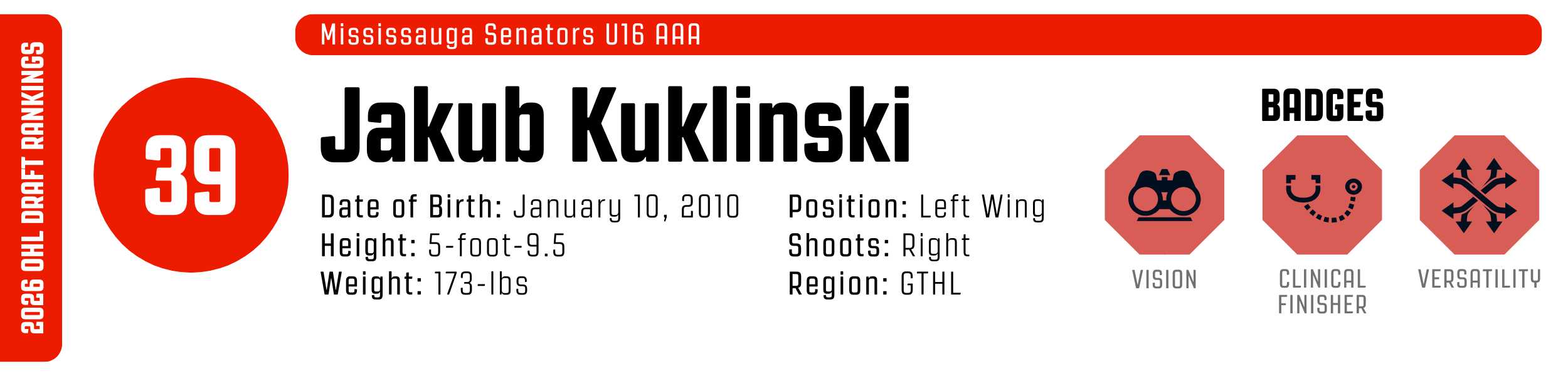
Calculated and tactical, Jakub Kuklinski has steadily improved in every viewing. Pacey and skilled, he’s added an impressively deceptive playmaking game to bolster his powerful shot in just half a season. With a high degree of awareness, Kuklinski adapts quickly to pressure and carves through the offensive zone with the confidence of a seasoned pro. In lower-scoring affairs, he’s equally as impactful, working tirelessly to win pucks back, establish the forecheck, and impose his will physically. As he adds more elements to his game, his ceiling continues to rise – don’t be surprised if Kuklinski climbs our final board in June.
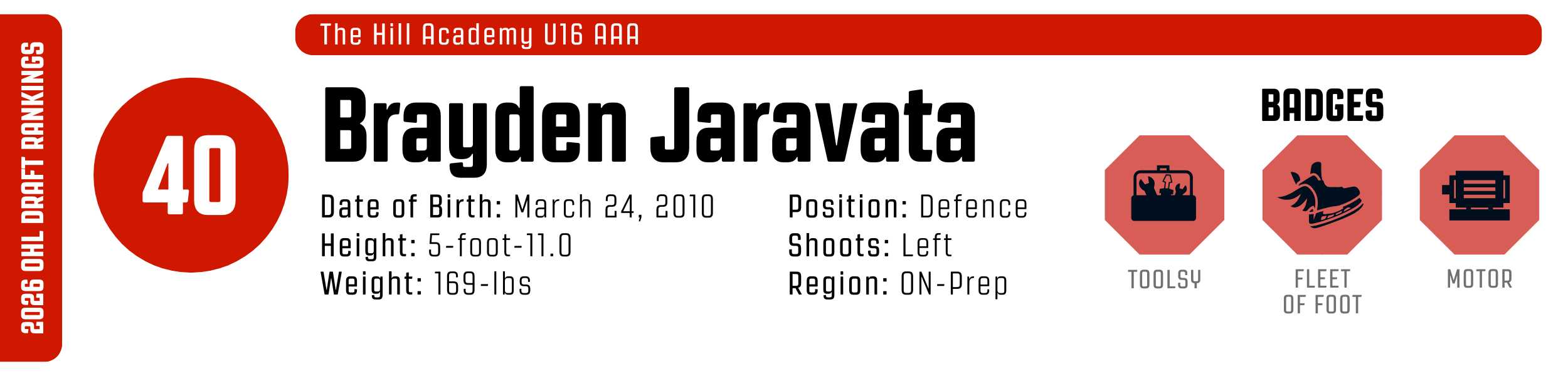
Brayden Jaravata is an offensive accelerator. Give him the puck inside space and, with a fake, a couple of steps, and a clever next pass, he will open up even more space for the attack, snowballing the play toward a scoring chance. His skating ability and awareness serve him well on defence, too. Rotating well, pushing players to the outside, and defending rushes, he controls the play, reducing the time his team spends in their own end. A puck-mover first and foremost, Jaravata could fill a top-four role in the OHL and a power play spot.
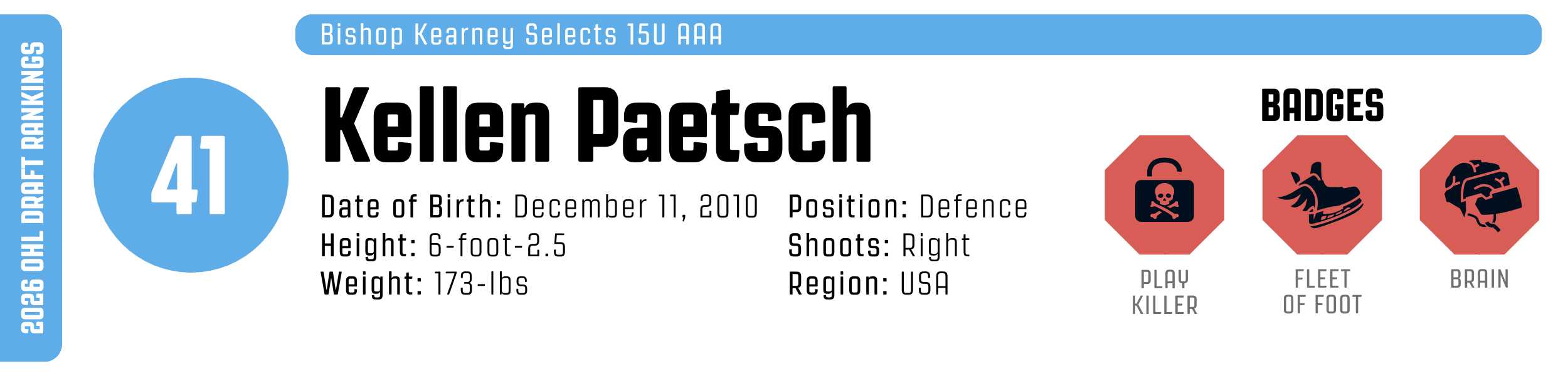
Debuting lower on our first board, don’t be surprised to see Kellen Paetsch work his way up come season’s end. As far as rush defenders in this class go, Paetsch headlines the group, using his length to steer everything to the perimeter, while maintaining the lateral footspeed to adjust to attackers moves, and attempts to get around him. His four-way agility makes it extremely difficult for opponents to beat him wide or to the middle. Paetsch has also shown high-level offensive decision making, manoeuvring pucks from the perimeter and the point to shooting areas in the high slot and middle ice. Expect the tools to keep shining and his confidence to keep growing, which should make for a great debate on our final board.
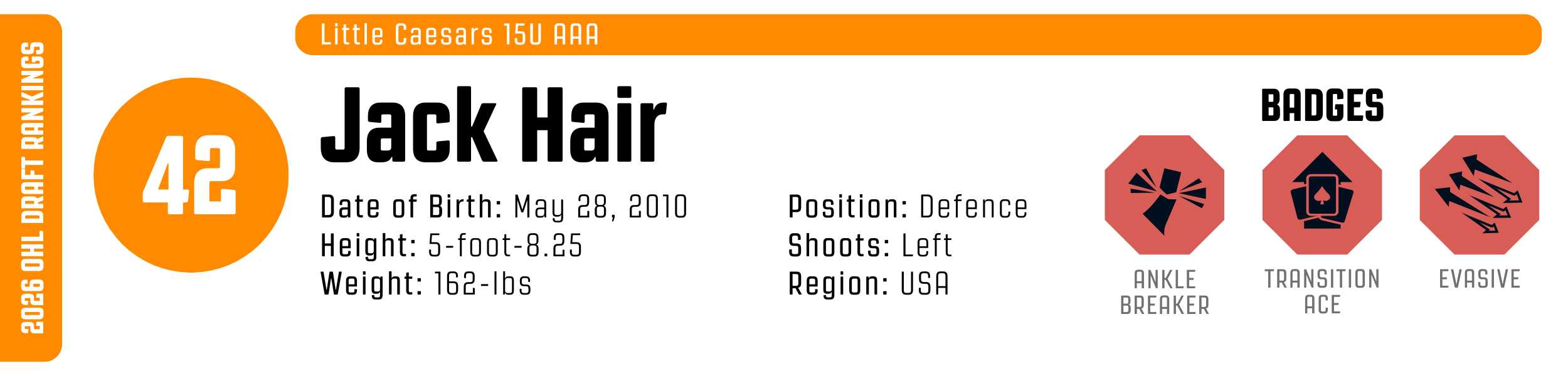
Jack Hair is one of the most evasive defenders that this age group has to offer. He complements a strong base with a willingness to attack and manipulate coverages, leaving opponents in the dust in transition. In space, Hair is a dangerous distributor who is always looking to put his teammates in favourable advantages, delivering pucks to pockets of ice that they can make ensuing high-level plays in. Hair also bodes the confidence to activate in the offensive zone, using ten-and-two and quick edge cuts to create uncertainty for defenders, allowing him to open up shot lanes to the net.
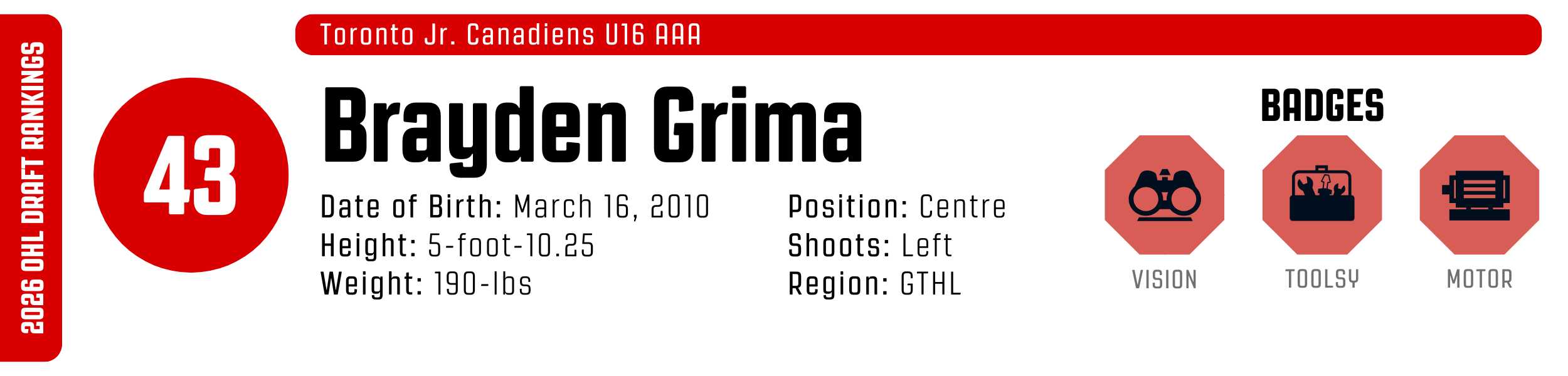
One of the best shooters in the class, Brayden Grima's release combines velocity and power. He fires with almost no drawback and knows how to build plays with short passes to get to a spot where he can use his release. His efficient playmaking, strong build, and crushing physicality should help his OHL transition. Becoming more dynamic and agile would create even more offensive opportunities for him, almost assuring him a scoring role at the next level.
Read More: Brayden Grima stands out at Titans Early Bird
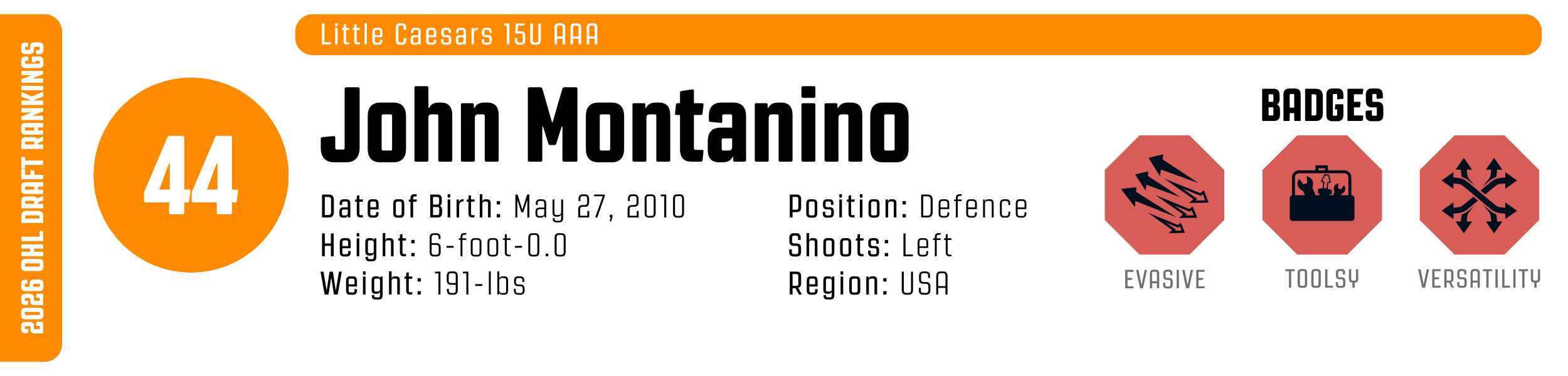
Sarnia-born Little Caesars blueliner John Montanino has a good blend of athleticism, and both offensive and defensive skills. He defends rushes well, matching attackers’ footwork, and pushes the play forward with precise passes and shots from the point. His all-around solid foundation could make him a plug-and-play defender at the next level. Some technical development could free his offensive game up even more.
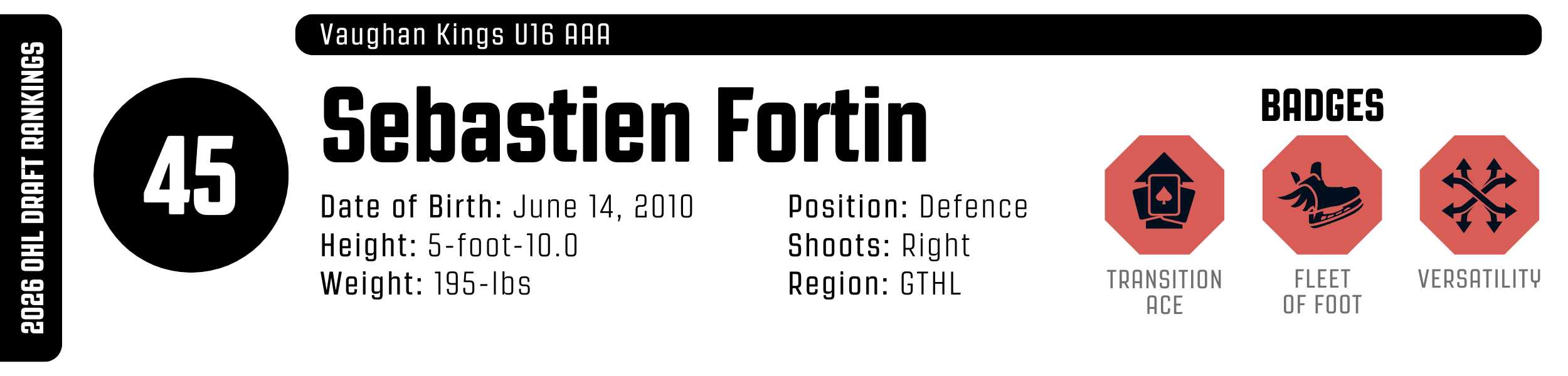
Few defenders in this class have Sebastien Fortin’s combination of rush activations and physicality. With impressive four-way mobility and natural explosiveness, Fortin regularly rushes up ice and shows a willingness to make plays, attack at angles, and beat defenders on his way to the net. He also uses that skating ability to get stops on the rush, seeking contact at every instance and getting stops on the entry with jarring hits along the boards. Leveraging that physicality to kill the cycle and box out in front of the net more effectively will be something to watch in the second half, but Fortin has top-four upside in the OHL.
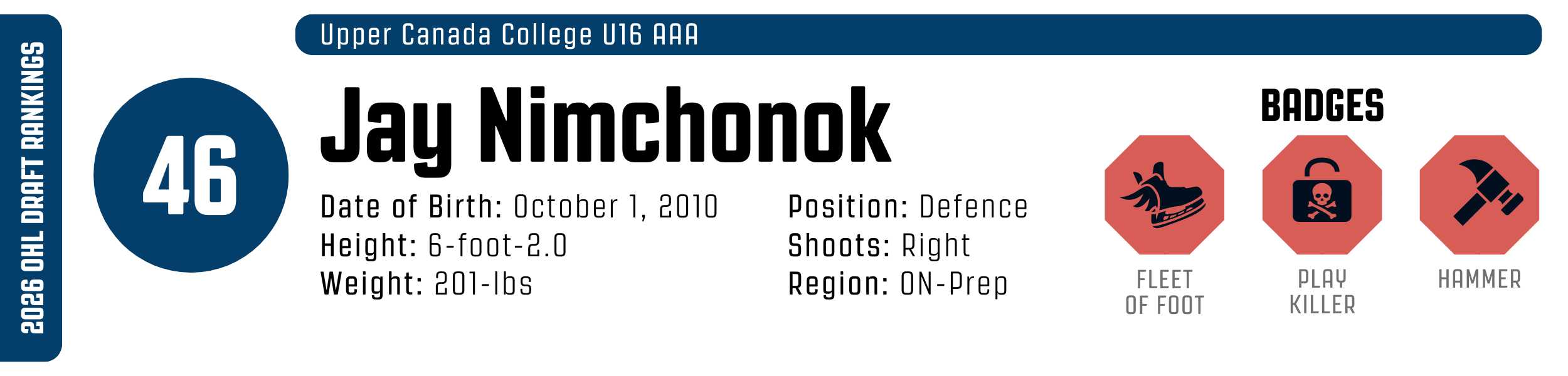
In every sense of the word, Jay Nimchonok is a bruiser. Attackers looking to gain entry to the offensive zone on his side will almost assuredly have to pay the price physically. What’s impressive about Nimchonok’s game is how well he can control his body, and instead of hitting to strictly inflict pain, he’s hitting to tactically separate his man from the puck. His timing while defending entries is an asset, using smaller, choppier, crossovers to time those last couple strides without sacrificing speed and close out ability. While the offensive ceiling may not be sky-high, Nimchonok is the kind of player who costs teams an arm and a leg to acquire at a trade deadline.
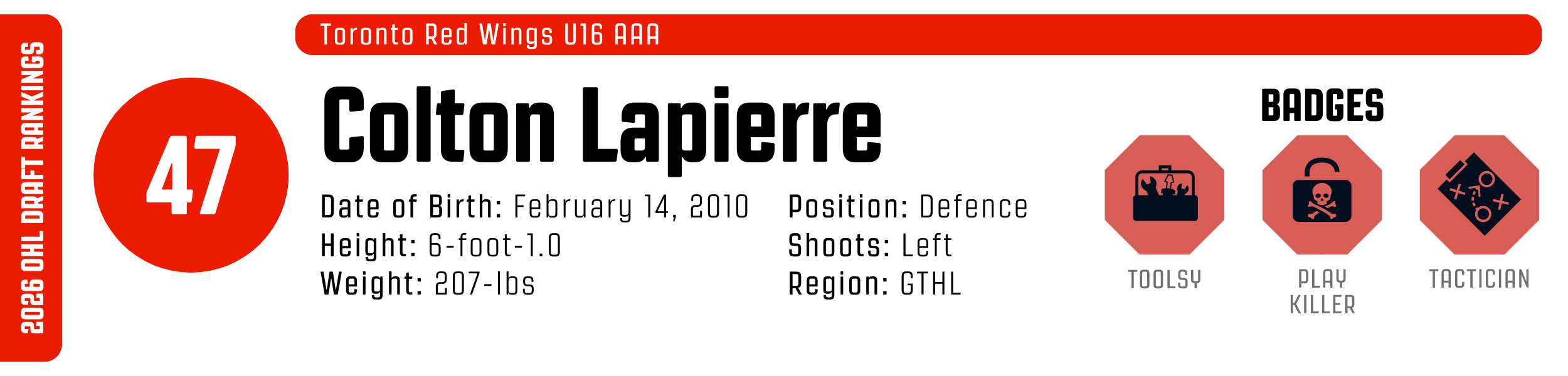
Physically gifted, Colton Lapierre is a suffocating rush defender. Leveraging his above-average mobility, range, and long reach, he angles, gaps up well as he matches forwards’ speeds, and steers them to the boards. Detailed and patient, he never overcommits on a play, shutting down the opposition with impressive efficiency. He’s flashed higher-end offensive instincts at times this season, too. Increasing the frequency of his activations could improve his long-term upside, but even if they remain just flashes, Lapierre has all the makings of a play killing, shutdown OHL defender.
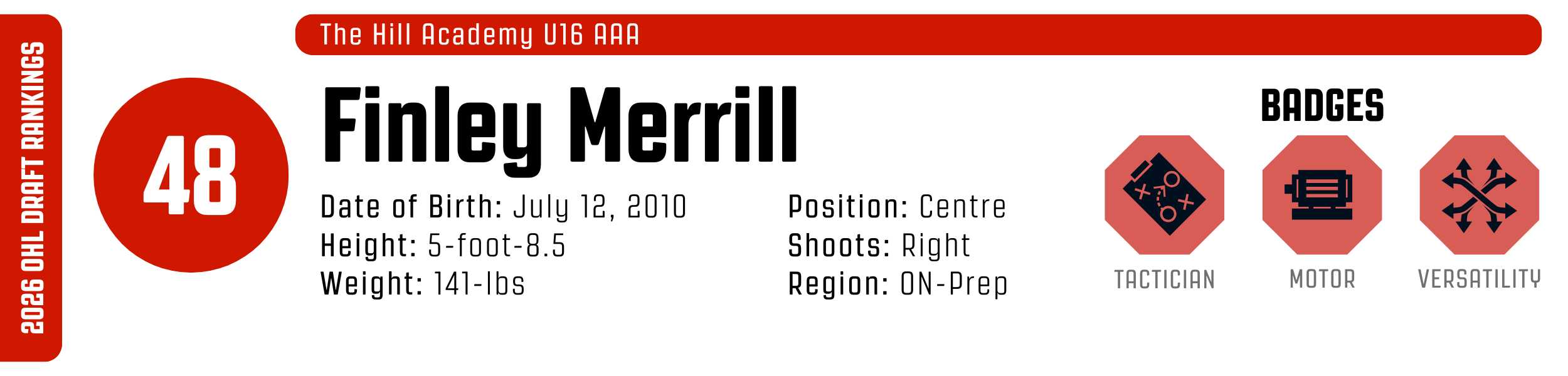
It’s easy to see Finley Merrill’s dynamic and intelligent game translating well to the next level. A well-rounded scorer who builds plays effectively, Merrill generates offence in a variety of ways, attacking the inside before shooting, or spotting teammates with passes through layers. Armed with deception and the ability to play through checks, he’s acutely aware of potential options, and a fast problem-solver when initial plans go awry. Adding a touch more power and pace to his game could allow his puck skills to shine even more at the next level, but he’s a highly projectable player with a complete package of tools.
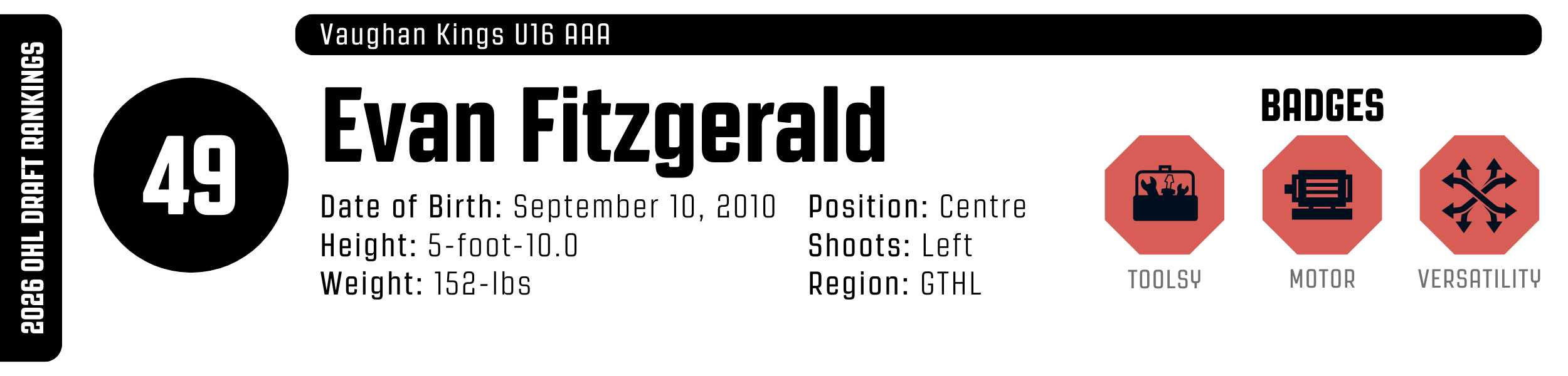
Cerebral is the word that comes to mind when evaluating the game of Evan Fitzgerald. Every detail in his game is calculated. Players with this archetype are sometimes exposed when the team’s system breaks down, but with Fitzgerald, he is also able to make something out of nothing a lot of the time. Worth noting, there are even more layers of skill and creativity to his game that don’t always shine through with his buy-in to his team's system. Fitzgerald is most dangerous offensively off the rush, where he picks up speed in the neutral zone, backs defenders up, and shows off his tool kit. He can beat defenders wide or stop up to make a play, and always follows his plays to the front of the net.
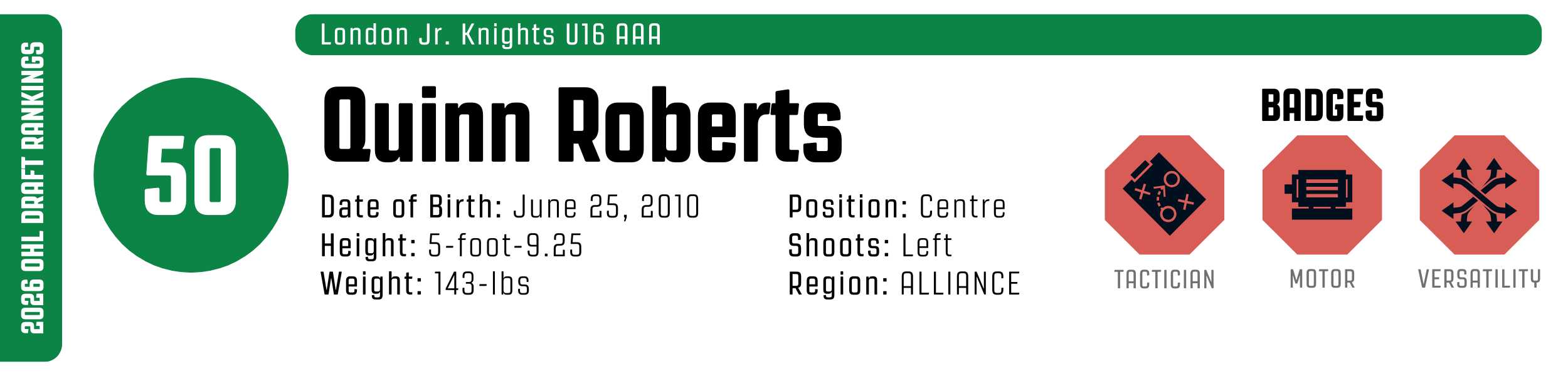
There's not a skill missing in Quinn Roberts' game. He can connect passing plays, pop open for a return feed, and score from around the slot. But also pick up speed off the rush, back up defenders, and drive inside. His tactical feel for the game, vision, and two-way engagement, along with his all-around abilities, could make him a play-driver on a middle-six line at the next level.
Honourable Mentions: Caden Petrovsky (Niagara North Stars), Ethan Davidson (Central Ontario Wolves), Finn Ellery (Central Ontario Wolves), Gabriel Barakat (The Hill Academy), Matthew Taylor (Ajax/Pickering Raiders), Owen Loftus (Don Mills Flyers), Robert Knight (Mississauga Senators), Ryder Nobes (Markham Majors), Rylan Da Costa (Huron-Perth Lakers), Ethan Bridges (Huron-Perth Lakers)
Our OHL Draft Scouting Team:
Ben Jordan - Ontario Crossover Scout
Lauren Kelly - Ontario Crossover Scout
Jagr van Brederode - Ontario Crossover Scout
Kareem Ramadan - Ontario (GTHL) Regional Scout
Chase Windsor - Ontario (ALLIANCE) Regional Scout
Matthew Burns - Ontario (OMHA West/USA) Regional Scout
David Saad - Ontario (HEO/OMHA East) Regional Scout
Jacob Titus - Ontario (HEO/Goalies) Regional Scout
David St-Louis - Special Assignment Scout
Badges Definitions:
Sniper: A great shooter
Clinical finisher: A great net-front scorer
Vision: A great playmaker
Fleet of Foot: A great skater
Evasive: A player with a lot of small-area manoeuvrability or agility on their edges
Ankle Breaker: A player with great puck-handling skills
Chess Master: A great manipulator
Brain: A player with great hockey sense
Tactician: A player with great hockey sense away from the puck
Hammer: A player who is punishing physically
Got That Dog In Him: A player who shows up in big games
Fearless: A player who doesn't back down from challenges
Motor: A player with a high work rate
Versatility: A player who can fill a variety of different roles
Toolsy: A player with high-end tools
Play Killer: A player who gets defensive stops
Transition Ace: A player who moves the puck well
Raw: A player with a lot of unrealized potential



