Elite Prospects 2026 WHL Draft midseason top 50 ranking





The 2026 WHL Prospects Draft is approaching, and this group is looking to set some records.
The presumptive No. 1 pick, Madden Daneault, is currently scoring 4.35 points-per-game, the second-most in AEHL U15 history – and No. 1 is within striking distance. Not to be outdone, linemates Parker McMillan and Teagan Dernisky are No. 2 and 3, respectively, in CSSHL U15 Prep point-per-game history. The former is just seven points away from the all-time league record, too.
Meanwhile, defenceman Eli Vickers has become the second-highest scoring defenceman in CSSHL U15 Prep history, while Aidan Potash has already made BCEHL U15 history.
And that’s really just scratching the surface of how impressive this group has been.
There are also some major factors in this draft class, primarily around the WHL’s surge in American recruiting. This season, over 100 USA-born players have suited up in the league, nearly triple last season’s total, and the big-name signings keep coming, including top 2010s Ezekiel Kaebel (Edmonton Oil Kings) and Easton Dozark (Portland Winterhawks).
To keep things simple, we’re restricting our ranking to only include WHL-eligible USA players who have played in the major tournaments in Western Canada this season. The top name in the age group who meets the criteria is Owen Moulton. The Shattuck St. Mary’s product is far from a guarantee to report to the WHL, but on pure skill, he’s right there with our No. 2-ranked prospect.
Our scouts have been hard at work since the summer time, attending just about every major event possible and racking up well over 600 reports already. This ranking reflects which players we anticipate will provide the most value in the WHL, a combination of upside and the likelihood of filling a top-end role, and not worrying much about reporting.
With that out of the way, let’s kick off the ranking with the name that certainly will come as no surprise.
.jpg)
After winning the AEHL U15’s scoring race, championship, and playoffs MVP last season, Madden Daneault returned to the level, where he’s tacked on an additional point-and-a-half per game while captaining the team. If that wasn’t enough, he’s been a standout in three AEHL U18 games and has six points to show for it.
It’s rare that players with Daneault’s level of competitiveness, drive, and skill come through the ranks. Already taking a pro-style approach to the game, he battles relentlessly for every puck, never stops moving his feet, communicates with his teammates, and racks up dozens of contact plays in a single game.
Then, the explosive shooting and playmaking skills shine. Always looking to get inside and capable of manipulating defenders to do it, Daneault controls the game for shifts at a time. Plus, he has the in-tight handling skill, finer puck protection skills, and quick-possession game to play any style. While there are times when his shoot-from-anywhere mentality masks his playmaking, he’s becoming a more balanced player in crunch time. He projects as a superstar WHL centre and will be a name to remember for the 2029 NHL Draft.
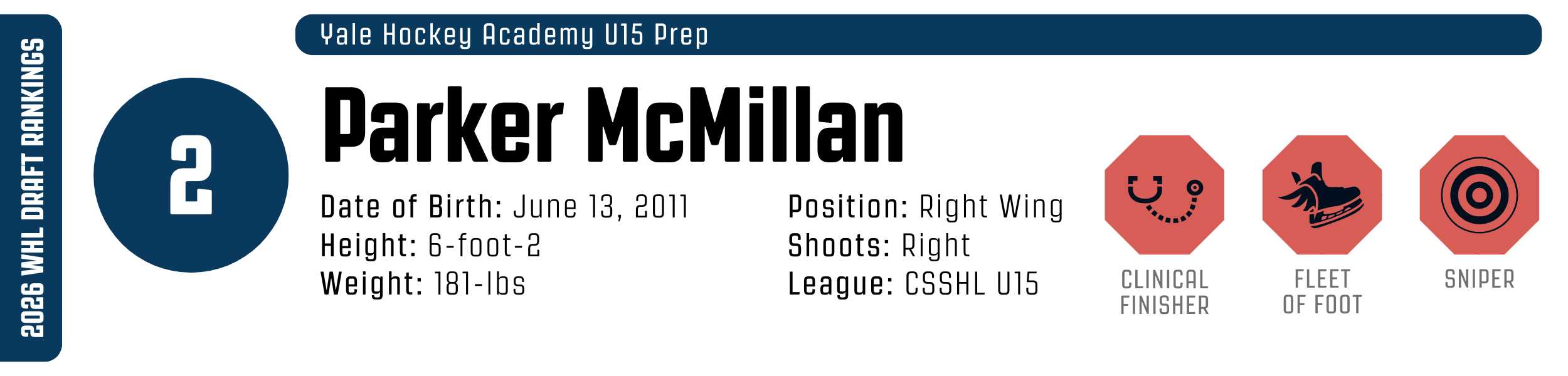
While the debate between Daneault and Parker McMillan was brief for our group, we all believe no player in this draft comes close to embodying the power forward archetype as McMillan does.
A tall, explosive winger, McMillan is a cheat code at the under-15 level. His 6-foot-2 frame, contact game, and protection details are already beyond his years. Hip-pocket holds, inside-lane hunting, and proactive physicality all blend with ridiculous lower-body power, making McMillan a unique quantity in this draft.
McMillan treats the rush like a 100-yard dash, taking outside-to-inside routes. Already an overwhelming shooter, he’s also a deft handler in small spaces, operating with a wide selection of dekes and deceptive feints. While he suffers from tunnel vision and relies heavily on his physical advantages, his playmaking flashes were evident throughout our viewings. He has every element to be a play-driving, top-line winger in the WHL; a player that may as well have been made in a lab to dominate junior hockey.
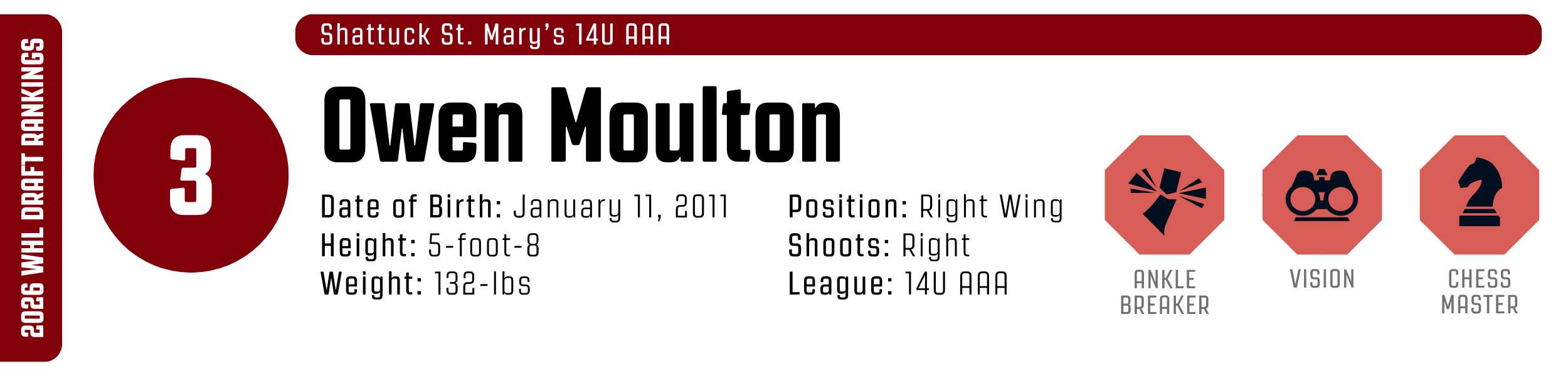
Owen Moulton is the engine of Shattuck St. Mary’s 14U team, the No. 1 team in the country. A premier dual-threat weapon, he combines elite vision with a deceptive scoring touch to dominate every sequence he touches.
Moulton’s offensive engine is fuelled by dynamic skating and high-end processing. He uses linear crossovers to attack downhill at speed, maintaining a scanning posture that allows him to dismantle defensive structures before they can settle. Whether he’s threading a hip-pocket seam pass or rifling a snap shot off a deceptive drag move, his execution is clinical. He consistently manipulates coverage, attracting pressure to open lanes for teammates while remaining a constant threat to drive the slot himself.
Beyond the skill, Moulton plays with a pro-style jam that makes his game remarkably translatable. He is an interior-driven force who relishes physical engagement, frequently finishing checks and outworking larger defenders to claim high-danger ice. While his slight frame may be a factor early on, his combination of pace, high-end skill, and relentless compete should see him become a league game-breaker, provided he chooses the WHL route.
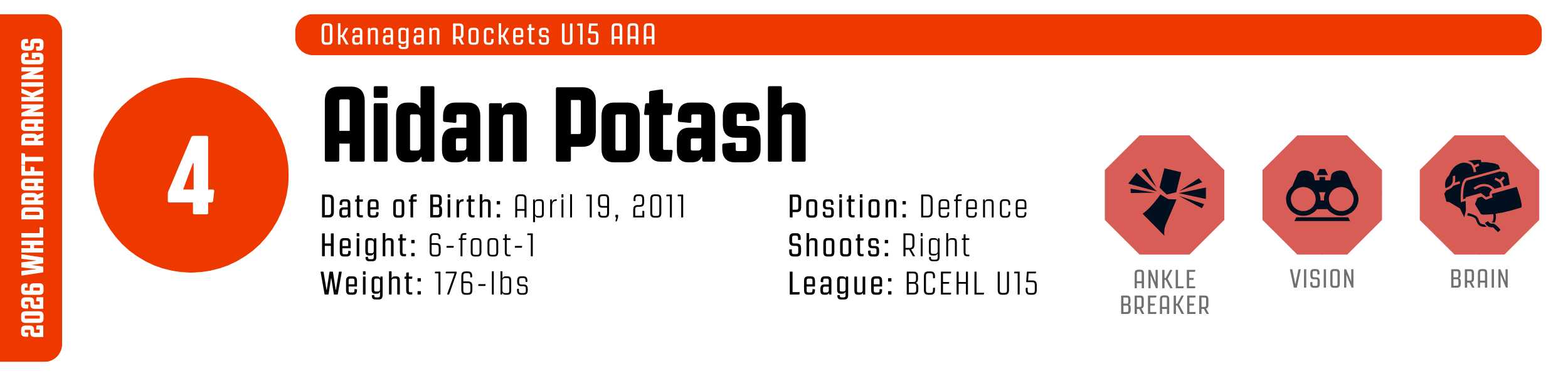
There may not be a defender in this draft with the upside of Aidan Potash. Already standing at 6-foot-1, Potash is the standout game-changer of the BCEHL U15 league, constantly tilting the ice into his team's favour.
Creative, confident, and skilled, it isn’t out of the ordinary to see Potash deke pressure in open ice and create chances. He's a uniquely flashy and dynamic creator for a defenceman, especially one with this stature. He leverages his frame into his shooting to create high-velocity volleys from the point, and he’s a willing activator and distributor. He draws in defenders to create screens and space, flexes plus agility, and his details are already high-end.
A battler, pushing strength unmatched at this level, Potash denies space with his length, kills plays proactively with his patient feet and stick work, and while he is still learning his depth and stability across his skating, projects to be a high-end mover down the road. With the potential to grow even more, Potash’s confidence, play-driving, and disruption potential should mean a top-pair role in the WHL in the near future.
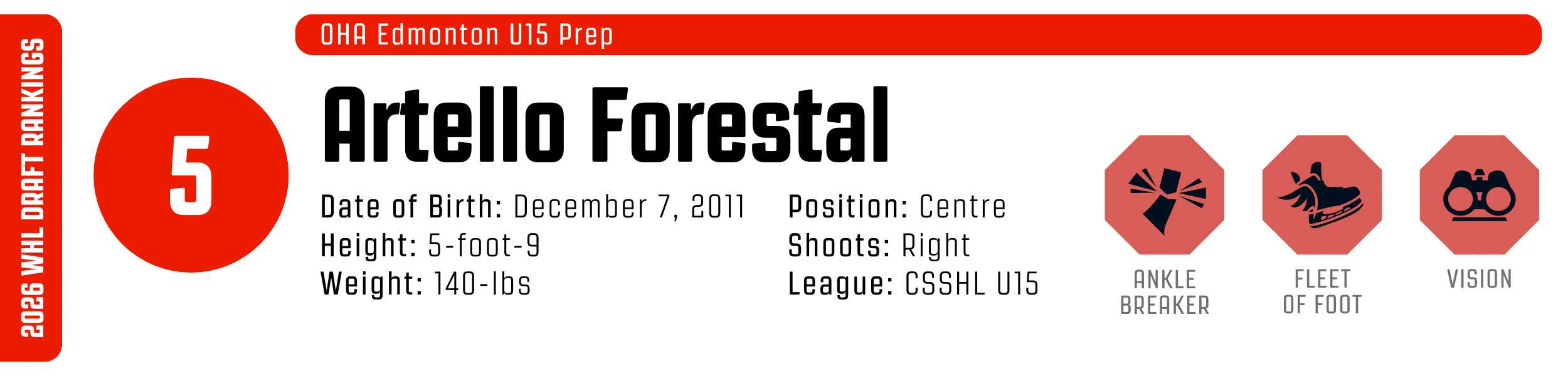
Perhaps the most purely skilled player in the draft class, Artello Forestal makes the impossible look routine and adds an additional layer of flash and projectability to just about every touch. When he’s flying down the wing, he doesn’t just drive past opponents; he fakes one way, goes the other, and then powers through their recovery route, for example.
At full speed, Forestal easily manoeuvres through defenders, even the best at this level. He manipulates opponents, accelerates through his dekes, and works outside-in regularly. Likewise, he’s a skilled off-puck attacker, using his speed to time dashes into space and instantly firing.
After starting the season on what looked like it could’ve been a league-leading campaign, he missed several months due to injury and hasn’t quite played at his previous high levels. Still, he showed well at the John Reid Memorial Tournament for the second straight year. He projects as a top-line, high-scoring forward with off-puck value.
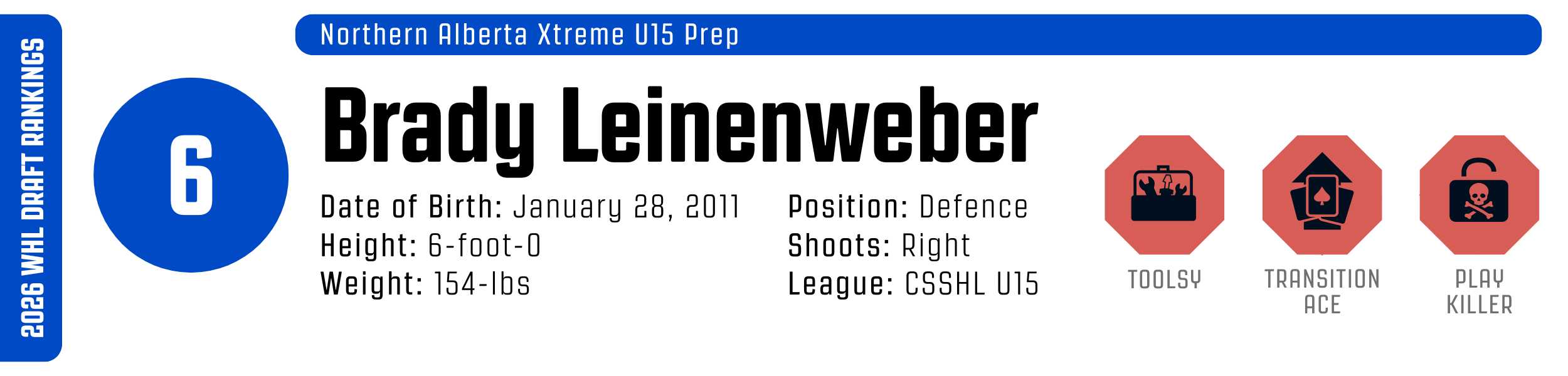
Brady Leinenweber is the definition of smooth. The high-IQ blueline commander for the Northern Alberta Xtreme, he dictates the game’s rhythm through poise and reach. From highlight reel rushes to shutting down top lines, he has established himself as the top, all-situations defenceman in the class.
Leinenweber’s game is built on elite puck-management and high-end processing. He pulls rims off the wall effortlessly, transitioning play into his hip pocket before launching tape-to-tape breakout passes. In the offensive zone, he’s a creative catalyst who manipulates wingers with subtle weight shifts and deceptive fakes to open downhill lanes. Whether he’s walking the line on the power play or executing end-to-end rushes, his coordination and soft hands allow him to navigate through layers of pressure with remarkable ease.
While Leinenweber is still adding explosiveness and a consistent physical edge to match his frame, his defensive habits are fundamentally sound. He gaps well and uses his range to neutralize rush attempts, projecting as a minute-eating, top-pair force. His combination of size, vision, and offensive ambition should see him become one of the league’s most impactful two-way orchestrators.
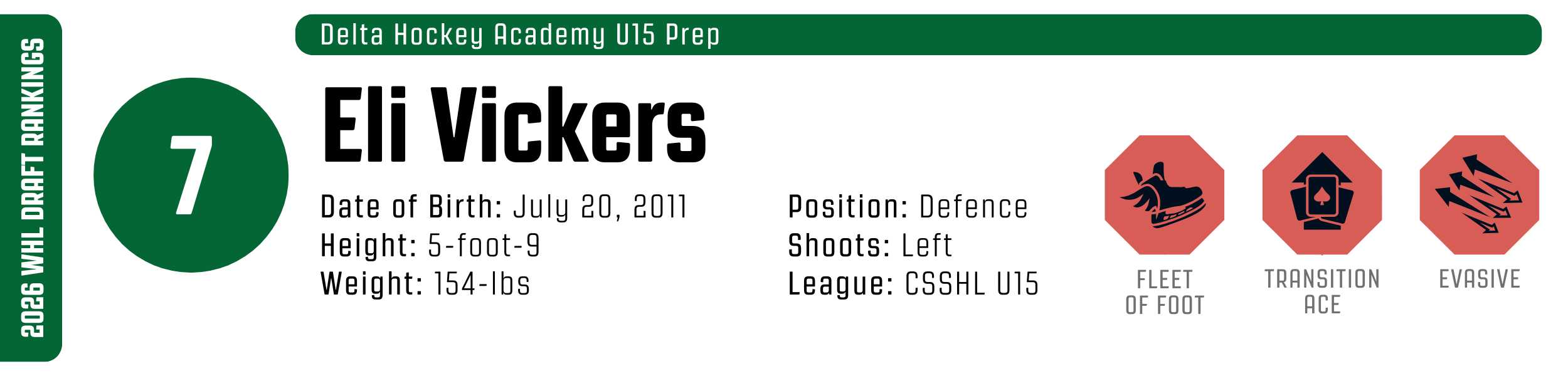
The most dynamic offensive defender in the draft, Eli Vickers, puts on a clinic whenever he is on the ice. An uber-explosive skater, handler, and a daring puck carrier, he already manoeuvres pressure off the rush with ease, blending deception through body manipulations and route feints.
Always drawing in pressure, Vickers’ protection skill and the freedom with which he moves naturally open up space for others. Deft cutbacks as pressure closes in create space, leading to outnumbered downhill attacks where he fakes shots to freeze defenders.
Vickers is undersized, but there is still considerable physical runway available across his profile. He will have to rely more on his processing and skating to get stops over his punishing physicality. He projects as a potential No. 1 WHL defenceman – a point-producing play-driver.
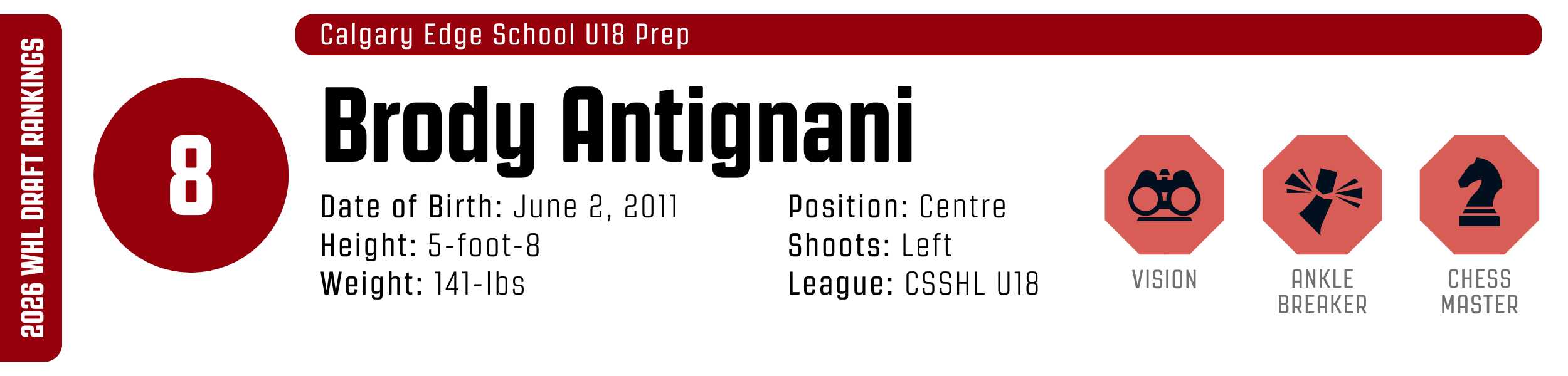
The offensive catalyst for Calgary Edge School’s U15 Prep program, Brody Antignani, is already a master at controlling the pace of the game.
Antignani differs from most of the top forward prospects in this draft, relying less on physical advantages and overwhelming speed, playing a more cerebral game, based on outthinking his opponents. He slows the transition down, leveraging delays and his plus-tools to stretch the puck east-to-west. He connects with give-and-gos, slips, layers, and expert weighting, providing high-end off-puck pass support when he doesn’t have control.
Antignani is also very adaptable, scoring through both redirections and shooting skill. While Antignani will undoubtedly have to improve his skating and pace to see the same level of success in the WHL, he’s a can’t-miss, top-six projection due to the level of control and skill he exerts across the game.
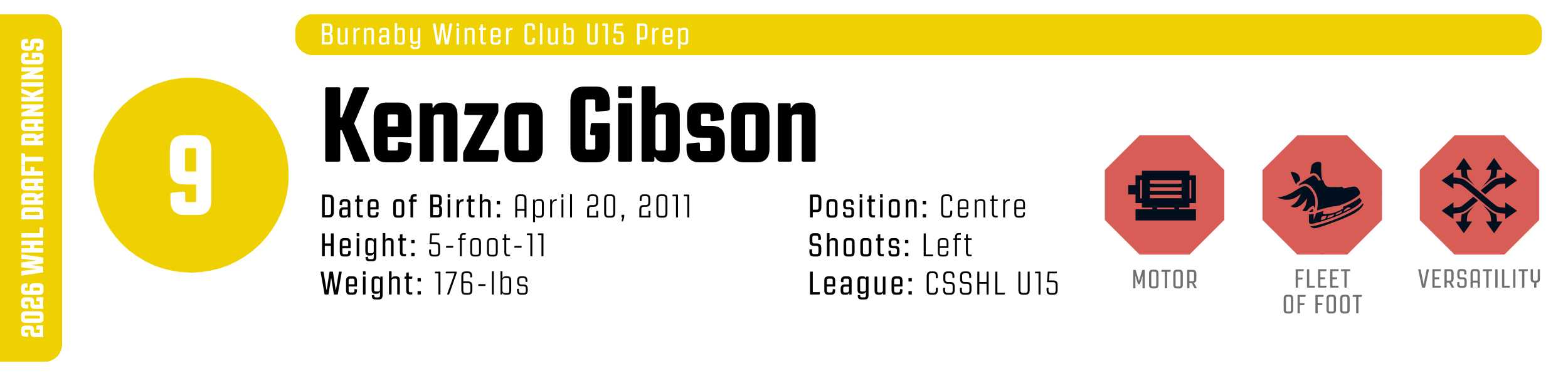
Kenzo Gibson is an admission-price talent who dictates the game through elite athleticism and a relentless power forward engine. Armed with a terrifying first step and superb top speed, Gibson gallops around the ice, hounding pucks and absorbing contact with a deep, strong skating stance. He’s a high-volume individual creator who thrives in transition, utilizing deceptive inside-outside dekes to dismantle defensive structures at full flight.
A master of the hip-pocket protected cut, Gibson uses his strength to muscle through contact and claim the middle of the ice. His shot is a legitimate WHL-calibre weapon, characterized by heavy downforce and incredible precision. Whether working off the cycle or utilizing explosive crossovers to build outside speed, he’s a constant threat to tilt the ice.
While his high-tempo style can occasionally outpace his support, his clutch instincts are undeniable. He’s a resilient worker who backchecks with ferocity and relishes physical engagement. With that skill set, he’s easy to project to the WHL, likely as a top-six forward.
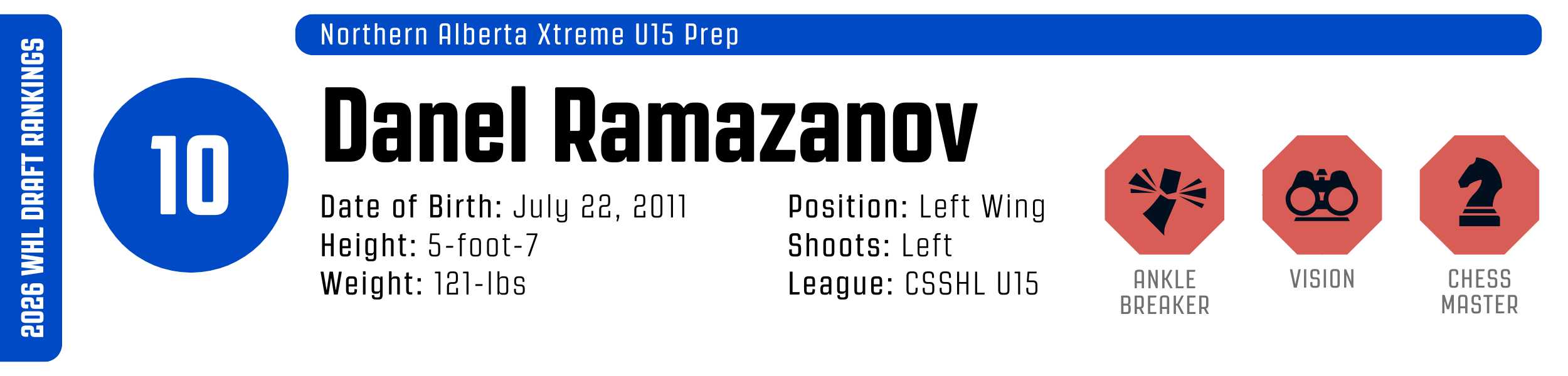
Danel Ramazanov is a human highlight reel. An electrifying offensive catalyst who forces the game to be played at his breakneck speed, he possesses the rare ability to dismantle defenders at Mach speed. Whether he’s attempting a spin-o-rama or slicing through a defensive triangle, Ramazanov is a constant threat to turn any neutral zone touch into a high-danger breakaway.
With a deep, balanced stance, explosive edge work, and dynamic skating skills, Ramazanov’s mechanical foundation really powers his game. He’s a master of the east-west attack, drawing coverage to the perimeter before darting into the slot to deliver a hip-pocket snap shot or a deceptive cross-ice feed. He shows remarkable anticipation, reading the play several steps ahead to exploit gaps before they even fully materialize.
While his size remains the primary question mark, Ramazanov has begun to silence critics with a surprisingly gritty physical layer. He has shown a knack for well-timed reverse hits and a willingness to crash the crease against much older competition at the U18 level. If he continues to refine his directness off the rush, his high-end skill and relentless pace should see him become one of the league’s most dangerous and creative play-drivers.
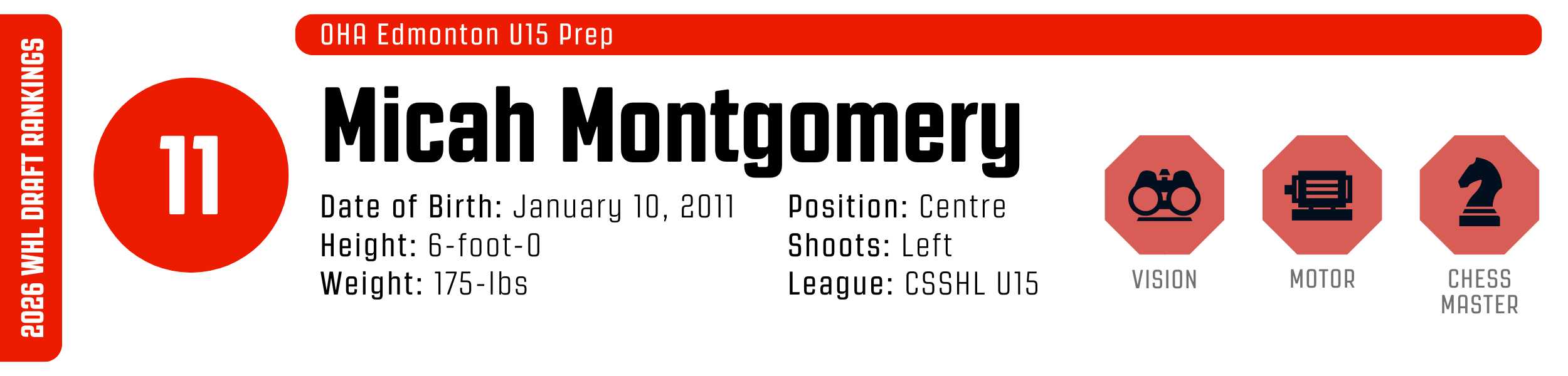
Catch Micah Montgomery on the right night, and you’ll come away thinking he’s a No. 1 overall-calibre prospect. In lieu of footspeed, he outthinks the opposition at every turn. When he’s really clicking, he’s faking out multiple defenders at once before landing a Porter Martone-style pass through the trickiest of openings. Always thinking about safeguarding his team, he plays deep in his own zone and always puts in the extra effort defensively. Plus, he’s a strong puck protector with a physical edge and the frame to support a power game in the WHL. The key will be adding more speed, but his physical skills and off-puck game will translate – it’s just a matter of whether he will become a top-line driver or top-six supporter.
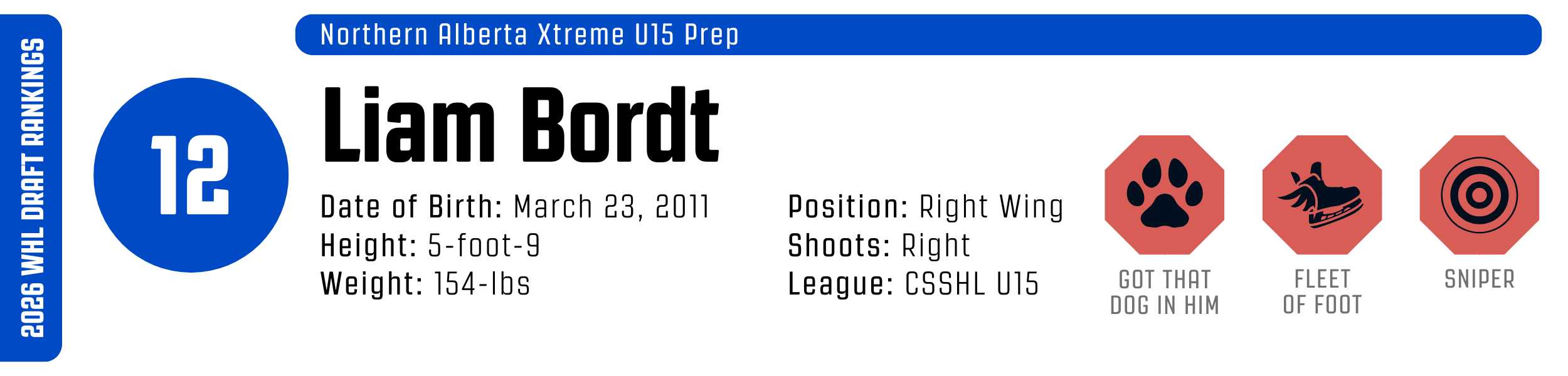
Already a detailed, dynamic mover who breaks his opponents with his pace, Liam Bordt is a constant advantage creator. An agile skater who creates separation through his crossovers, Bordt strings route-adjusting, east-to-west attacking, to open pass seams. His shooting stands out as separating skill, flexing a hard, catch-and-release wrister often blended with eye-line misdirection. A relentless worker and competitor, Bordt’s projection could go in many directions, but the outcome of a top-line, shot-first speedster stands out as an intriguing option for WHL clubs outside our top-10.
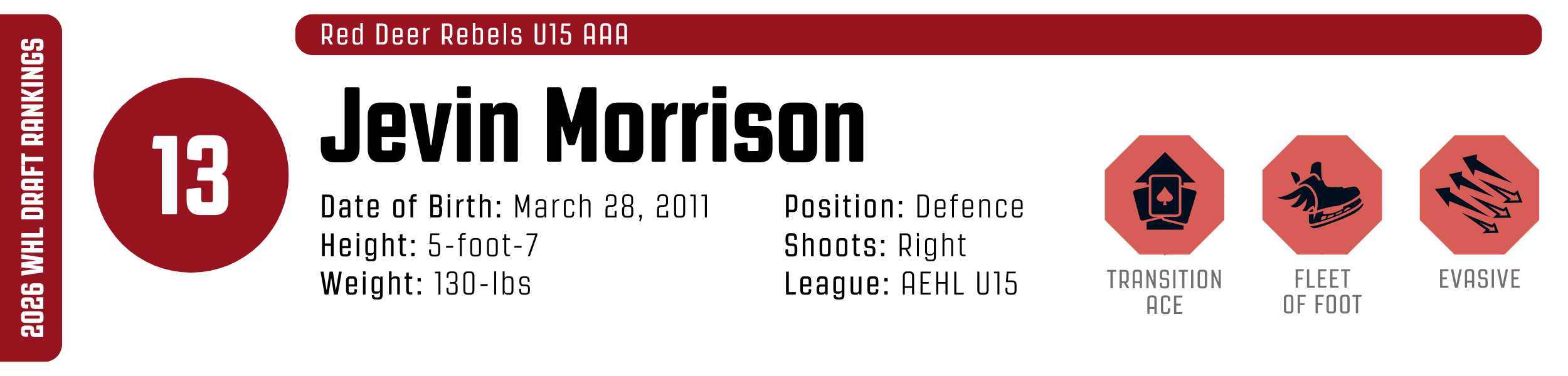
An effortless mover who provides impact across every given shift, Jevin Morrison has all the makings of a special defender at the WHL level. Fully-extended crossovers, tight turns, and a master at changing the pace of his attack, he’s a player always in motion. He evades pressure with ease, a master of read-and-react. manipulating overreactions and taking what he can from opposing defenders. A stingy defender in his own end, Morrison’s use of aggression, stick-work into physicality, and his athleticism mean he rarely degrades posture-wise across his shifts. With off-puck defensive improvements and leveraging his shooting threat into more playmaking, he could drive a WHL’s top-pairing as an offensive defender.
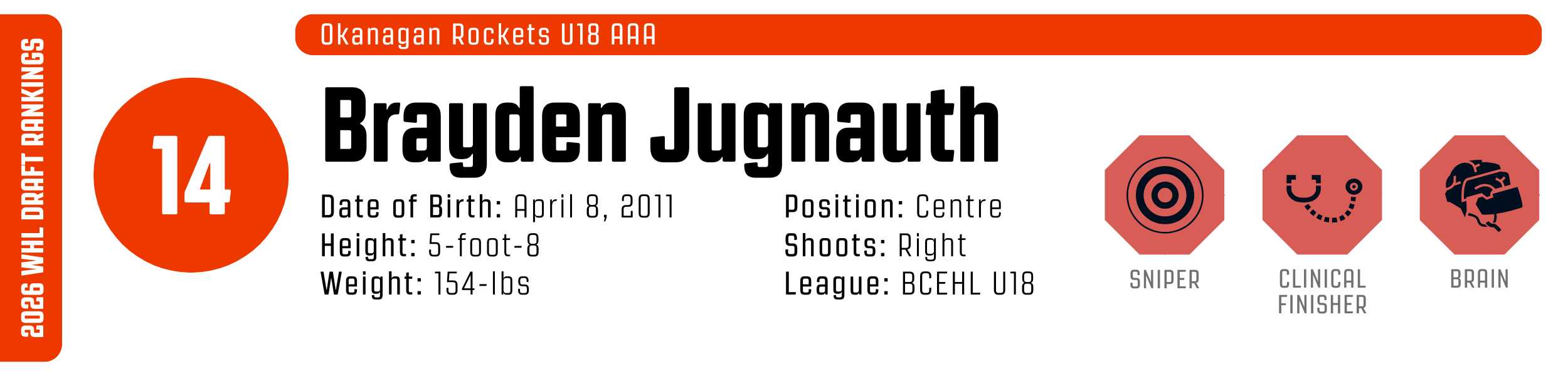
Brayden Jugnauth isn’t just the only full-time U18 player on this ranking; he’s the first-ever U15 player in the BCEHL U18, and he’s leading the league in goals. A shooter with precision and an ultra-quick release, he finds the tiniest of openings. He’s potent off either leg and requires no space at all to fire. Despite his lack of strength and explosiveness for the level, he’s not afraid to take the puck hard to the net or battle. Plus, he’s a really cunning playmaker, using lots of area passes in transition and faking shots before slipping pucks across the slot. While he’s not always flashy, he’s great at capitalizing on turnovers, which should make him a productive WHL scorer early in his career. He’s a potential top-six scorer and riser, come our final ranking.
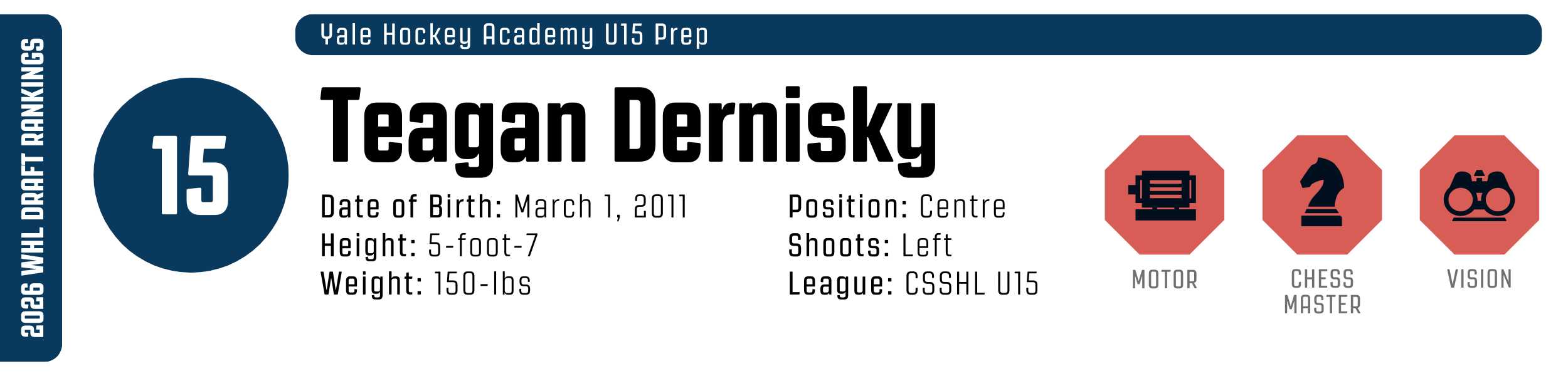
Teagan Dernisky is a master facilitator whose historic point production is a byproduct of elite foresight and a motor that never quits. He’s a high-IQ connective pivot who excels at navigating the neutral zone and identifying passing lanes before they fully develop. He's remarkably slippery along the boards, using craftiness and hip-pocket protection to escape defenders twice his size. Whether he’s winning end-board retrievals, killing penalties with aggressive foresight, or threading a primary assist on an overtime winner, his impact is felt in every phase of the game. He maintains a high work rate across every shift, using his agility to slip around contact and funnel pucks toward high-danger areas of the ice. He projects well as a top-six WHL forward, especially if he grows a bit more.
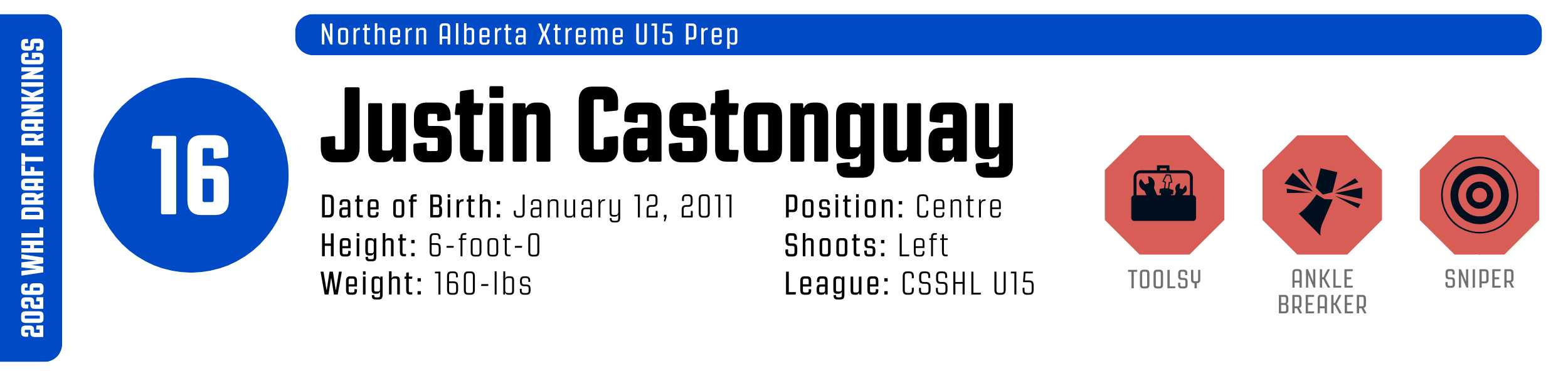
In the midst of a massive upward trajectory, Justin Castonguay could very easily crack the top-10 on our final ranking. At the start of the season, he was a skilled handler who played a lower-paced game. Now, he’s attacking – and beating – defenders with open-ice speed, crossover bursts, and well-timed edge work. He manipulates opponents, uses his full reach to dangle through and traffic, and creates space for his space. In top form, he rips games open. There are, however, games where he’s a bit too quiet physically, his pace drops, and he overcomplicates. While the consistency lacks, that really only speaks to how much more room he has to grow and improve. If he hits, he’ll be one of the draft’s best players.
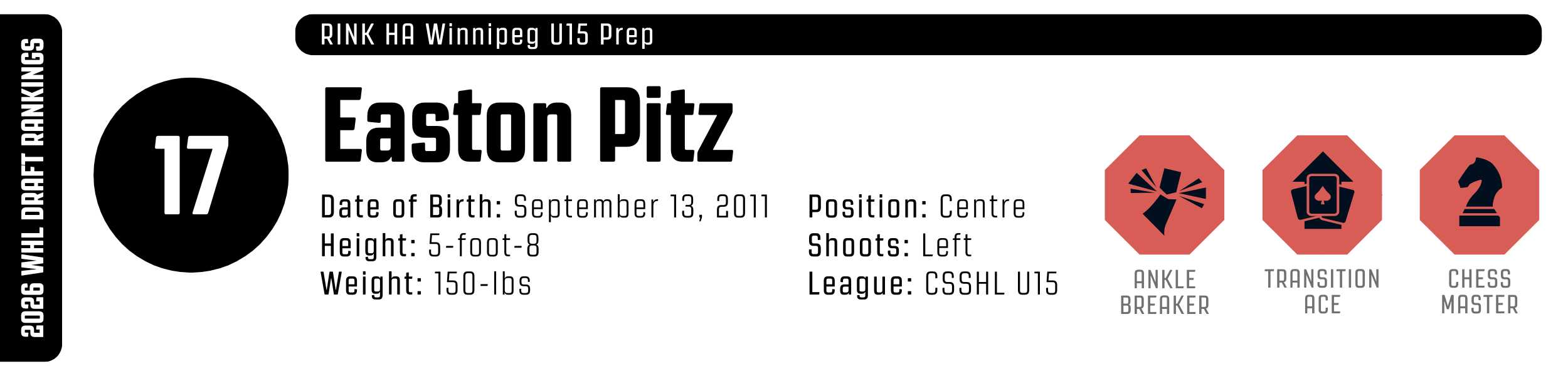
The undisputed centre of gravity for RINK Winnipeg, Easton Pitz, is a dynamic attacker who dictates the pace and physicality of every shift. An offensive engine, Pitz combines elite hands in motion with a fearless approach that consistently lands him in the middle of the ice. Whether he’s drop-stepping a defender with an explosive east-west cut or wiring a snapper while falling, his ability to generate momentum is elite. He relishes board battles and possesses a heavy shot with pro-level drag mechanics. While he needs to add strength to support his power-move posture, his competitive motor and high-end processing should see him become a reliable scoring centre in the WHL.
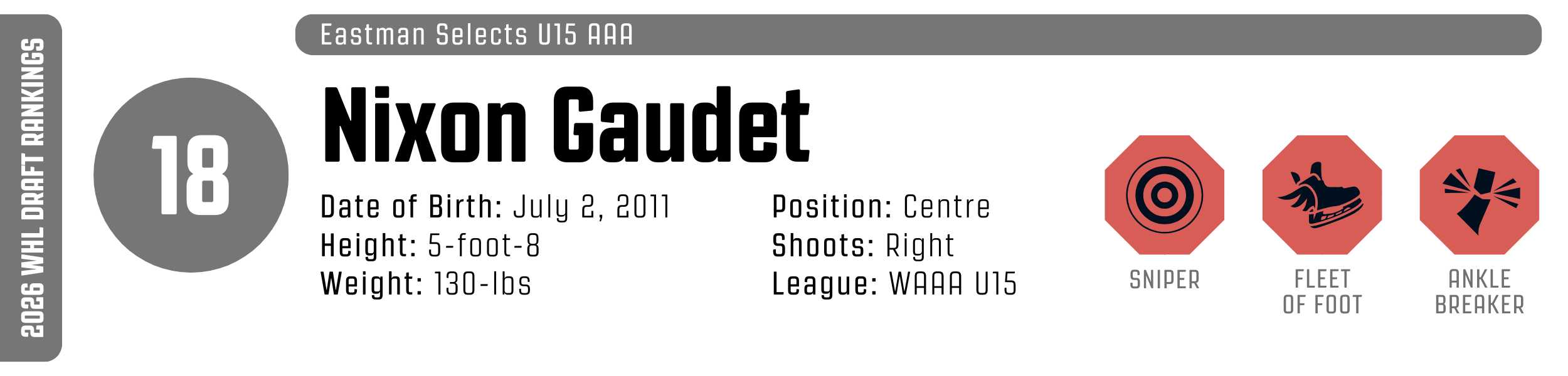
Nixon Gaudet is one of the most dangerous rush creators in the draft, armed with a terrifying first step and elite separation speed. He’s a north-south speedster who dismantles defenders with momentum-based dekes and a laser-beam whippy wrister. Whether he’s executing a dynamic deke through a defensive triangle or pickpocketing opponents on the backcheck, Gaudet’s timing and anticipation are pro-level. While his slight frame raises physical projectability questions, his ability to blend high-end handling with breakneck pace is a rare trait. Gaudet possesses the tools and connective intelligence to become a premier offensive driver in the WHL.
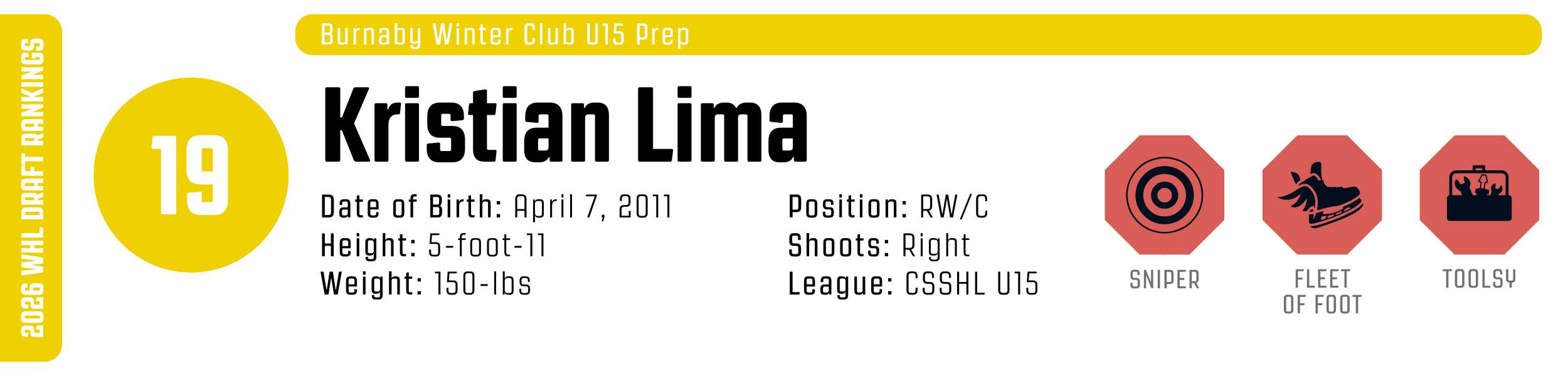
We’ve always appreciated Kristian Lima’s game, but the John Reid Memorial Tournament really cemented him as a first-round prospect for us. He’s shown just about every skill in the book, while still leveraging his best tool constantly – his shot. He’s a highly skilled and powerful shooter, checking off all the boxes and able to fire around traffic and at higher speeds. He times movements into space to receive pucks and fire instantly, and he’s a powerful linear skater who will keep that advantage at higher levels. And just when it looks like his game can be reduced to drive-and-shoot, he sets up a chance or makes an impressive defensive stop. He could become a top-six scorer in the WHL, and he has the checking skills to thrive early in his career.
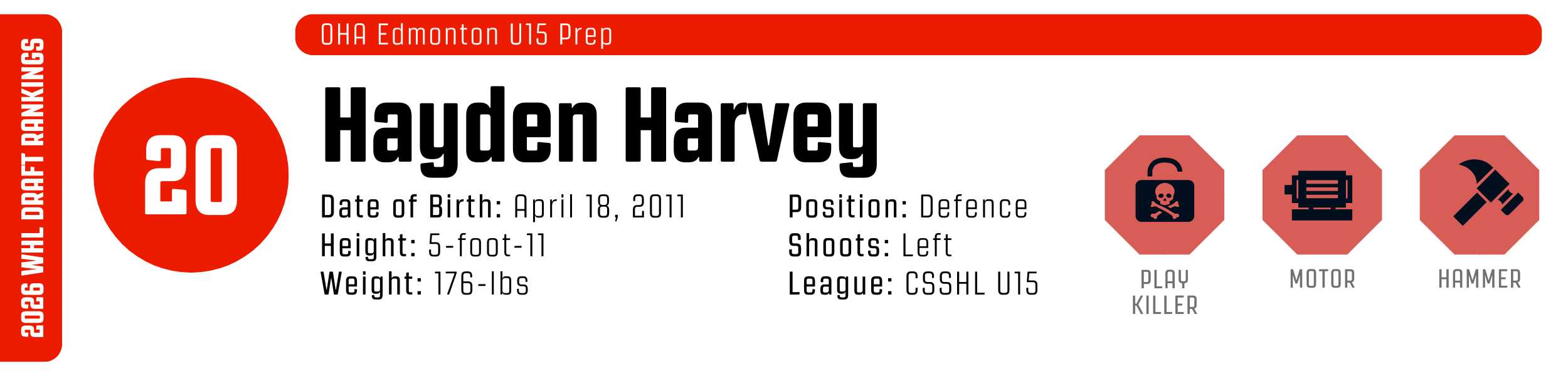
You would be hard-pressed to find a defender who loves joining the play as much as Hayden Harvey. An all-encompassing offensive threat, Harvey’s tall frame and explosiveness are something to marvel at. A smooth mover who joins practically every rush up the ice, his aggressiveness offensively is a special trait in this draft. With plus-puck skills, Harvey’s breadth of playmaking details represents his most dangerous scoring tool. He forechecks, explodes into pinches, and even crashes the net off the puck. A stingy defender with length, Harvey is also physical, with tight gaps and a tendency to target puck carriers in open ice. He will have to learn to pick-and-choose involvement moments better in the WHL, but he has everything to be a driving top-four defender in the league, with considerable physical runway left to unlock.
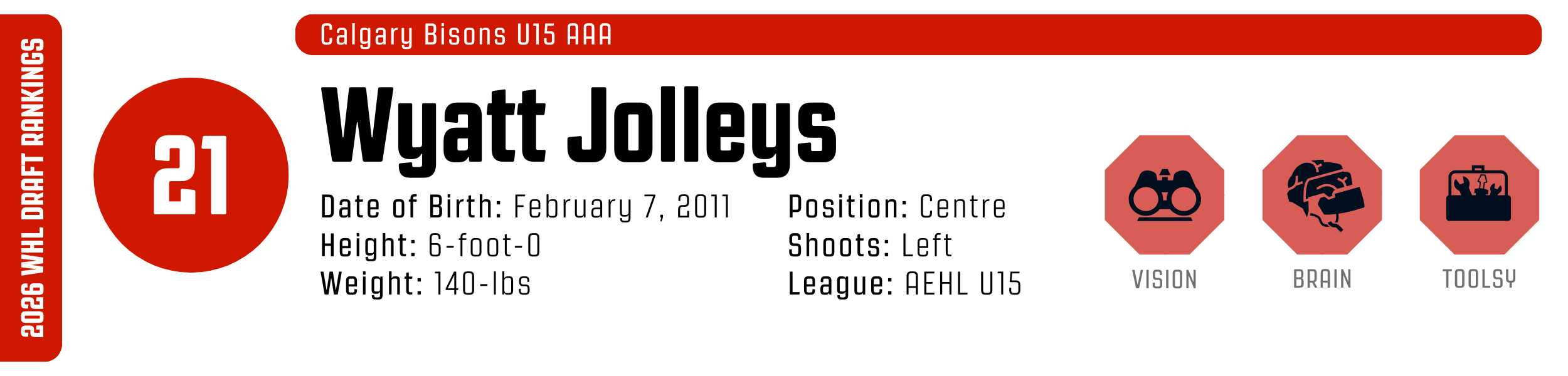
Wyatt Jolleys combines explosiveness and crossover speed to create a deft dual-scoring profile. He’s patient, but recognizes moments to push aggressively off the walls. His outside-foot shooting stands out as an effective tool, while his playmaking details separate him at this level. Separated upper- and lower-body lane threading, one-touch, and east-to-west distributing are all part of his playmaking mix. He’s deceptive off the boards, leveraging body manipulations, and pushes a deft supporting game off the puck. Combine that with high-effort defending, and Jolleys’ upside as a top-six centre in the WHL is clear.
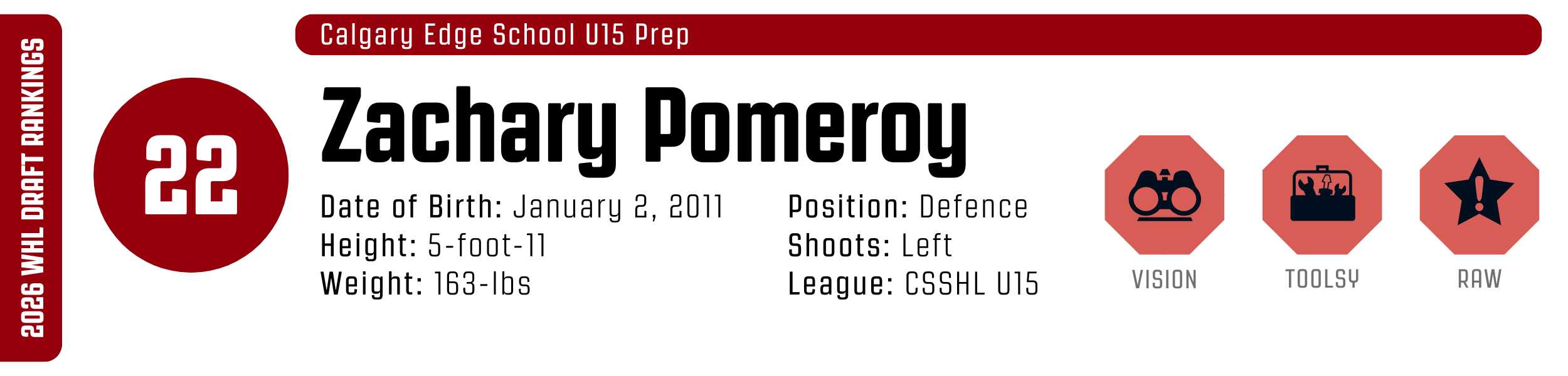
Always in control of the game, Zachary Pomeroy’s poise under fire and patience stand out each and every shift. Along the backwall, he’s one of the best in the class, faking one way before going the other, smoothly picking up rims, and leveraging body positioning along the way. That comfort extends to the point where he’s always shifting and looking for options, including high-value passes. Defensively, there’s a ton of potential here with his combination of mobility and range. He’s a sturdy rush defender, and with more pace, he could become a high-end shutdown piece. There are many WHL outcomes for Pomeroy, but most should see him becoming a top-four defenceman.
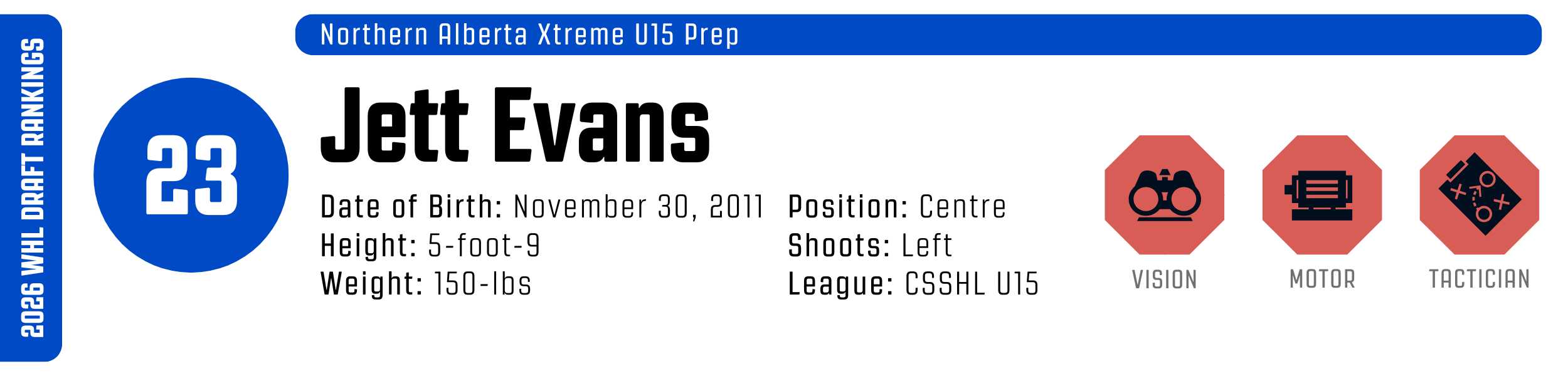
Jett Evans is a big-game hunter who thrives when the lights are brightest. An explosive, high-motor centre, he dictates play through a combination of elite lateral agility and relentless puck pursuit. Evans is a master of the east-west attack, utilizing slick toe-drags and deceptive saucer passes to dismantle defensive structures. His game is defined by its completeness; he is as reliable defending a one-goal lead as he is driving the net for a clutch equalizer. With top-notch puck protection habits and a knack for timely, hero goals, Evans projects as a versatile centre who elevates his game when the stakes are highest.
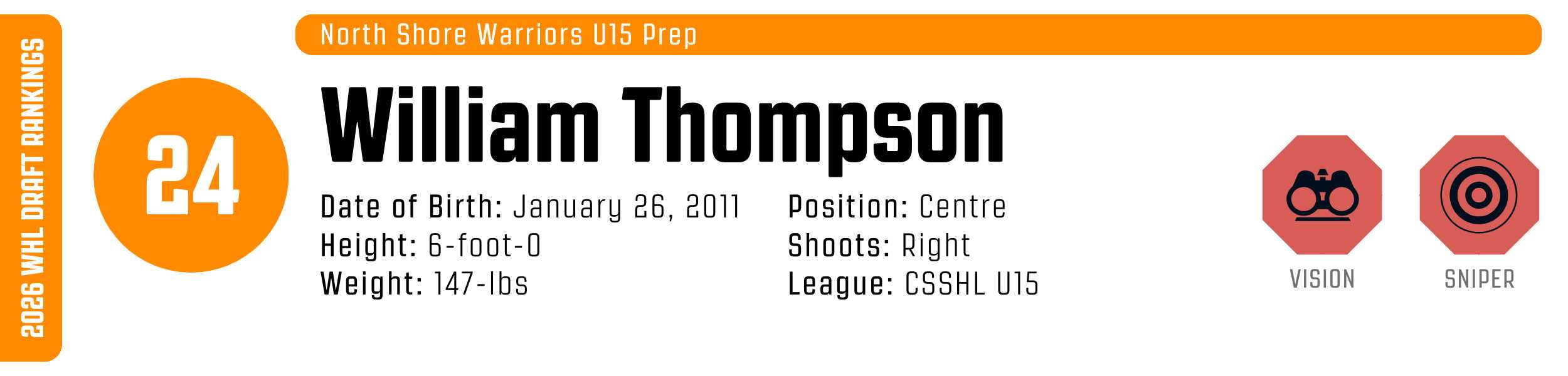
The North Shore Warriors' offensive driver, William Thompson, is consistently the best player on the ice. Already tall and detailed, Thompson’s physical skill and power-game upside are clear. He drives through defenders' hands, powers with a dropped shoulder, and proactively sets up his handles off the reception. A nuanced rush attacker full of weight-shifts, crossovers, and stutter steps, Thompson even blends feints off the entry to freeze defenders and open routes to the net. While his game may verge on inefficient and self-reliant at times, his profile screams top-line driver at the WHL level – a player who may rise on our list as the season goes along.
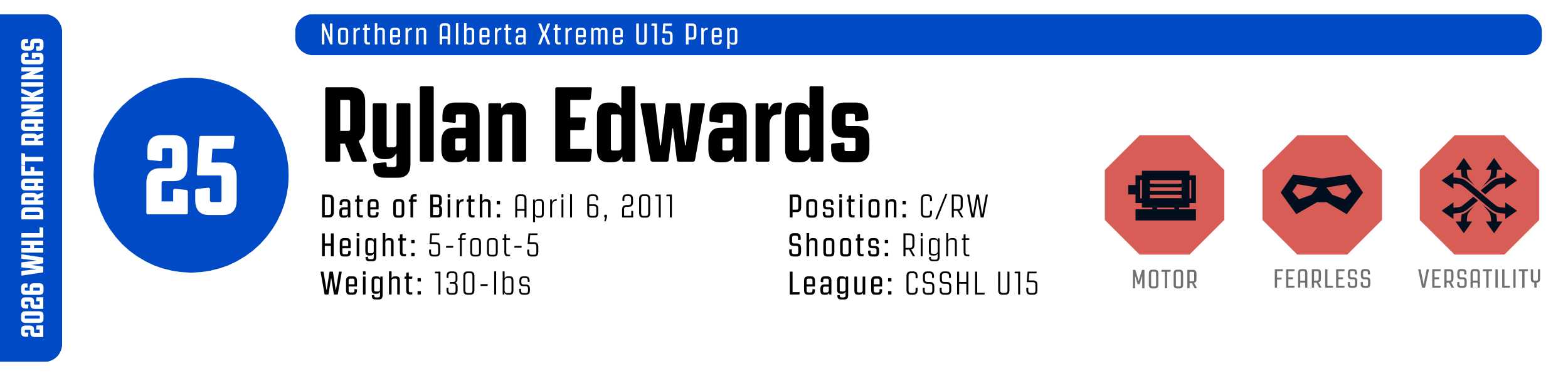
An unmitigated puck hound who pairs a low, powerful skating stance with elite processing speed, Rylan Edwards, plays the game at a tempo that often leaves defenders a step behind. Edwards excels at creating advantages through intelligent pace modulation; he can burn a defender wide with blistering foot-speed or pull up to delay, allowing lanes to develop. His game is defined by a heavy off-puck work rate and a deceptive drag-and-bury scoring touch. Reliable in a shutdown role but dangerous as a primary driver, Edwards projects as a high-IQ, all-situations forward with pro-level habits.
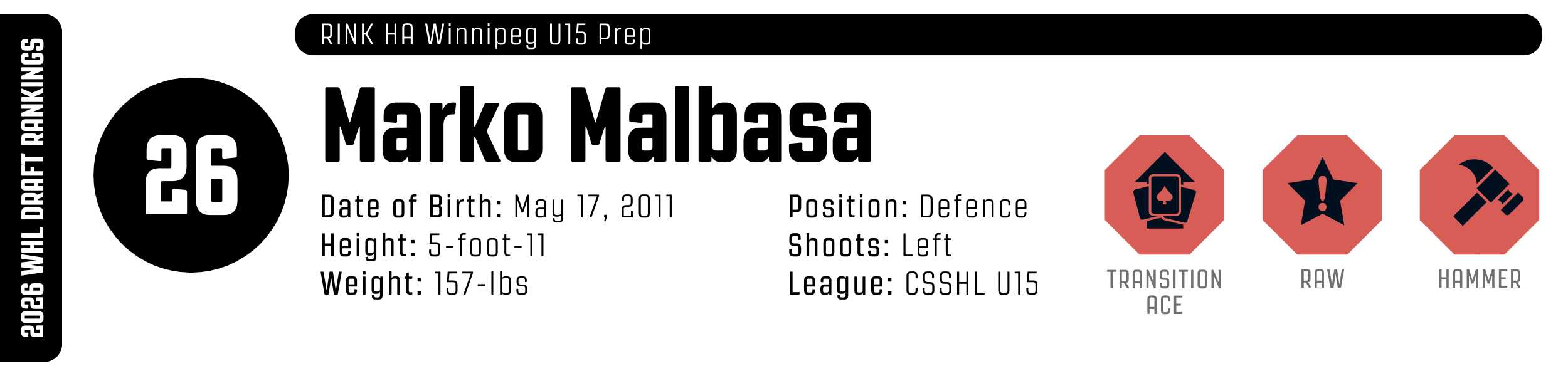
Marko Malbasa is a tall, poised, and proactive defender who dictates play from the back end. A smooth skater with a significant reach advantage, he excels at sealing off opponents and ending rushes with well-timed step-ups or heavy open-ice hits. Malbasa handles the power play with professional-level composure, utilizing deceptive look-offs to freeze defenders before snapping firm, accurate passes. While his lateral quickness is still catching up to his frame, his mature defensive instincts and ability to transition the puck under heavy pressure make him a high-floor prospect. He projects as a versatile, all-situations defender.
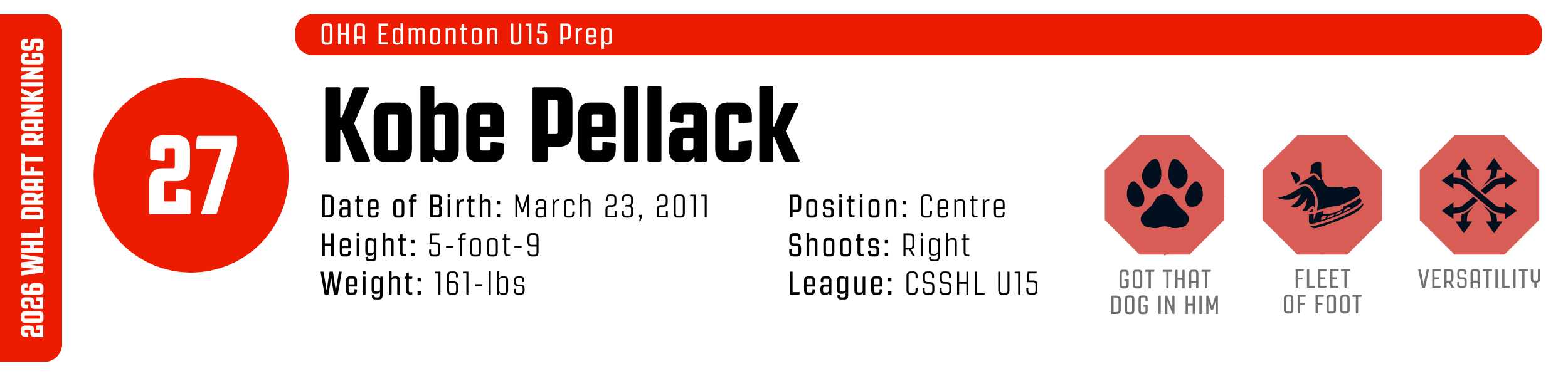
A high-paced offensive threat, Kobe Pellack, thrives on directness and relentless second efforts. A courageous attacker, he consistently drives the middle of the ice, dropping his shoulder to protect the puck or splitting defenders with slick dekes through their defensive triangle. His game is built on creative puck skills and a tenacious mentality, often hounding the opposition's breakout to force turnovers and outworking goaltenders for his own rebounds. Pellack uses deceptive pace changes to escape pressure along the wall, maintaining possession until he can funnel the play toward the high slot. He angles opponents effectively in the neutral zone, using an active stick to disrupt passing lanes and trigger immediate counter-attacks.
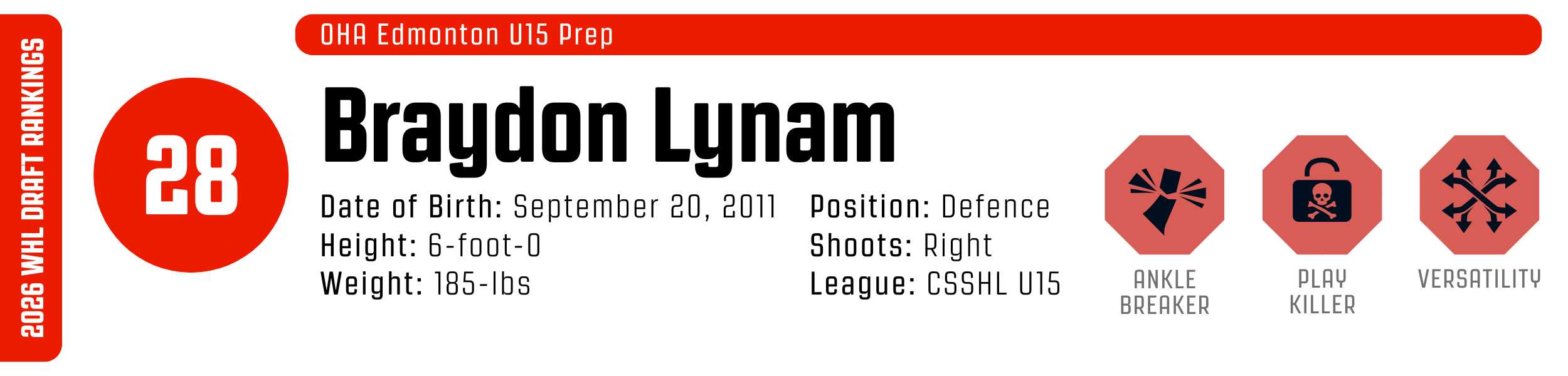
Braydon Lynam is a versatile, big-framed defender who serves as an all-situations defender for OHA Edmonton. He’s a gifted puck handler for his size, demonstrating the poise to bait forecheckers into mistakes before launching a clean breakout. On the man advantage, Lynam excels as a deceptive quarterback; he weaponizes heavy shot fakes and look-offs to manipulate defensive boxes, opening up cross-seam lanes for tape-to-tape backhand feeds. His game is defined by intelligence and efficiency, consistently making the right first pass to ignite his team's high-skill forwards. He uses his reach and frame effectively to steer attackers into low-danger areas while maintaining a calm, proactive gap through the neutral zone.
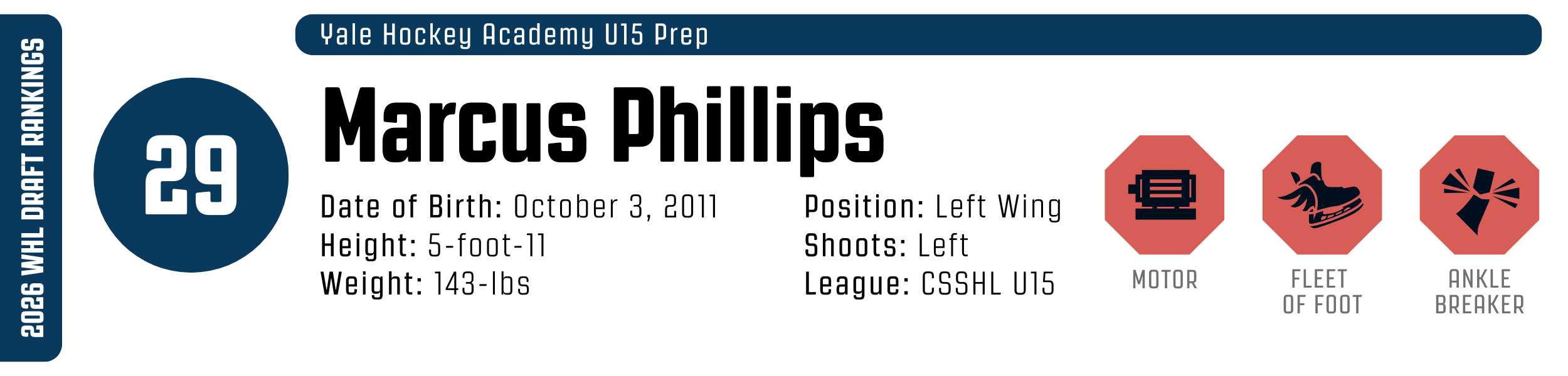
While Marcus Phillips’ production is hovering around No. 10 over Yale’s high-powered offence, he looks like one of their most translatable talents overall. A tall, high-speed forward with defensive discipline, he’s already a top penalty killer and creates a ton of turnovers with his pressure and anticipation combination. He’s also a skilled handler who always looks to walk out of the corner and get to the net. With tons of room to become even stronger and faster, he has the runway to become one of the draft class’ faster developers.
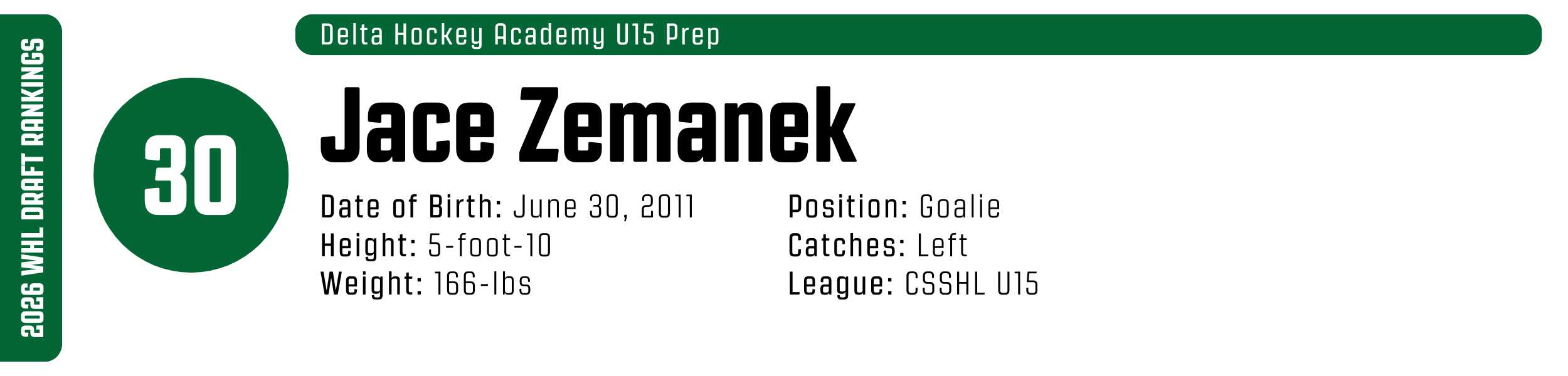
At this stage, Jace Zemanek looks like the top goalie option out of Western Canada. Beyond his striking statistical profile with a .931 save percentage, he has an impressive lower-body tool base. Using a wide butterfly, he changes direction and explodes across in an instant, keeping his body upright and adjusting his angle. Plus, there’s barely any wasted movement in his game and he shows a lot of discipline with his route selection. With mobility, power, and high-end footwork, he looks like a potential starter in the WHL.
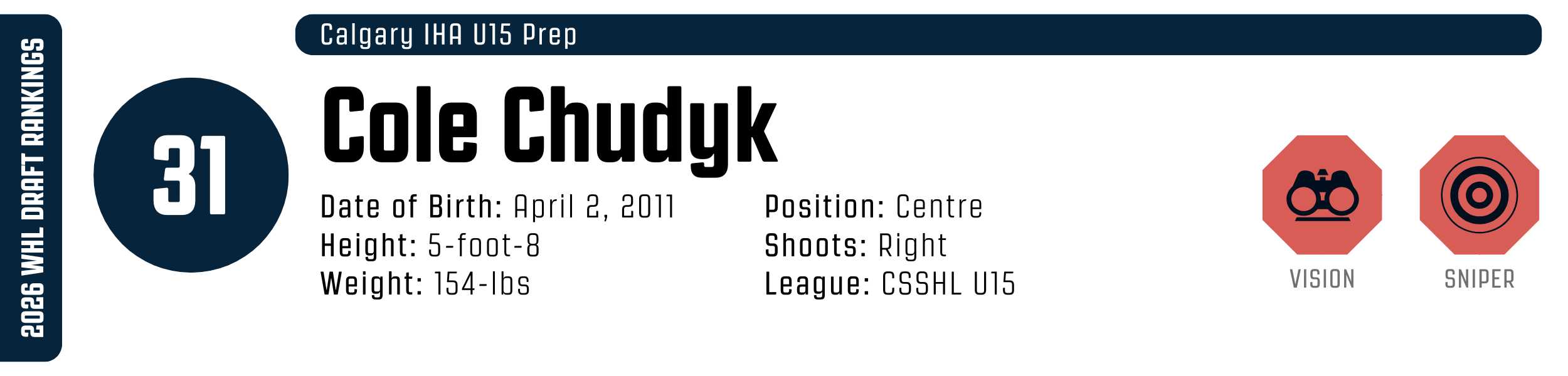
Cole Chudyk creates advantages through his outstanding processing and offensive details. He’s a proactive mover, sneaking behind coverages, boasting a mechanically refined wrist shot. Aggressive, with proactive contact details, Chudyk’s lower centre of gravity and ability to fend off pressure with his balance and upper body are among the more translatable aspects of his game. Hip-pocket holds, into slips, hooks, and tight-seam layers are all part of his mix. While he will have to improve his agility to have success at the next level, Chudyk represents a top-six upside bet outside of the first round.
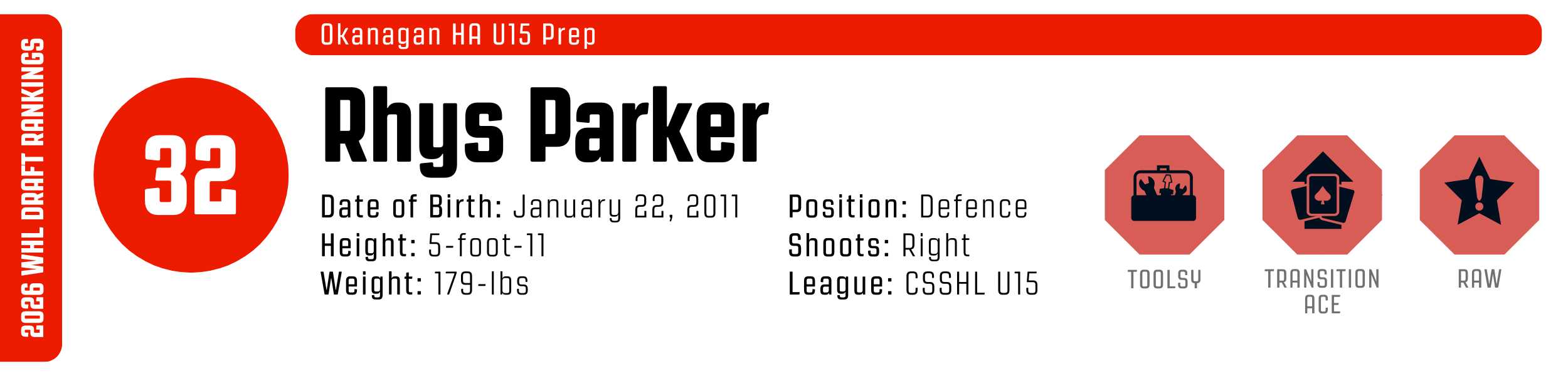
When Rhys Parker steps on the ice, coaches don’t have to worry. A stifling rush defender and precise puck-mover, he manages the game and limits risk at a high level already. In his best sequences, he takes the middle, tightens the gap, and pokes away possession before instantly finding a teammate across the rink. He’s physical, too, and joins the rush frequently. While he’s not the flashiest offensive player on this ranking, he extends possessions regularly, gets pucks through, and avoids needless point shots to find open teammates. He projects well as a potential top-four WHL defenceman.
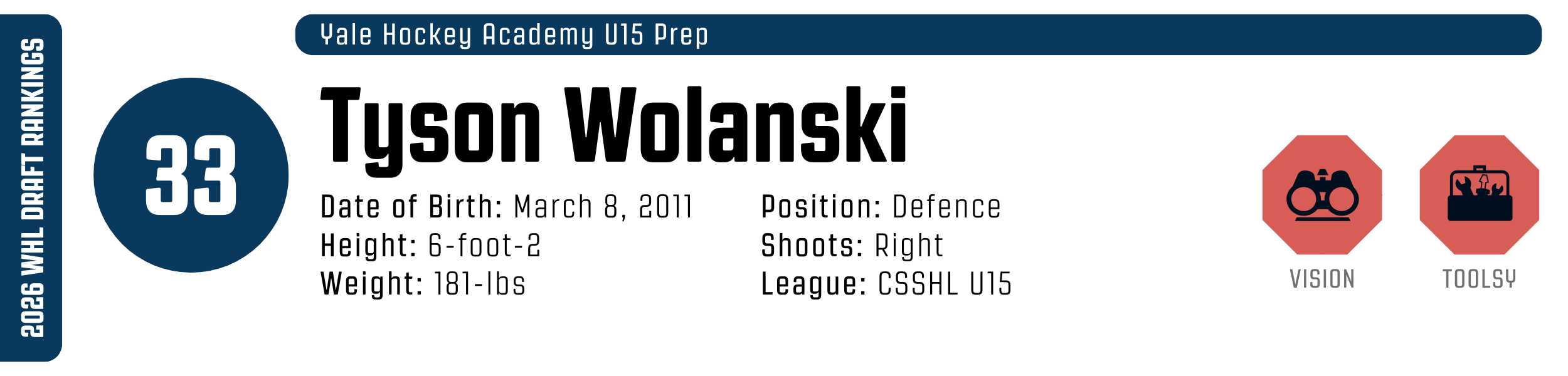
Likely the most polarizing player among our team, Tyson Wolanski’s size, offensive involvement, and play-stopping upside have been on our radar for years. Operating with an NHL frame, Wolanski already absorbs contact with ease off the retrieval, even incorporating handling skills to manoeuvre pressure into the breakout. Wolanski’s offensive dimension is simple: volume shooting from the blueline, looking for redirection and chaos looks. His processing in his own zone is our biggest question mark – slower to engage his body or to recognize secondary threats represents his biggest weakness. Nevertheless, Wolanski is already a game manager, which likely mirrors his role in the WHL, where he will have a significant opportunity to become a top-four defender in the league due to his physical advantages. He likely will be drafted higher than where we currently have him.
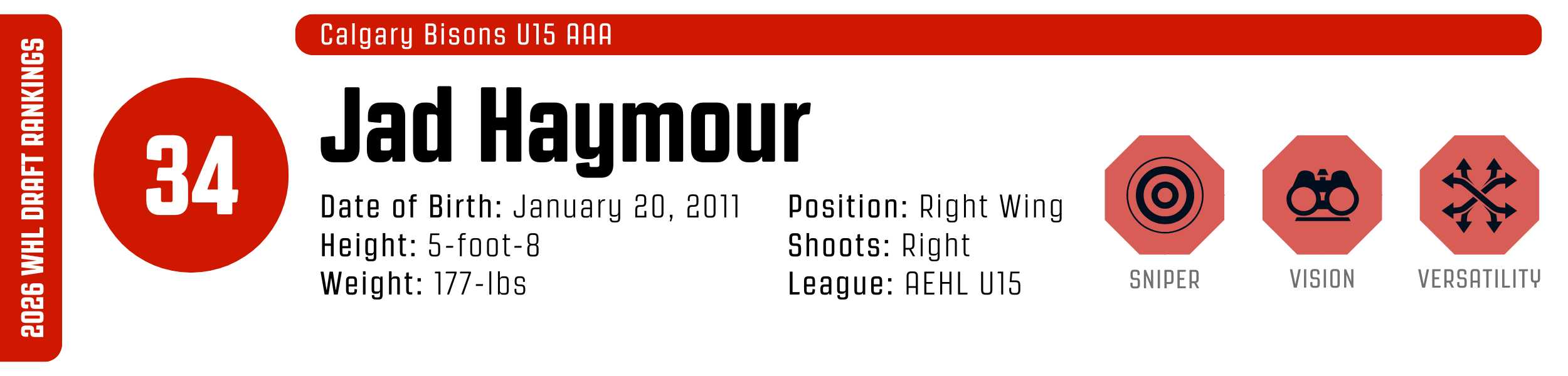
A true dual-threat creator, Jad Haymour is a sniper, net-front finisher, short-range passer, and deceptive playmaker all in one. He’s constantly scanning, looking for opportunities to use the trailer, weak side, or middle-lane driver. If there’s space, he uses every inch before advancing the puck, bringing a rare level of puck management for this age. Effective in battles with his strength and low centre of gravity, he brings puck-winning skills, too. The key for Haymour will be continuing to develop footspeed and pace. If he can do that, he could become an impactful top-nine scorer in the WHL.
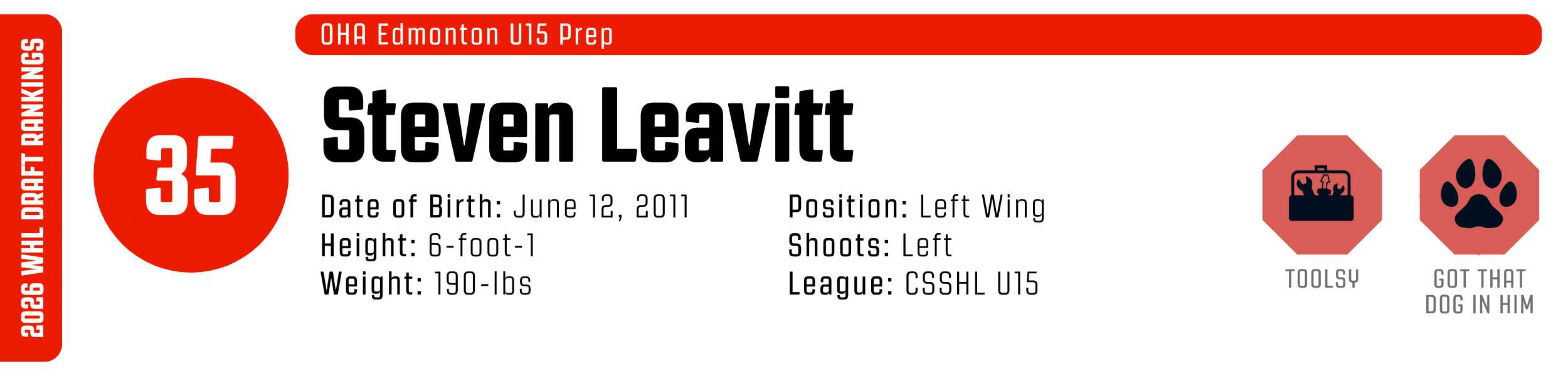
A power forward who lives at Mach 10 speed, Steven Leavitt, uses a powerful stride and overwhelming strength to force opponents onto their heels. A premier counterattacker, he’s a constant threat to split defenders on the rush and creates immediate offense through sheer tenacity and a clinical net-front presence. Leavitt uses an impressive shot with synchronized downforce and heavy power, often pouncing on loose pucks in contested areas to finish plays. He’s a tireless worker who treats high-effort play like a routine, hounding pucks on the forecheck and pickpocketing carriers in the neutral zone to trigger transition. His game is anchored by heavy physical engagement, frequently using reverse hits and active stick lifts to dominate puck retrievals along the boards.
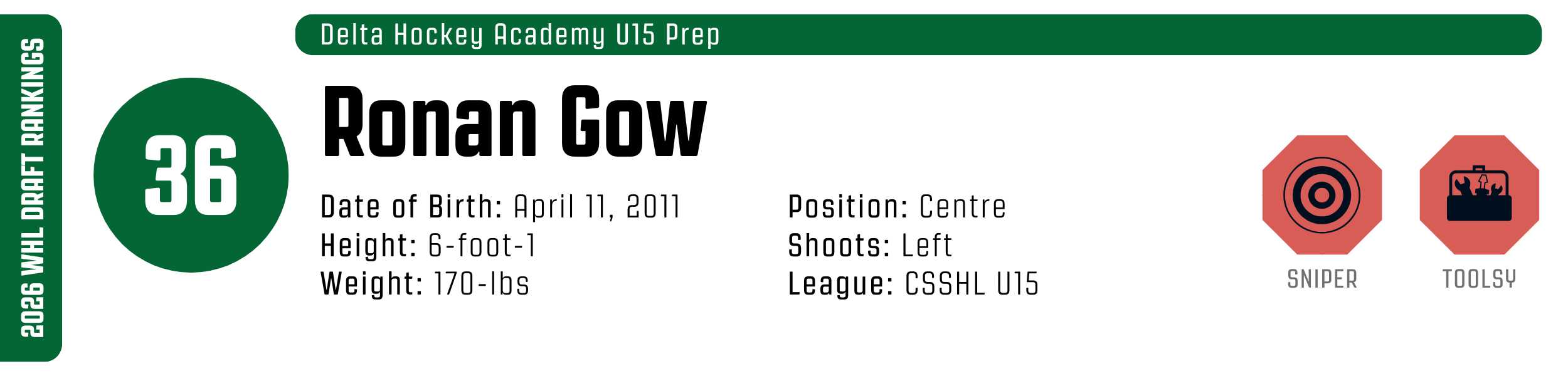
A tall and physical threat at the U15 level, Ronan Gow’s game is built around individual skill, work-rate, and physicality. A classic shoot-first archetype, every one of Gow’s actions is an attempt to get inside for a high-danger opportunity. Ten-and-two cuts, pass-off give-and-go plays with off-puck slot activations, angled attacks, and dropped-shoulder drives are all part of his mix for improving the condition of the puck. His upside as a middle-six goal scorer in the WHL is clear enough to have a place in the second half of our board. Possessing a junior-ready frame only reinforces that.
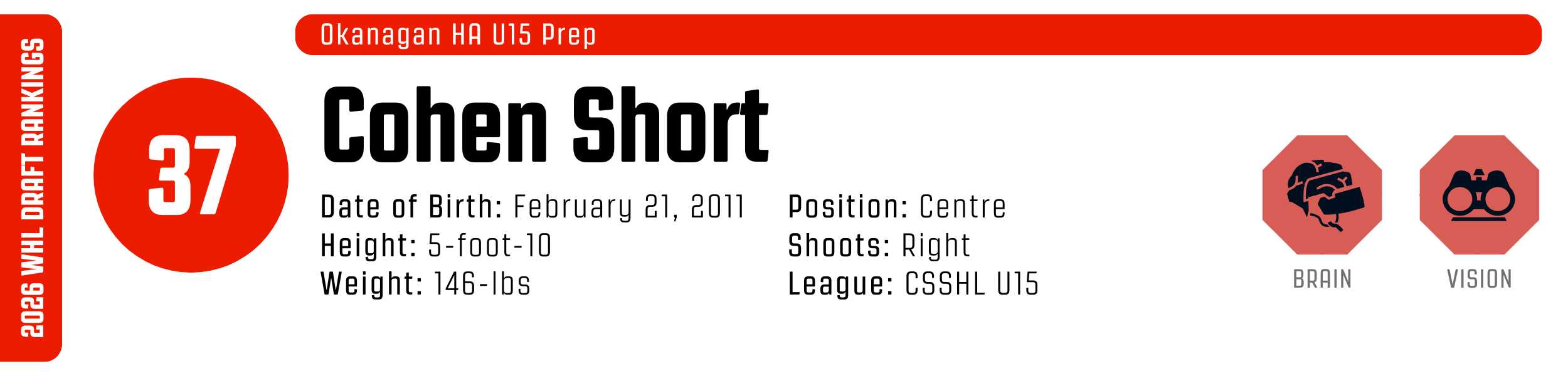
Already standing at 5-foot-10, you could say that Cohen Short’s name is a bit of a misnomer. Okanagan Hockey Academy’s captain is already a toolsy playmaker and shooter with power elements throughout his game. He’s a connector, pushing poised playmaking across the slot, actively building up speed to create advantages. Outmuscling defenders on the outside of the ice, his physical skill is clear. Short’s projection could yield multiple profiles. With his handling being his weakest tool, he likely won’t be an overly dynamic WHL attacker, but the potential for Short to become an impact checker and power forward is a valuable projection after the first round.
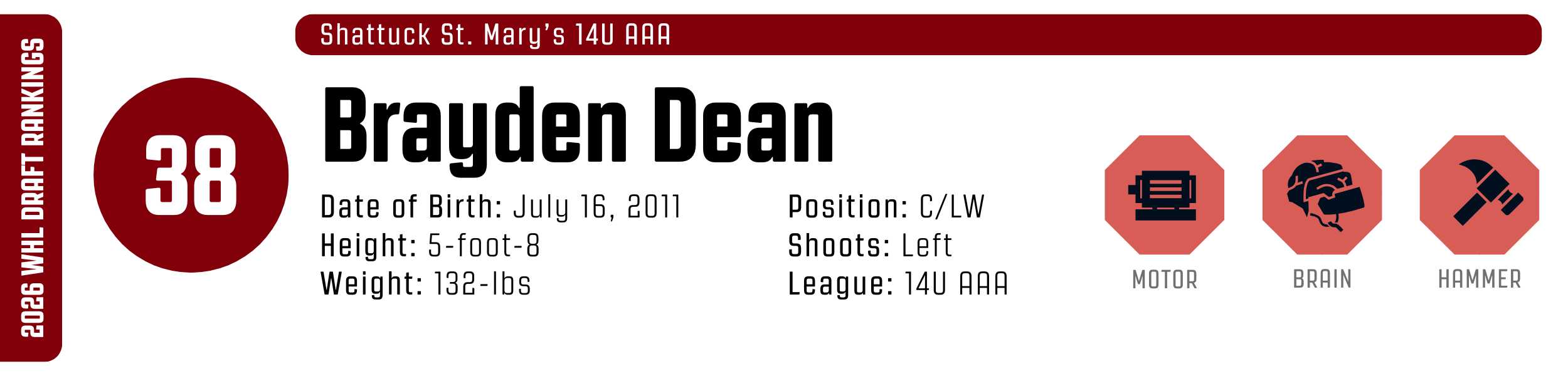
A high-tempo, shoot-first threat, Brayden Dean, drives the game through directness and a relentless mean streak. A constant presence in the hard areas of the ice, Dean thrives on outmuscling opponents behind the net and along the boards to force turnovers. He combines spectacular off-puck movement with a slick, whippy release that allows him to strike quickly off the rush or from the slot. Most impressive is how he weaponizes his physicality; his hits are purposeful, designed to kill cycles and create immediate counter-attacking opportunities. With a blend of pro-level pace, aggressive anticipation, and scoring instincts, Dean projects as a high-impact, two-way centre who creates his own space.
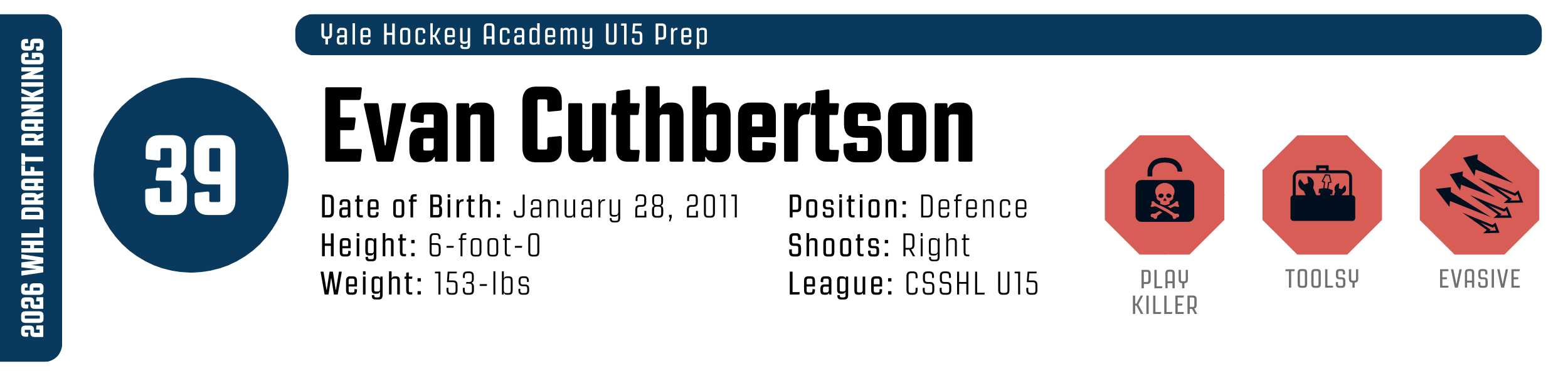
Playing a top role on the high-powered Yale Hockey Academy, Evan Cuthbertson faces a lot of rushes coming back the other way. There might be no defender in the class better equipped for such a role. A deep, strong stance powers his backwards skating and allows him to always win the race to the middle. He pokes away pucks with ease, times step-ups, and brings all of those skills and more to defensive zone coverage. With possession, he plays a game centred on quick passes and facilitation to let his forwards shine, but in a different environment, it’s easy to envision him taking on more playmaking duties. He projects as a well-rounded top-four WHL defenceman.
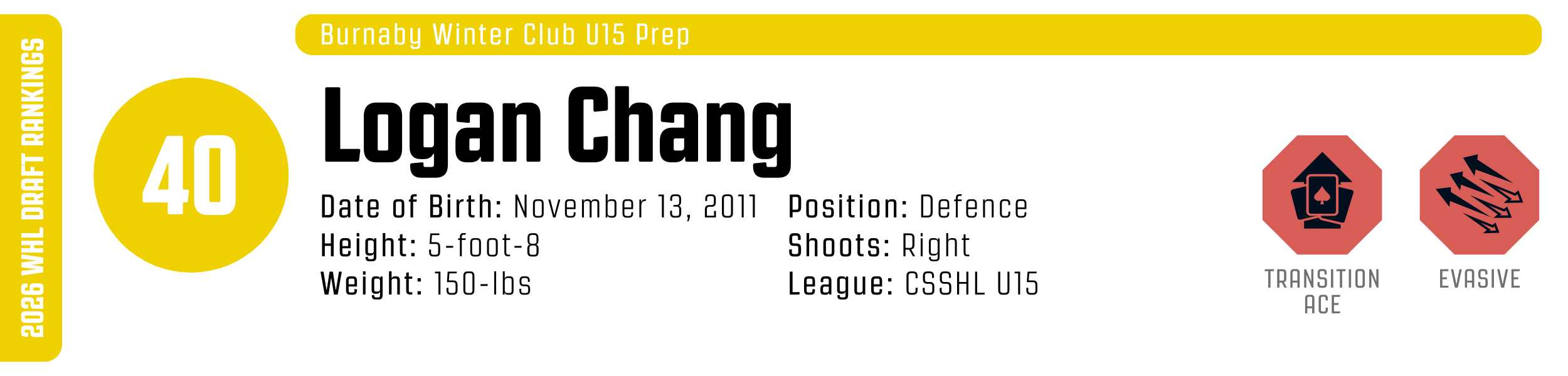
Logan Chang is a fluid, offensive defenceman who serves as the dynamic heartbeat of the Burnaby blueline. A premier powerplay quarterback, Chang weaponizes elite edge-work and constant scanning to weave through neutral-zone traffic and dismantle defensive structures. He’s a frequent activator who loves to fly up the wing, carrying possession end-to-end with a poise that keeps opponents on their heels. While currently a bit undersized, he defends with high-level stick positioning and surprising grit, even mixing in well-timed reverse hits to neutralize larger forecheckers. His ability to manipulate lanes and rip top-shelf snap shots makes him a legitimate dual-threat orchestrator with significant WHL upside.
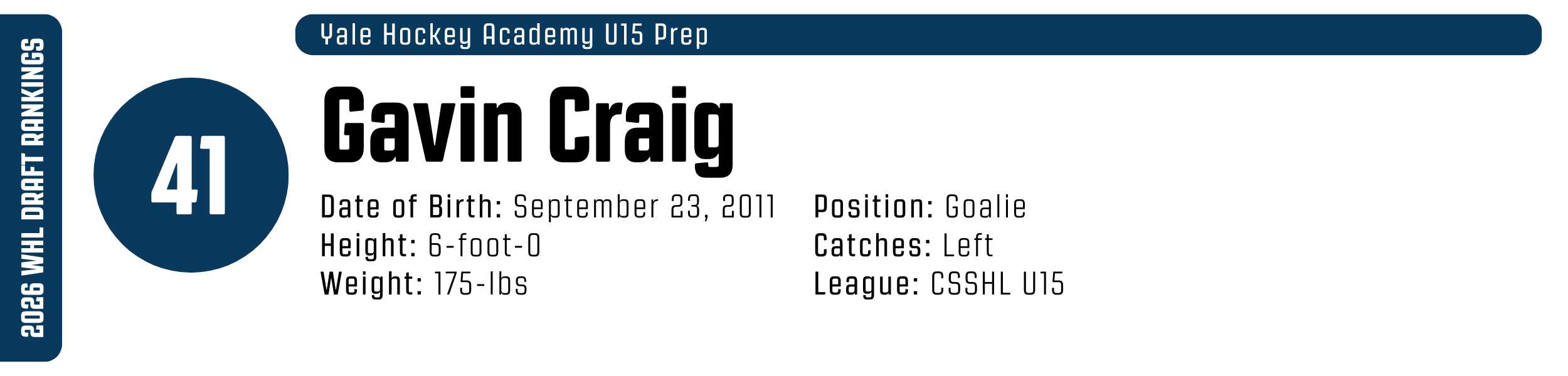
After being just one of 19 full-time CSSHL U15 Prep goalies at 13, Gavin Craig has reached new heights at 14, currently posting the fourth-best save percentage in history with a .943. Plus, he’s already set the all-time shutouts record with seven over his two seasons. Already having WHL-calibre footspeed, he transitions quickly and with control. But it’s really the technique that sets him apart, with tight post integration and a strong stance. Staying more disciplined in his technique and skating form could make him a WHL starter.
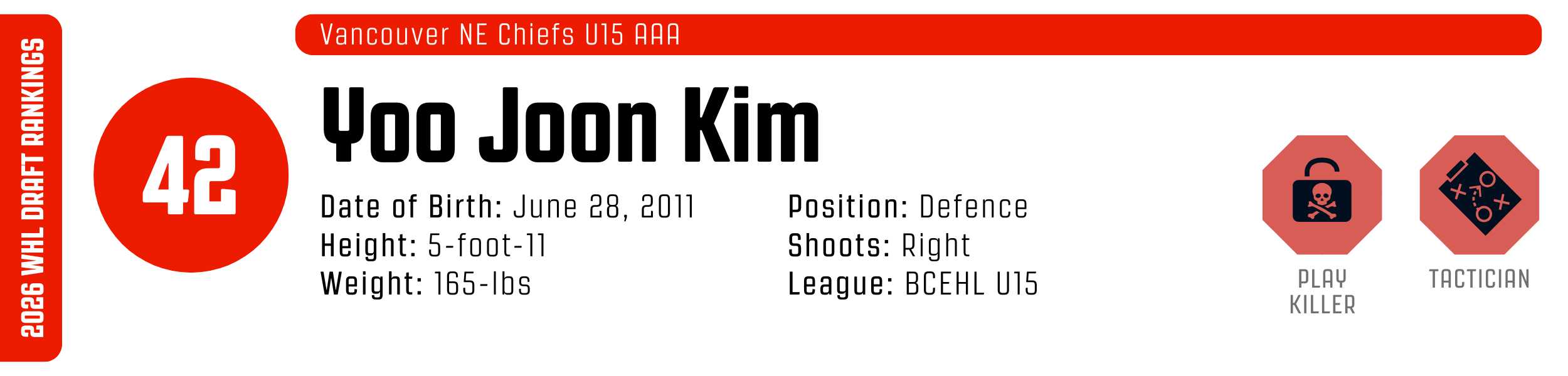
Yoo Joon Kim is a high-IQ, transition defenceman who excels at stifling opposition attacks before they gain momentum. He uses a rangy reach and sophisticated angling to disrupt lanes in the neutral zone, effectively stripping pucks and turning play in the right direction. Kim is an exceptionally poised puck-handler, capable of settling awkward passes under pressure and identifying high-value lanes from the offensive blueline. While he’s a mobile, balanced skater who can carry the puck with confidence, his primary strength lies in his defensive reads and willingness to engage physically. He frequently dictates the terms of engagement along the wall, using well-timed reverse hits and a heavy stick to clear his zone and maintain possession for his team.
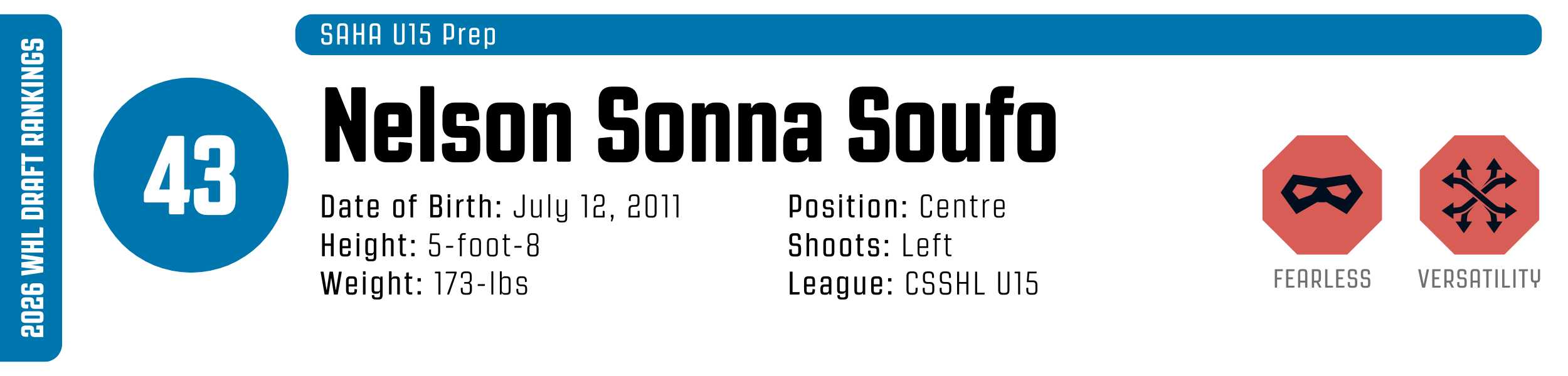
Power, pace, and fine details define Nelson Sonna Soufo’s game. An active scanner and deft supporter, Sonna Soufo plays a cerebral and physical game full of subtle pick plays, delays, and superior engagement. He blends fakes, hunts high-percentage passes, and shows adaptability around the net front. While the volume of his creation plays tends to be on the lower end, his rawness and physical runway mean this is far from the Sonna Soufo we will likely see down the road. A middle-six projection isn’t out of reach – especially if he further refines his tools.
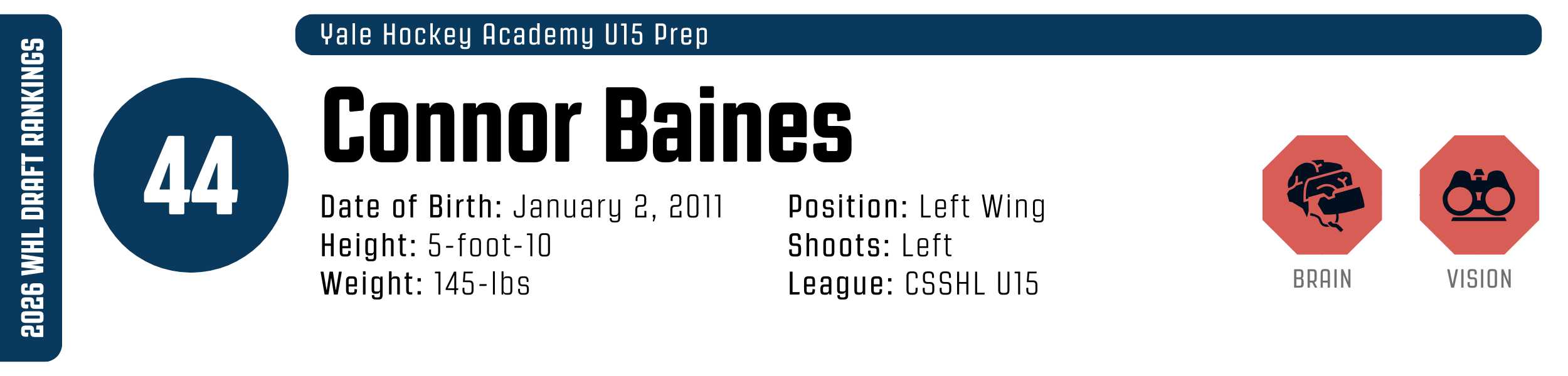
Rounding out Yale’s top-line trio with McMillan and Dernisky, Connor Baines is also a noteworthy prospect in his own right. A hard-working, gritty forward with passing skill, he forces turnovers, wins positioning, and then finds open teammates. He pulls pucks into his feet to pass under sticks and reaches out to hook them around, and he’s a skilled off-the-catch shooter. Tall for the age group but not reliant on a size or speed advantage, he plays a scalable game. He looks like a potential third-line forward with a chance to develop into a top-six complementary scorer.
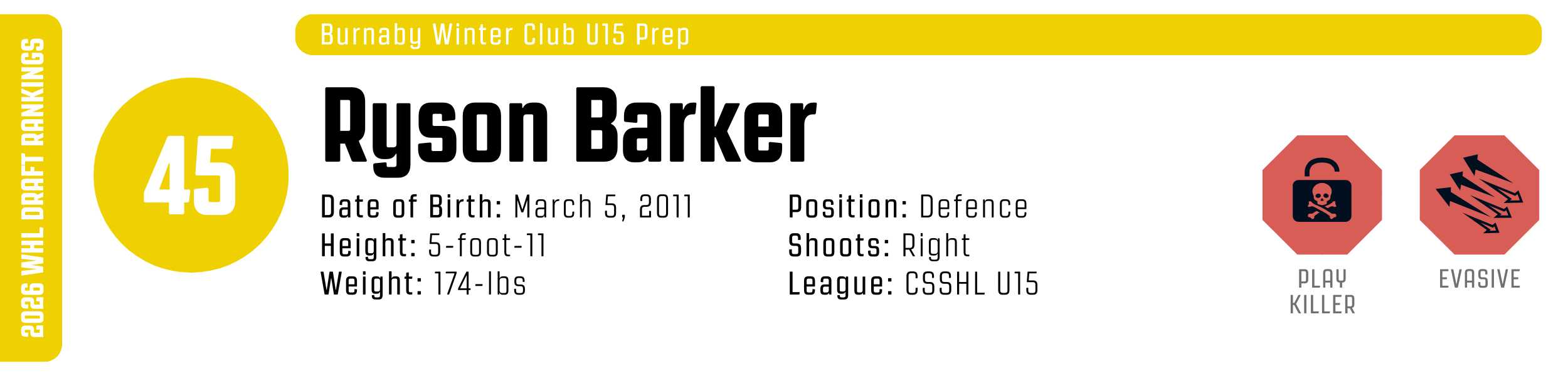
The quintessential modern shutdown defender, Ryson Barker, combines elite edge work with a punishing physical edge. Barker excels at using his lateral mobility to squeeze attackers out of the play and kill rushes before they reach the defensive blueline. He plays with grit, consistently bullying forwards in the corners and landing massive, clean open-ice hits. While his defensive identity is clear, Barker is also an adept puck-mover; he shows immense poise under pressure, shaking forecheckers with sharp cutbacks and landing precise saucer passes to spring the counterattack. Reliable and mobile, he projects as a shutdown defenceman in the WHL.
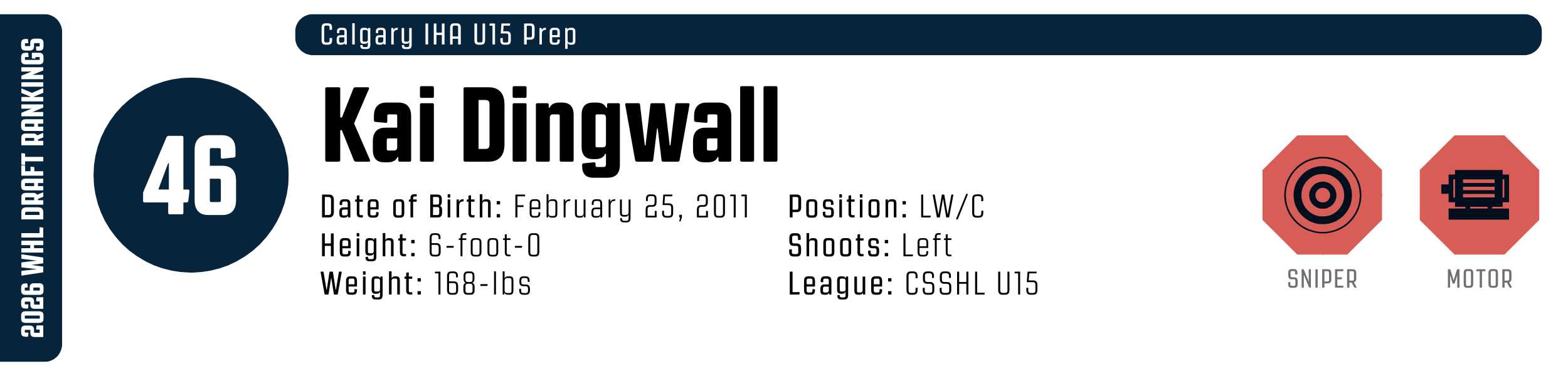
Kai Dingwall is a prototypical power forward who weaponizes his imposing frame and sheer strength to dominate the interior of the ice. A worker with an intense competitive engine, Dingwall thrives on winning puck battles along the wall and driving his shoulder through defenders to claim the slot. His game is defined by high-end puck protection and a heavy, dangerous shot that makes him a perennial scoring threat. While he currently lacks elite explosiveness, his ability to execute high-skill plays under heavy contact is rare for his age. A 200-foot centre with undeniable certainty in his projection, Dingwall projects as a physical force who can provide on the power play and dictate terms physically.
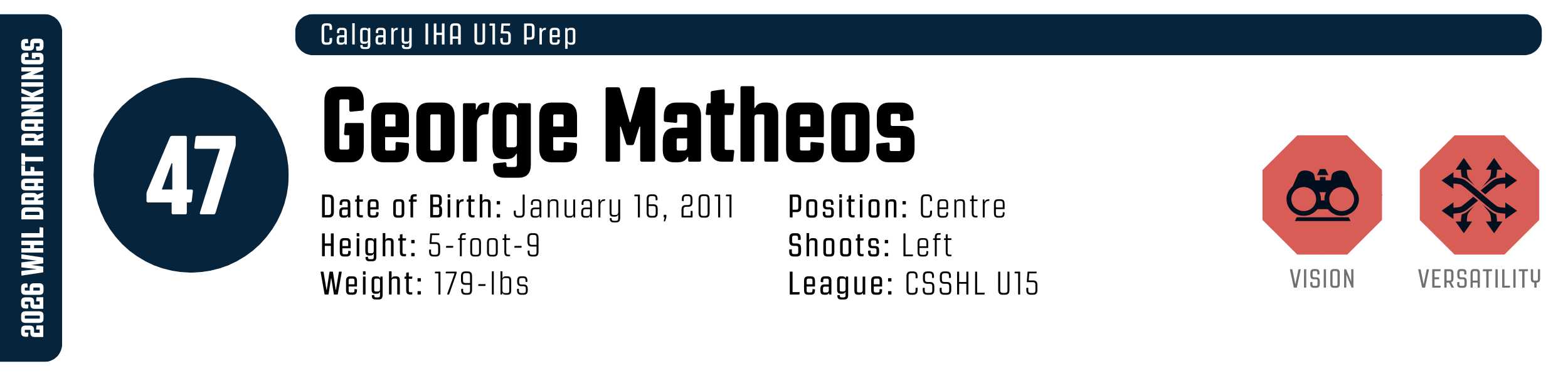
A heavy-possession centre, George Matheos, excels at slowing the game down to his own pace. While not a pure burner, he uses sound edgework and a sturdy frame to protect the puck, often stopping up on his hip pocket to weather defensive pressure. He’s highly effective on the cycle, demonstrating the patience to work 360-degree spin moves and cutbacks to open up passing lanes for backdoor tap-ins. Matheos combines this vision with a physical edge, showing a willingness to drive through defenders on the boards and win the inside position on puck retrievals. He thrives in tight spaces, using his reach and puck-handling to navigate through layers of traffic before threading precise passes into the slot.
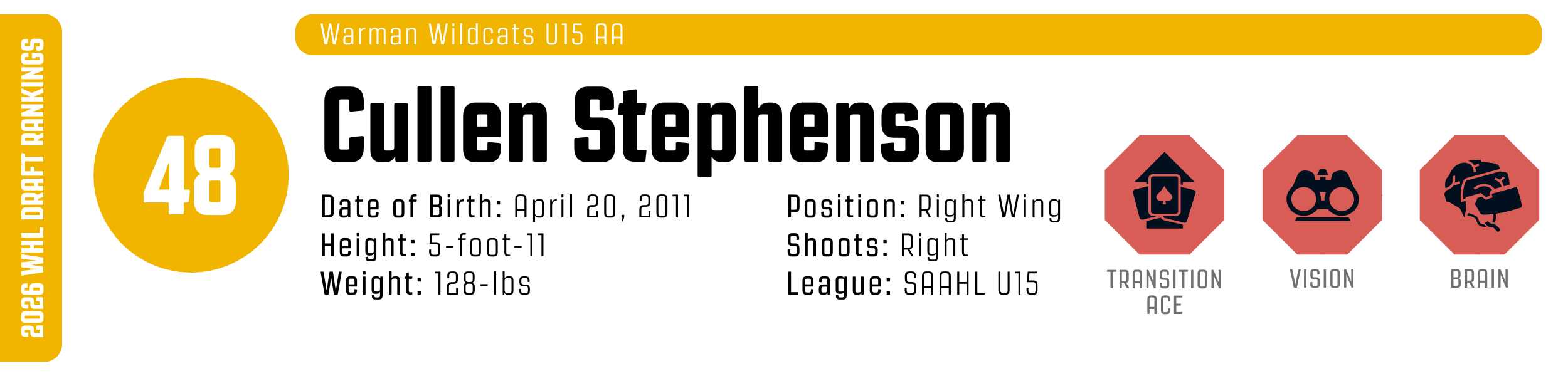
A high-ceiling playmaker, Cullen Stephenson, translates his elite skating and vision across multiple levels of competition. Whether dominating his own age group or testing his mettle at the U18 AAA level, Stephenson’s composure remains his hallmark. He is a master of manipulation, utilizing heel-to-heel weaves and deceptive shot fakes to freeze defenders before slipping precise passes through seams. A versatile asset, he drives transition with powerful crossovers and serves as a primary powerplay orchestrator from the flank. While he still has room to develop physically, his active stick and high-end processing make him a consistent ice-tilter.
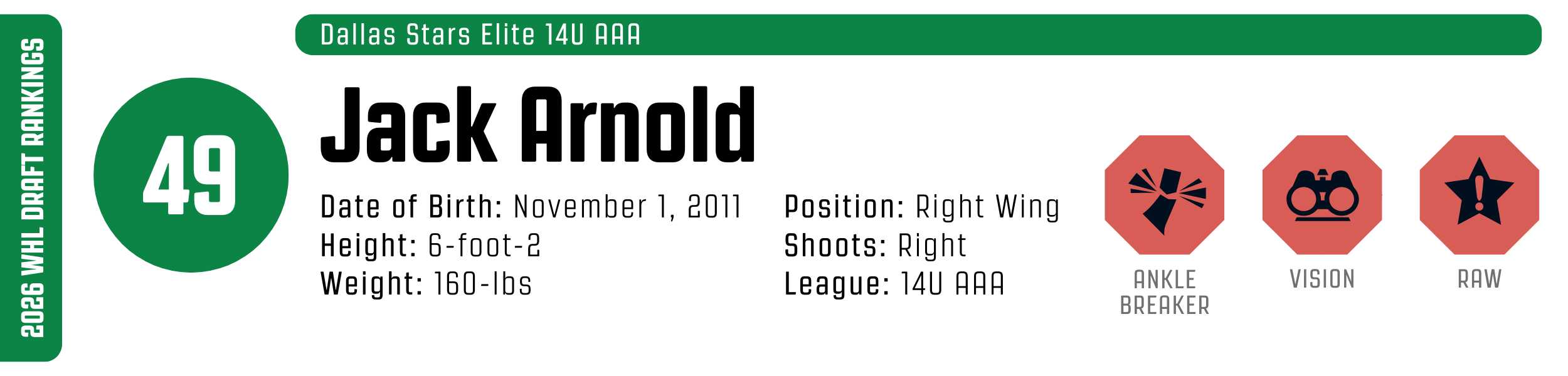
Jack Arnold is a physically imposing winger who weaponizes his massive reach to play a sophisticated power game. He is a high-level offensive processor who sees passing lanes clearly even while under heavy pressure or engaging in wall battles. Arnold excels at using his frame to shield pucks, often turning his back to opponents and leaning into their space to create separation. Whether he’s executing a slick toe-drag to the backhand for a backdoor feed or outskating defenders to find quiet ice for a heavy snap shot, his skill set is remarkably refined for his size. While he’s still developing the coordination and skating depth typical for a player of his stature, his combination of hockey sense, puck protection, and finishing ability gives him immense potential as a modern WHL power winger.
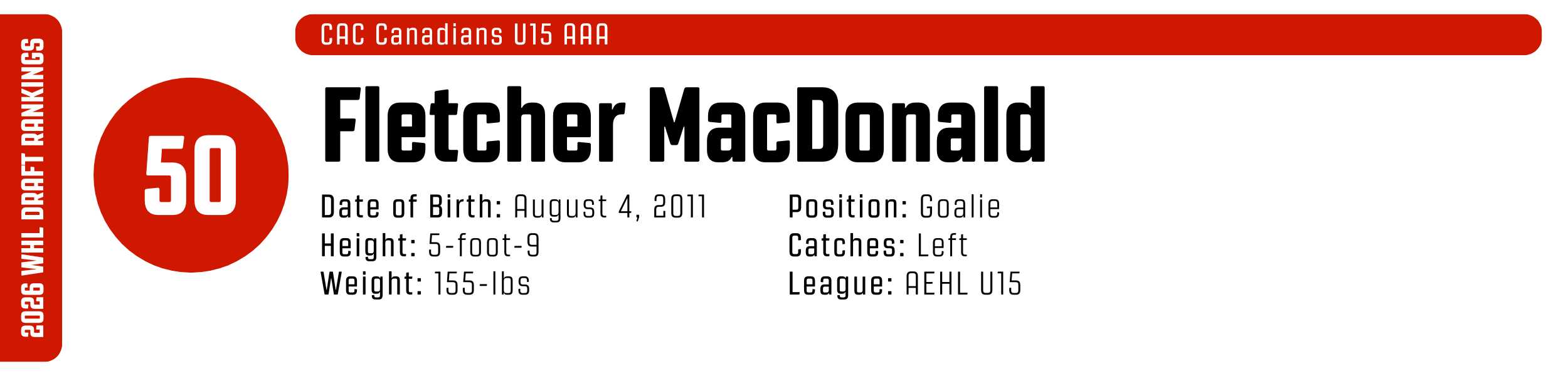
This hasn’t been an easy season for the CAC Canadians, winning just nine of their 27 games so far. Fletcher MacDonald, however, has given them a chance to win every night he’s been in, with a .926 save percentage while serving as a rare true starter at this level. At 6-foot-1, size isn’t a question, and with seamless transitions and powerful movements, skating isn’t either. Learning to leverage his skill set into more aggressiveness will take his game to another level.
Honourable Mentions:
Brock Vodden, F, Pilot Mound Academy U15 Prep (CSSHL U15)
Champ Vannus, G, Winnipeg Thrashers U15 AAA (WAAA U15)
Emmett Abel, F, Northern Alberta Xtreme U15 Prep (CSSHL U15)
Jake Gerstenbuhler, F, Calgary IHA U15 Prep (CSSHL U15)
Jesse Scriven, F, Warman Wildcats U15 AA (SAAHL U15)
Joshua Koehler, F, Saskatoon Stallions U15 AA (SAAHL U15)
Koen Braunberger, F, Winnipeg Bruins U15 AAA (WAAA U15)
Landon Reschny, C, Northern Alberta Xtreme U15 Prep (CSSHL U15)
Lincoln Baschuk, D, Northern Alberta Xtreme U15 Prep (CSSHL U15)
North Gilbertson, D, Northern Alberta Xtreme U15 Prep (CSSHL U15)
Steven Martyniuk, F, OHA Edmonton U15 Prep (CSSHL U15)
Zander Resendez, F, Fairmont Prep 14U AAA (14U AAA)
Our Team:
Daniel Gee: WHL Draft Lead
Rylan Wiest: Alberta Regional Scout
Tyson Soobotin: B.C. Regional Scout
Seth Ditchfield: Prairies Regional Scout
Max Lee: Goalies Scout
Mitchell Brown: Crossover Scout
Badges Definitions:
Sniper: A great shooter
Clinical finisher: A great net-front scorer
Vision: A great playmaker
Fleet of Foot: A great skater
Evasive: A player with a lot of small-area manoeuvrability or agility on their edges
Ankle Breaker: A player with great puck-handling skills
Chess Master: A great manipulator
Brain: A player with great hockey sense
Tactician: A player with great hockey sense away from the puck
Hammer: A player who is punishing physically
Got That Dog In Him: A player who shows up in big games
Fearless: A player who doesn't back down from challenges
Motor: A player with a high work rate
Versatility: A player who can fill a variety of different roles
Toolsy: A player with high-end tools
Play Killer: A player who gets defensive stops
Transition Ace: A player who moves the puck well
Raw: A player with a lot of unrealized potential

