Ranking the top 2011-born Americans for the 2026 WHL Draft



Times have certainly changed in the junior hockey landscape, and the Western Hockey League is no exception.
When the rule preventing CHL players from joining the NCAA was lifted, an influx of Americans began to pave a path headed north of the border. The WHL has felt the surge, specifically in the production of top scorers JP Hurlbert and Jacob Kvasnicka. Both players took varying paths from the NTDP to the Western League; Kvasnicka as a U18 age-out, preparing one more year before college, and Hurlbert as a U17 player looking for new opportunities. These prospects found immediate success.
In the 2010 age group, the class of players stepping into junior hockey for the 2026-27 season, there’s already a strong core of talent who have signed contracts. Top 15 players on our latest USA top 100 list, such as Ezekiel Kaebel, Parker Colmer, Easton Dozark, and Henry Meier, all have made commitments to play in the WHL.
There’s no guarantee that any player on this list will end up in the WHL. They’ll have a full year of courtship from whoever selects them, go through the USHL selection process, potential NTDP evaluation camps, and make their decisions from there. But it would be ignorant to pretend that the WHL cannot serve as, at the very least, a massive stepping stone for players who want to pursue collegiate and professional hockey.
This list features the players we feel are the top Americans available for the 2026 WHL Prospects Draft. There was no commitment to the league as a criterion; it was purely about who we feel are the best players available.
For grading, 50 represents a WHL-calibre ability, 70 is equivalent to middle-six/pair-level, and 90 is the high-end tools that you’d expect to see in top-line and top-pair players.
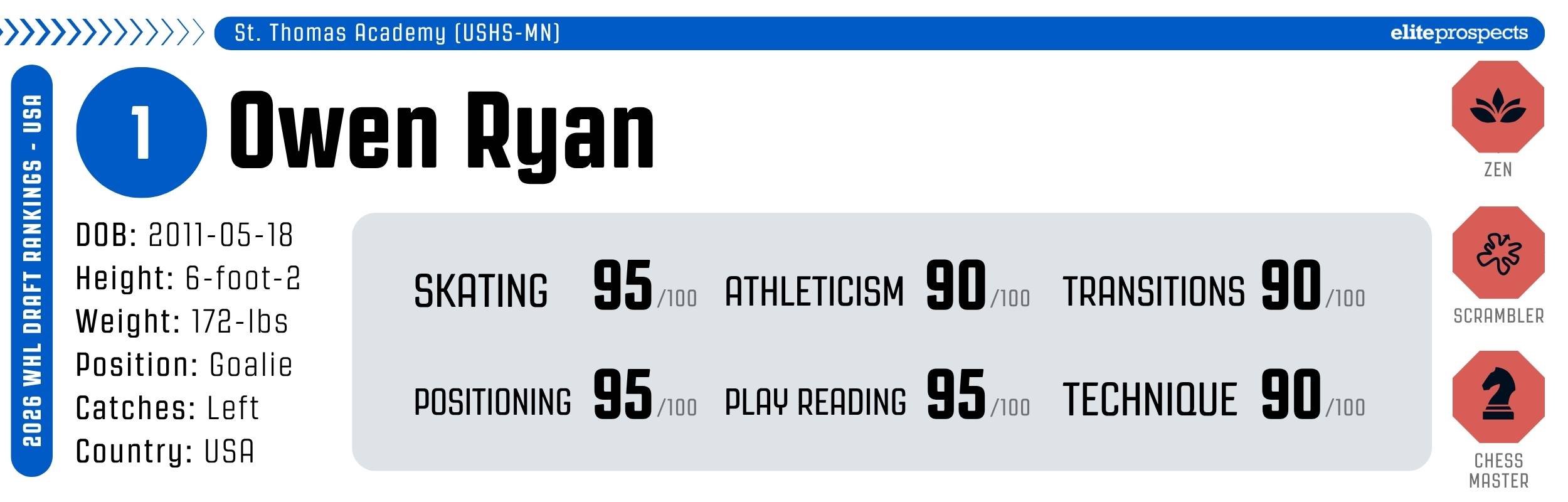
It’s ambitious to rank a goaltender as the top player in a class, but our group is confident in backing the historic numbers Owen Ryan posted this season. Stepping into a top-10 Class AA High School program and immediately earning the starting job at 14-years-old is unheard of. Not only did Ryan do that, but he led the entire league in save percentage across all conferences. He earned selection into the prestigious fall all-star league before he even debuted, and led that circuit in save percentage as well. Technically, Ryan is proficient in every way. He tracks pucks, moves with efficient power, and has the athleticism to continue progressing physically. His commitment to the WHL is unknown, as with all these American players, but he would go in the first round if he declared.
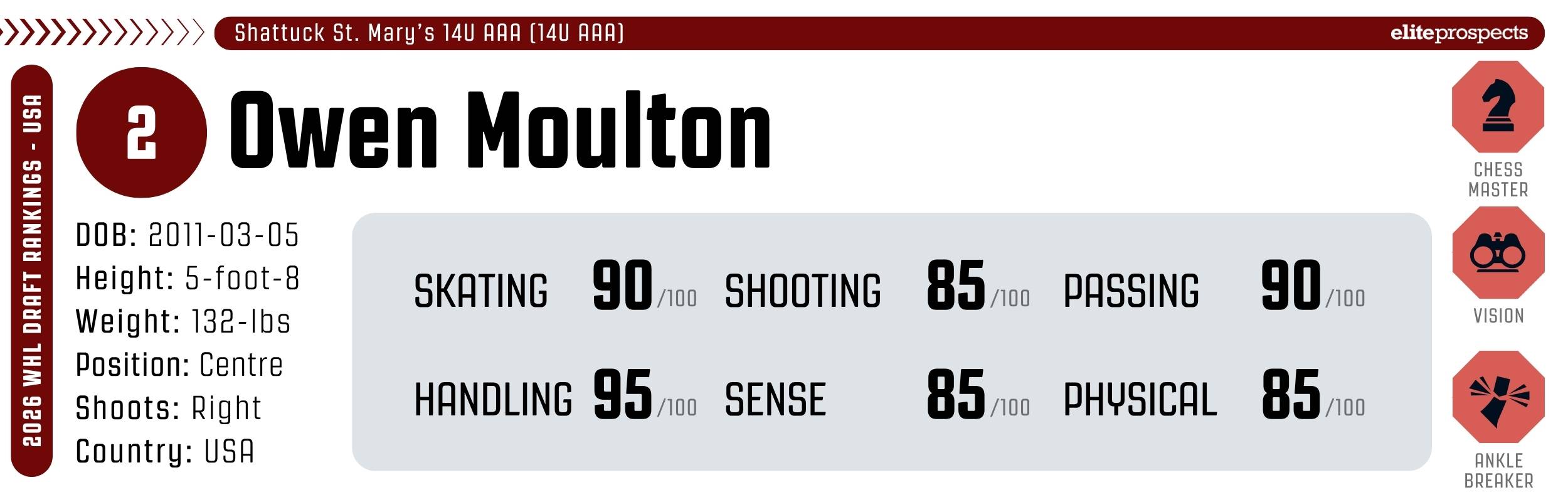
Not only is Owen Moulton the most dominant advantage creator on this list, but he’s also one of the best available to WHL teams in the entire draft. He went well over two points-per-game this season as Shattuck-St. Mary’s top player, and arguably the best overall player in the country. Moulton pushes to create on every touch. He drives offensively with pace, attracts coverages, and either beats his check with wild handling manoeuvres or slips pucks to teammates in scoring areas. Moulton isn’t a soft player either; he has a ton of jam and can bowl over any opponent. If he’s insistent on signing with the WHL, don’t be surprised if he’s a top-five pick. If he’s not, a team still may take a chance in the top two rounds.
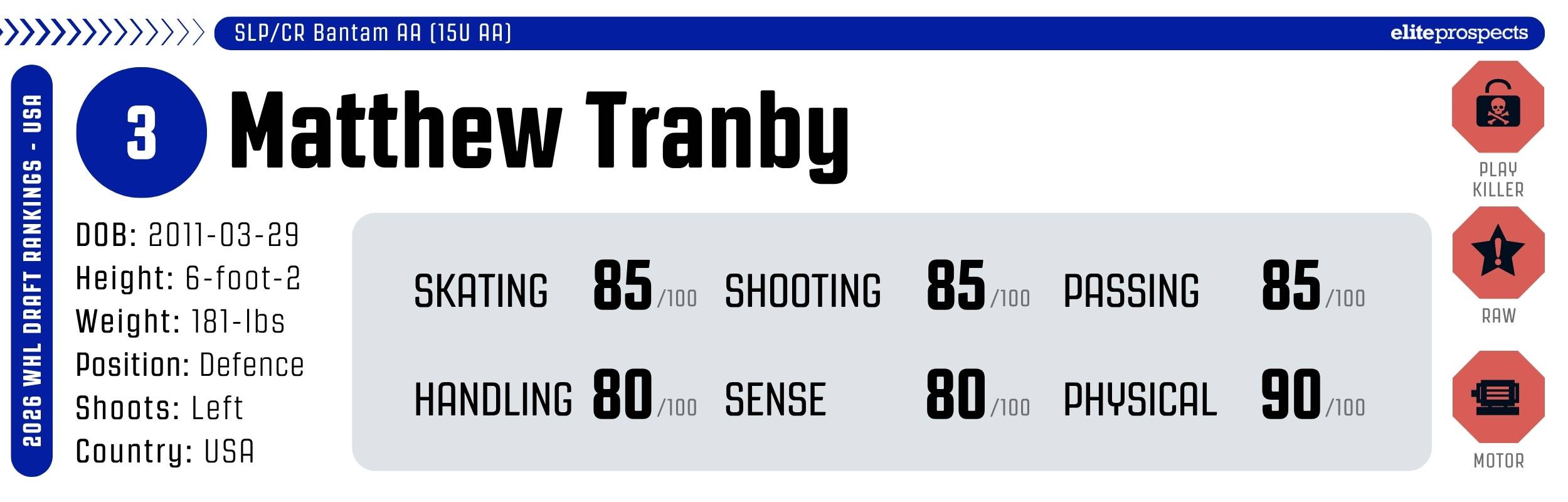
Matthew Tranby is ranked third here, but you could argue him as high as top-10 on the overall WHL board. He’s a hulking defender at 6-foot-3 already and is learning to use it more with every game. The defensive game is pretty obviously going to become a massive tool for Tranby; he surfs aggressively, cuts down attack lanes, and manages gaps well. He’ll have to add more edge comfort and physical engagement, but that could happen quickly. Tranby is a rare breed in this class, one of the best defenders available.
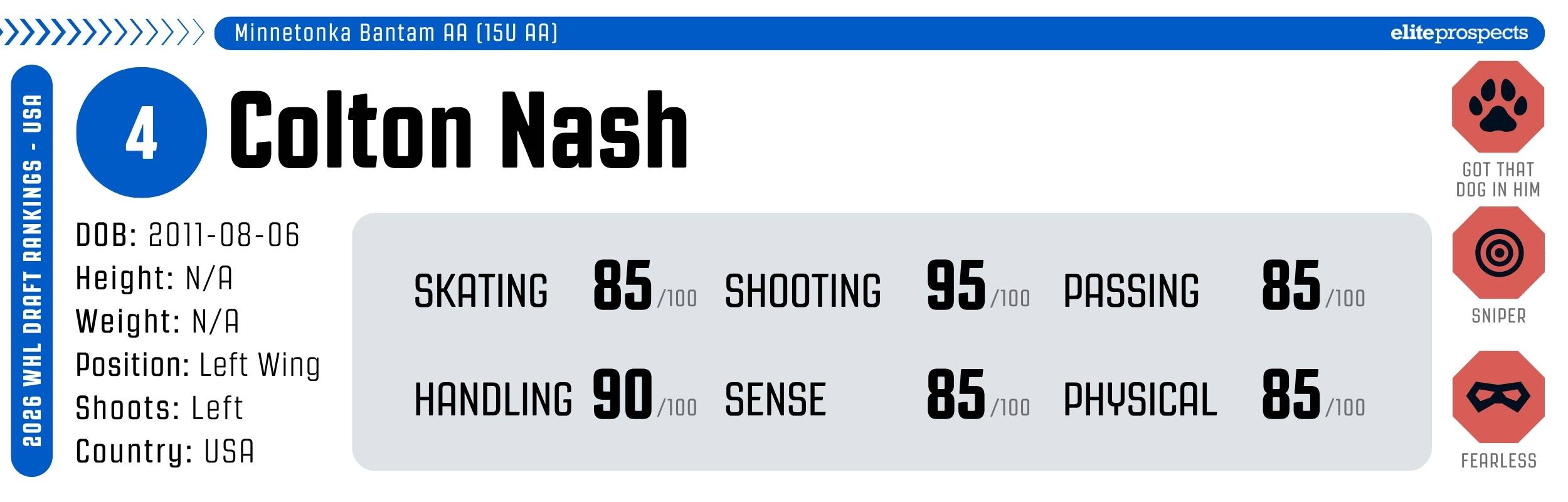
Colton Nash is the last of the big four in a group of players who we all feel could change the course of a WHL franchise if they declared for the league. Nash averaged nearly three points-per-game this season at Minnetonka, playing on the most dangerous line in the state. His game stems from his violent movement patterns. Nash is a strong player already, and he explodes on pucks from all sorts of body positions in the offensive zone. If presented with a second of space, he can break the game open. Nash could become a ridiculous WHL scorer if he heads north.
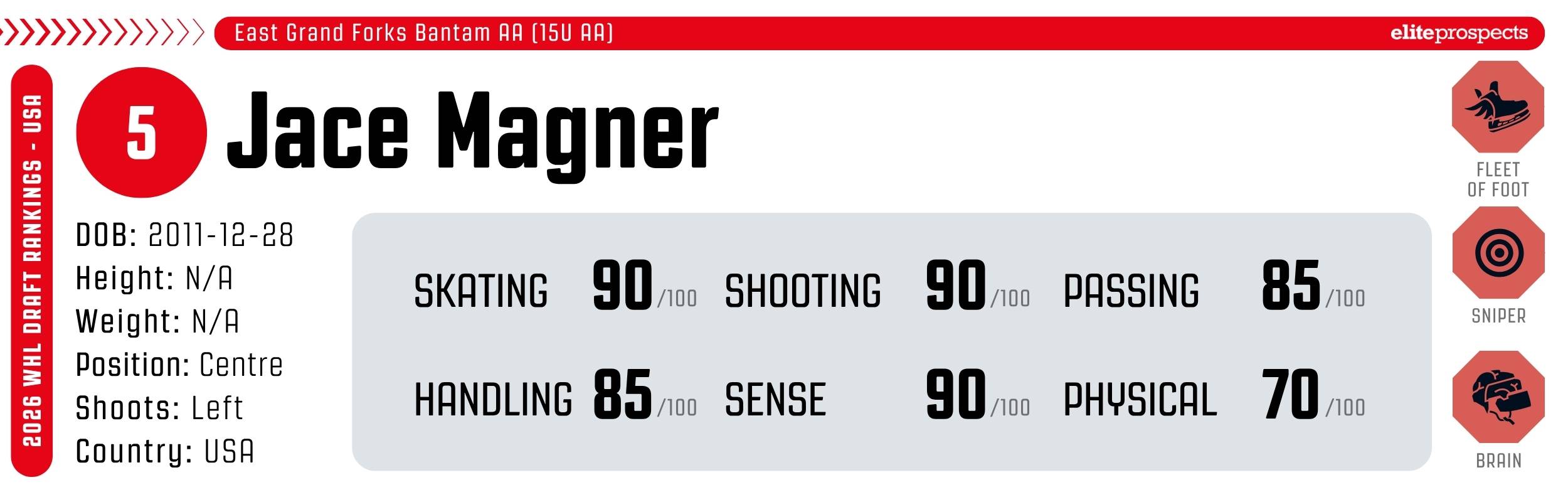
Jace Magner was as important to his team as any player in bantam hockey this season, posting nearly three points-per-game. He’s a cerebral player who plays as a true centre, a driver. Magner elevated his ability to make plays at pace over the course of the season, anticipating coverage and reacting in real time to engagements. He’s developing elements as a scorer, too. Magner scored 61 goals this year and is starting to beat goalies from mid-range with tactical releases. Magner could become a top-line centre in the WHL if he continues to develop.
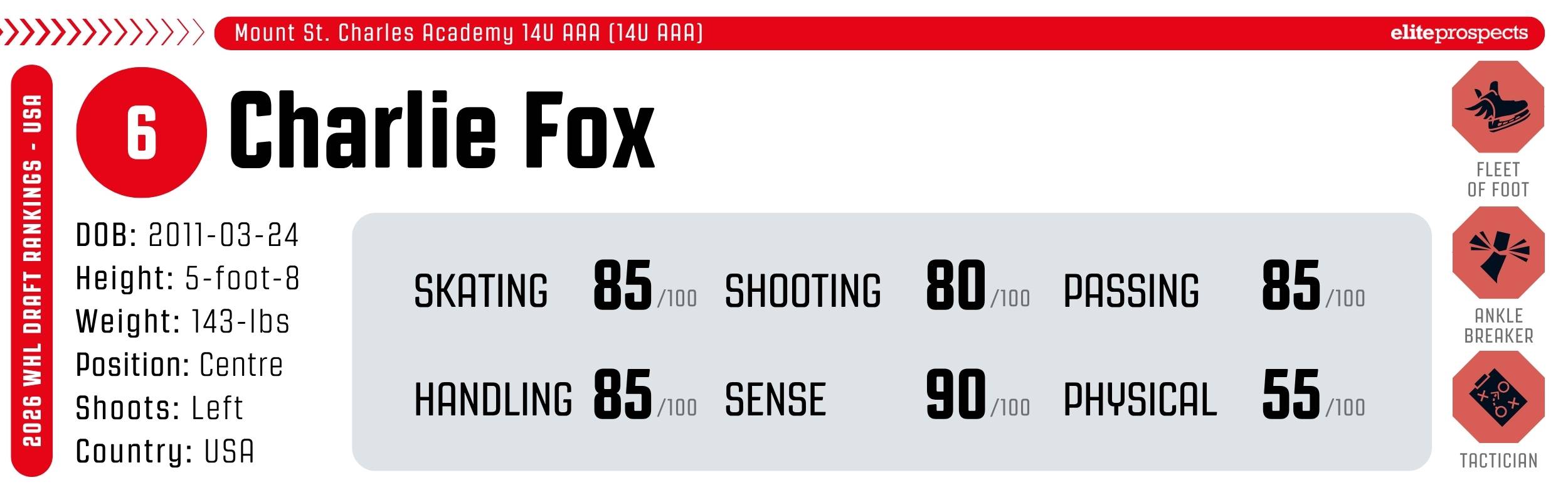
Charlie Fox is the highest-rated player outside Minnesota on this list and was extremely impressive in our viewings. He’s as dynamic as it gets offensively. Fox carries pucks at pace through the middle of the ice, generating multiple touches in sequences. He’s a lanky kid who appears to have plenty of room to continue growing physically. Fox has gaps in his skating posture that may hinder him in the near future; as he gains strength, those can be ironed out. He looks like a potential top-six player wherever he lands in junior hockey.
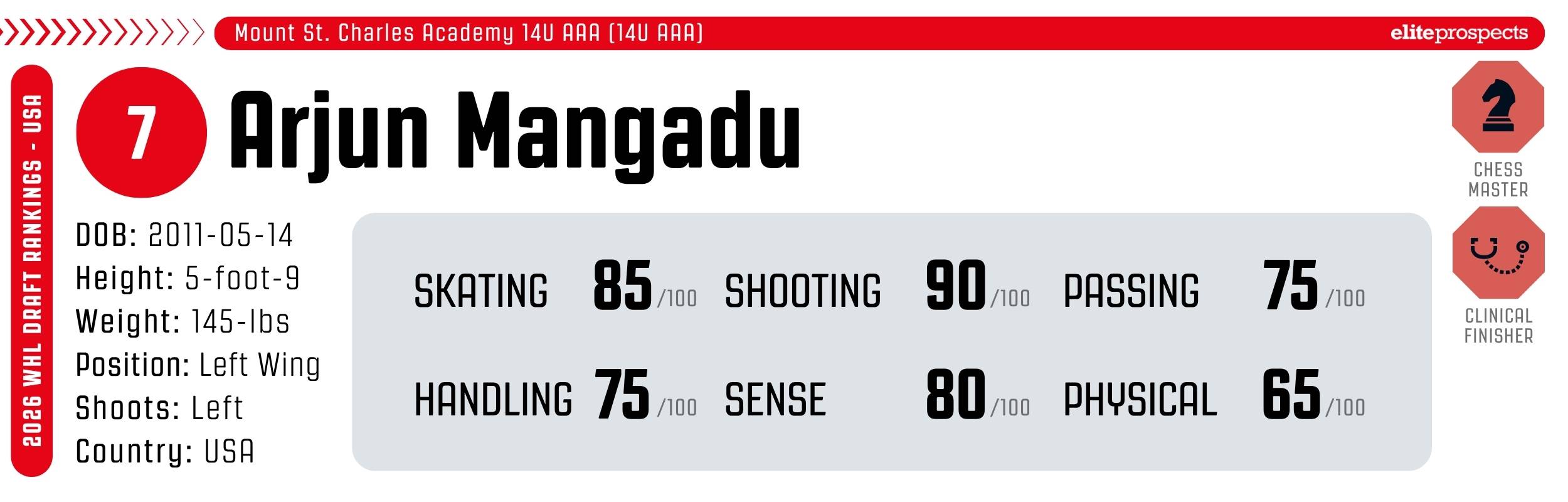
Arjun Mangadu was one of the better offensive creators in the entire country at the 14U level, a potent option every night. He scored at a goal per game rate all year, including three in the national championship game. Mangadu has a slight frame, but he can shoot the puck, boasting solid mechanics in the way he generates torque. His offensive tools are strong enough to facilitate for his brain; he doesn’t mishandle many pucks nor miss any reads, creating consistent offence on any shift. It’s hard to say his interest in the WHL, but Mangadu could become a scorer with continued physical growth.
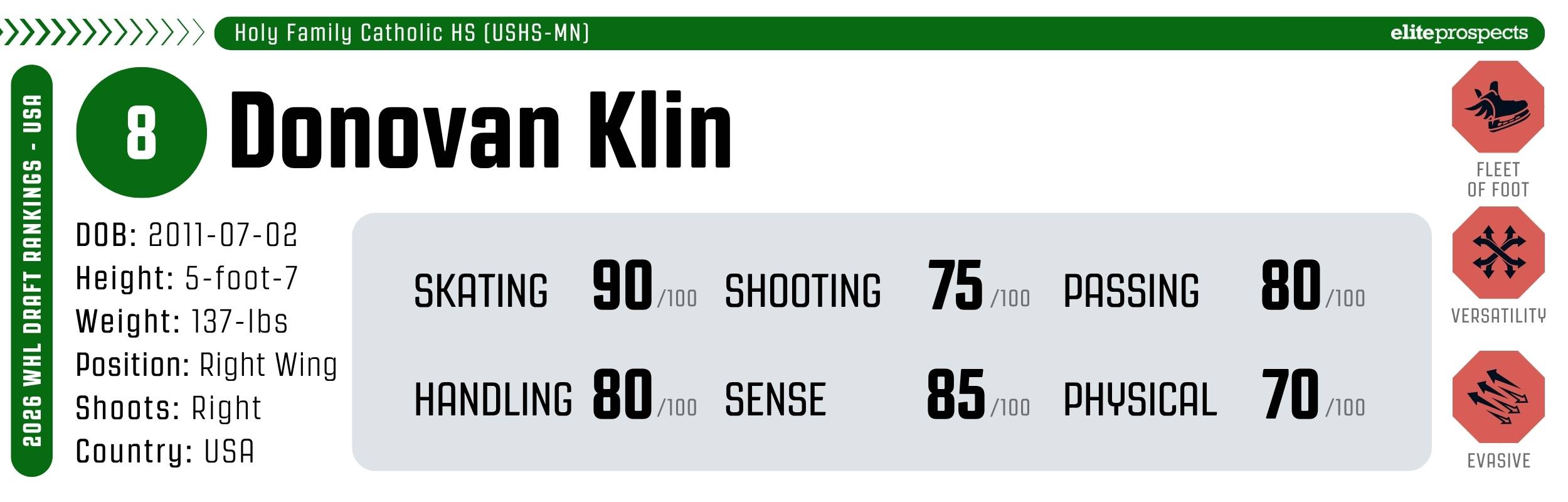
Donovan Klin made the rarest of jumps this season, stepping from peewee hockey into the top-six of a Minnesota High School AA hockey team. He immediately earned trust, becoming everything for Holy Family Catholic. Skating is a defining attribute for Klin. He outsprints everyone down the wall, burning holes in coverage with separation. Even as one of the state’s youngest players, he contributed brilliantly in defensive situations. Klin has the skating to mark checks and an active stick to apply consistent pressure. He’s another potential top-six forward in the WHL.
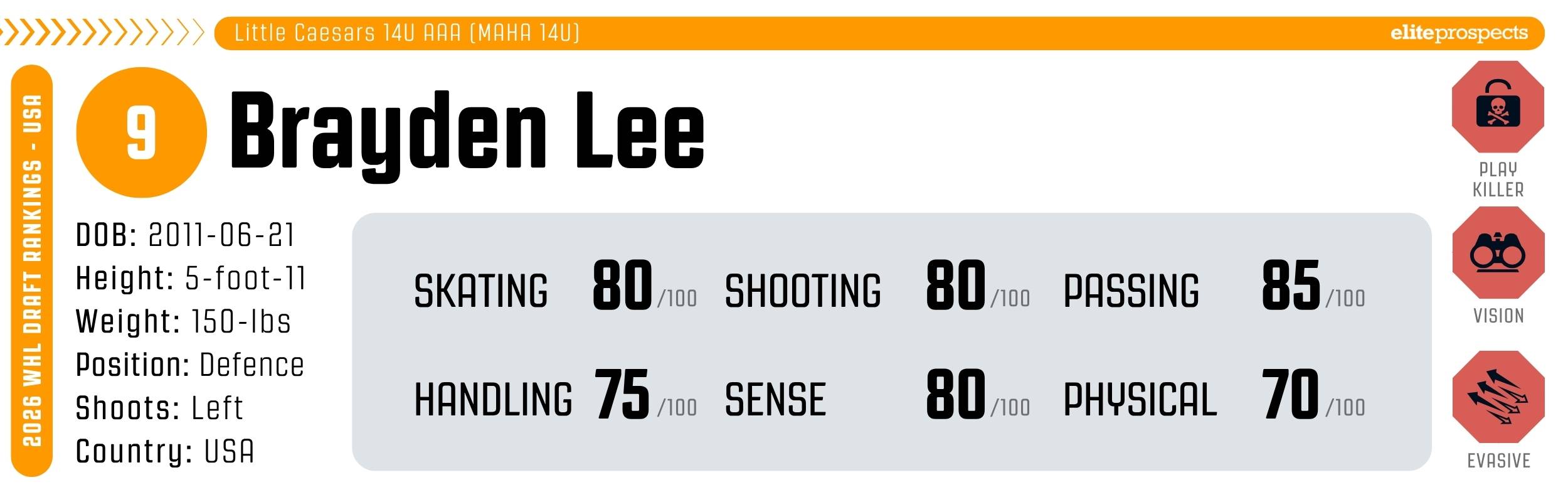
Texas has quickly become a reliable pipeline for upcoming talent, and Brayden Lee may be next in line. He manned the blueline for Little Caesars on their national title run and logged massive minutes in every game. Lee plays a puck-dominant game, controlling pucks in carries up ice with edge control and placement around stick zones. He has potential as a power play quarterback at the next level, with a solid point shot and strong facilitation. It's hard to say where he fits in among this draft class as a whole, but we’ve identified him as a top-10 US prospect.
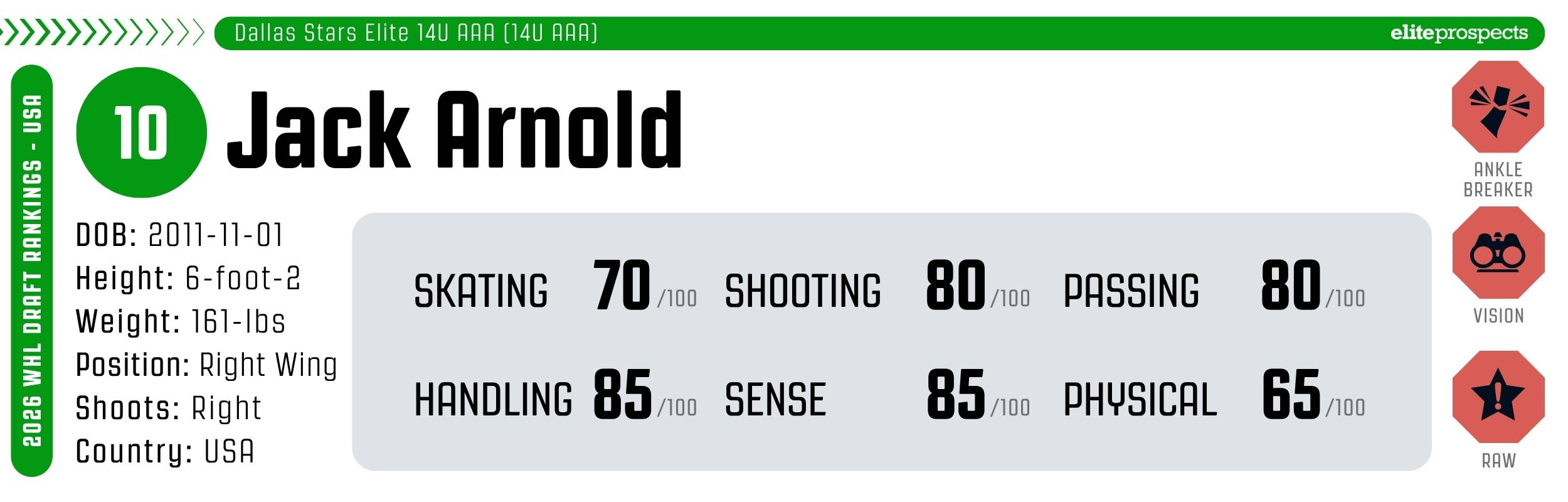
Jack Arnold is an extremely intriguing prospect out of the Dallas Stars Elite program, a hulking forward with tons of room to continue blossoming physically. He’s 6-foot-3 and already developing a power game. Arnold seals checks, sprints on the forecheck, and works hard defensively to suffocate space. There’s skill too, showing in-stride shooting and contributing in complementary ways through the cycle. Agility and quickness will be the next developmental step towards becoming an NHL hockey player. He could blossom in major ways in his junior hockey career.
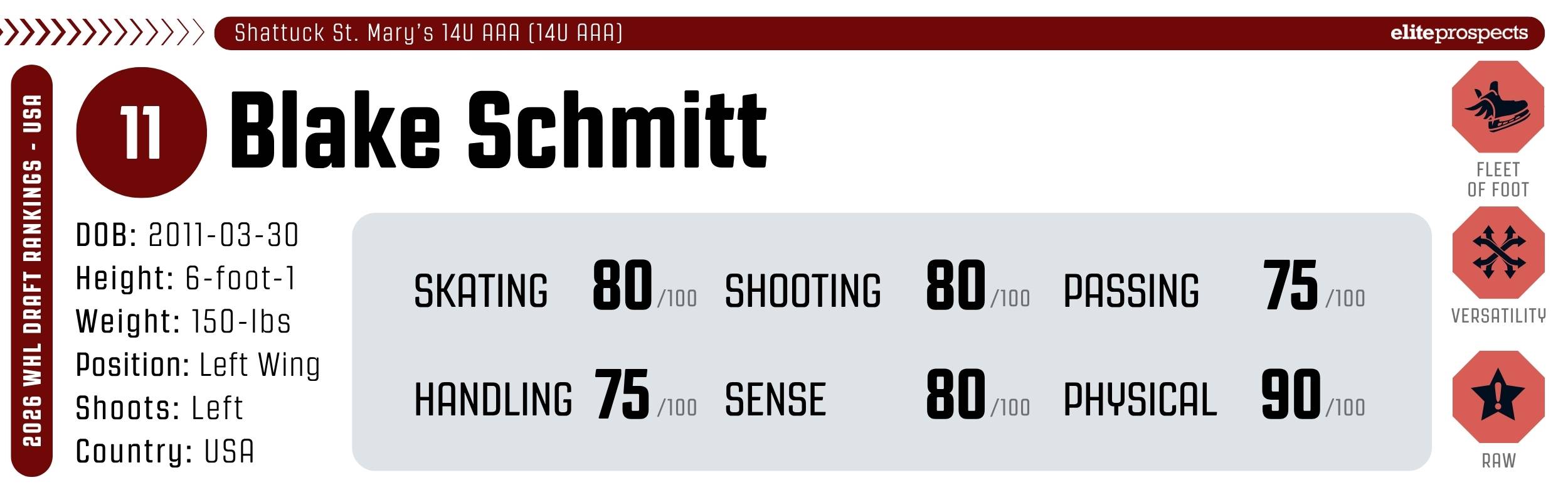
Blake Schmitt has versatile potential anywhere in a lineup and is a player WHL teams may take a chance on early. His reach and compete are already projectable traits. Schmitt swallows up ice with his length and limits opponents physically. Schmitt stacks his weight absurdly well, handling in stride while scanning proactively. Continuing to add pace to his game will be the next step, the ability to get out of breaks and explode in straight lines. Schmitt has the tools to become a valuable middle-six forward with complementary upside.
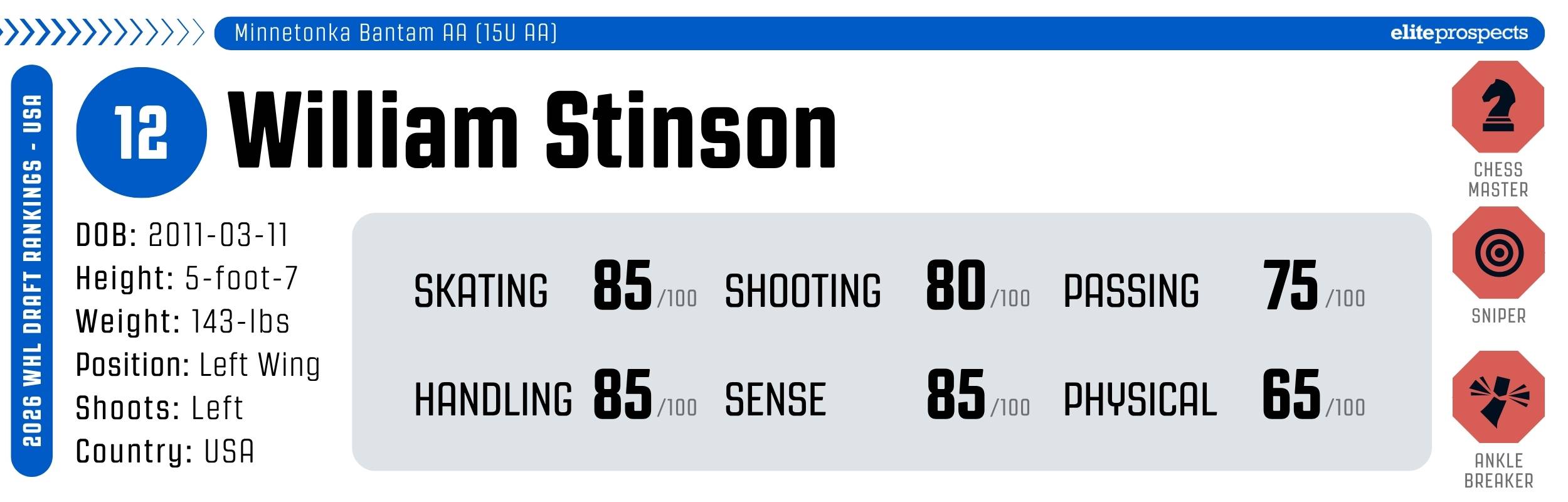
Some might lose William Stinson in the fold of a loaded Minnetonka team, but we think that would be a mistake. He’s one of the most dynamic attackers in the entire class. Stinson blends perfect skating posture with projectable attack patterns, using delays and manipulative routes to open layers on the rush. The pushes to create offence are pretty relentless. He’s a high-upside offensive prospect in the draft, and one who may be undervalued right now. Stinson was a fringe A-grade for us.
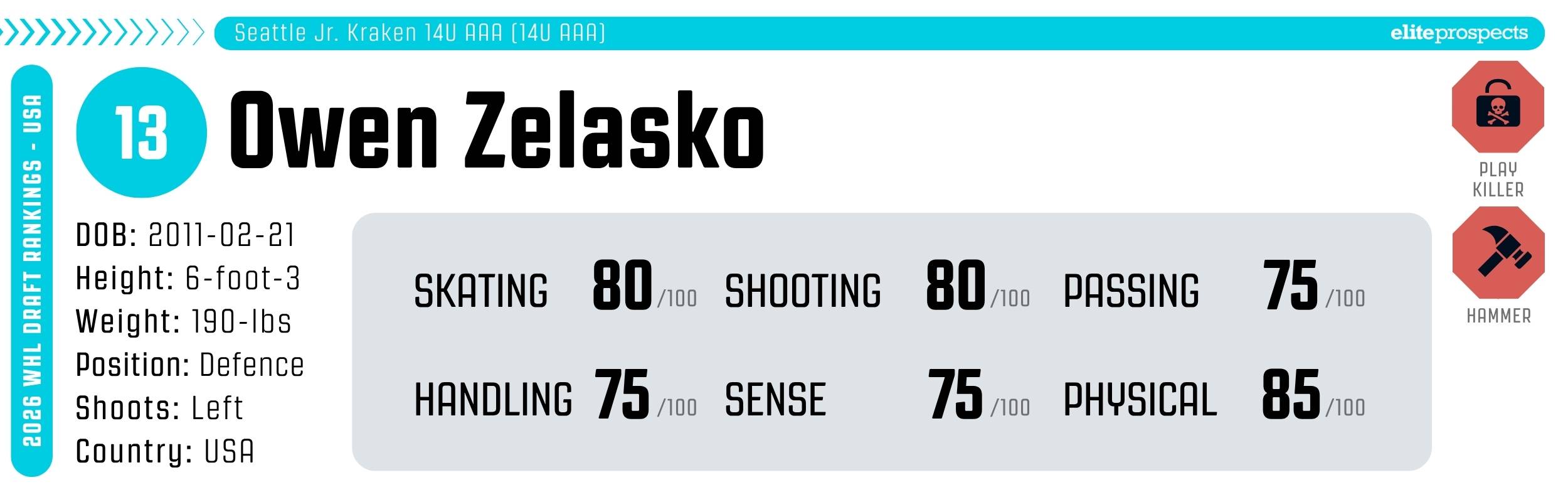
Owen Zelasko had an excellent AAA season for Seattle Jr. Kraken, serving in every role on their blue line. His involvement rate is exceptionally high. Zelasko is always active offensively, driving rushes as one of the first players up the ice and connecting plays with his teammates. Defensively, he’s proactive too. Zelasko restricts space and shuts down opportunities with both his stick and physical frame. He has the size and will to push the game that makes us believe in a potential WHL projection. Zelasko could become a WHL player if he experiences an efficient development path that boosts his explosiveness and fluidity.
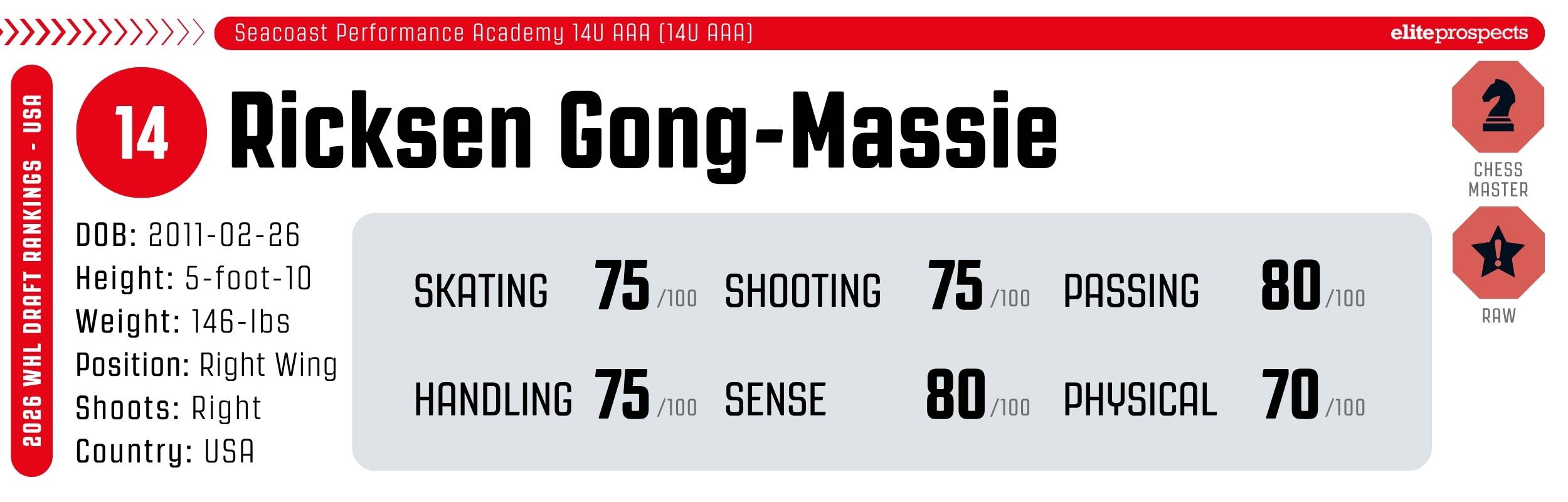
A west coast kid who played his AAA hockey this year out east, Ricksen Gong-Massie had another year of offensive outburst, hitting the 100-point total. He’s a pretty deft creator, handling pucks between the dots and distributing from there. Gong-Massie has a lanky frame that should handle weight well, as he adds needed explosiveness in his lower half to keep separating. He is a quick connector and has the handling skill to scan through his puck touches, weighing options. Gong-Massie could become a middle-six scorer in major junior with increased physical development and improved skating.
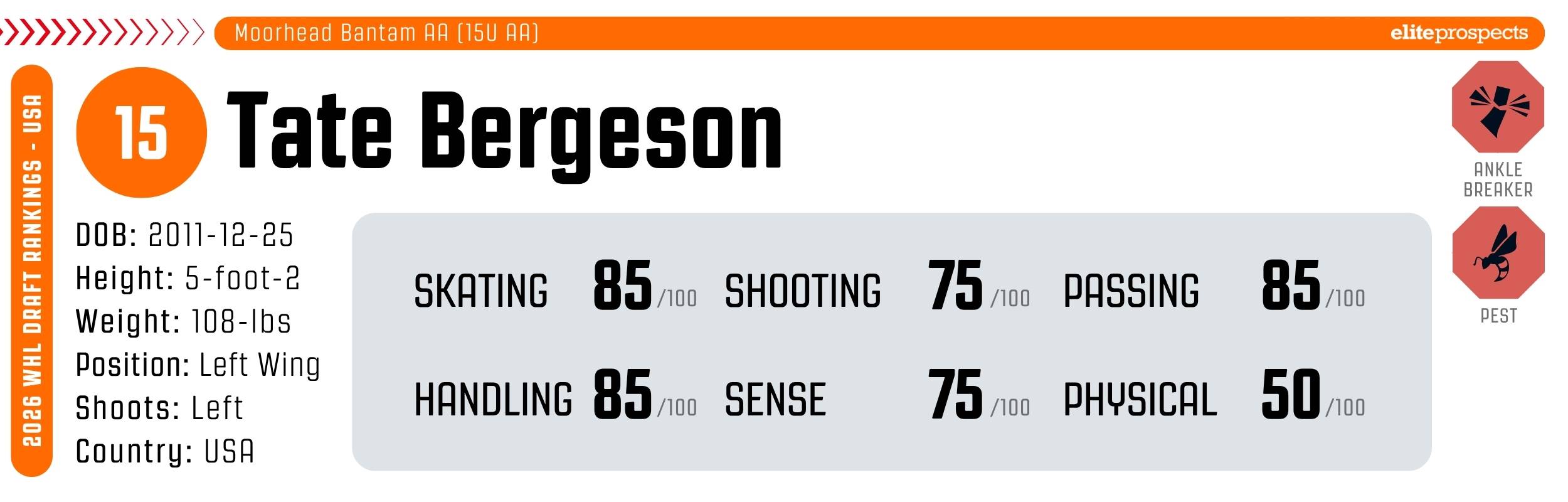
Tate Bergeson played himself up lists all year long and truly broke out at the Toronto Exposure Cup, one of the leading scorers in the event. It’s easy to see how he produces. Bergeson constantly rolls with pace through the offensive zone, slipping pucks through triangles and looking for plays to the interior. He funnels so many pucks to the inside for triggers. Bergeson is typically the smallest player on the ice, but he’s a fearless attacker. He’s not afraid to take pucks into the deep slot against bigger defencemen if it’s the right read. Bergeson could become a top-six junior hockey player. Physical growth will play a big role for him.
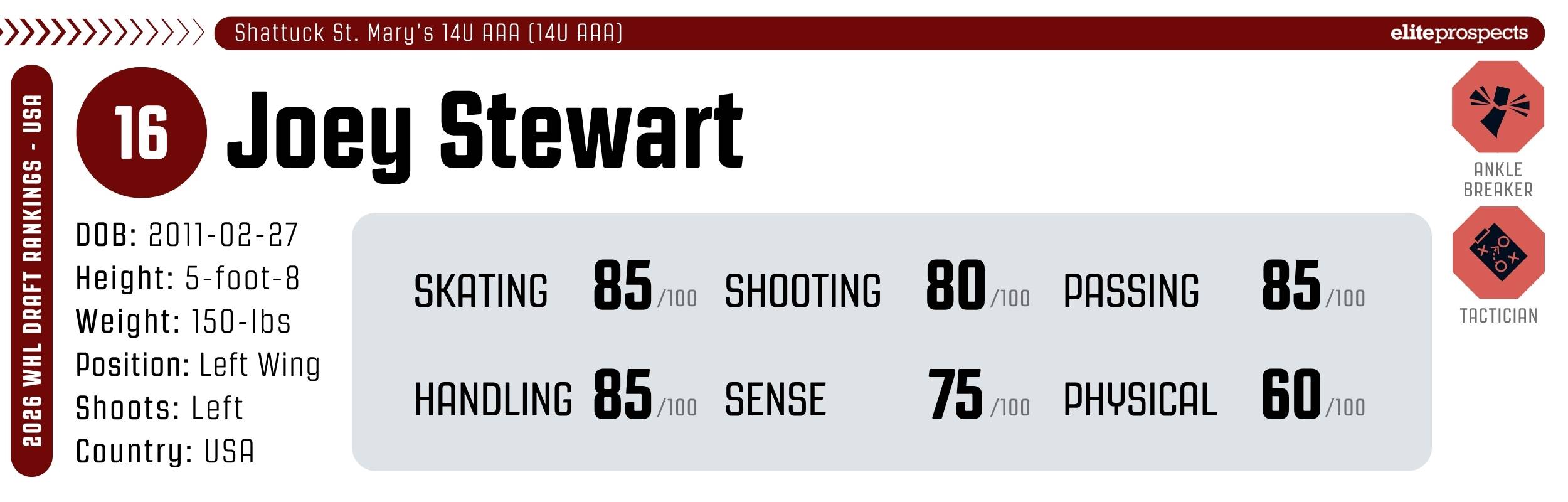
After missing extended time last year, Joey Stewart appeared to really find his stride in the spring season. His skating has gotten exponentially better with time. Always a coordinated kid, Stewart has added a bit of balance to his frame, making his carries at pace easier. As he’s found more body control, Stewart has begun to hold onto pucks longer and connect more complex plays. He can make reads in all layers of the attack, learning how to delay plays with his hands and skating. It might be a longer development curve as he adds size and continues to grow, but Stewart could be a nice high-upside bet for a team.
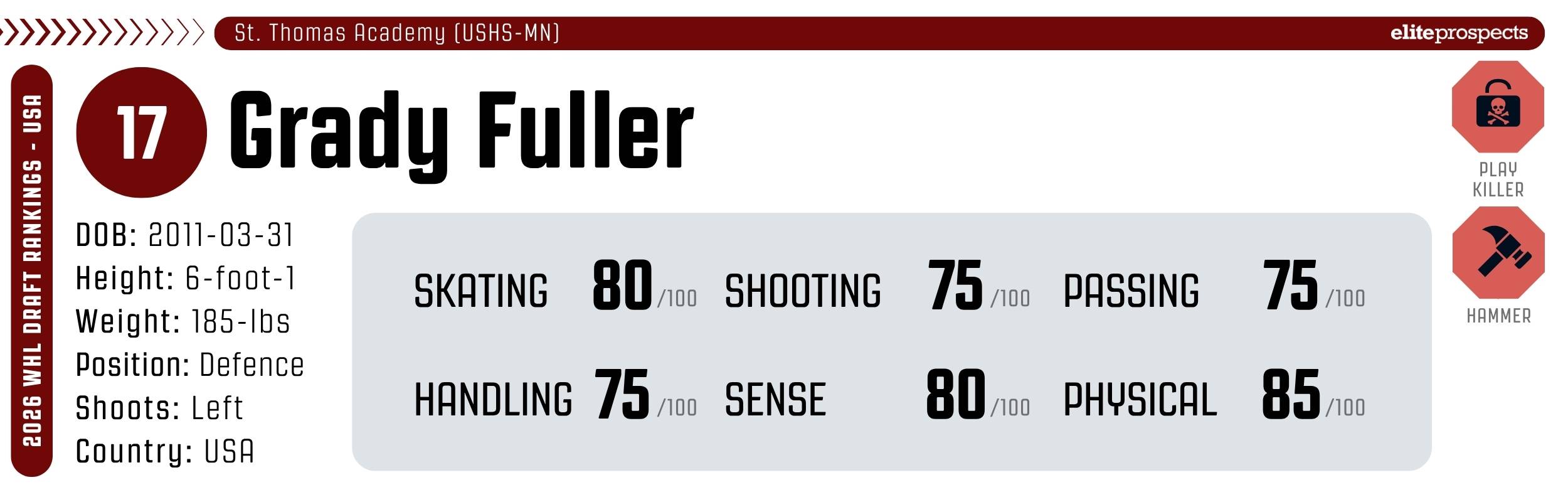
One of just a few defencemen on this list, Grady Fuller is a player that we liked in the limited viewings throughout the season. At a stacked St. Thomas Academy program, he didn’t get a ton of icetime as a 14-year-old, but he’ll likely take on a huge role starting next season. Fuller has pro-level traits already. With good size, he places edges well, shifting his weight on carries to create space. Fuller retrieves puck with poise, deploying pre-scans to map out spacing before starting offence from the backend. He’s a tricky projection, with the lack of real minutes, but a player who could blossom next season. Fuller is an interesting bet on two-way upside.
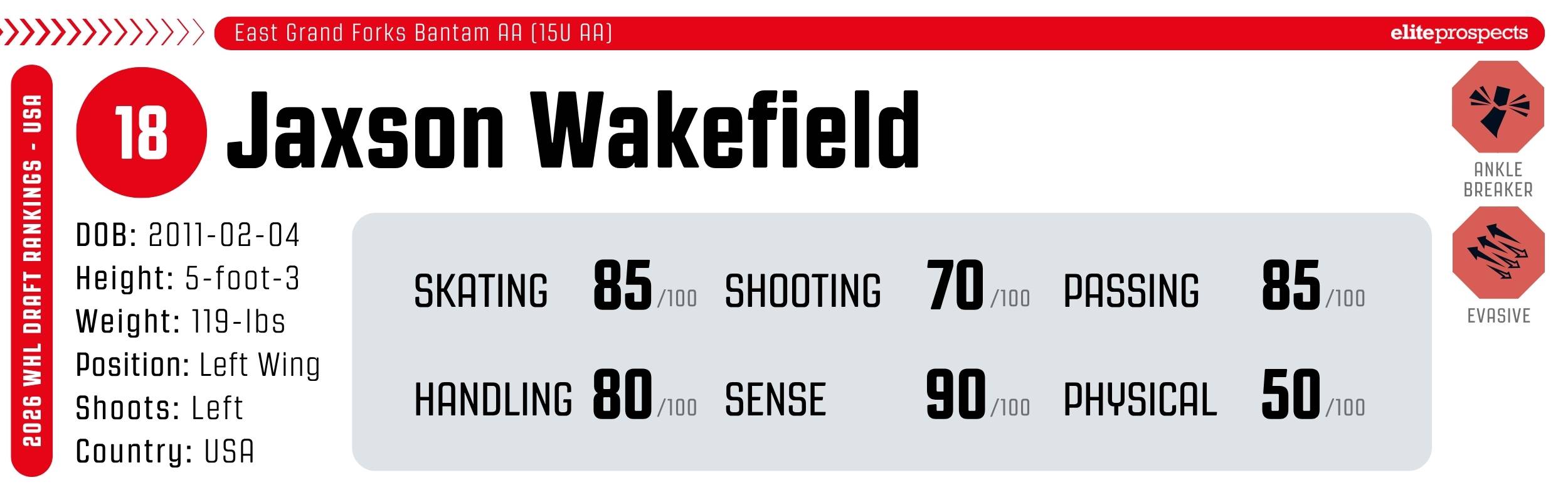
Jaxson Wakefield played alongside Magner on East Grand Forks’ top line this season and was able to provide offensive contributions just about every night. He’s tiny, at just 5-foot-3, but there are plenty of offensive traits to see hope in. Wakefield has efficient handling mechanics, rolling his wrists to cup pucks while extending every last inch of reach around his body. He has pro-style edge work, too; riding a ten-and-two to face the inside, punch turning to pull up on speed entries, and stutter-stepping to give off misdirection. There’s inherent risk in his size, but Wakefield is an offensive creator who could spend some time marinating in high school before making the jump.
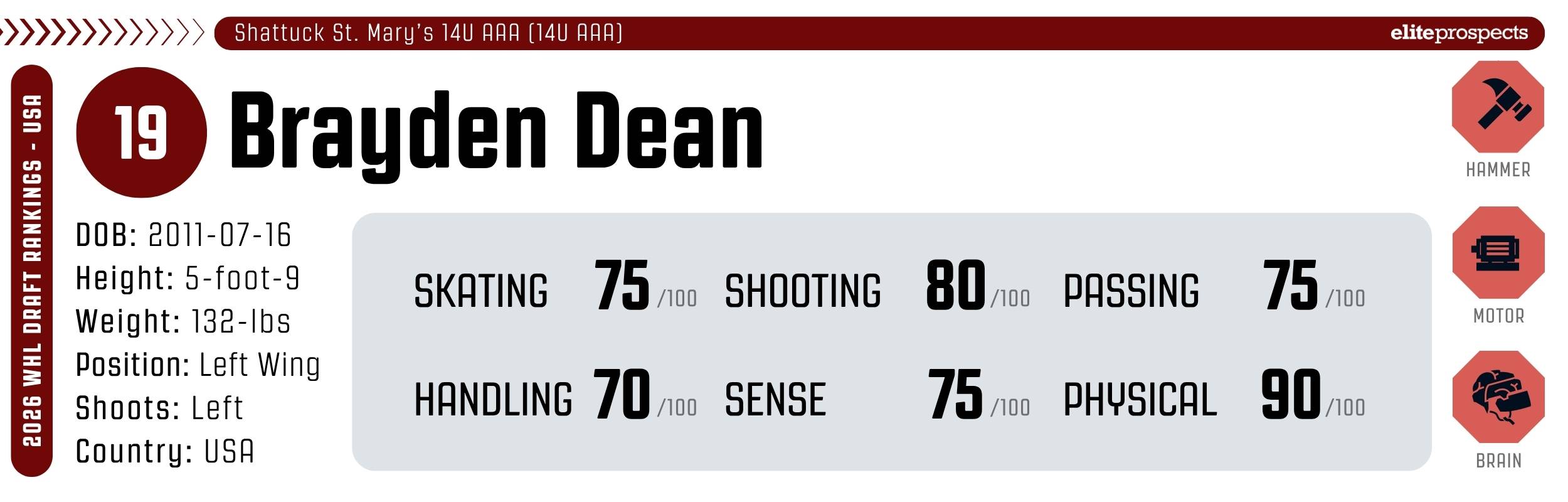
A player who appeared on our midseason WHL list, Brayden Dean, was heavily scouted by our team over the course of the year. His game stems from a high-end work rate and compete level. Dean constantly engages physically, sprinting into battles and expressing mature contact skills for his age. The shooting mechanics are strong, too, scoring 30 goals with efficient posture, torque, and a drive for the net. It could be a long development path, and it depends on how much he grows, but Dean certainly has WHL scoring upside.
