







As the march toward both the USHL Draft and OHL Priority Selection continues, and more USHL tenders seem to be signed every day, it feels like a perfect time to release our first-ever annual Top 100 USA Prospects list for the 2010 age group. It's the time of year that brings new hope to junior hockey teams across the continent, an opportunity to refill their cupboards with prospects and build for a bright future.
There’s been a lot made of this group of 2010s playing in the United States, and our group tends to agree with the consensus: this is an above-average crop of talent. We strongly feel that, from the top of our list all the way down to the honourable mentions, you can find high-end skill and contributors.
A major part of this project was considering the criteria for player eligibility. Eventually, we settled on the most basic qualification: if you were born in 2010 and you played in the United States this season, you are eligible to appear on this list. That means players born outside the USA, but who play on American programs, were fair game to be selected.
The nature of that criterion made this a gruelling project. Many other high-end players were unfortunately forced off the list, considering the deep player pool. The talent floor in the United States has never been higher, meaning we’re looking at a list of 100 kids who we all could become top junior scorers, potential NCAA contributors, and some even in the National Hockey League.
Our team accumulated in-person viewings of all these players, whether it was at the OHL Cup, the Whitby Silver Stick, Minnesota High School, New England Prep, USA Hockey Nationals, league play, or other various settings. It was a fun class to watch and analyze.
Each player has grades, with 50 representing a Tier 1 and Major Junior-calibre ability, 70 equivalent to middle-six/pair-level, and 90 being the high-end tools that you’d expect to see in top-line and top-pair players.
Here’s our final ranking of the top 100 2010-born players in the USA. You can access a downloadable copy of our list by clicking here.
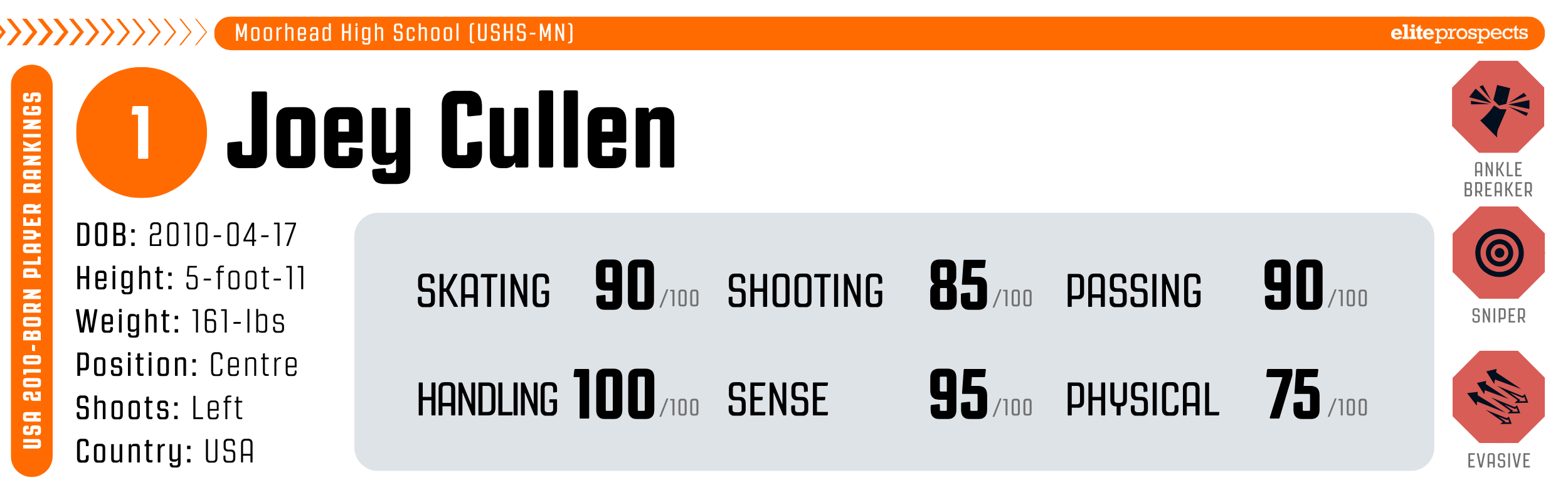
In 2010, the birth year of all the players on this ranking, USA Hockey dramatically adapted its ideals of player development by founding the American Development Model. It prioritized puck touches, pace, and creativity, hoping to teach the next generation of American-born players the modern game. A player like Joey Cullen, one of the first to grow up in the new age of American Hockey, embodies all the attributes the country set out to develop.
Cullen’s puck handling earned one of just two 100-grade ratings handed out in this project. He’s a constant manipulator. Cullen leverages heels off the rush, baits defenders with outstretched reaches before pulling pucks against the grain, and attacks straight at opposing triangles to gain a half-second of hesitation before winning new ice. Cullen handles at a high pace, too, rarely slowing down to execute these sequences. This can lead to some wild ankle-breaking moments, crossing up defenders’ momentum multiple times in a shift.
He easily eclipsed two points per game this year at both Honeybaked and Moorhead High School, and enjoyed some nice team success, too. Cullen led his team to a state championship, scoring in an already legendary third-period comeback. He’s the easy bet to be the U.S. National Team Development Program’s No. 1 centre on the U17 team next year, and projects as one of their more dynamic recruits in years.
Read More: Breaking down USA Hockey’s U17 NTDP roster for the 2025-26 season
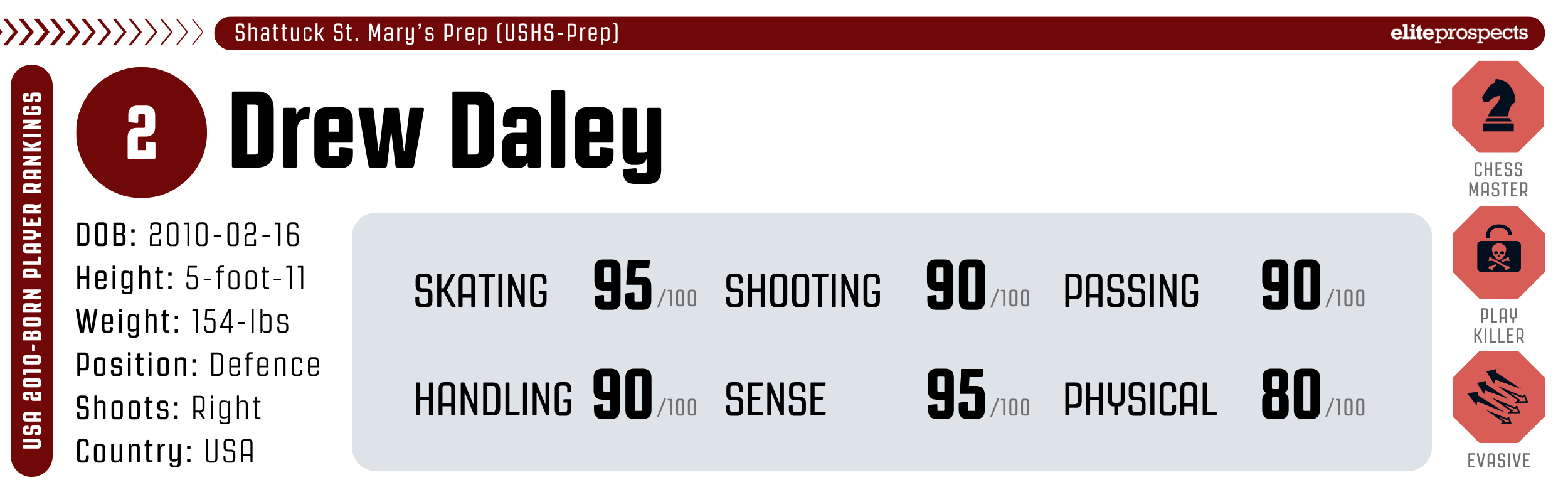
Sidney Crosby, Macklin Celebrini, and Jonathan Toews highlight the shortlist of players who have made Shattuck St. Mary’s Prep team as double-underagers, an illustrious achievement. Drew Daley did it as a defenceman this year, a feat even rarer. After a near-100-point season last year at the bantam level, Daley had outgrown his age group and earned a look against some of the top prep teams in the country.
It became clear right away that he belonged at this level. Daley exploded out of the gates offensively, continued to find his confidence from last season, and exploded in the biggest game of the year. In the third period of the national championship game, Daley baited a defender, used a backhand toe drag to separate, then ripped a goal off an angle-change shot to tie the game. These activations are so impressive with Daley; he plays into soft space in the high cycle without over-extending defensively. His retrieval game is effective, and he has the feet to stick with any check while on-puck defending.
On a blue line with varying levels of offensive talent, Daley is the early favourite to emerge as the No. 1 defenceman for the NTDP next year. The completeness of his game will be hard for any kid at this age to match, and with room to fill out physically, Daley will only get better. He could become a high NHL pick in 2028.
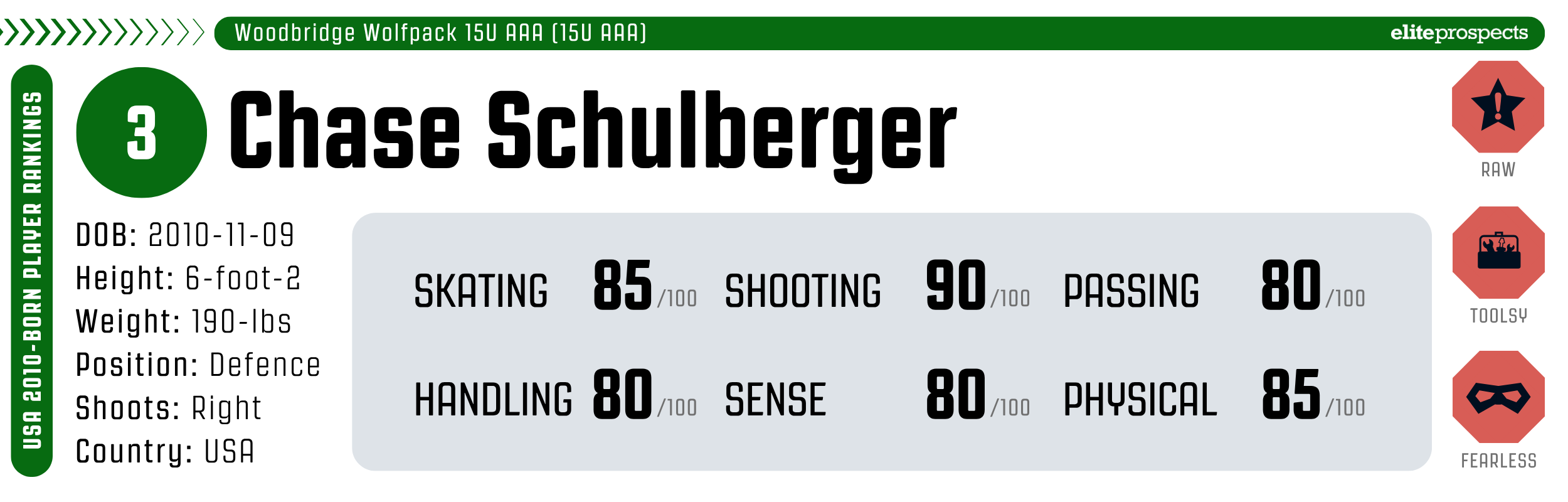
This is an aggressive ranking for Chase Schulberger, but he’s a player that our group strongly believes in. He joined Woodbridge Wolfpack after his time with the Philadelphia Jr. Flyers and translated his game immediately. Schulberger earned a selection for the NTDP as an easy player to slot into the top-four immediately.
The physical tools with him are super exciting. He’s a 6-foot-2 right-shot defenceman with 85-grade skating and physical skills. Schulberger drives pucks through the middle of the ice and is a fearless attacker in transition. His skating and hip mobility allow him to dart quickly through the middle lane; there are moments where he leads a rush yet easily becomes the first defender back to kill a play. Schulberger has physical intensity, too, finishing hits and eliminating opponents with his body. It's a complete package, everything you look for in the modern defenceman.
Schulberger is another player who could have a seamless projection to NHL draft conversations someday. He has both the measurables and the mentality in his approach to push the game, leave an impact, and occasionally take over. There’s so much to work with for the NTDP team staff in Schulberger, who looks like another potential top-pair guy in college hockey.
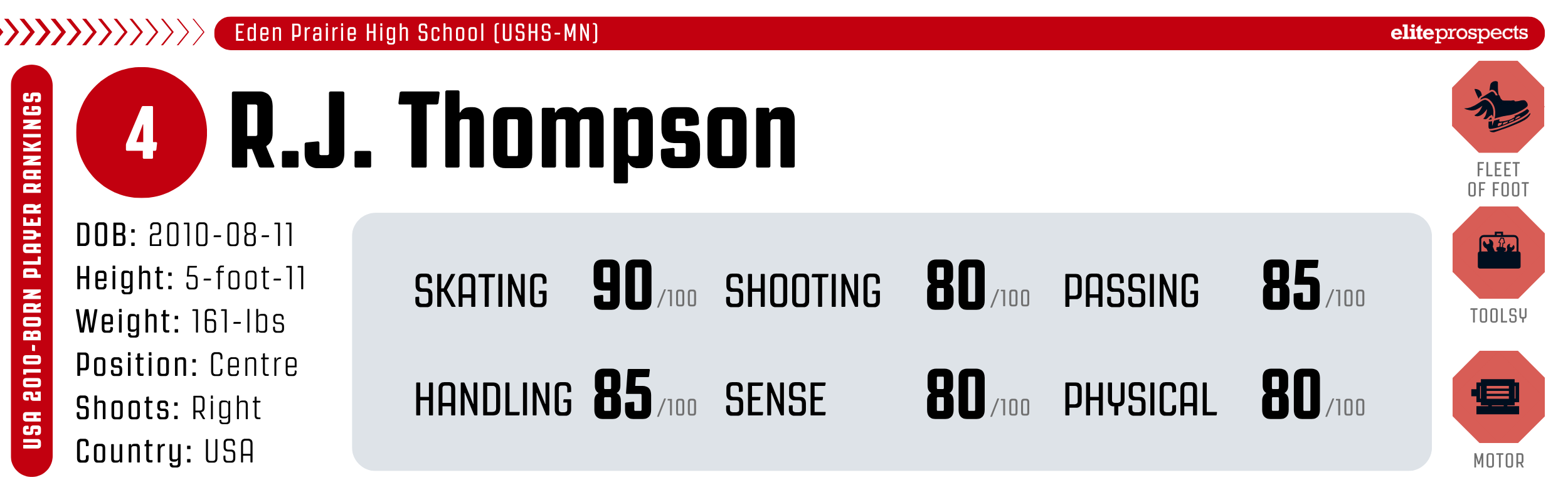
After torching the 14U level with Little Caesars last year, eclipsing 140 points, RJ Thompson had plenty of options for his final season of minor hockey. He opted to debut at Eden Prairie High School in Minnesota, a program with a deep history of developing high-end NCAA and NHL talent. Thompson didn’t disappoint, leading the team in scoring as a ninth grader.
Out of all the high-end forwards heading to the NTDP, there are none that project more as a true two-way centre. Thompson doesn’t cheat the game and responsibly fills ice on the right side of the puck. The defensive game is pillared by his off-the-charts athleticism and skating ability. Thompson rapidly closes space in all three zones, motoring around to eliminate checks and disrupt possessions. Offensively, he pops in transition. He underhandles pucks and plays a direct game driven to the middle of the ice.
Thompson could be an immediate difference maker for the NTDP, and, as an August birthday, the NHL draft interest will be strong. Two years from now, it's easy to project Thompson as a blazing-fast two-way centre with creative abilities and decent size. He’s a strong top-five prospect in this class.
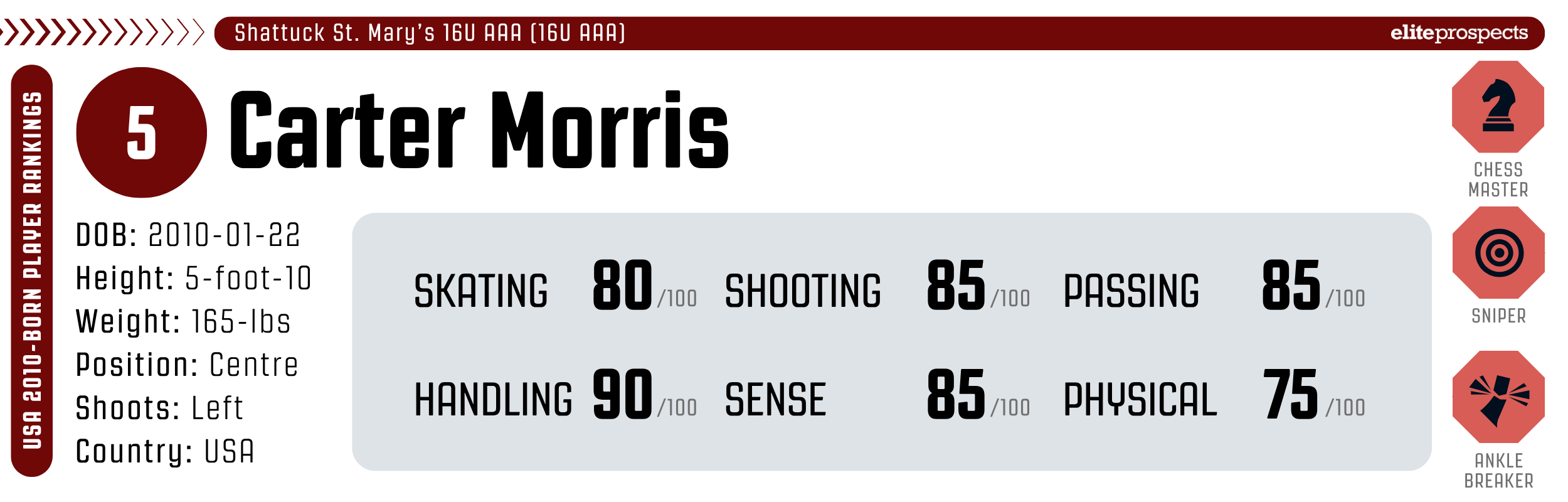
Carter Morris is the second name from the Shattuck-St. Mary’s program to crack our top 10, emerging as one of the best players in the entire country this season. After 111 points at the 14U level last year, he made the 16U team as an underager and posted 81 points in just 51 games. The Anchorage, Alaska, native was selected 2nd overall in the WHL U.S. Priority Draft last spring, but will play for the NTDP instead.
Morris is another high-end puckhandler and a dynamic offensive threat. He served the role of the middle lane connector while playing alongside fellow underagers Henry Meier and Kain Martinuik, who will also appear on this list. He’s a fast skater, but the game pace might be the most impressive. Morris constantly slipped one-touch passes in transition and worked opponents to uncomfortable speeds, accelerating the game. His skill level is up there with anyone on this list.
There’s a chance he slots in on the wing at the junior level, becoming a perimeter creator who manipulates pucks to the inside. Morris added a crafty stick game over the year, stripping pucks off opponents, and it could become a nice element in his identity. With physical development remaining, Morris is a pro prospect.
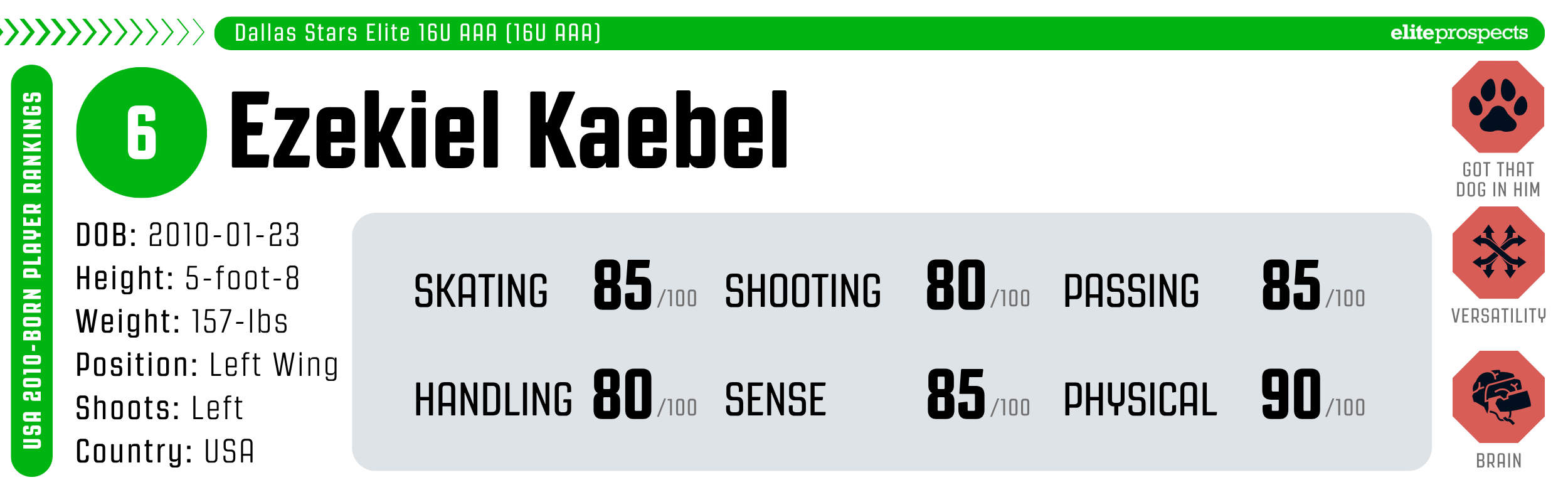
We’ve arrived at the first player on this list who won’t be playing next season at the NTDP. Ezekiel Kaebel signed a player agreement with the WHL’s Edmonton Oil Kings in January, committing to begin his junior hockey career in the Canadian Hockey League. He was the 3rd overall pick in the WHL U.S. Draft last season and should make an immediate impact for a rebuilding organization.
It's fairly easy to see Kaebel’s play style translating to any level of junior hockey and, eventually, the NCAA. He’s a bit undersized at just 5-foot-8, but his competitiveness and motor provide one of the highest floors in the class. Kaebel is constantly working off the puck and rotating when his team has possession; he understands complex support concepts and how to get himself touches. While he has an extra gear, he doesn’t always need to use it. Kaebel understands tempos, like how to speed the game up and immediately slow it down. He produced nearly 75 points as an underager for Dallas Stars Elite’s 16U team, good for second on his team.
He’ll now head to Edmonton, a very favourable destination. As multiple forwards move out of the program, Kaebel will slide right in with an immediate opportunity. Even as a bit of a smaller forward, we expect his compete level and skating ability to help make an easy transition. Kaebel is a brilliant player, one to keep an eye on.
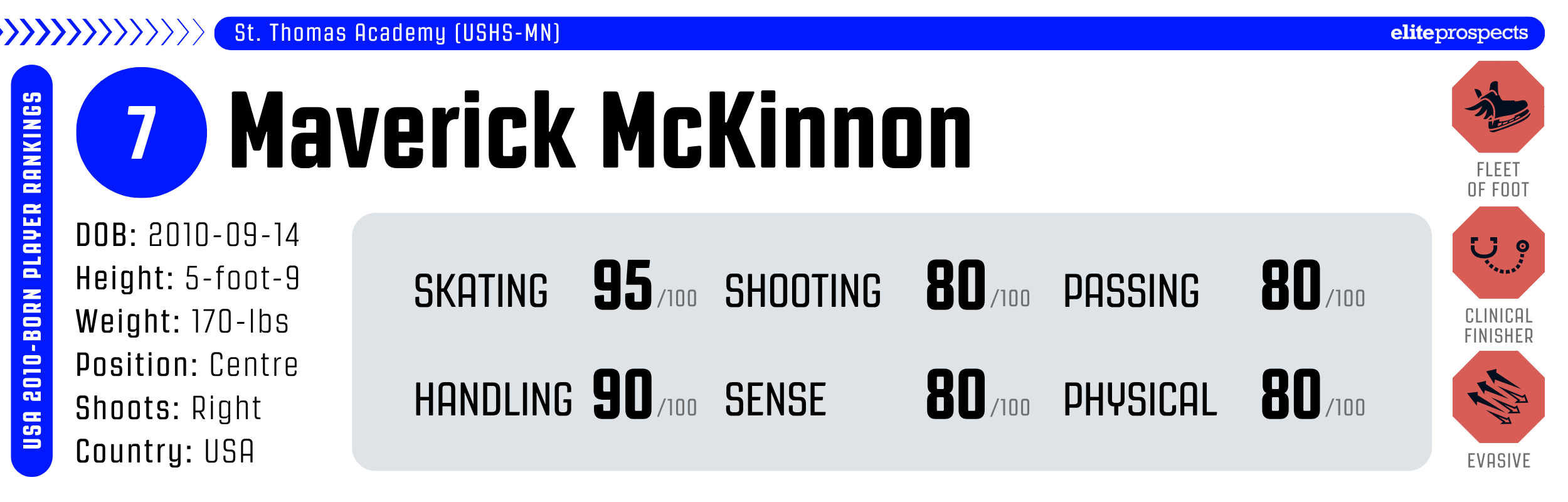
If you’re looking for a player with unprecedented scoring totals in this class, that conversation has to start with Maverick McKinnon. Last year, as an eighth grader at a AA high school program, he put up 50 points, a 15-point gap over second place before entering high school. McKinnon transferred to powerhouse St. Thomas Academy this season and didn’t skip a beat. He finished with 61 points against an even higher quality of competition, once again leading the state for his birth year.
McKinnon’s game stems from his wild skating ability. He’s just a five-foot-nine centre, but that has yet to hinder his ability to create space. There aren’t many 15-year-olds who can manipulate with their feet the way McKinnon can. He darts into space, runs rapid routes, and can change direction on a dime. Both the ability to accelerate and decelerate made him a near impossible check man-on-man this year. He’s also a plus-handler and makes effortless plays in transition.
It will be very intriguing to see how his game immediately translates to junior hockey. While this type of profile has struggled before, historically, those players hadn’t been as dominant previously as McKinnon. Any boost in height could help add to his potential to become an NHL hockey player. He’s a potential top-six threat for the Program.
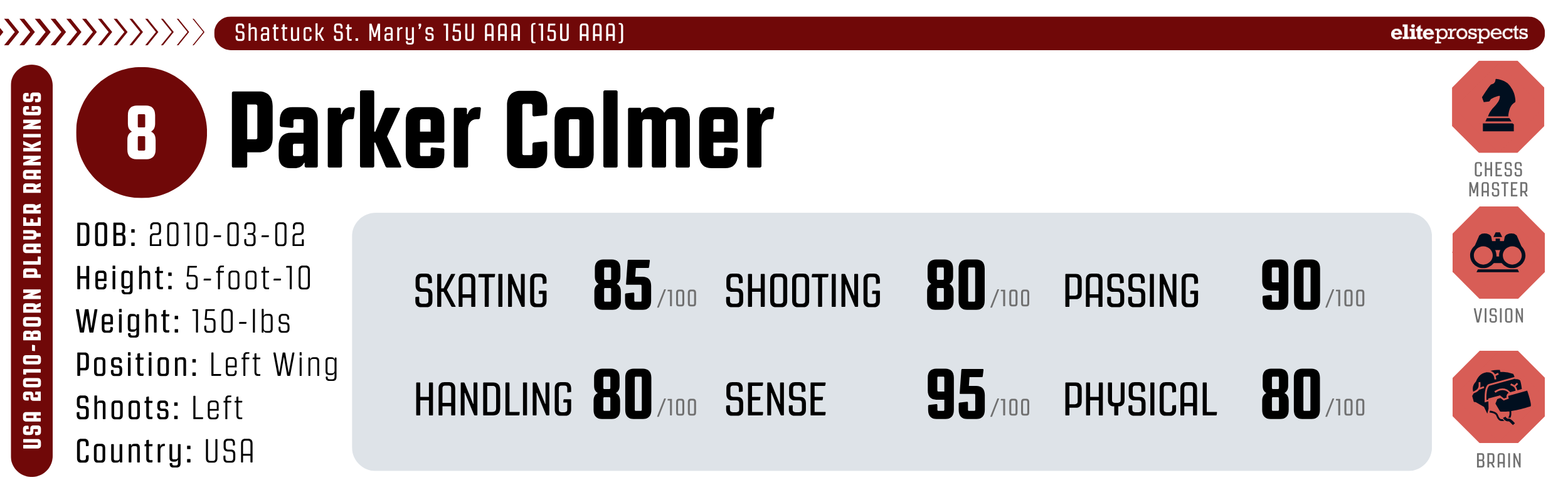
Parker Colmer is another player who will be headed to the CHL after recently signing a player agreement with the Spokane Chiefs of the WHL. He posted 117 points this season, giving a 239-point total across his two years at Shattuck. Most important of all, Colmer ripped off 12 points in six games at the national tournament to push his team to a championship.
Of everyone on this list, Colmer is headed to perhaps one of the best opportunities to match his playstyle. Spokane consistently seems to find success with small, quick, smart, playmaking wingers, and Colmer has the potential to be next in line. He snaps pucks off a touch through space constantly. The pace at which he accelerates the game, both off carries and deceptive passing, is near the top of this class. Colmer can play inside pockets of coverage and push his line into scoring opportunities.
He could find a role immediately in junior hockey and then shift into a dominant creator for his draft year. There may be a learning curve stepping into the WHL, but there’s more than enough to believe in with him. Colmer has the brain and motor to carve out a spot in the bottom-six right out of camp.
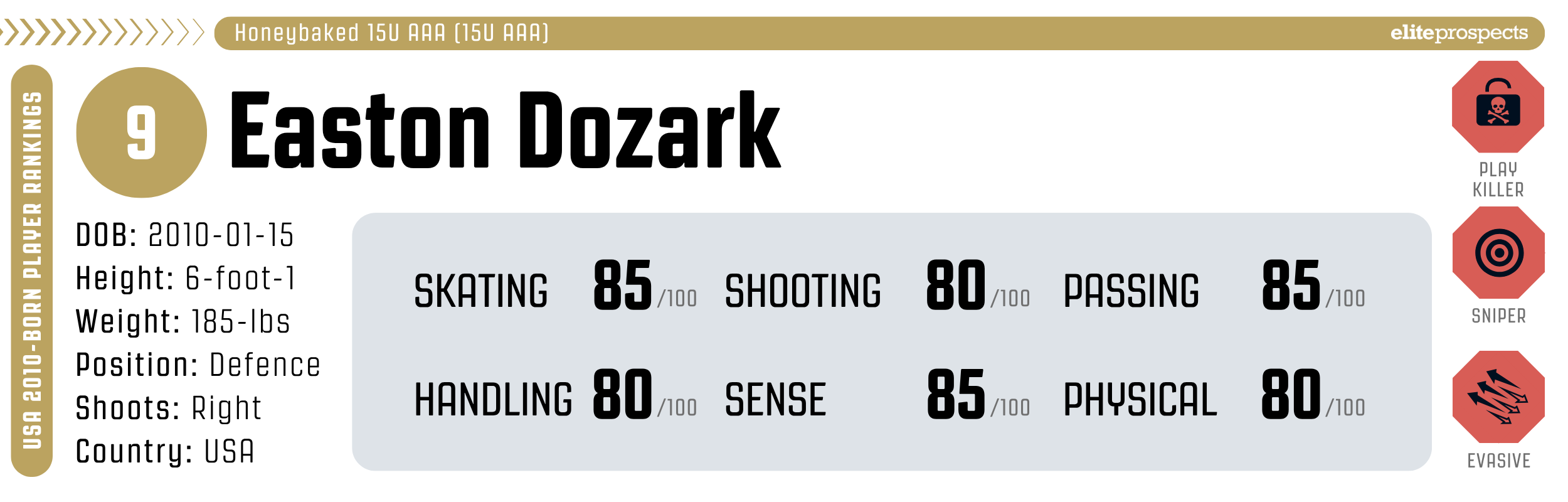
Easton Dozark led all defencemen in points across the 15U AAA circuit this season, recording 134 in 89 games. He also paced the nation in scoring by a defenceman with 1.51 points per game, according to Elite Prospects. The production alone places him among the top blueliners in the class, but when paired with his track record of team success, his overall impact becomes even clearer.
Operating as a primary offensive driver from the backend of a strong Honeybaked squad, Dozark blends rushing ability, manipulation, and distribution into one of the more intriguing profiles in the age group. He consistently pushes pace, often acting as a fourth forward, yet maintains a proactive defensive game that supports his aggressive style.
Signed to the WHL's Portland Winterhawks, Dozark should establish himself as a top-four defenceman early in his junior career, with long-term upside as a No. 1 option as he continues to develop.
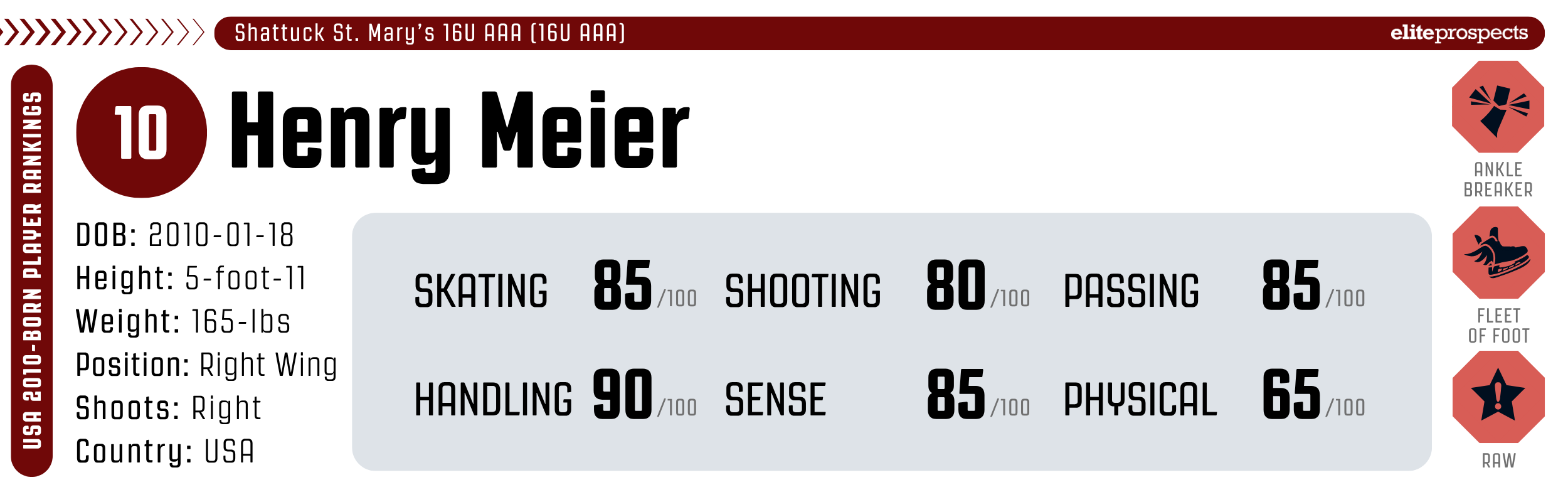
Henry Meier eclipsed the point-per-game plateau this season as an underager, playing on a line with previously mentioned Carter Morris. He continued his productive run by leading the NTDP evaluation camp in scoring, producing points against the best players in the country. Meier will head to WHL Everett next season after recently signing a player agreement, an organization currently pushing for a Memorial Cup.
At this age, development curves are perhaps the most important element of all. While it’s nice to have kids who are elite from wire to wire, it can be even more beneficial to have someone constantly improving their game. Meier took massive jumps this year, particularly with his skating. Last year and in this season’s first half, he didn’t have the first step to consistently beat checks. But that has developed, and paired with his 90-grade hands, he has a lethal combination of skill. There are manipulative patterns in the way he handles the puck, constantly attacking against defenders’ momentum.
Meier’s baseline of offensive skill makes him an easy player to project as a CHL creator. He understands layers of attack already, leveraging timing to generate offence in pockets of the game. It will be interesting to see what identity he takes on, either as a puck-dominant perimeter winger or an inside-driven connector with a motor. Meier has tons of room to fill out physically to become a pro prospect.
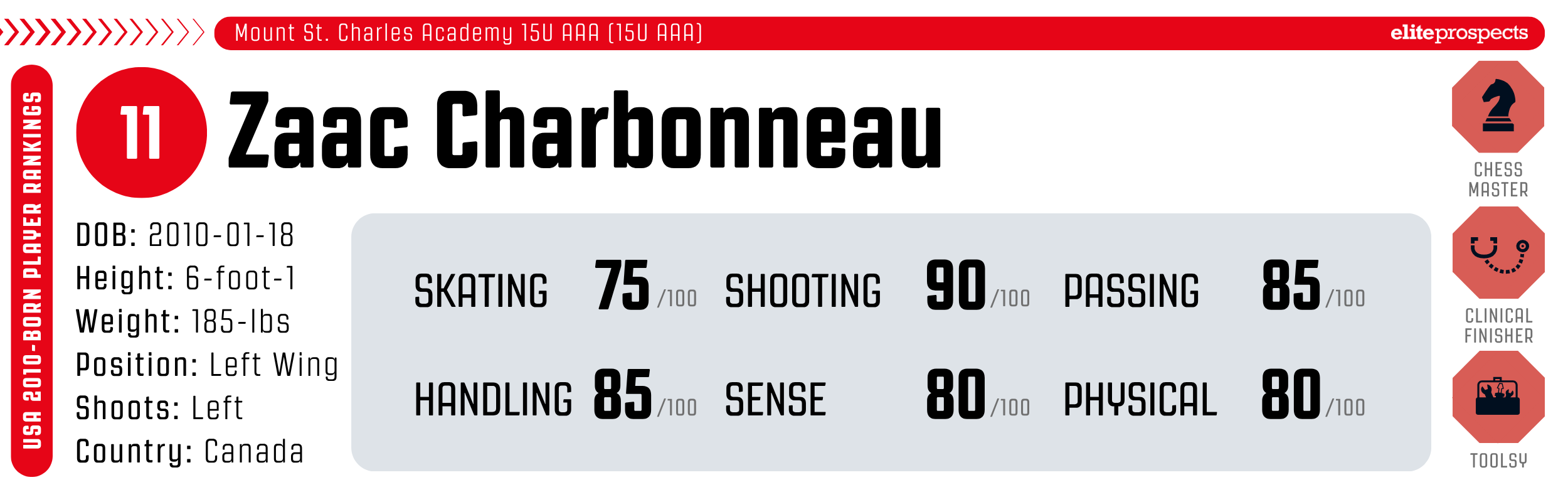
Zaac Charbonneau was the second-ranked player on our QMJHL team’s midseason board. Since then, he’s signed a tender agreement with the Muskegon Lumberjacks, where we expect him to play his first year of junior hockey. Charbonneau has the potential to be one of the best scorers at any level of minor hockey in the world. He scores off the catch and the carry, ripping pucks from all sorts of body positions. Charbonneau’s feet are still developing, as well as his ability to make plays in motion, but there’s enough here to see an easy half-wall scorer. He’ll be an immediate power play contributor.
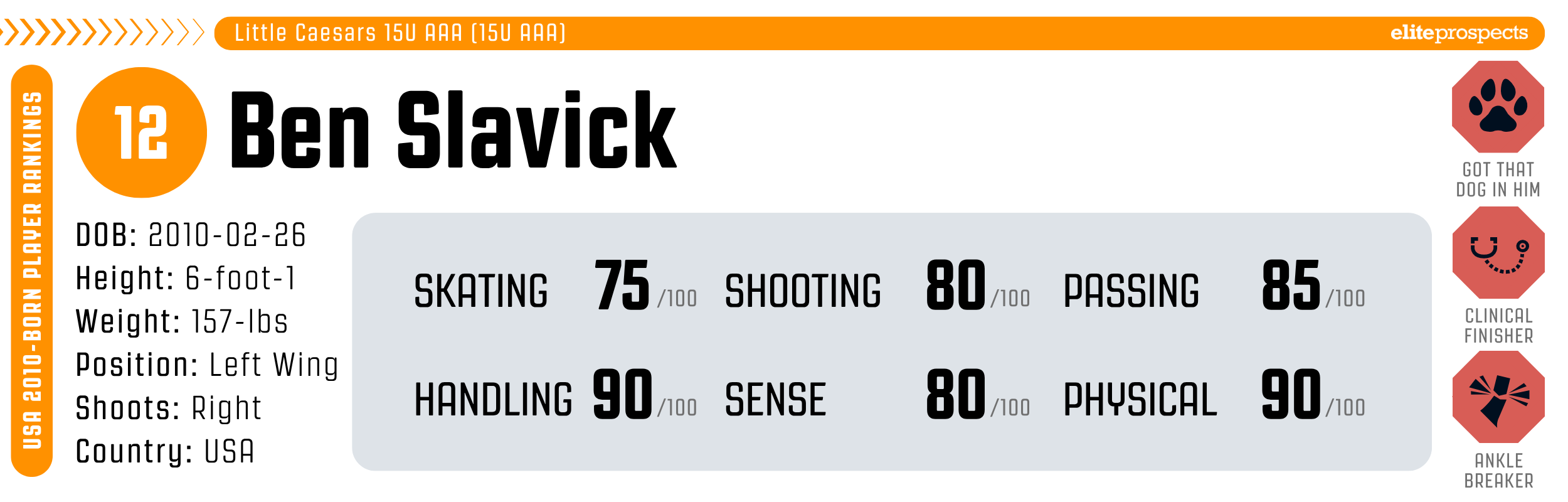
Earning the top spot among a deep Little Caesars roster is no small feat, but Ben Slavick has proven himself worthy of that distinction. Simply put, he possesses many of the traits associated with the modern power forward. His skill level, particularly his stick detail in tight areas, stood out throughout the OHL Cup. He plays through contact effectively, handles pressure with confidence, and offers value as both a distributor and finisher. That offensive toolkit is complemented by a diligent defensive presence, rounding out a well-balanced game. Slavick projects as a top-six, play-driving forward at the next level, with potential to secure a top-line as he continues to develop. He's tendered to the USHL's Green Bay Gamblers.
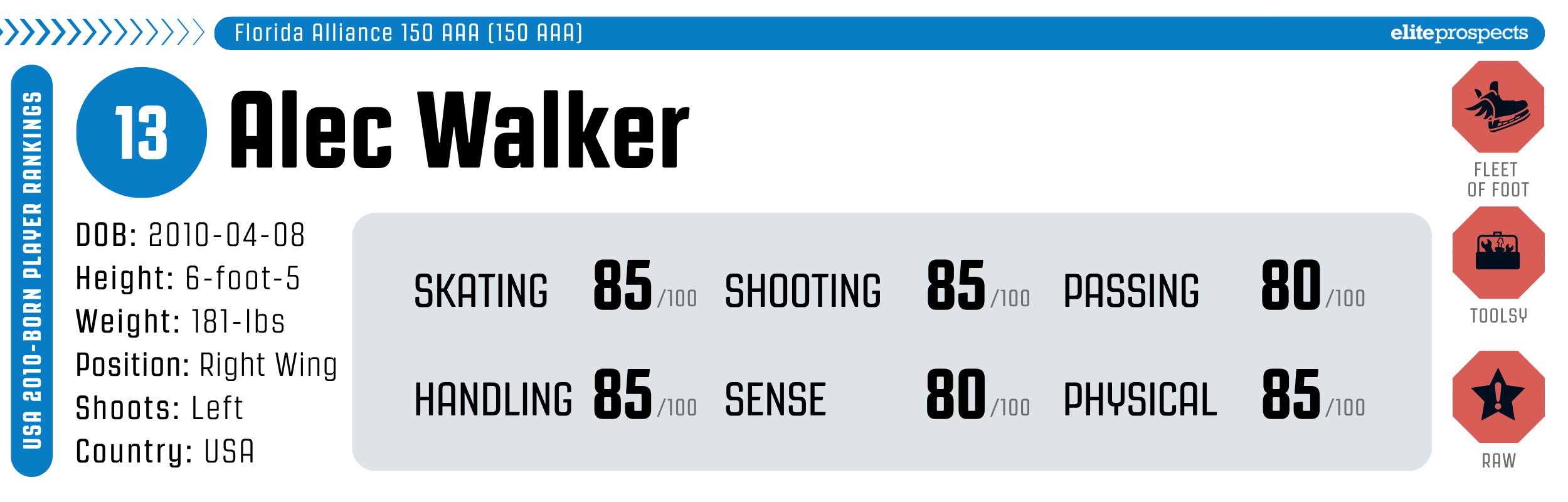
There has already been internal discussion among our scouts that Alec Walker looks like a future NHL prospect. At 6-foot-5, his size immediately draws attention, but what makes him particularly intriguing is how frequently he shows flashes of using it effectively. Walker is already a strong skater for his frame, displaying impressive dexterity and coordination. His toolset is well-rounded, combining finishing ability, playmaking, and a developing sense for the game. There are few glaring holes in his profile at this stage, but he remains a raw player, and greater consistency will be key in maximizing his toolkit. Even so, the foundation is already in place for him to become a top junior player, with a middle-six projection as early as next season.
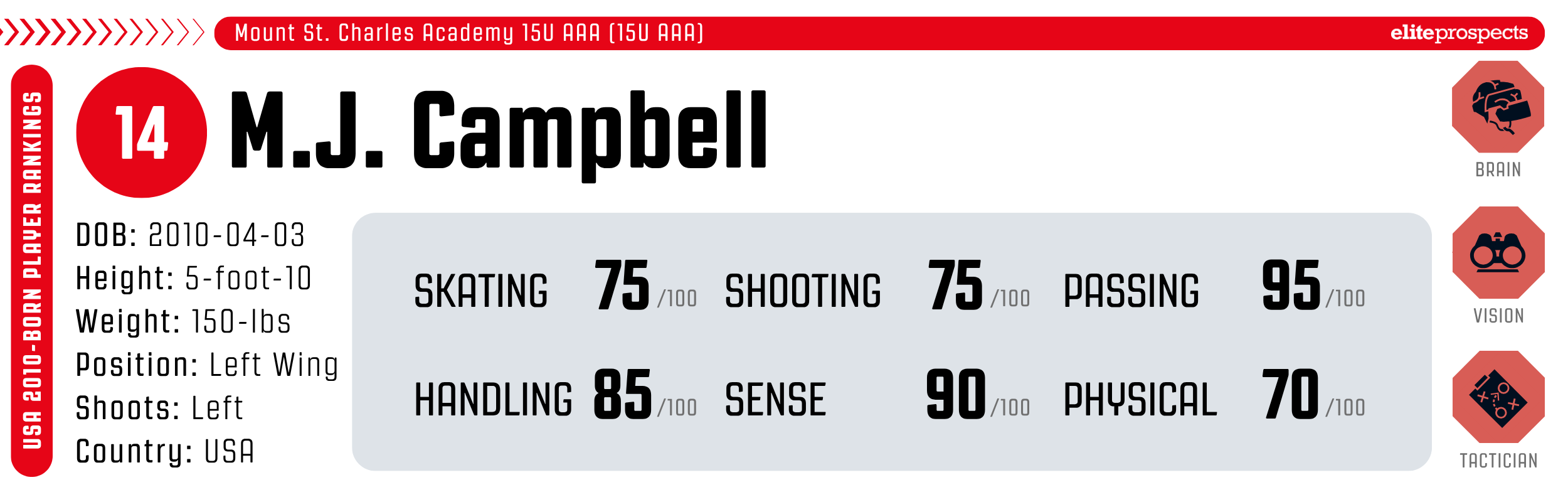
MJ Campbell wasn’t extended an invitation to the NTDP evaluation camp, but we believe he’s one of the best players in the entire country. This is a player who continuously proved himself to our scouts, an underrated name that we felt we couldn’t slide much lower down the board than this. When it comes to recognizing lanes in all layers and slipping pucks off the wall, Campbell is among the best in the country. He carries in a strong posture, scans the ice, and snaps pucks to his teammates. He finished with 101 points this year, a really strong clip even on a great team. If Campbell’s footspeed and first three strides continue to improve, he’s going to be a major producer in junior hockey.
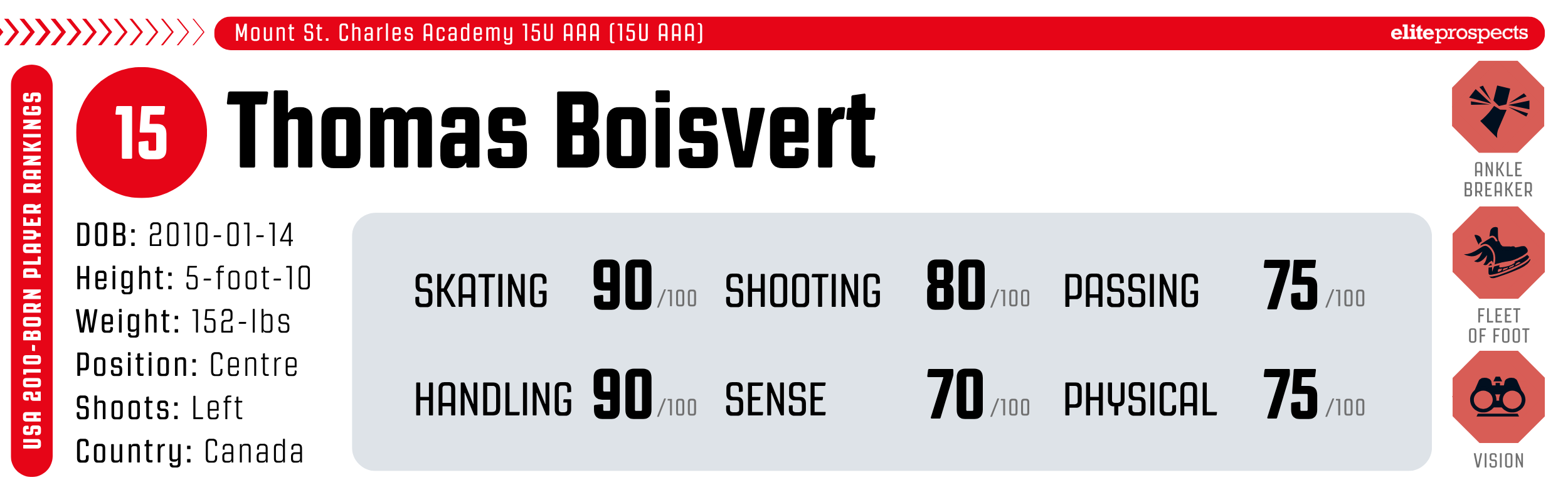
Thomas Boisvert will carry top-five pedigree, as he’s set to be selected extremely high in the QMJHL draft in early June. He’s a blazing-quick centreman who explodes in transition, transporting pucks at high speed. A bulldog, Boisvert gets up to speed quickly and bowls through sticks and bodies en route to the net. His game will elevate to the next level if he continues to develop as a connector, recognizing opportunities to play give-and-gos with his teammates. Boisvert is an easy middle-six centre projection with the pace, compete, and strength.
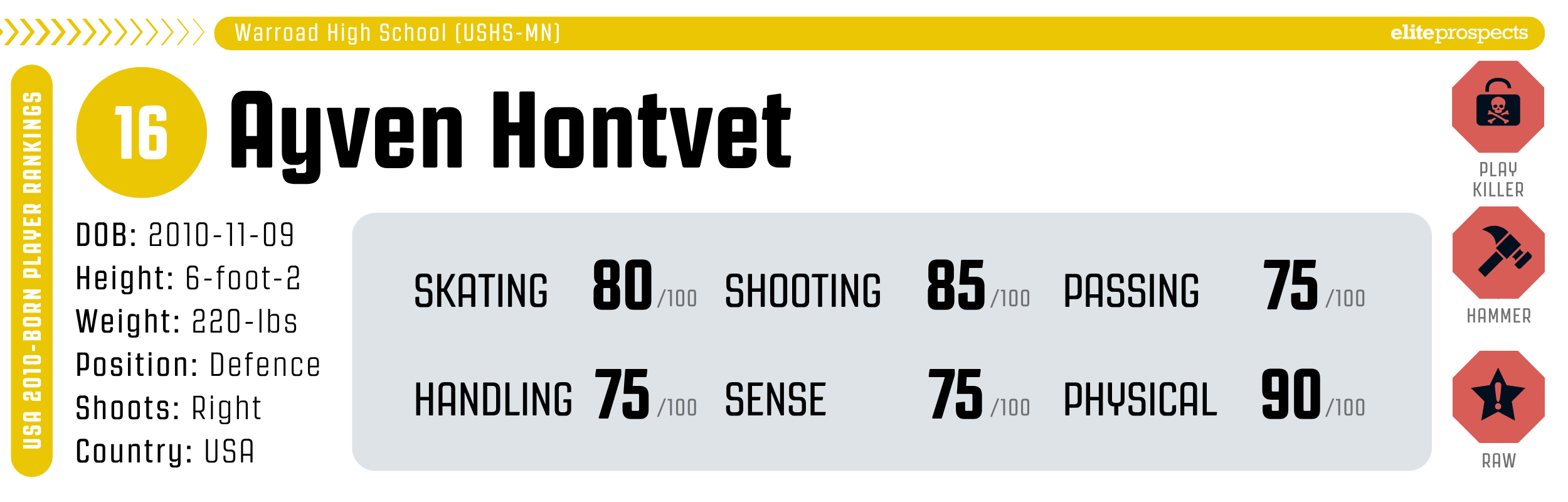
After a brilliant first season of high school hockey, Ayven Hontvet lands at No. 16. He played massive minutes for Warroad High School in a run to their first State Championship in 21 years, posting 43 points in just 31 games. Hontvet is a hulking defender manning the blue line, a kid who took a ton of steps in the past year. There were concerns entering the year about his agility and quickness, but he continued to get quicker and more effective with every passing game. Hontvet transitions pucks like a train and powers around on his edges. He didn’t make the NTDP evaluation camp, but is likely a highly coveted prospect for both the USHL and WHL. He was selected by the Brandon Wheat Kings last spring.
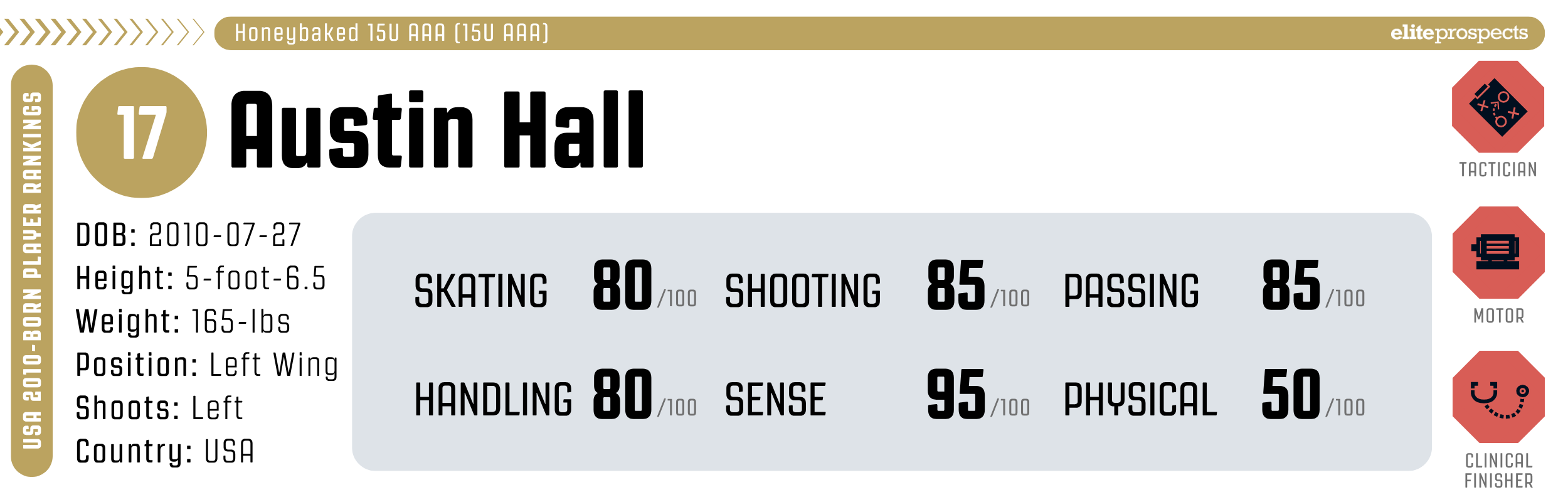
Ontario-based scouts received a first-hand look at Austin Hall's upside at the OHL Cup, where he captured tournament MVP honours. His dominance came as little surprise, given that he led the nation with 186 points in 89 games – 40 more than the next closest player. Hall’s game is driven by an elite hockey sense. Graded at 95 in that category – one of the highest marks on this list – he processes the game at an advanced level. His off-puck movement consistently puts him in space at the right time, while his on-puck play presents a dual threat. His vision stands out most, allowing him to anticipate movements and execute plays that fuelled his nation-leading 117 assists. At 5-foot-6, his size will raise questions, but his motor and work rate help offset them. Hall projects as a potential premier junior player in the near future.
Read More: Austin Hall leads 44 standouts at the 2026 OHL Cup
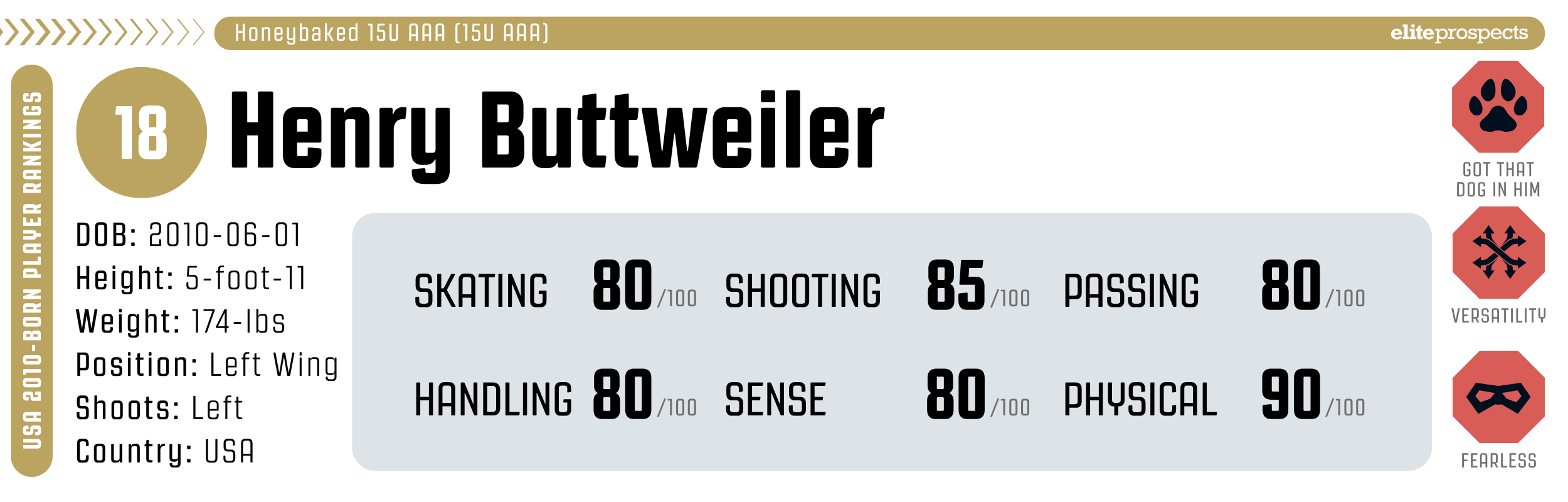
Henry Buttweiler is the third Honeybaked player featured in the top-20, a reflection of both the program’s strength and his individual quality. He finished second on his team in scoring with 146 points in 82 games. A versatile forward, Buttweiler brings strong physical details and reliable habits, allowing him to complement a variety of linemates. His combination of finishing ability and playmaking rounds out a well-balanced offensive profile. His impact was evident early in the season at the Whitby Silver Stick, where he earned player of the tournament honours and delivered a quadruple-overtime game-winning goal to send his team to the final. That performance, among many others, helped secure his selection to the NTDP for next season.
Read More: Henry Buttweiler leads tournament standouts at 2025 Whitby Silver Stick
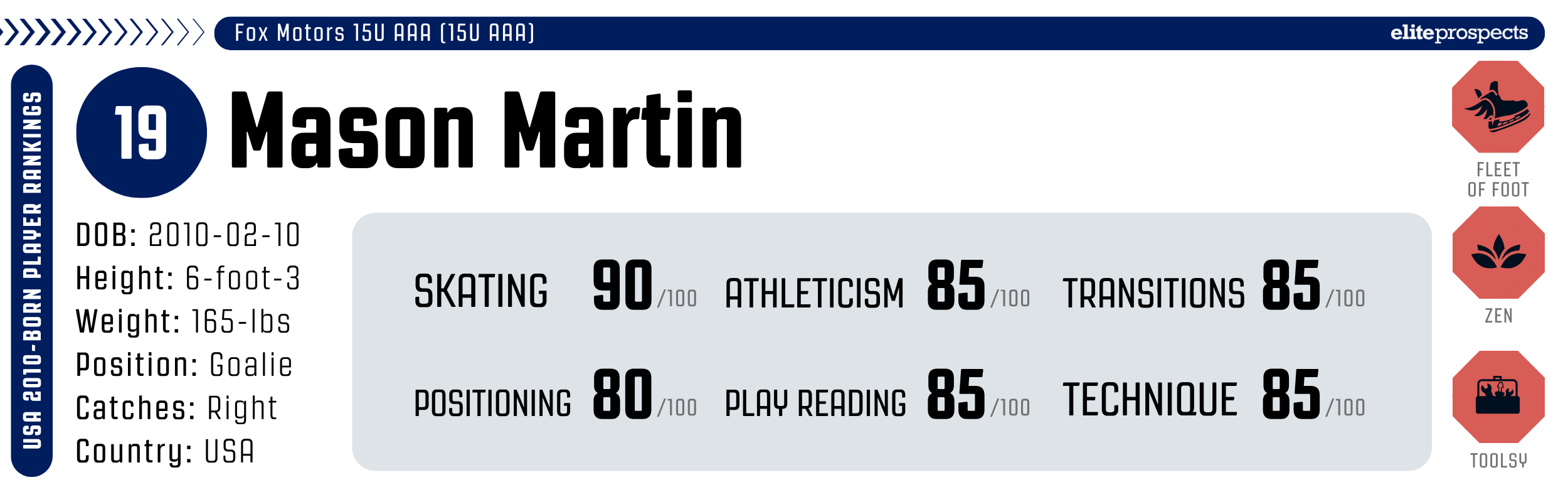
Of all the 2010-born goaltenders our team has watched this year, from Michigan to Moscow, Mason Martin is number one. He was the clear standout at the NTDP evaluation camp, where his spot was likely secured after the first day. Martin’s play reading and composure are orders of magnitude above those of other goalies his age. He uses his size, positioning, and flexibility to get big, seal the ice, and wait out shooters until they have nowhere to go. Play after play simply ends with the puck going harmlessly into his pads. Martin is also an elite skater with phenomenal edges. He’s fast and routes around the crease with accuracy and efficiency. Despite his calm demeanour and calculated play, when the situation demands it, Martin lets his athleticism burst out. The explosiveness, body control, and flexibility are all there to the highest degree. If this profile sounds familiar, that’s because Martin looks a lot like a 6-foot-3 Trey Augustine. The NTDP has its next big name in net.
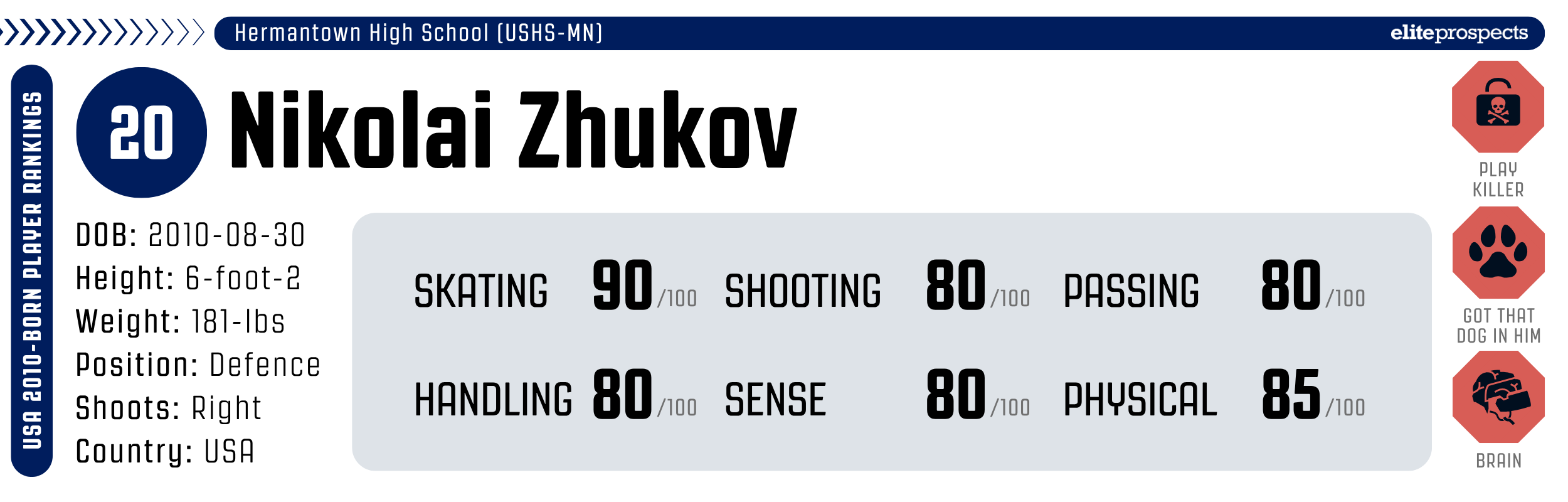
The second in a string of Northern Minnesotan defenders, Nikolai Zhukov slots in at number 20 on our board. Zhukov started the year at the Bantam level, and it quickly became apparent he was far too developed for the quality of competition. He moved up to the high school team and immediately became a minute-eater with size on the blue line. At 6-foot-2, Zhukov controls space and tempo effortlessly. There are smart activations in his approach, and he creates off the pass into the cycle. Zhukov has the potential to become a legitimate NHL prospect over the next two seasons. He’s an eighth-round pick to WHL Spokane and will likely be highly coveted in the USHL draft as well.
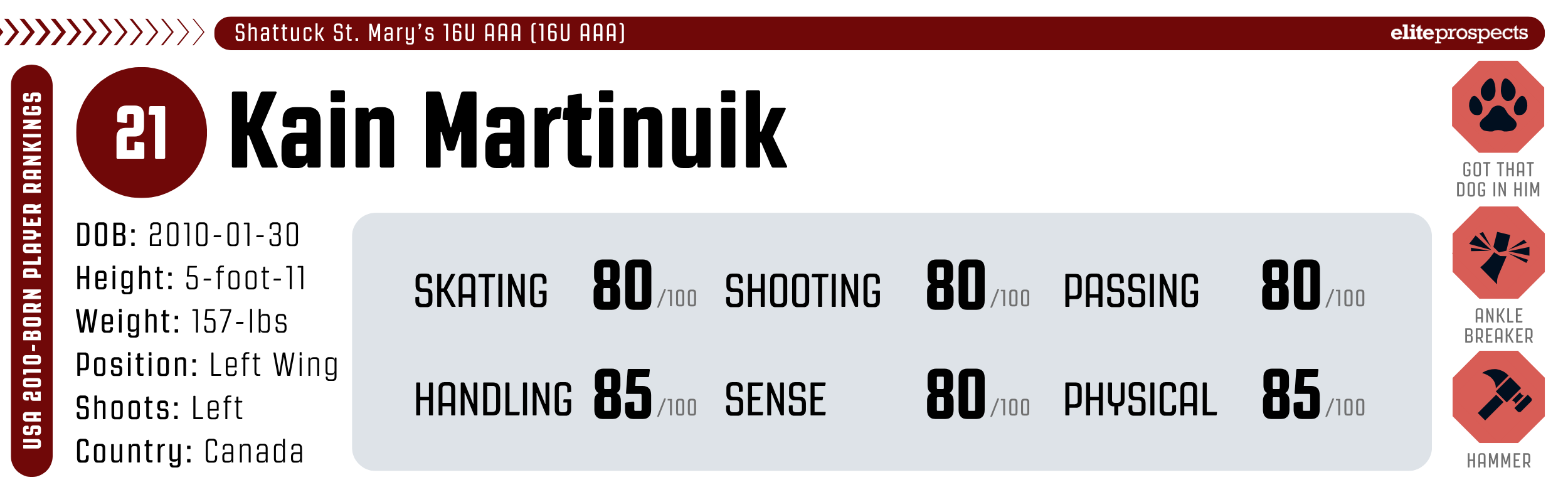
The third and final cog on Shattuck’s ridiculous 16U first line, Kain Martinuik, ends up at 21 on our board. He’s a Canadian citizen and was picked in the WHL draft last year, 15th overall by the Saskatoon Blades. He’s since signed in Saskatoon, and we think the style of the Western League could be an excellent fit. Martinuik is a dynamic handler with wild physical abilities. When he’s at his best, he’s a dawg on a bone, creating possessions and generating offence off projectable sequences. There may be a learning curve for him as he enters junior hockey, bringing his game every night and picking his spots, but it's easy to see Martinuik eventually carving out a top role in the WHL.
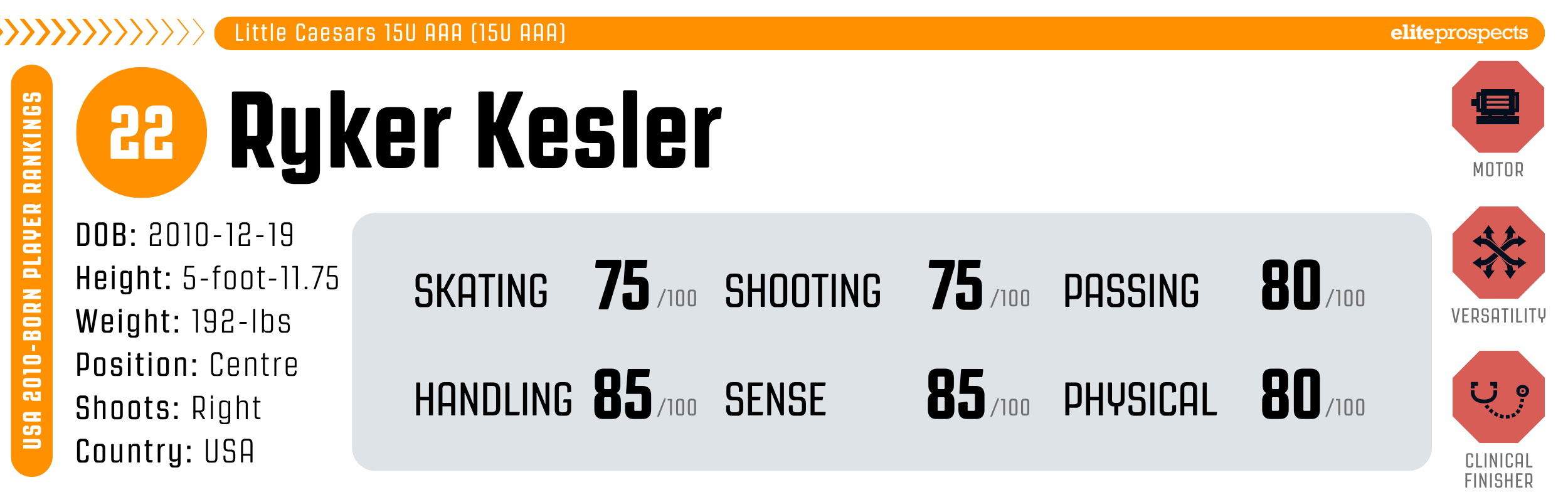
It was an up-and-down year for Ryker Kesler, one plagued by an injury that held him out of the two biggest events on the calendar: USA Hockey Nationals and the OHL Cup. Still, he made a strong impression on our scouting team. Kesler is a pro-style projection. He plays on the right side of the puck, has good size, and has incredible details already. There’s a ton of skill here, too, with his handling mechanics in motion and the way Kesler reads lanes on the ice. His lack of truly high-end dynamic creation keeps him below others on this list, but it's easy to see Kesler rising as this group gets older. He’s going to be a professional hockey player.
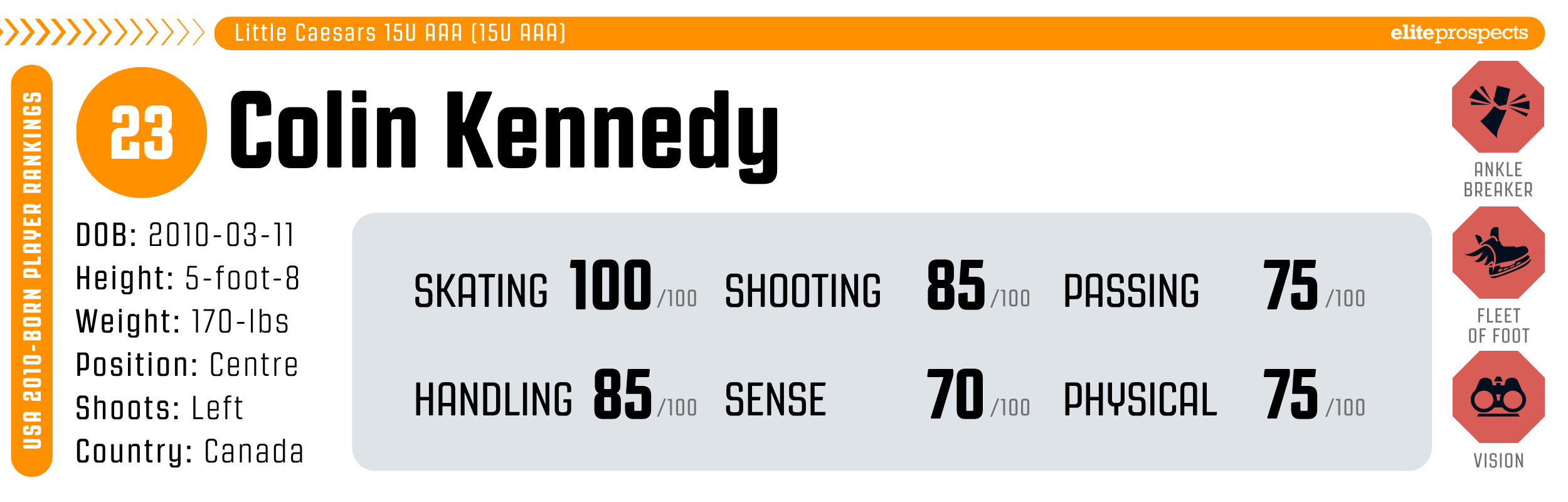
A 100 grade is rarely assigned, which underscores just how impactful Colin Kennedy’s skating is. His speed, combined with a near-perfect technical foundation, allows him to generate explosive acceleration with each stride. When paired with quick handling ability, that skating becomes a true play-driving tool. He brings the same intensity to the defensive side of the puck, with a motor that rarely slows. Kennedy projects as a top-six forward at the next level and has the potential to be selected in the first round of the OHL Draft as one of the top Canadian players in the American 15U AAA circuit.
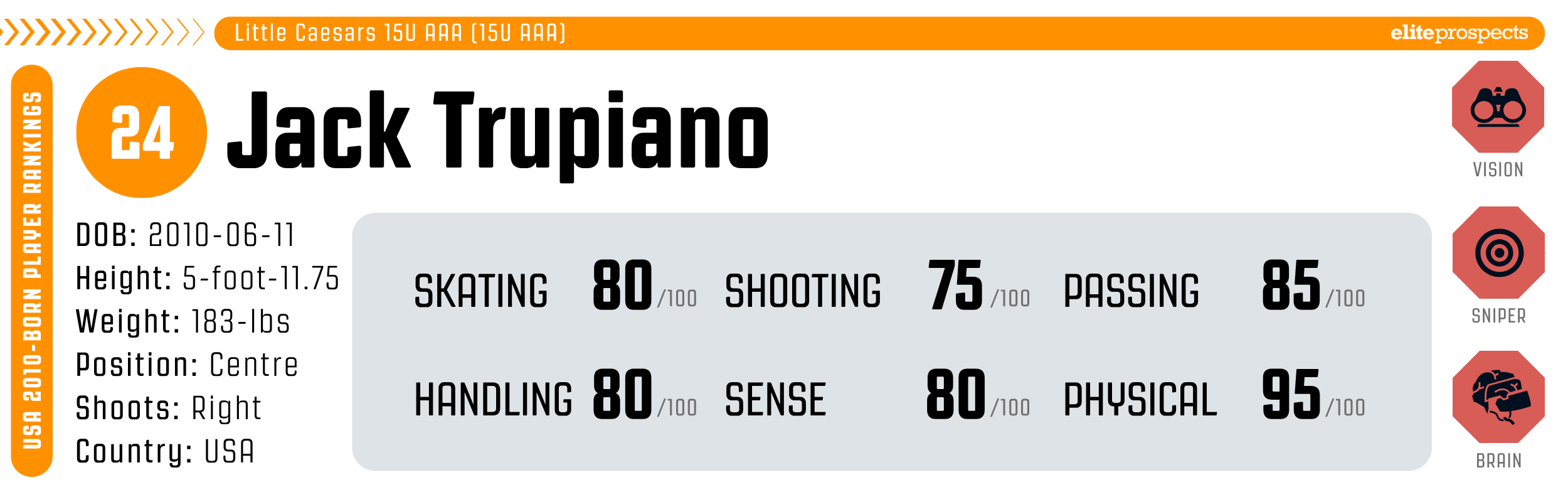
Jack Trupiano was a favourite across many of our scouts across the board this year. He’s a powerful winger along the wall that already has pro elements in his game. Trupiano sheds contact and drives play into the most dangerous areas of the rink. He’s an effective handler, a strong kid who is hard to knock off pucks. Trupiano was one of the players best suited for production in minor hockey; he’s a sturdy player with hands and offensive instincts. The question for him will be how much physical development he has left. If Trupiano continues to add layers and explosiveness to his game, he will rise.
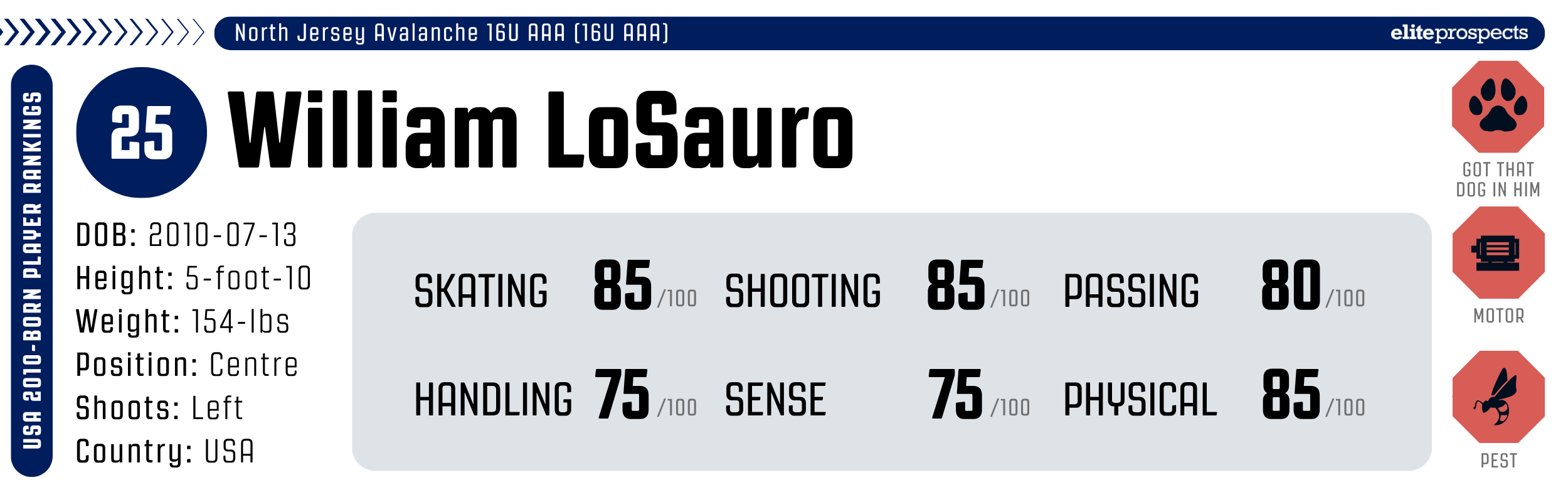
Another player who spent the season up at the 16U level, William LoSauro, is an effective player who could fill a variety of roles immediately in junior hockey. He’s a violent mover; everything he does is with torque and explosiveness, whether that’s ripping a puck, sprinting to get first touch on a puck, or finishing a heavy hit. LoSauro fills an interesting archetype. He’s likely to project as an energy guy in a team’s top-six. If his execution along walls and board play improves, he could become a coveted NHL draft pick. At worst, there’s an NCAAer with limitless motor here.
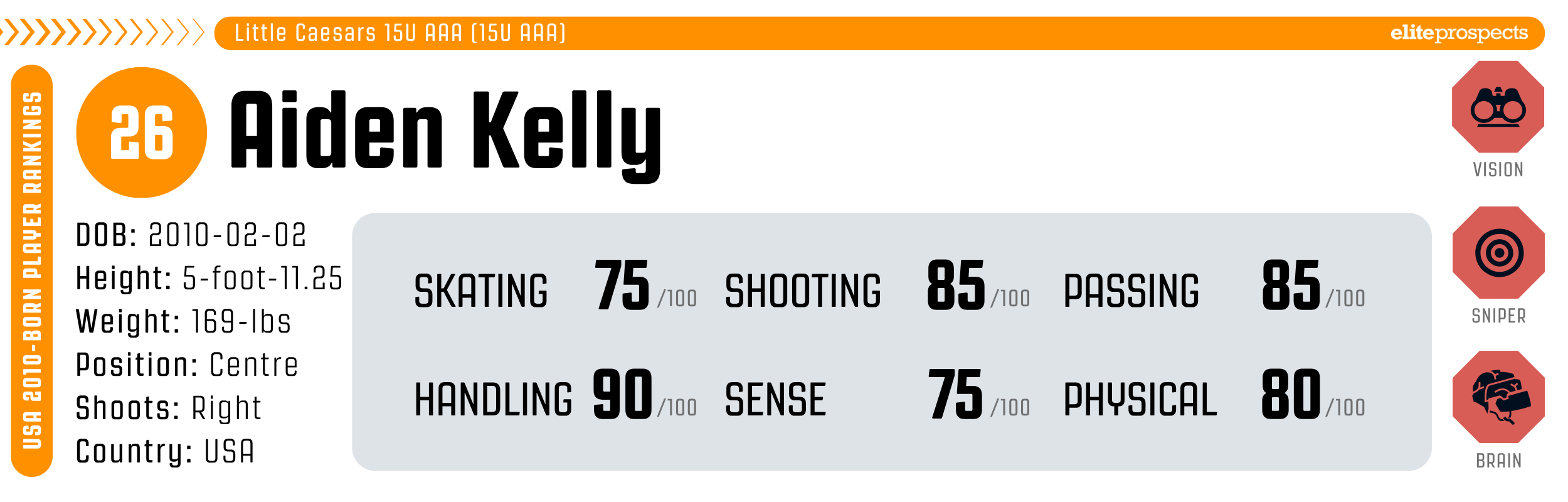
One of the best puck handlers in the entire class, Aiden Kelly, is a proficient manipulator with a pedigree of production. He controls tempo on entries, baiting checks before slipping through a triangle or deferring to a teammate in the now-vacated lane. Kelly has been torching events for years now, one of the most dominant players in the class. There’s some bite in his game, too, finishing hits and getting under opponents’ skin. His projection will hit if he can translate his high-end skill and feel for the game at a higher pace, making more plays in motion.
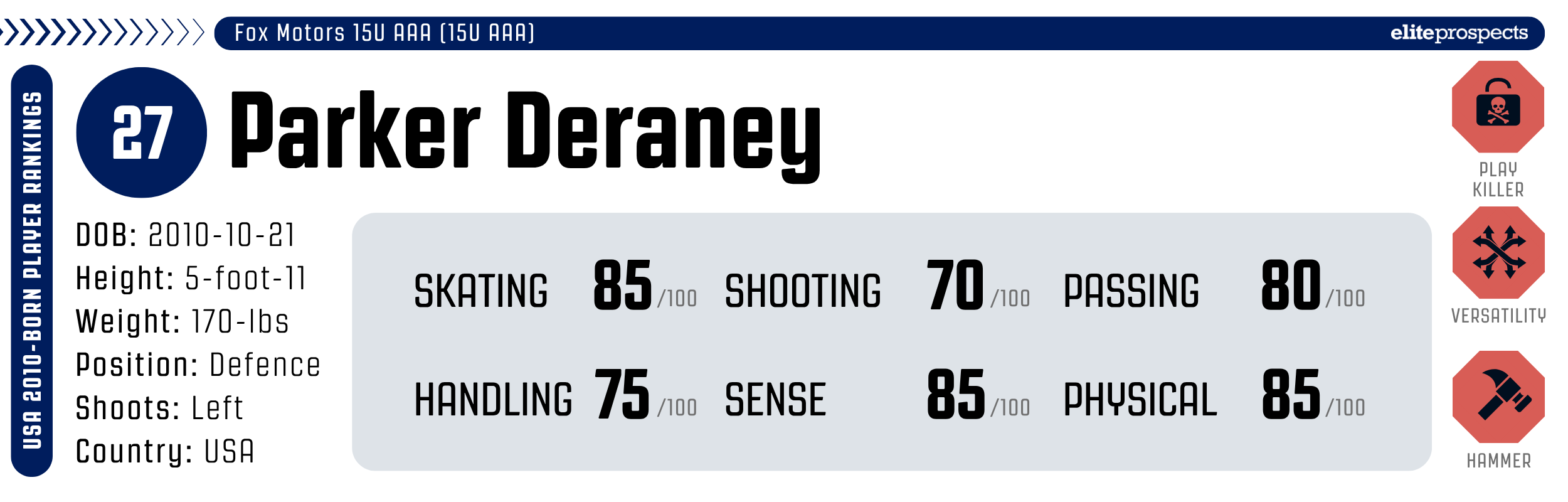
Parker Deraney is one of a few players on this list who were drafted to the WHL last spring as bantams and immediately signed, forgoing his eligibility for the NTDP. He made the move from the Detroit Lakes program in Minnesota to Fox Motors AAA and found solid success, as they earned a bid into the National Tournament. Deraney is a really nice source of stability in this group. He kills rushes against some of the better players in the country, hunts pucks with a detailed stick and feet, and advances play slowly but surely up the ice. I’m not sure he has the game-breaking upside that others possess, but Deraney is a pretty safe bet to fill a role in major junior hockey.
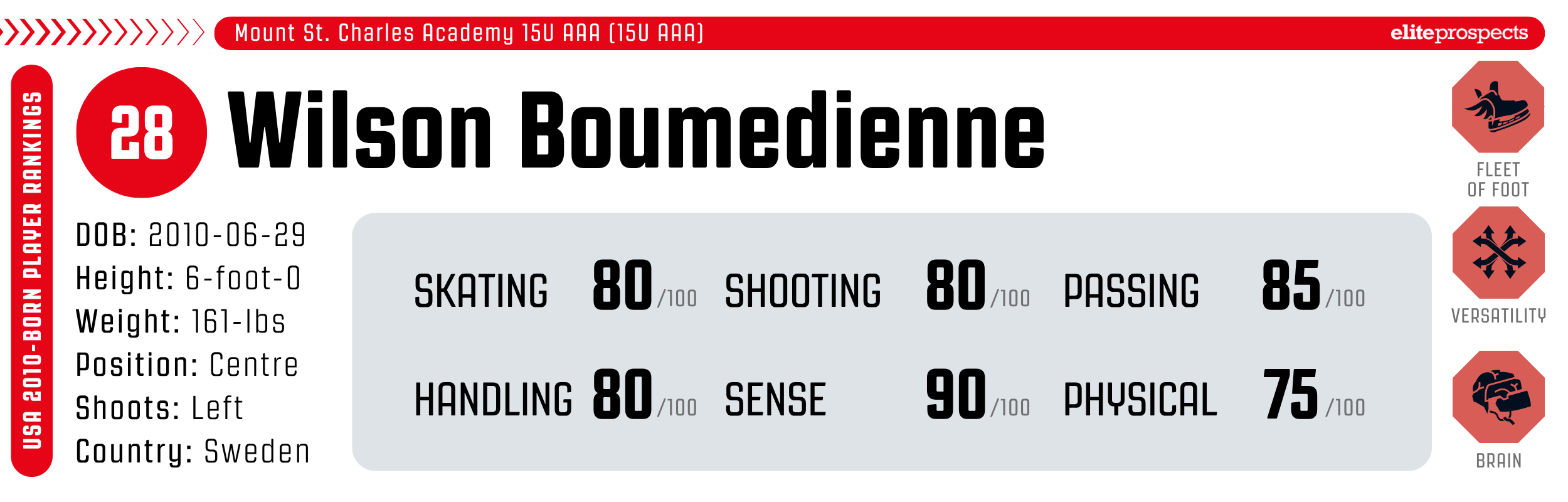
On a loaded team at Mount St. Charles, Wilson Boumedienne still found plenty of ways to break out as an offensive player. He’s a brilliant thinker, executing plays in the middle of the ice. Boumedienne leverages timing and momentum to attack pockets and make complex reads; he has a high level of feel for the game. The pace is excellent, too. Boumedienne plays fast and can blend skill as he weaves in and out of opposing checks. He projects as a smart middle-six centre almost immediately to junior hockey, with the chance to become a high-level producer.
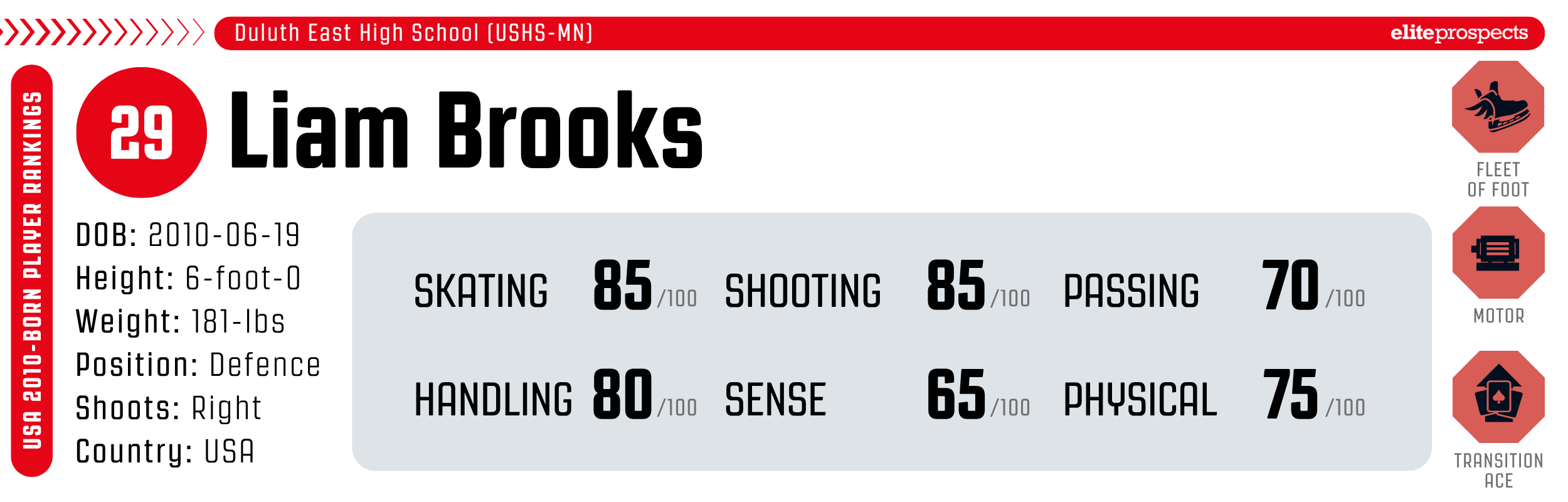
Liam Brooks is a ridiculously fun player to watch, if nothing else. There’s quite a bit of refinement necessary in the way he approaches the game, but Brooks’ tools are maybe top-10 in the entire country. He explodes around the ice, one of the most powerful skaters we’ve seen all year. Brooks is a high-flyer, roving anywhere he wishes in all three zones to make any contributions he can. He finished the year at a point-per-game pace in a high school program on a down year, too. As Brooks works his way into junior hockey, he’ll have to pick his spots better and cut his activations in half, but we’re betting on the tools. 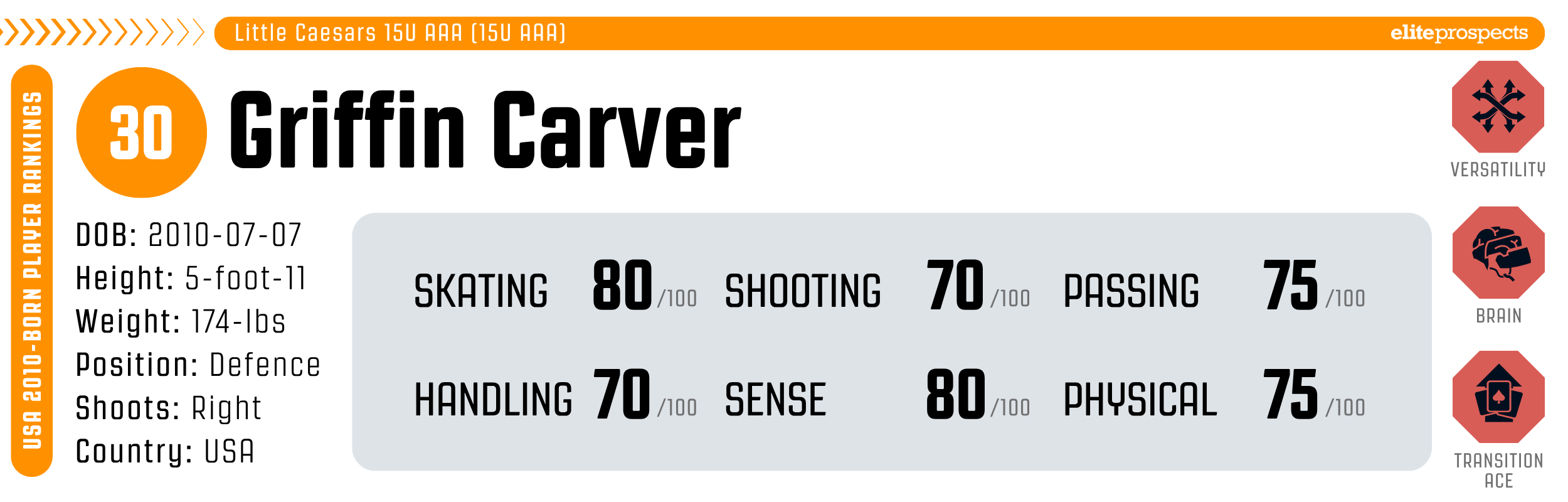
Griffin Carver provides a steady, versatile presence on the backend for Little Caesars. His defensive game is particularly reliable, supported by strong four-way mobility and positioning that consistently limits opposing chances. His transition play is equally effective. Carver moves the puck efficiently, makes smart first passes, and connects sequences without unnecessary risk. His composed approach makes him an easy projection into a dependable role. Selected to the NTDP, Carver projects as a reliable top-four defenceman at the junior level.
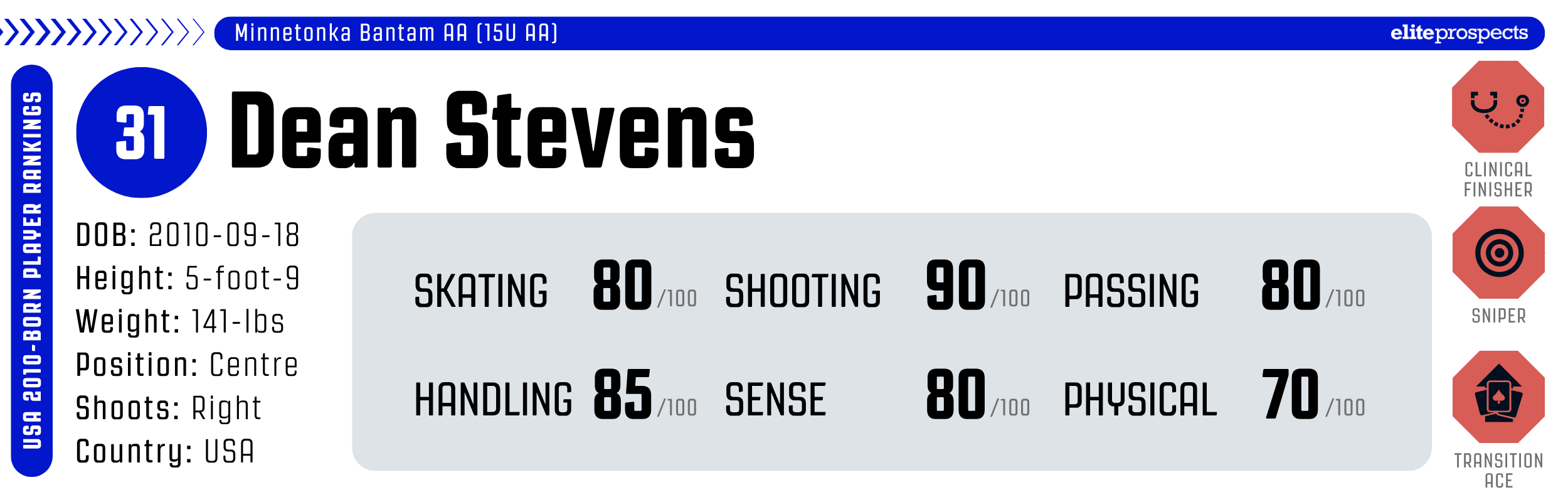
Dean Stevens is set to join a small class of players who have earned selection to the NTDP out of bantam hockey. Settled at a strong program in Minnetonka with limited high school ice time to go around for everyone, Stevens opted to play out his last year of minor hockey, eventually leading his group to the state semifinals. He’s one of the most dynamic attackers in this entire class. Stevens is constantly baiting defenders, manipulating with his reach to access whatever lane he wants. Stevens scored 92 goals this year, many coming in advanced patterns; he can change the angle, shoot through triangles, and rip the puck from any body position. There will be a massive jump in competition level from 15U AA to the USHL, but Stevens has enough talent here to make us believe.
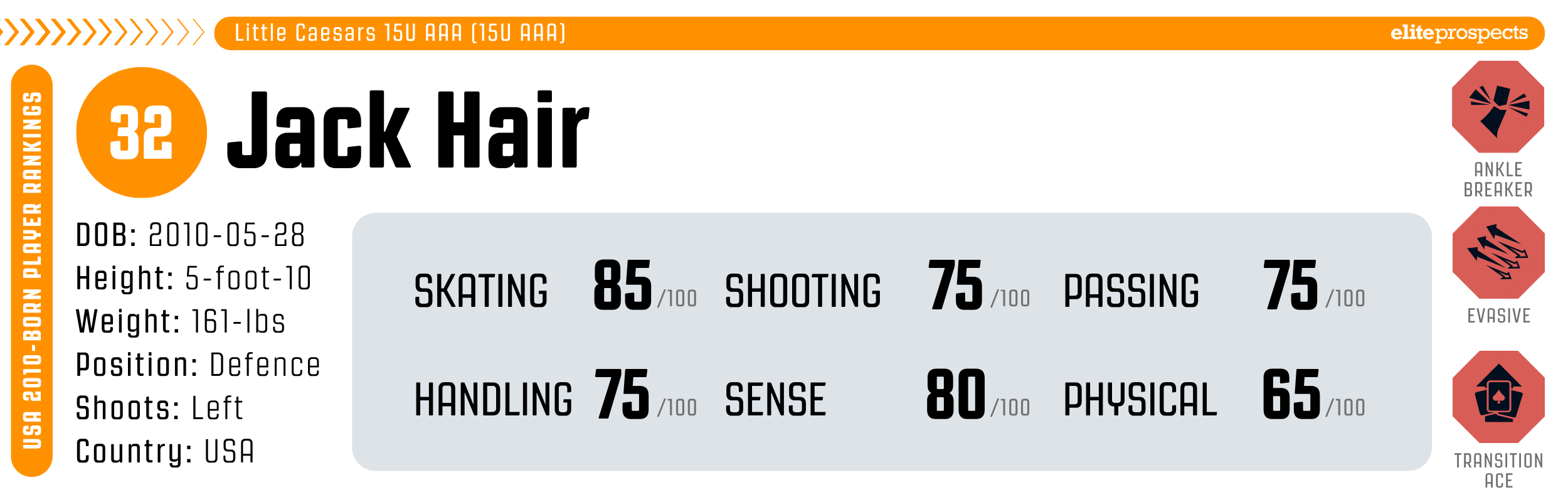
Jack Hair is another polarizing prospect that earned a ton of fans across our scouting teams at Elite Prospects. Everything in his approach stems from his skating. Hair has possibly the best edges in this entire class - he establishes a low centre of gravity and begins maneuvering on arcs all around the ice, swerving with crossovers and carefully placed edges. Hair is undersized, but there’s escapability in the way he makes plays. He has the potential to run a power play unit and bring offensive spark as soon as next season, whether that be in the OHL or USHL.
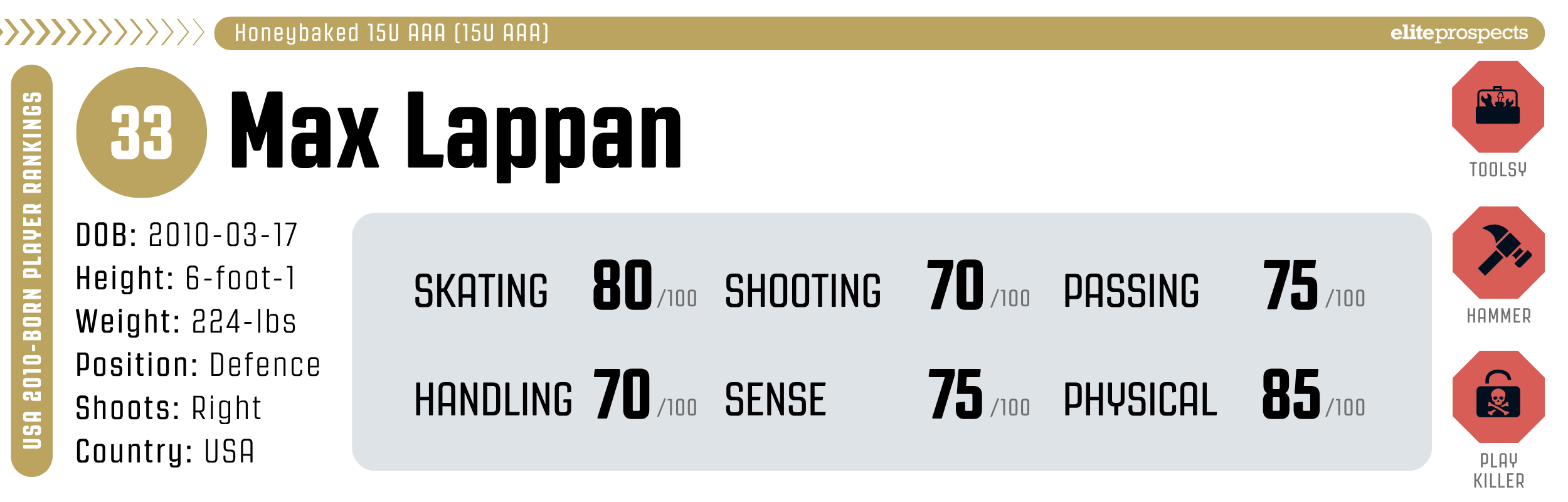
Max Lappan served as a stabilizing force for Honeybaked, logging top minutes in nearly every game while captaining the team to multiple tournament victories, including the OHL Cup. His defensive game is a defining strength. He closes on opponents effectively, matches pace, and uses his reach to limit time and space. His physical engagement further enhances that defensive reliability. While offence is not his primary calling card, he shows flashes as a puck carrier and in offensive-zone activations. More importantly, his risk management stands out – he rarely sacrifices defensive structure for offensive opportunities – all while contributing a 132-point season across 89 games.
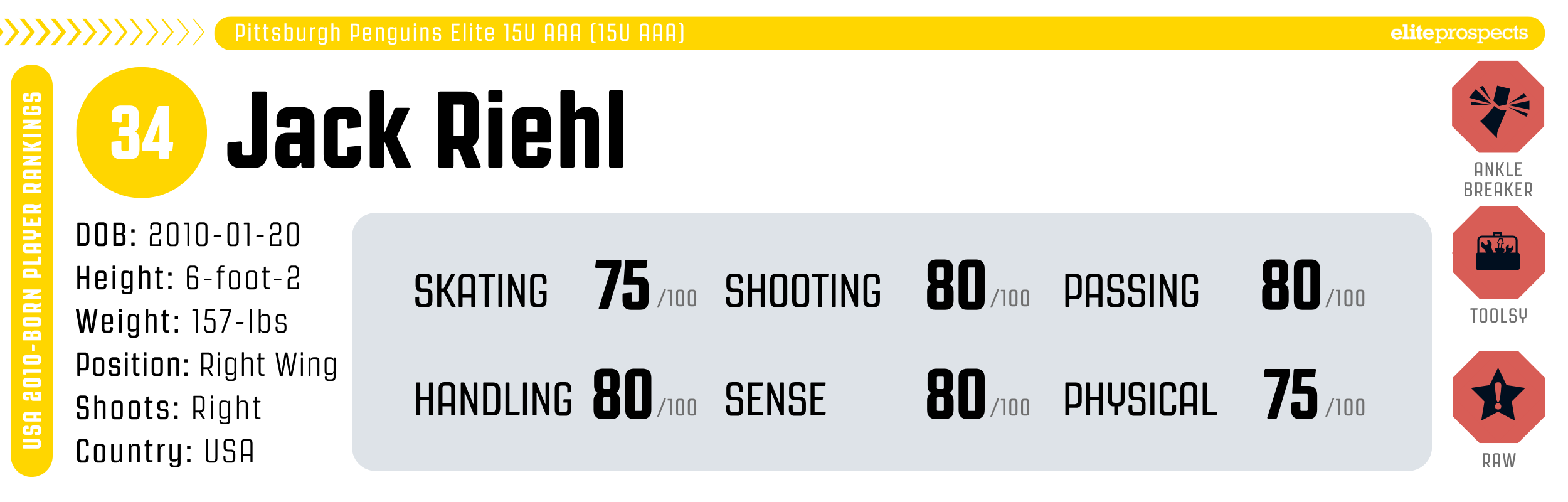
Jack Riehl has a profile that constantly kept coming back to us as a potential late bloomer. While he didn’t completely “pop” this season, there’s enough in the toolkit to believe there are years of growth ahead for Riehl. He’s a smart manipulator in his best moments. Riehl can play off defenders' heels in creative ways, placing pucks in both handling and passing sequences in opposing blind spots. At 6-foot-2, 168 pounds, Riehl has all the physical upside in the world right now. He is a critical player to keep an eye on for a potential rise.
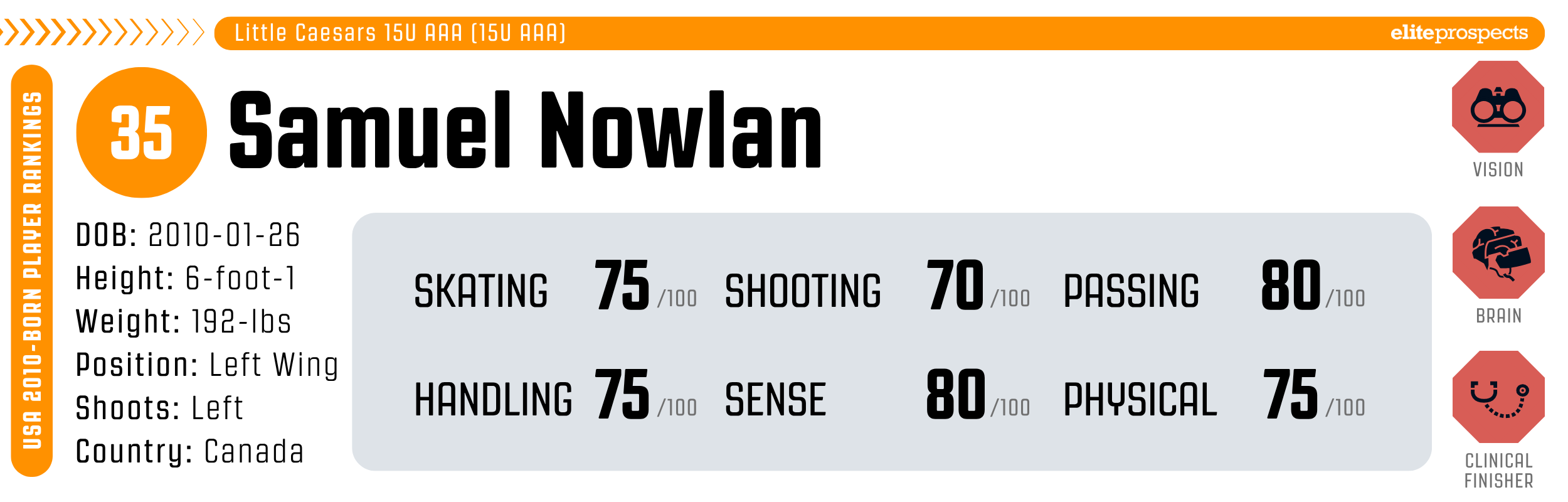
This ranking is littered with kids that we expect to all translate to junior hockey, with a few shining through as potential pro prospects. Samuel Nowlan is one of them. He wasn’t the highest-profile player on this Little Caesars team this season, but there’s so much to like in his game. Nowlan plays under pucks responsibly, marking his checks and holding tight coverage. He’s built like a pro already and is going to continue to learn how to effectively use his body. Nowlan is a true centre and, if he ends up in the QMJHL, will have the opportunity to develop as a really strong playmaker.
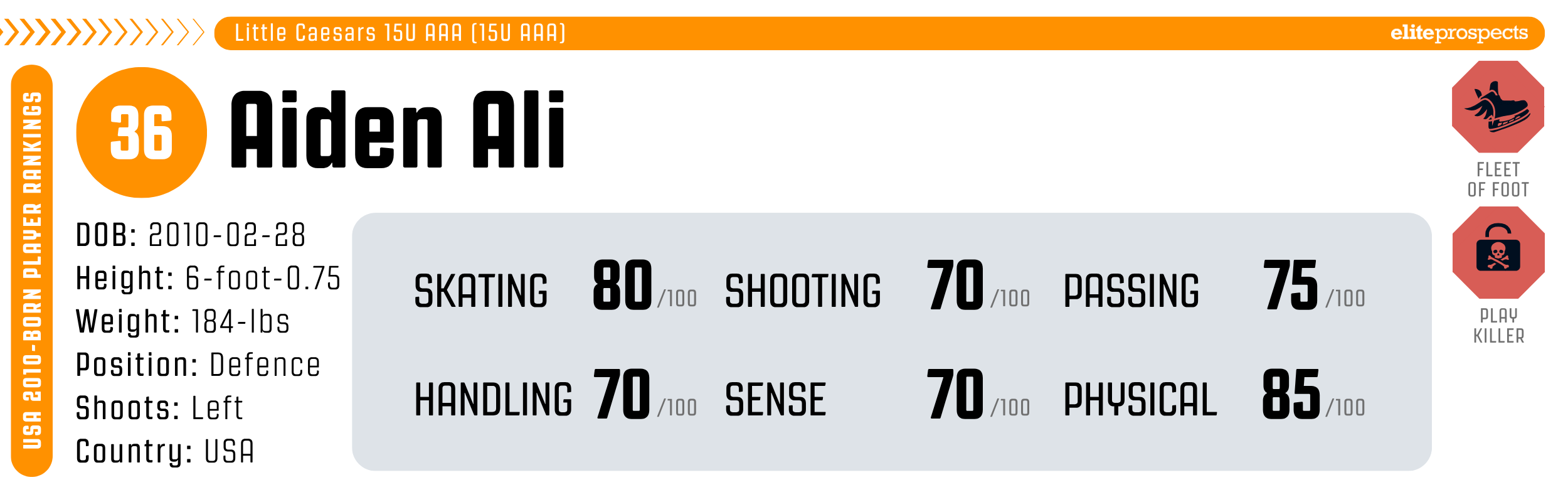
Aiden Ali stands out as one of the smoother shutdown defencemen in the age group. His defensive habits are already advanced, consistently reading plays, disrupting passing lanes, and closing space on opposing attackers. His four-way mobility allows him to execute these responsibilities efficiently, often making defensive sequences effortless. Scouts in our staff have noted that his habits already resemble a pro-style approach. Recently signing a tender with Madison in the USHL, Ali projects as a reliable top-four defenceman at the highest levels of junior hockey.
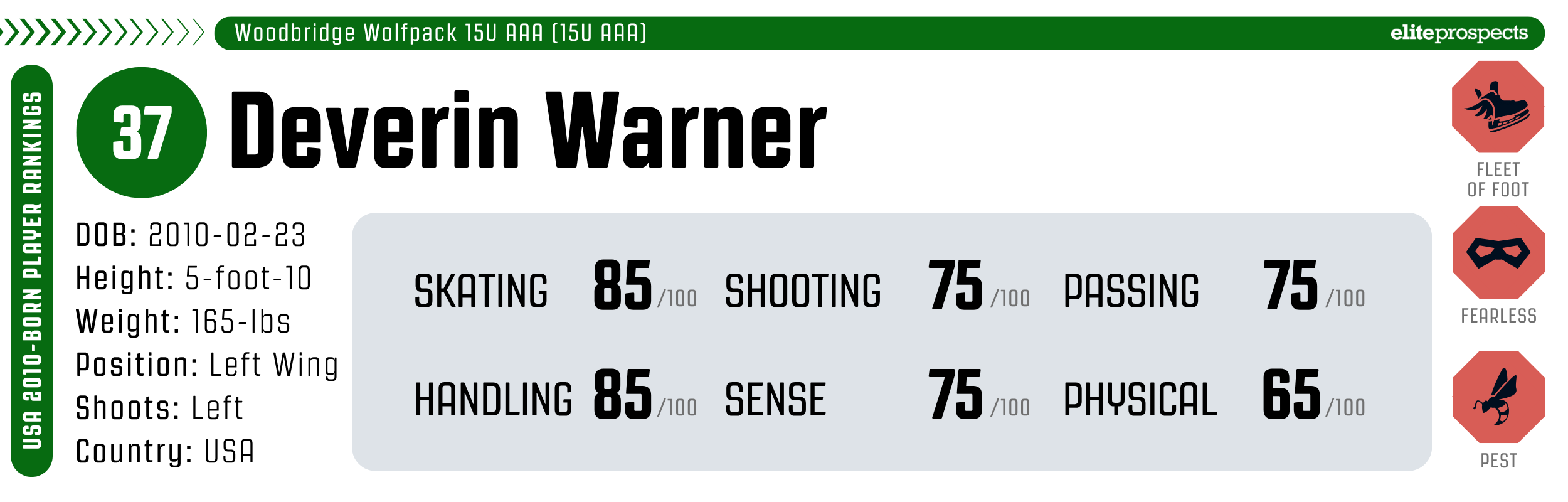
Deverin Warner impressed scouts all year long with his mature approach to the game. His Woodbridge group was stockpiled with talent, but perhaps none was more dynamic than Warner. In spots where other players were easily worked off pucks, Warner fought through contact, stayed on his feet, and earned possession in the toughest ice. There are beautiful movement patterns in his game, with tricky weight shifts and rotations to shake coverages. Warner likely projects as a middle-six dynamic winger with some contact skills. His pro projection will almost entirely depend on physical growth.
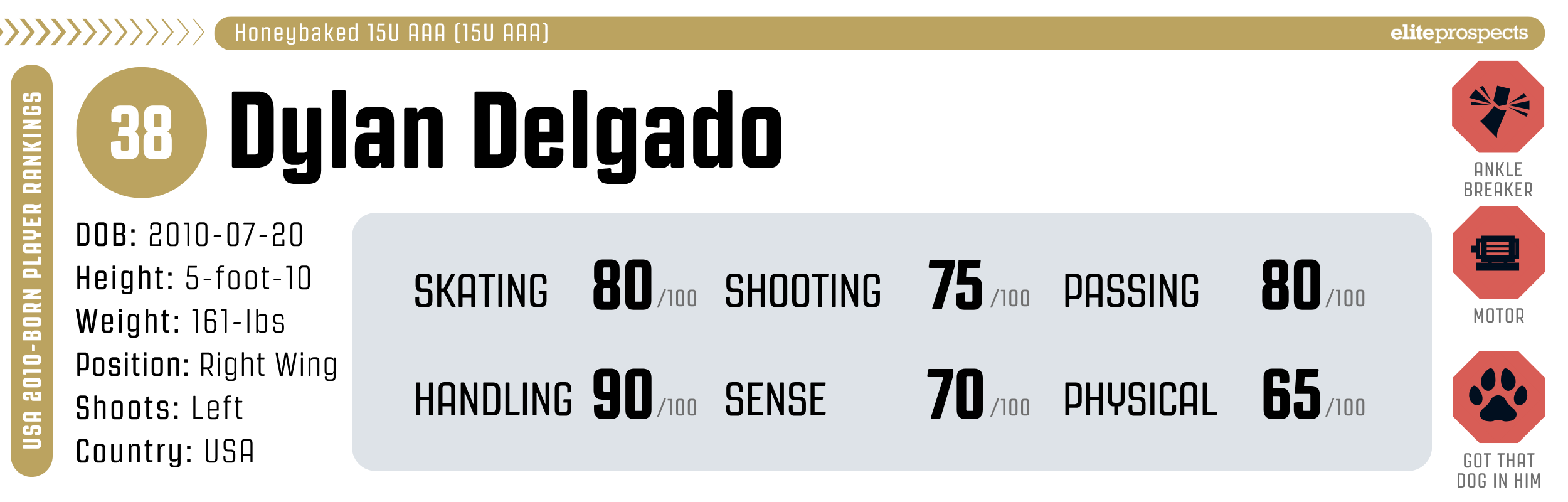
Dylan Delgado is among the most gifted puck handlers in the 2010 age group. He regularly breaks down defenders one-on-one, using body positioning and anticipation to create space. His creativity is evident through a wide range of skill moves, including lateral shifts, puck flips, and deceptive touches through defenders’ triangles. Combined with his vision, this gives him significant offensive upside. Puck management remains an area for improvement, as he often drives play individually at this level. With better integration of teammates, his skill set could translate into a top-line role in the USHL.
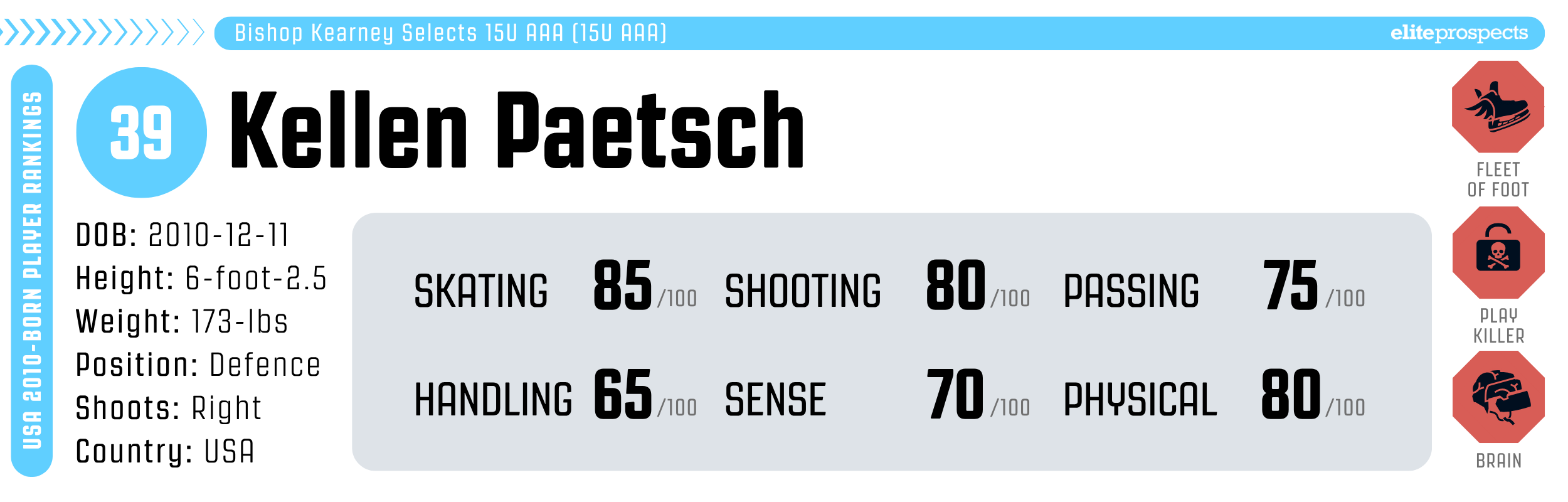
At 6-foot-2.5, Kellen Paetsch combines size, mobility, and defensive awareness to form a strong foundation on the backend. He closes gaps effectively, using reach and positioning to disrupt opposing rushes. His game is built on intelligence, particularly in transition, where he can both move the puck efficiently and carry it when needed. Offensively, he contributes through timely activations and smart decision-making in the offensive zone. His selection to the NTDP reflects the versatility and reliability he brings to the position.
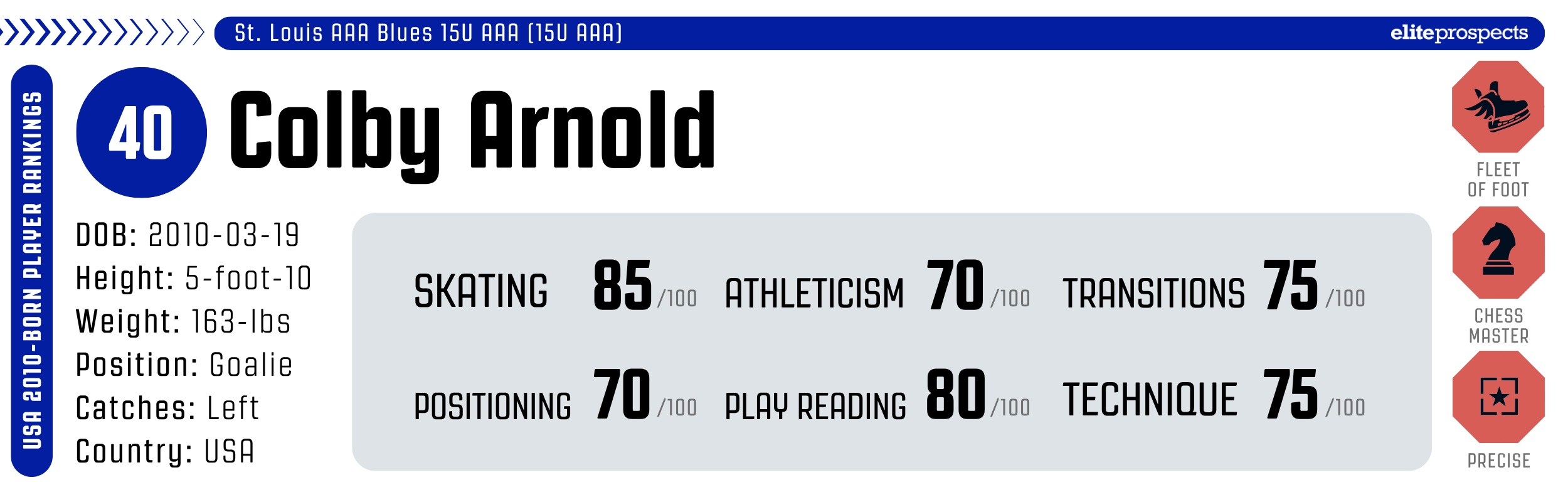
Colby Arnold is the second goaltender selection for the NTDP. An undersized guy, he kicks the trend of the Program’s preference for bigger goalies, but it isn’t hard to see how Arnold can make it work with his 5-foot-10 listing. Arnold is a smooth, graceful, and lightning-quick skater. He truly looks like he’s flying at times, and his edges give him great control over his positioning at that speed. He’s always on angle and stays on top of pucks with great diligence. The speed translates to his slides and butterfly, where his explosiveness can steal away cross-crease opportunities. His transitions are fast, he’s great on his posts, and his hands are sharp as well. Mentally, his processing is high-level, and he approaches dangerous plays with calm and composure. Being the U17 team’s goalie can be an uphill battle, especially for a guy lacking size, but Arnold has the tools to compete in the USHL next year.
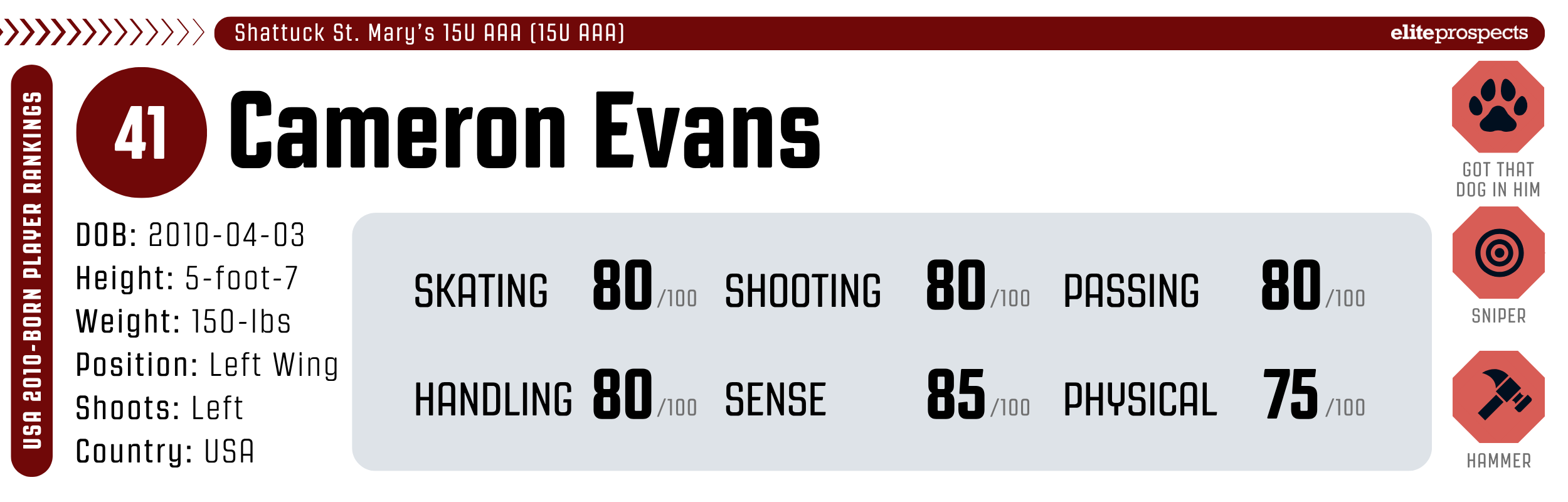
A lot has been made, and will continue to be made, about Cameron Evans’ size, but you simply cannot deny his ability to produce on the biggest stages. He eclipsed 100 points in each of the last two years at Shattuck St. Mary’s, including a massive explosion of offence at the National Championships. Evans might not be the biggest guy on the ice, but he has ridiculous pace and jam. He digs in, engages, and wins tons of battles physically. This is a kid who may find ways to score at every level. Evans will be a fun one to watch.
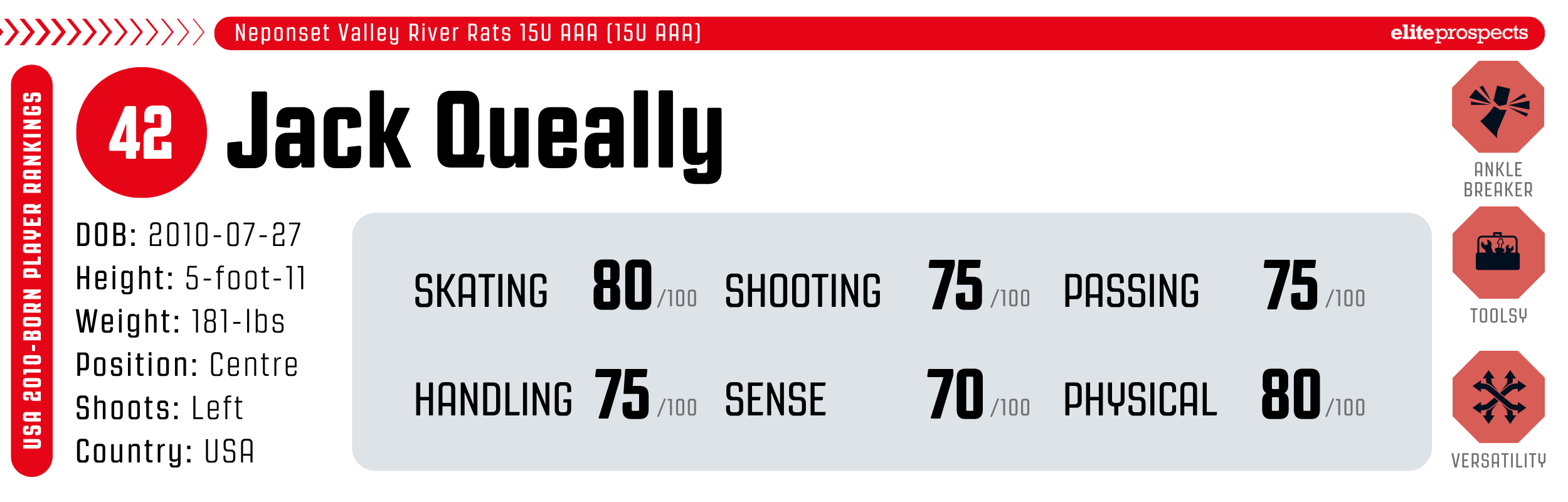
A more skilled attacker, Jack Queally, stood out from August to March. His excellent fall season with the Neponset Valley River Rats 15O squad sparked anticipation for his prep season at St. Sebastian’s — and he delivered, playing in all situations for the Arrows. Queally’s passing ability is one of his strongest traits, as he can connect with teammates on give-and-go plays, cross ice on the power play, and during odd-man rushes. He does seem to slow his pace in transition, which will be interesting to watch next season, but it has mostly benefited him this year. His two-way game is excellent, and he played a key role on the penalty kill throughout the year, using aggressive positioning and stick checks. He is a skilled handler, but gaining more confidence in his manipulative skills and speed will only make him a more dangerous forward for the NTDP in the future.
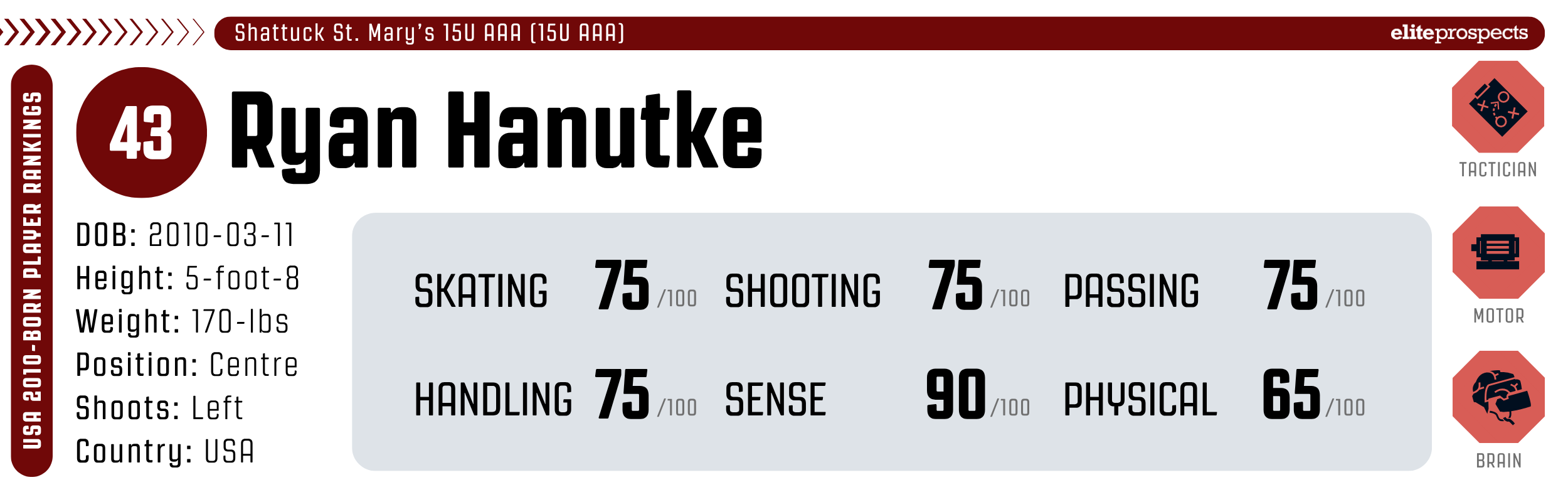
Ryan Hanutke was identified early by the Elite Prospects scouting staff as a potential riser. He has so many enviable traits, highlighted by an endless motor and brilliant feel for sequencing plays. As the season wore on, he got better and better, converting his attempts to push the game more frequently. It all culminated at the national tournament, running away with the scoring lead as his team won the national championship. Hanutke, along with linemate Colmer, brought an unrelenting motor and drive to get to the middle of the ice. He’s undersized, but the contact skills and pace provide projectability. Hanutke looks like a potential middle-six centre in the highest levels of junior hockey.
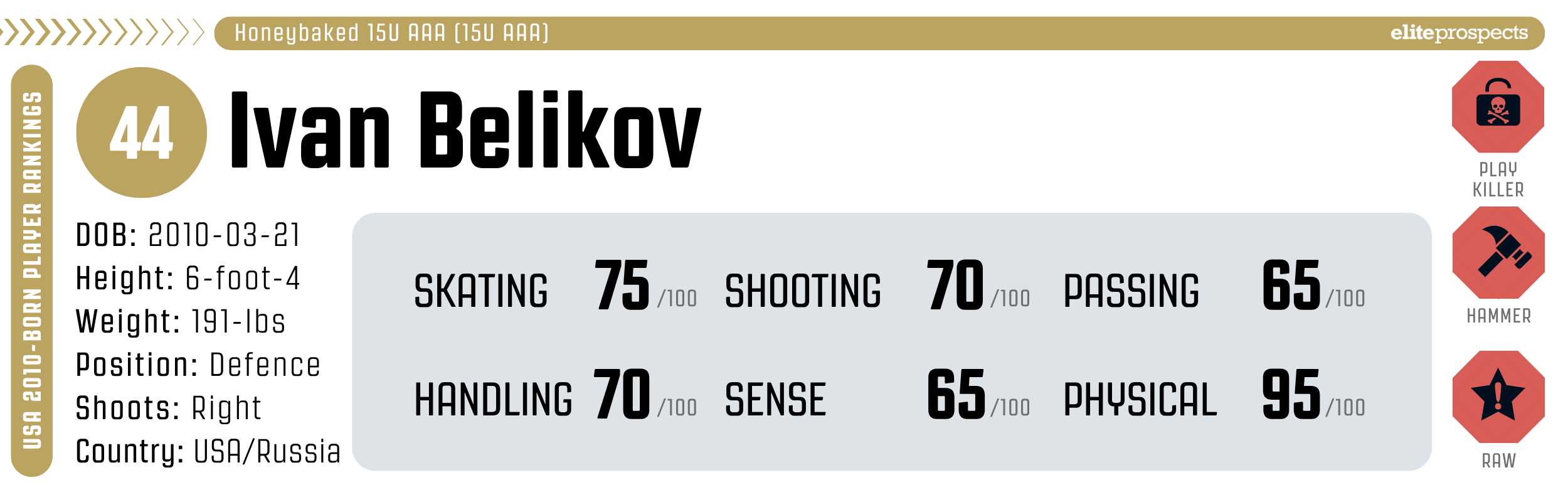
Ivan Belikov’s size makes him an imposing presence on the ice. He uses his reach effectively to disrupt plays and consistently limit opposing opportunities. While his physicality stands out, his defensive stick work is equally important in his ability to shut down attackers. His offensive game is more limited, though he does show occasional flashes of puck-moving ability. Belikov projects as a role-specific defenceman, with his long-term upside tied to the continued development of his puck skills.
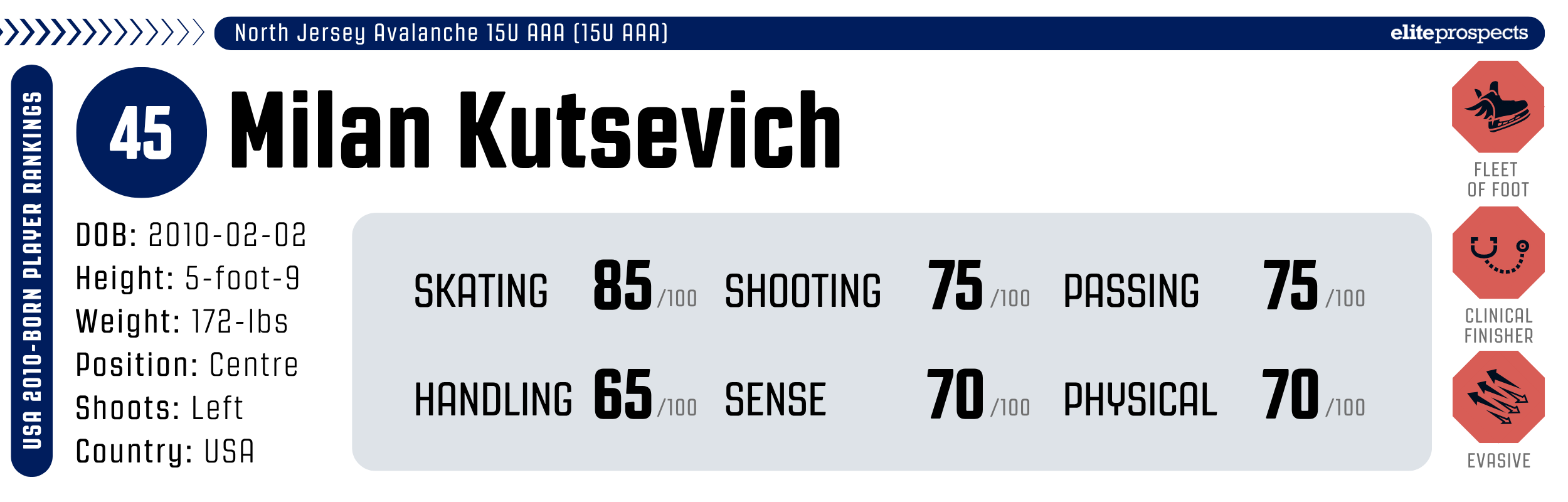
Milan Kutsevich is one of the more explosive skaters available in this age group. He explodes out of standstills and breaks coverage with his pace. The tempo he drives generated offence for the North Jersey Avalanche all year long, pushing defenders on their heels to open higher layers in the offensive attack. Kutsevich has the potential to play a top-six role in junior hockey, with his floor rooted in his skating and motor.
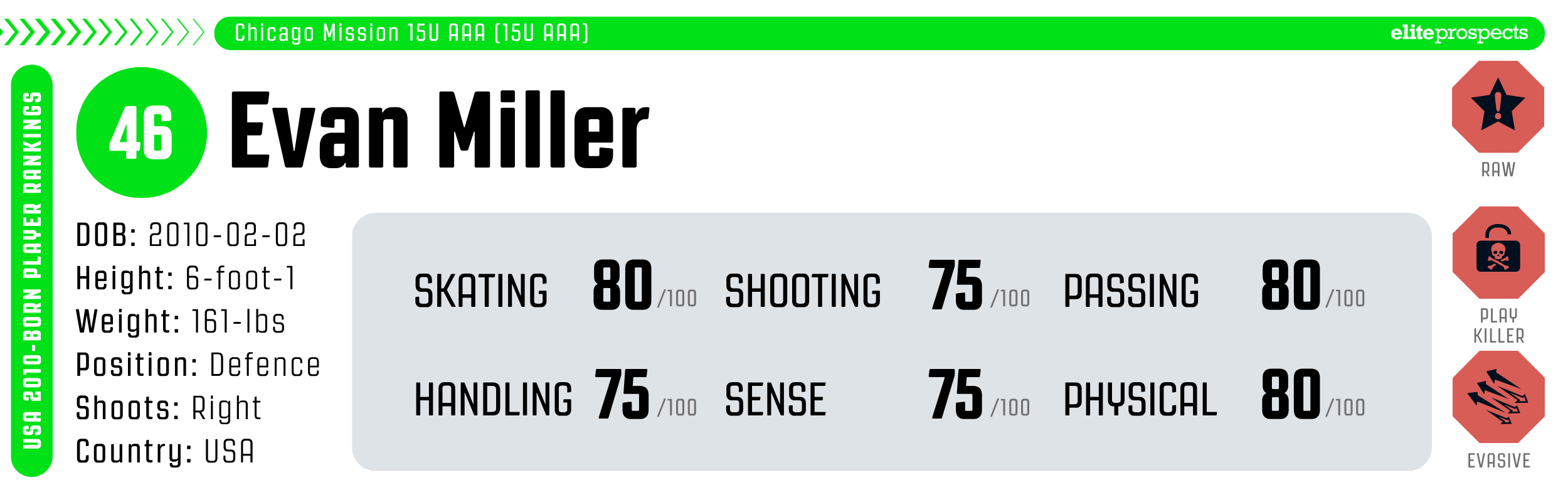
The first of two Chicago Mission players on this list, Evan Miller, slots in at 48 after a strong season. Miller was granted an invitation to the NTDP Evaluation Camp and, while he didn’t make it, he cemented himself as one of the better defenders in the country. He has size at 6-foot-1 and controls the game from the back end with his edge work. Miller opens his hips and manipulates forecheckers; he’s never in a rush to make plays, instead slowing the game down with poise. He’s a strong option for any junior team looking to add a kid who could blossom into a really nice defenceman over the next few seasons.
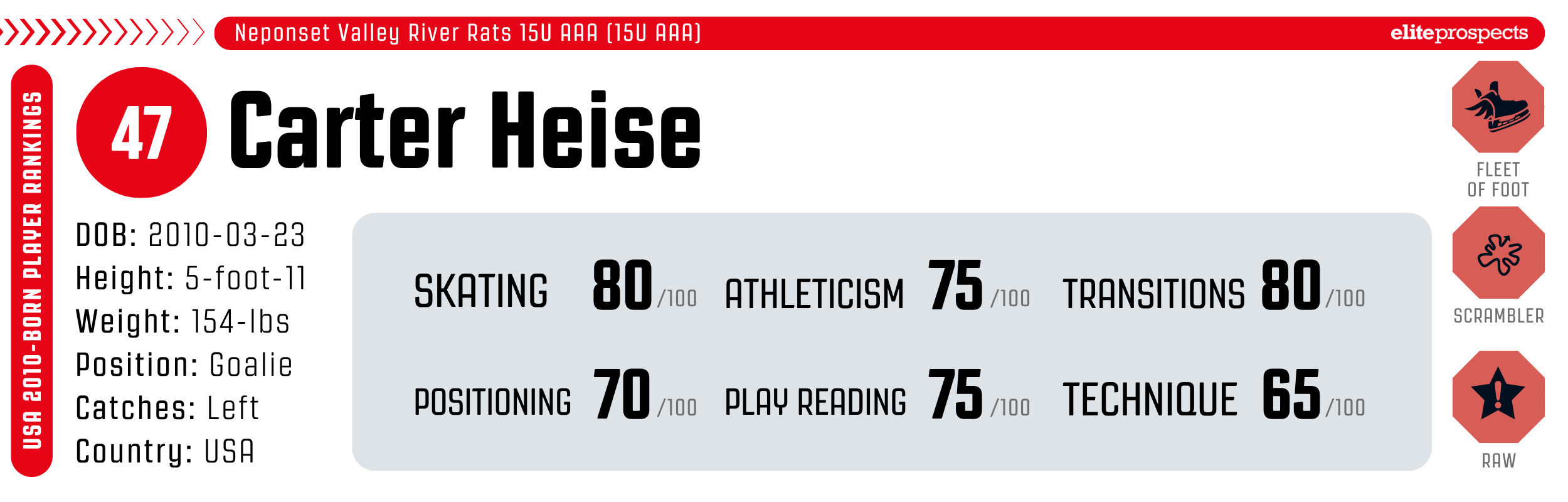
It’s really easy to project Carter Heise’s game to the junior levels and beyond. Already a nimble and precise skater, Heise can leverage his quick feet to cut down angles and get himself into position. Heise’s anticipation is also far ahead of his age, already scanning for passing threats with play in the corner and formulating and executing those reads. It’s no surprise that Heise has already found success, showing dominance at the 15U AAA level and leading his high school to a state championship. While the next step may be a big one, Heise has the blueprint in his smarts and athletic profile to adapt to the higher levels of competition and thrive.
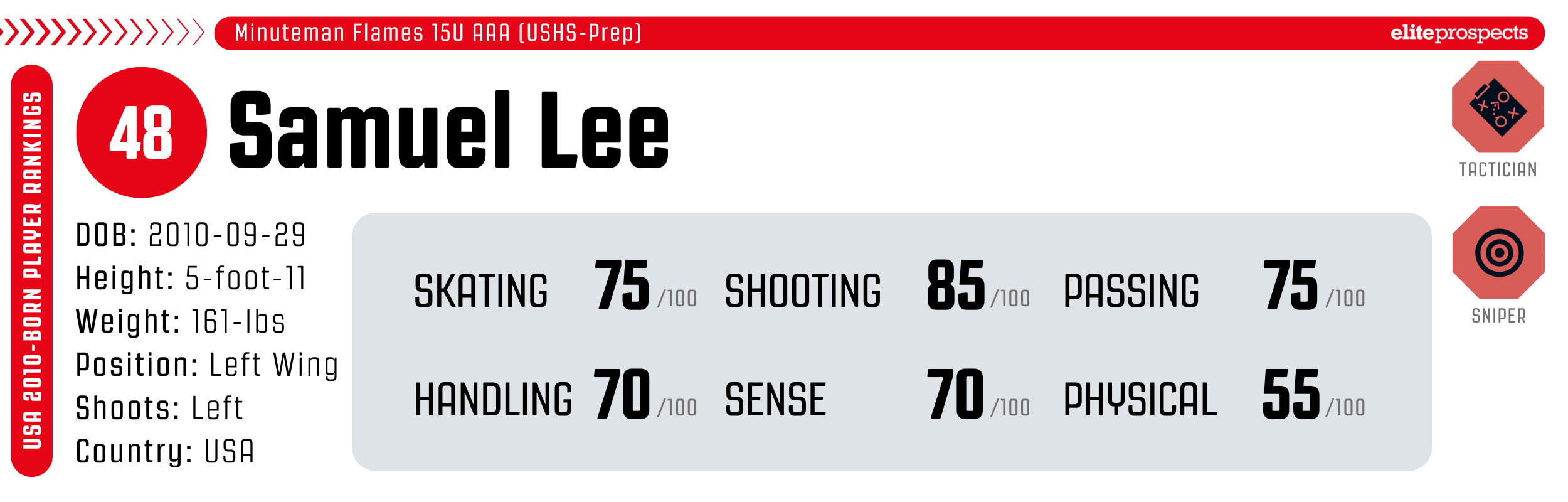
Samuel Lee significantly elevated his stock during the New England Prep season at Belmont Hill. His shooting mechanics are top-notch — he has a quick, powerful release off the one-timer and can snap pucks with impressive speed from inside the dots. His transition game is excellent, consistently recognizing patterns on the rush to find the best options on the entry. He’s already a strong skater for his age, showing great edgework and speed. If he continues to develop his physical game, he has the potential to become a standout player with the NTDP and in the NCAA.
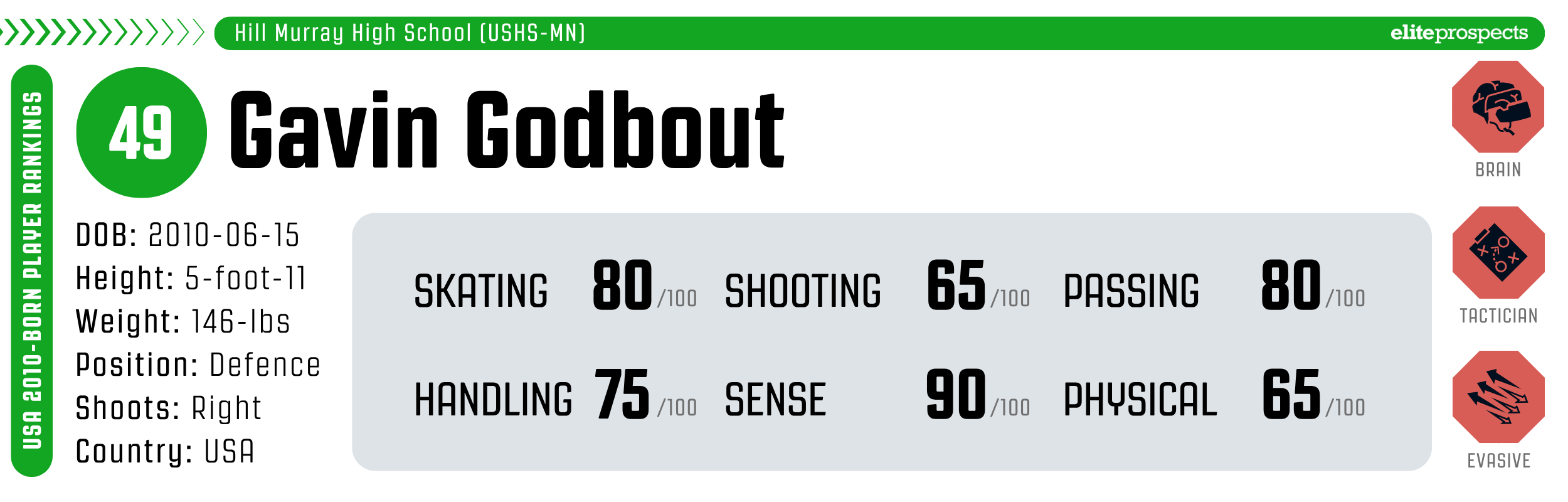
As other top 2010 defenders earned accolades and praise this year, Gavin Godbout flew under the radar. While he still lands below others here, Godbout is a really intriguing name that we’ve kept tabs on this season. He was mentioned as a potential NTDP player in our midterm article. His game is built on his hockey sense and four-way fluidity. Godbout effortlessly snaps first passes in motion before activating to get involved. He has room to fill out and potentially become another smart puck mover.
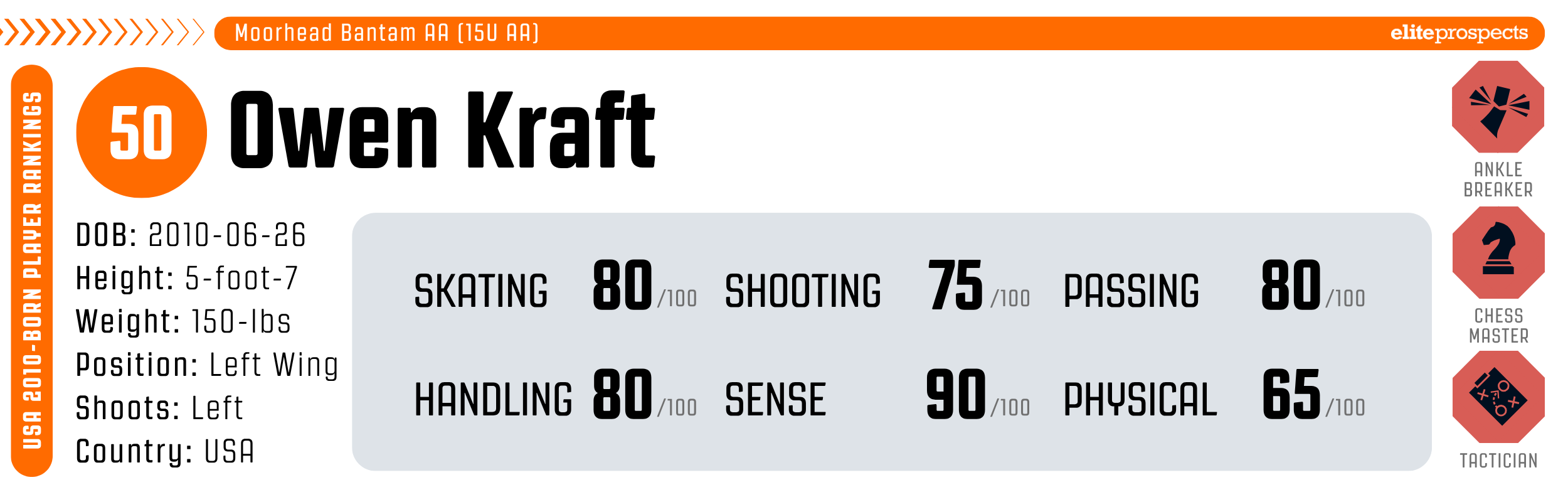
Owen Kraft spent the year playing bantam hockey, a victim of the backlog of talent at Moorhead High School. He torched the lower level of competition, but there’s strong reason to believe that he’ll carry his offensive dominance into high school and eventually junior hockey. Kraft is a brilliant player who controls tempo well and constantly creates advantages in transition. He doesn’t have the high-end straight-line pace, but the ability to ride edges and create from a handling base is as good as some of the best in the country. It’ll probably be a longer development path for Kraft, but it could pay off.
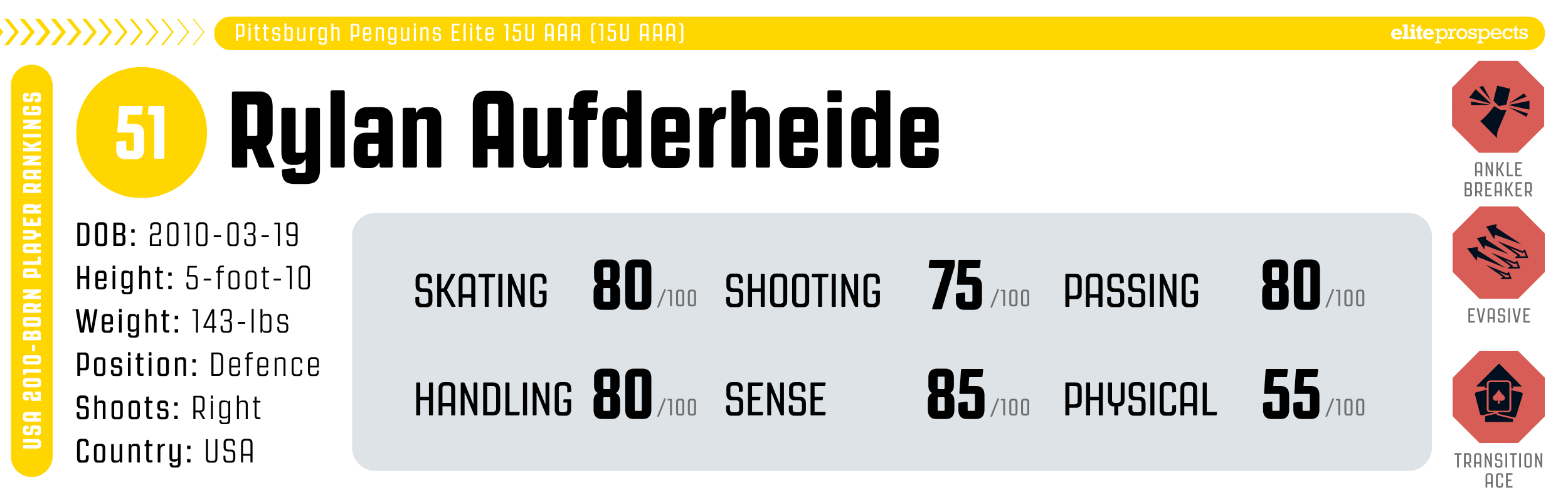
This list is riddled with top-end defenders that bring different contributions to the game, and it's intriguing to consider where a player with Rylan Aufderheide’s skillset slots in. He’s an NTDP selection camp player who didn’t make the team, pivoting focus to the OHL and USHL. Aufderheide is a bit undersized and doesn’t have many physical elements, but he’s really efficient. The skating grades out well, and the posture is technically sound, never altering his ability to scan the ice to make plays. It will be an uphill climb for Aufderheide, but he has the stick detail and puck-moving prowess to make it work.
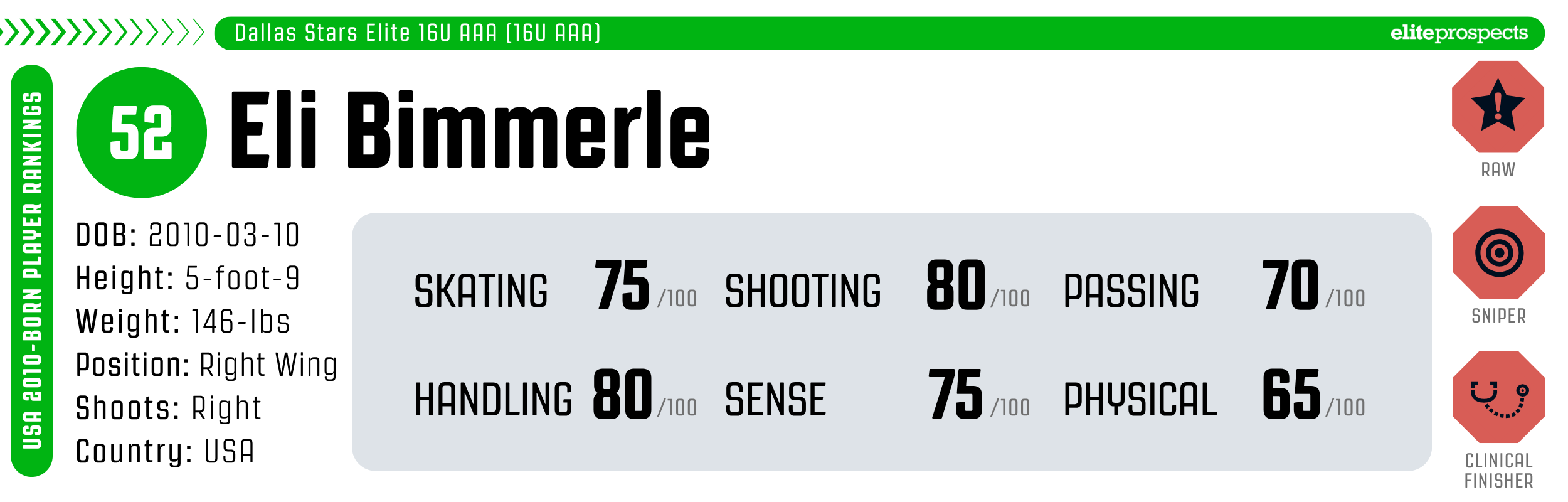
Dynamo forward Eli Bimmerle comes in at 52 on our list after a strong year playing on Dallas Stars Elite 16U as an underager. He led the way alongside Kaebel, finishing with well over a point-per-game en route to a National Tournament appearance. Bimmerle is small, but he has goal-scoring ability. He generates wild torque for his frame and navigates into scoring areas as efficiently as anyone on this list. The adjustment to junior may be difficult with his size, but with time, it's easy to see him becoming a scorer at the next level.
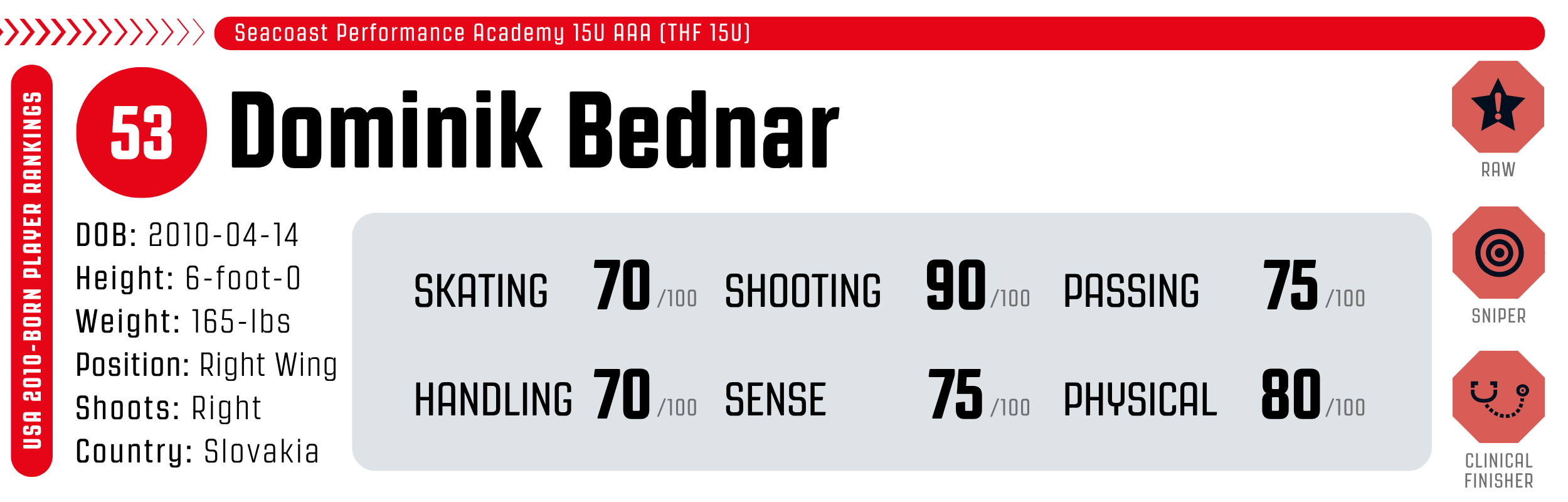
Dominik Bednar led the nation in points per game at the 15U AAA level, driven largely by his elite scoring ability. The Slovak forward scored 76 goals in just 51 games, showcasing one of the most dangerous shots in the class. His release is a clear standout, supported by strong technical detail that enhances its effectiveness. As he continues to develop, integrating more physicality into his game could further elevate his impact. Bednar projects as a potential high-end scorer at the Tier 1 junior level.
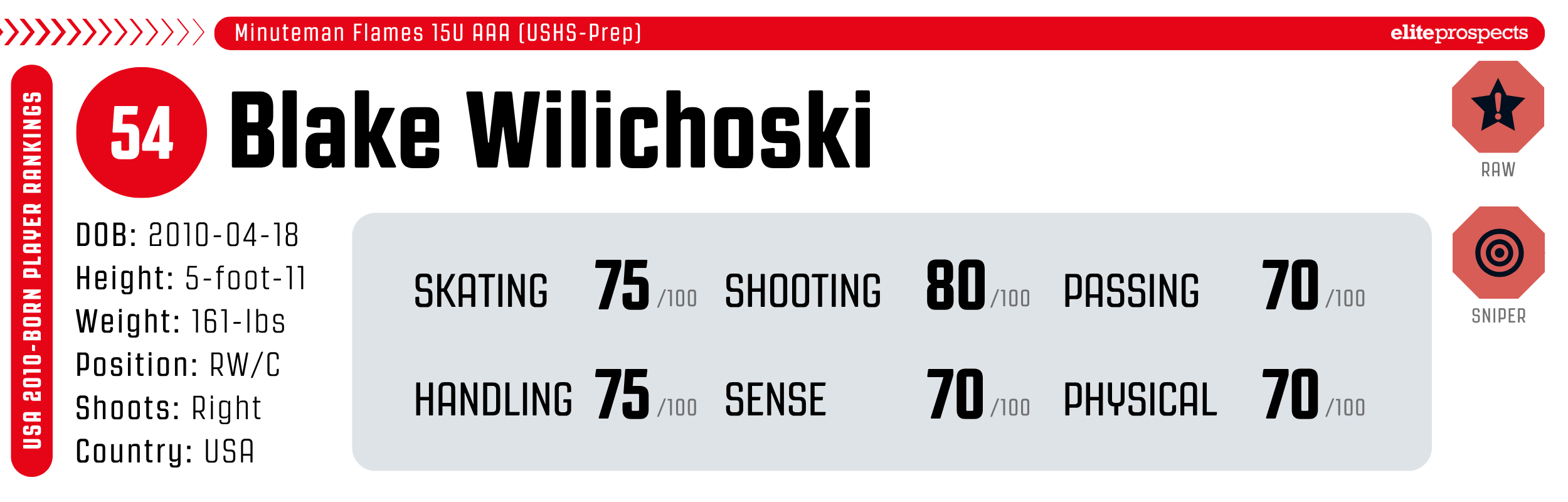
Blake Wilichoski had a fall season that caught many scouts’ attention. His smooth east-to-west skating style is highly promising for his frame, and he makes a tremendous impact in the offensive zone. He can fire pucks from basically all angles and off the catch with ease, as well as demonstrating excellent puck-handling even under pressure. Since he plays at such a high pace, it’s easy to see why many think he could have an impact at the USHL level rather quickly. While there are some questions regarding his defensive effort, we believe it is coachable, and there's still a chance it will improve down the road in the USHL with Cedar Rapids.
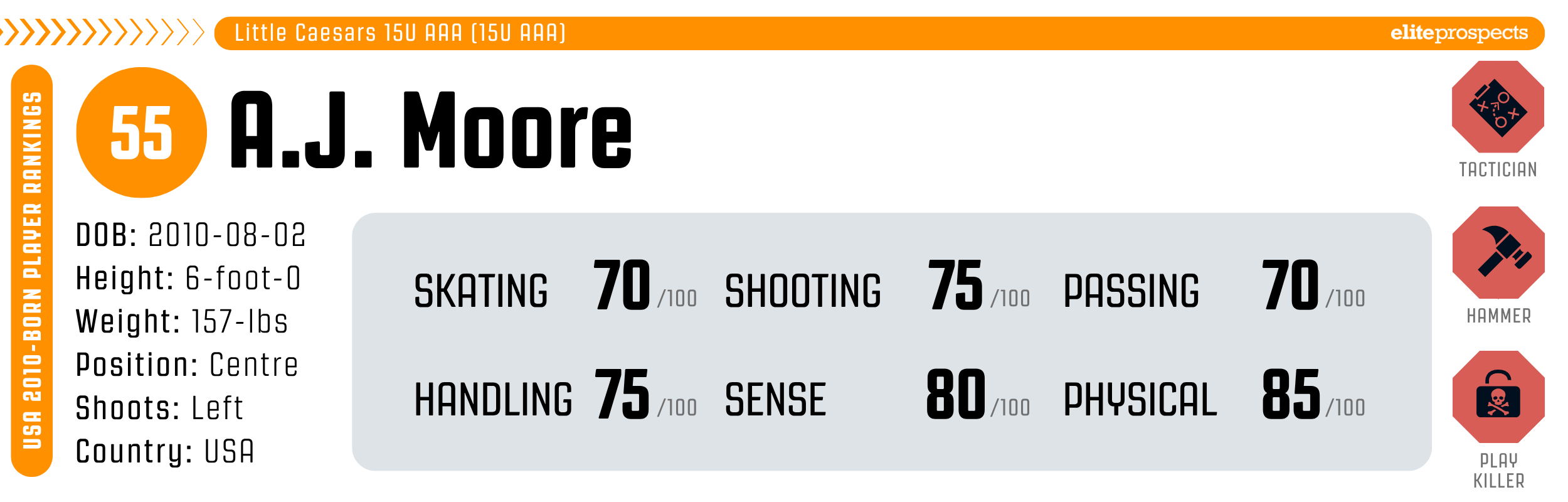
AJ Moore moved up and down Little Caesars’ lineup this year, a versatile piece with a translatable game. While he doesn’t possess the lethal offensive upside his teammates do, Moore brings strong foundational elements as a junior hockey prospect. He’s a traditional checker with upside around the walls. Moore consistently drops to the back wall to retrieve pucks, shields with his body, and distributes plays accordingly. He may never break through offensively, but a team will see value in him. Moore projects as a steady middle-six centre.
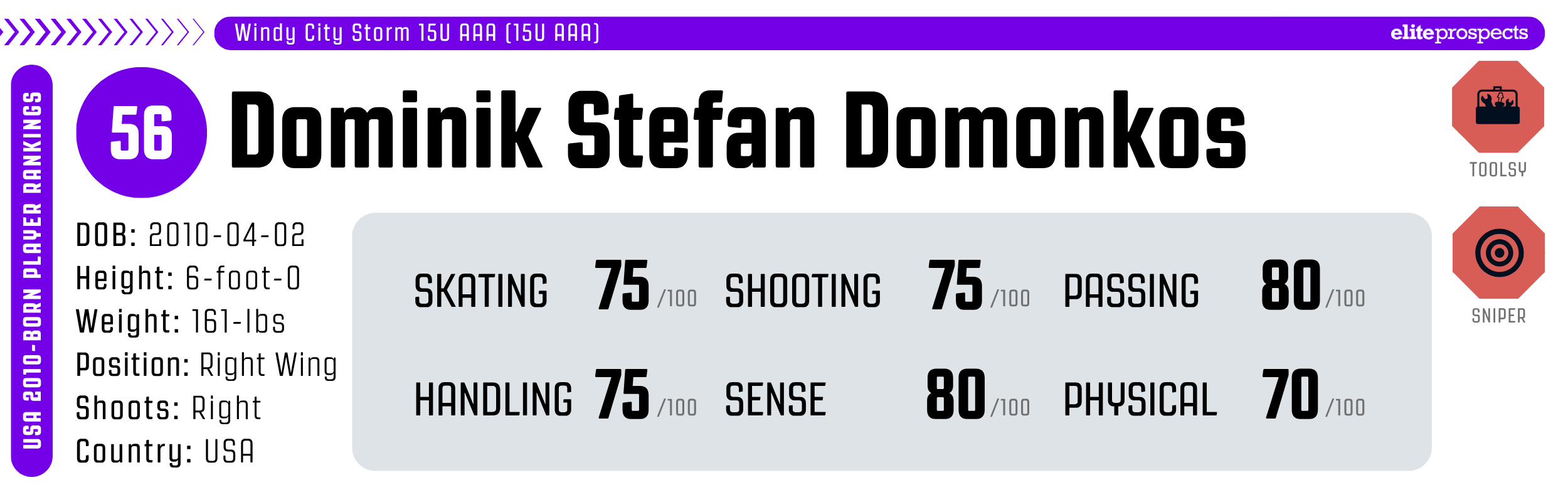
Dominik Stefan Domonkos is the second of a pair of Slovaks on this list, a rangy scorer who lit things up for the Windy City Storm this past year. There are a lot of elements in his game that a team can build off of: off-puck scoring, a potential checking game, and slick handling that can facilitate the rest of his game. With Domonkos, there are a variety of ways his identity can go. It's possible to see him becoming a tall checker with reach and scoring ability, up and down the lineup. Domonkos has signed a tender to the Tri-City Storm of the USHL for this upcoming season, a solid test while entering junior hockey.
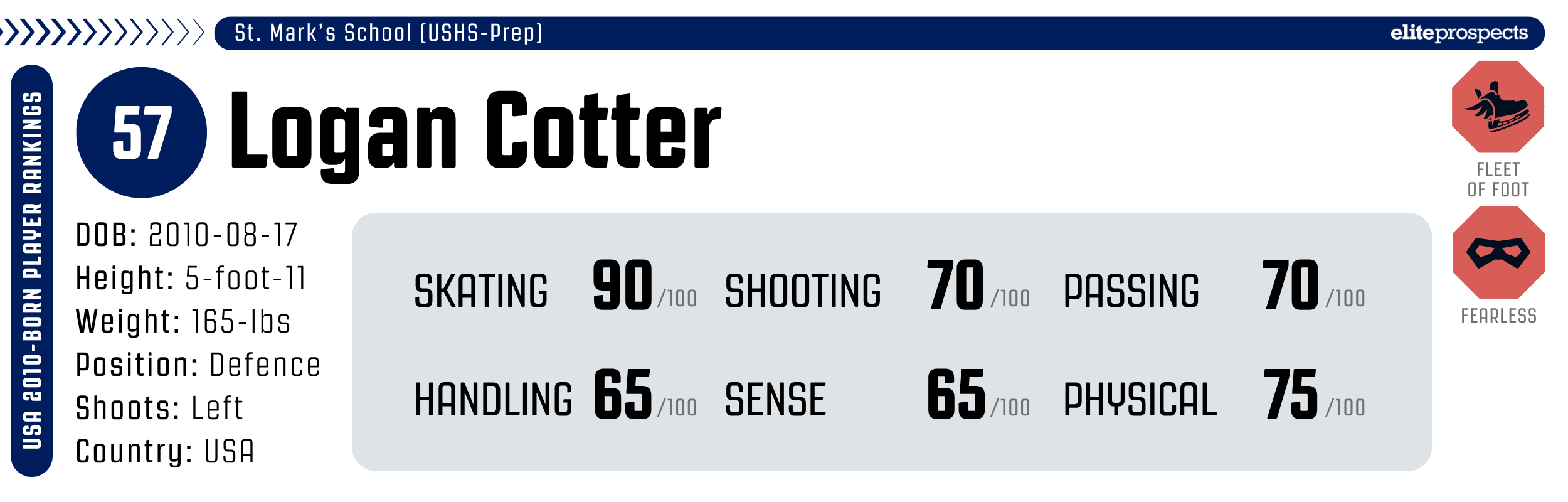
Logan Cotter has shot up our board late this spring, a serious riser. The skating ability will be his calling card at the next level. Cotter uses punch turns, cutbacks, and evasive movement patterns to create space on the blueline. He pulls opposing wingers into open ice and outpaces them, timing his sequences perfectly against defensive attempts to cut him off. There’s a lot of refinement required in the way he defends, and it could lead to a long development path, but Cotter has the tools to become a top-pair puck-mover and top unit quarterback. He’ll continue to be an intriguing case study through junior hockey.
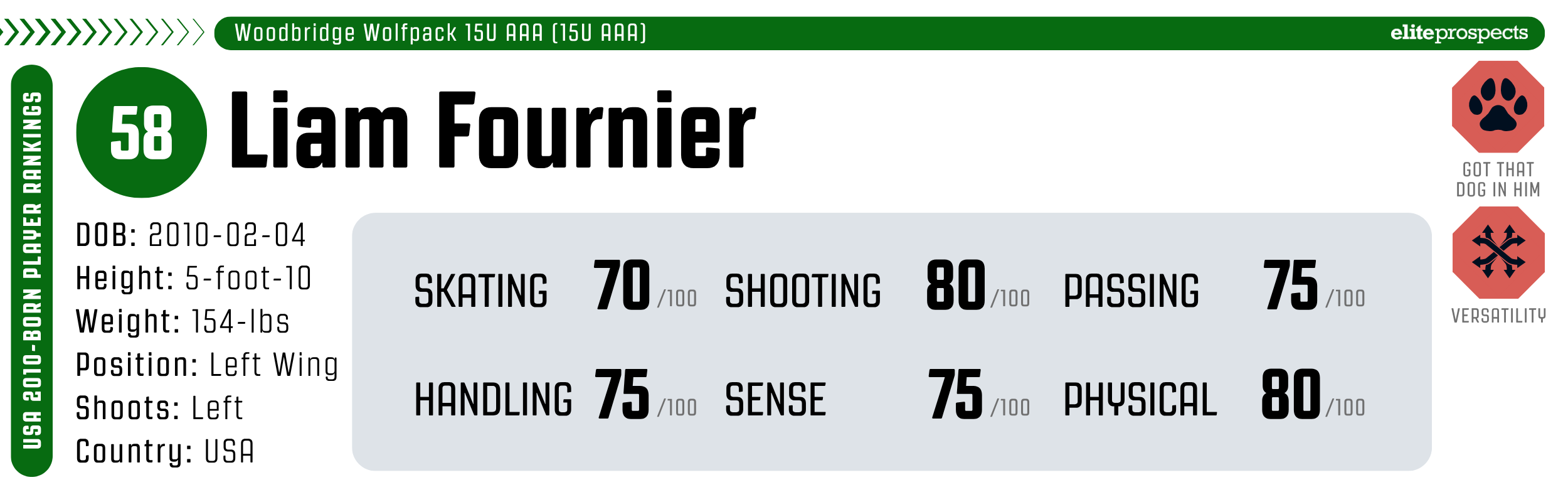
Liam Fournier first caught our attention back in August, when he was piling up impressive numbers with the Woodbridge Wolfpack 15O squad. He tends to be a shoot-first player, thanks to his lethal release off the rush, but his playmaking skills are an underrated aspect of his game. Fournier isn’t afraid to get into the thick of things, often involved in battles, and he enjoys challenging defenders head-on. If Fournier can improve his skating posture, it will position him well for success with Cedar Rapids in the USHL.
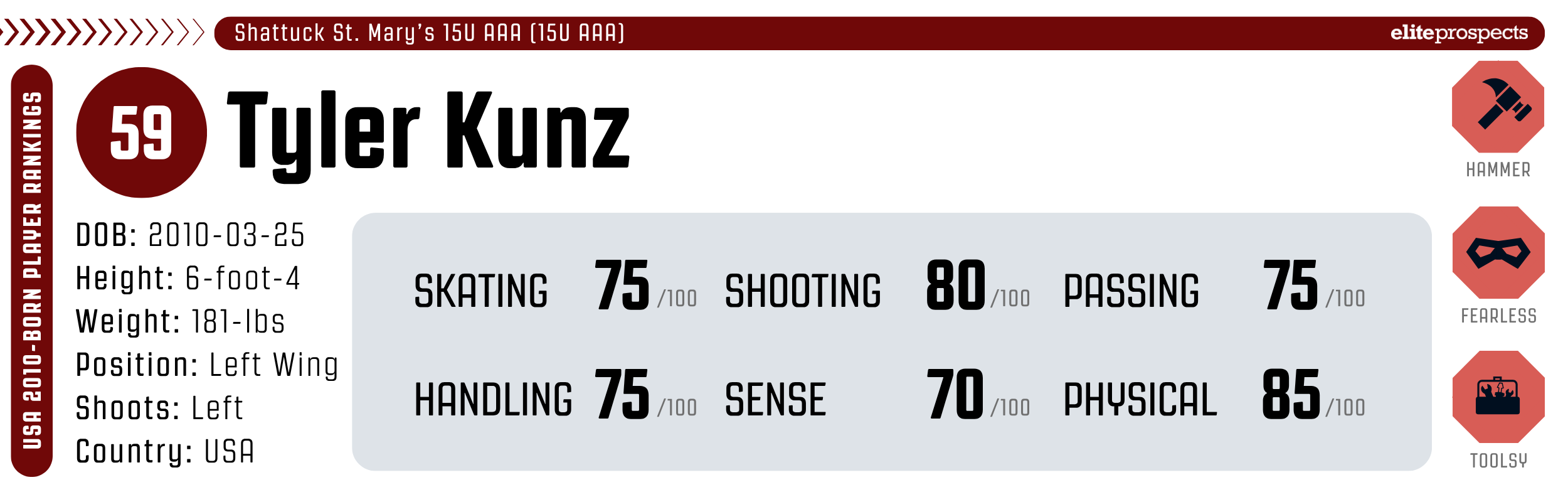
Tyler Kunz is a hulking kid, a monster with the potential to become a professional hockey player. There’s a true power game with Kunz; he earns hard ice, backs pucks down into the deep slot, and retrieves pucks off the backwall to facilitate the offensive cycle. He’s coordinated for his age and understands his body better than most kids his size. Kunz went point-per-game on Shattuck’s national championship team, filling a role at the top of the lineup. He has a ways to go in his development, but the upside in the NCAA is evident.
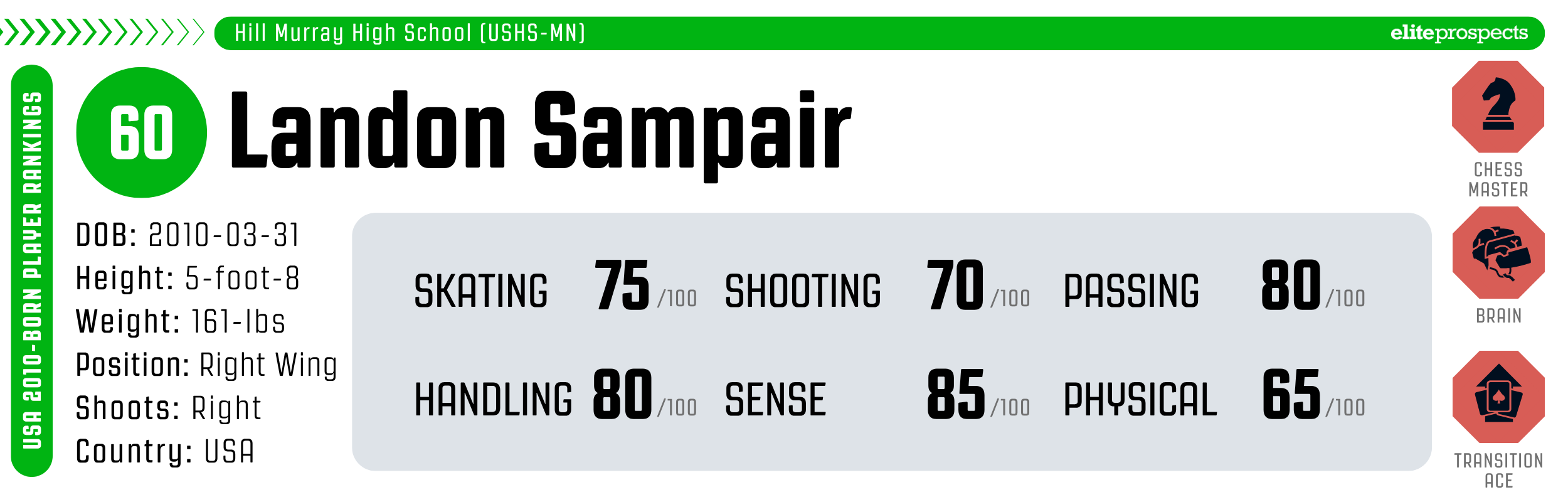
Landon Sampair maybe hasn’t received the accolades or appreciation he deserves. He’s small in stature, but there aren’t many smarter players in this entire class. Sampair went a point-per-game in the fall high school elite league, an incredibly impressive achievement for an underclassman. He controls tempo really well, handling inside coverage. As opponents work to run him off pucks, Sampair seems to always find ways to counter checks and stay connected. The projection might be limited by size, but Sampair is an easy player to appreciate.
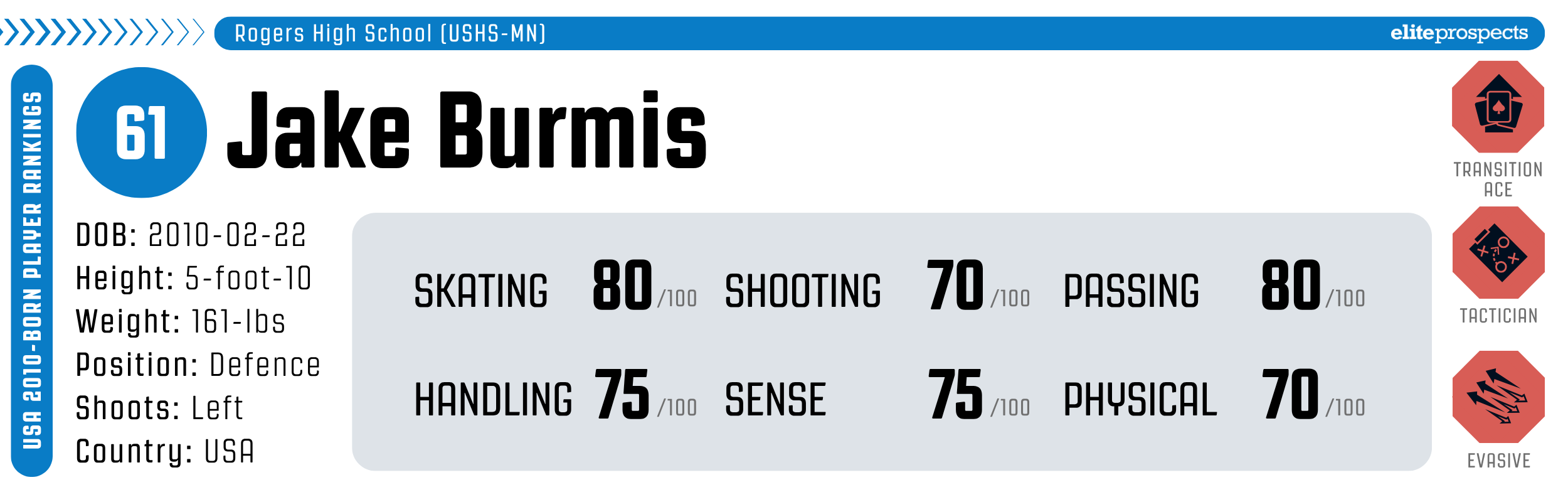
Jake Burmis is another Minnesota defender who comes on the smaller side yet packs a punch offensively. He finished as a point-per-game defender this year, playing alongside partner Jayden Kurtz, an NHL draft-eligible prospect. Burmis didn’t carry over all of the activations he had in bantam hockey, but instead played a steady game on the backend. He developed contact skills and the ability to stick checks as an on-puck defender, suffocating space. Skating is his strongest attribute. He’s a WHL draft pick to Medicine Hat and could certainly become a Tiger at some point. Burmis is a potential power play quarterback as a top-four puck mover.
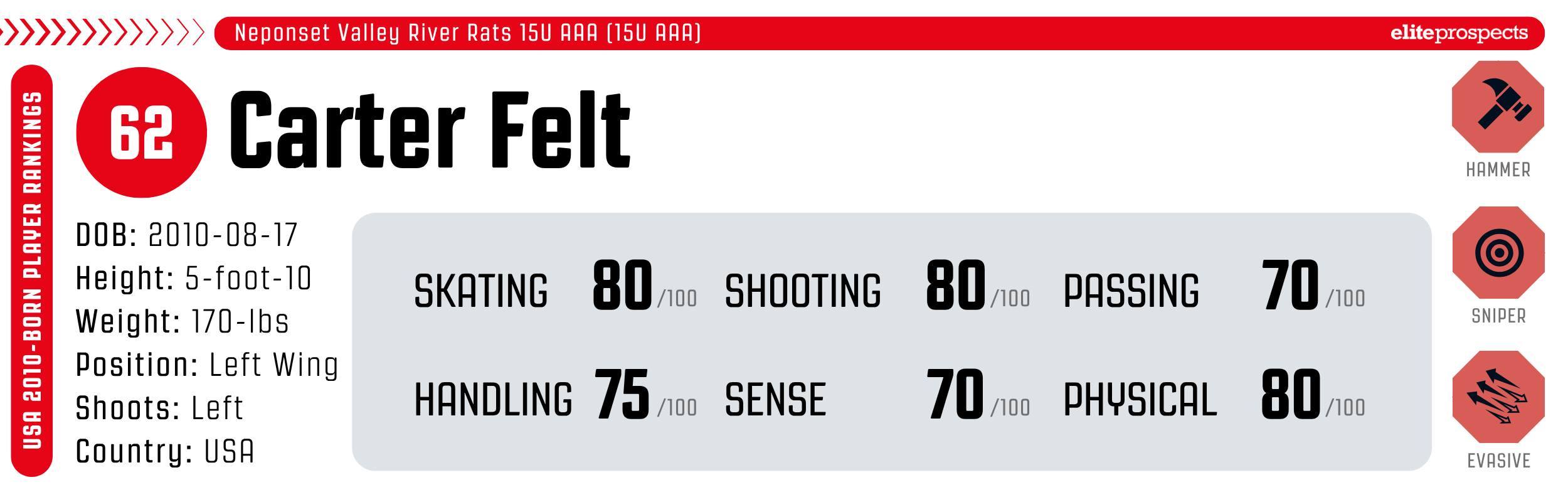
Carter Felt is one of the most aggressive hitters in his class, and he’s got a little bit of everything in his game. The Rivers School star is relentless on the forecheck, always looking to finish every hit, and he’s got a tremendous motor. He also shows some offensive flair, taking more chances with his passes, and most of them work out. As the season went on, Felt seemed to score more goals from close in, but he still has a nice shot with a quick release. His two-way potential is there too, as he’s an active penalty killer — diving in front of shots and locking up puck carriers along the boards. Most scouts want to see him develop more skills, but we still think Felt will be a top impact forward in junior, which should earn him a high pick in the USHL and QMJHL.
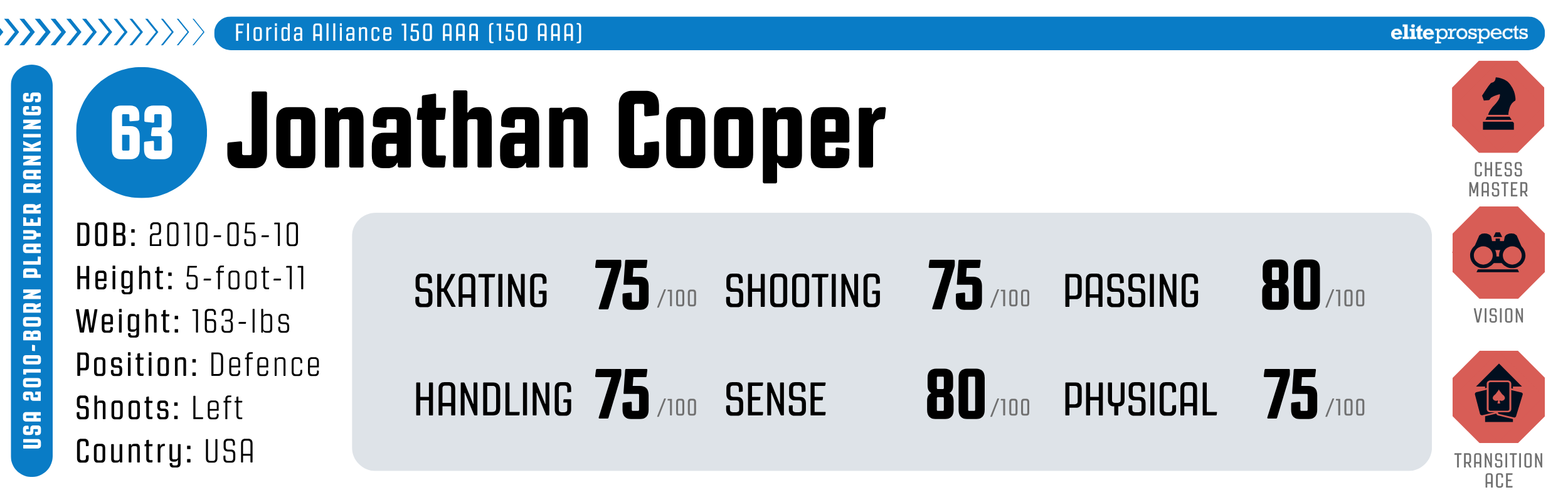
Florida Alliance defender Jonathan Cooper slots in at 63 on our board after a really strong season patrolling the blueline. He’s a versatile defender who can likely fill a ton of roles in junior hockey. Cooper has a solid retrieval and first-pass game, picking up pucks with poise and quickly advancing them up the ice. He’s a strong kid with fluid movements, a combination that gives him a high floor. It's hard to imagine many outcomes where Cooper doesn’t become, at the least, an effective junior defender.
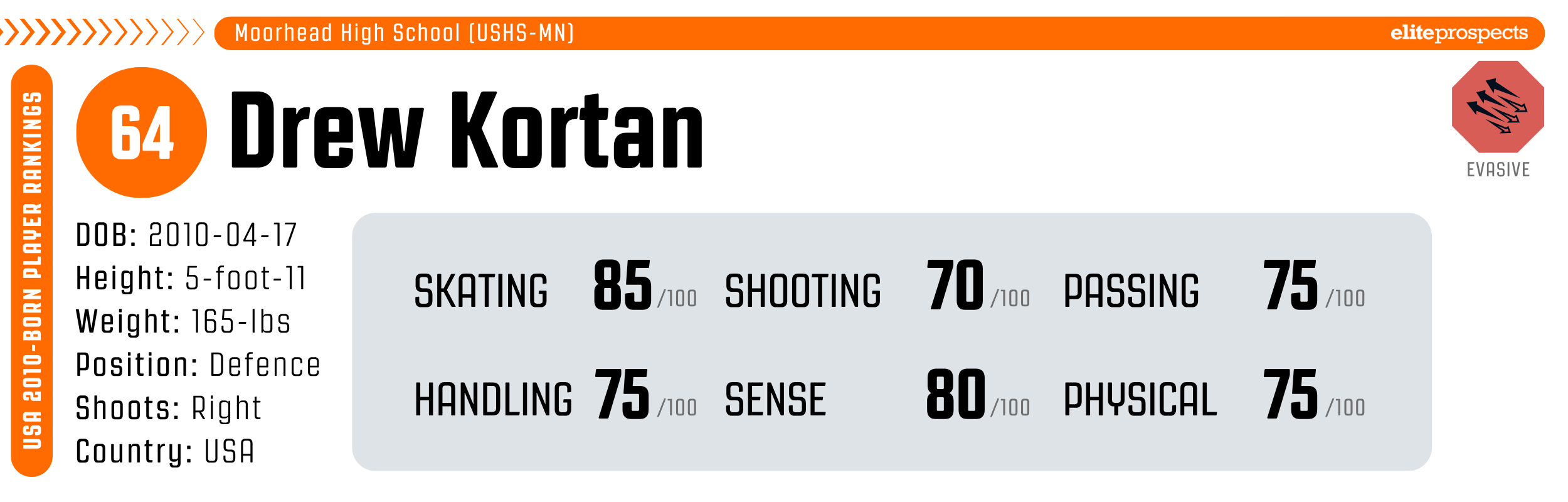
There was major uncertainty surrounding Drew Kortan going into this season and the opportunities he might get at Moorhead. Even with his talent level, the organizational depth was intimidating. But Kortan overcame those obstacles, carved out a legitimate role, and ended up playing real minutes in the state championship run. Kortan’s game revolves around his skating. He carries pucks across lines in the neutral zone with pace, activating into the rush. Kortan projects to the next level as a top-four puck mover with plus-skating that can potentially be repurposed into other elements of the game.
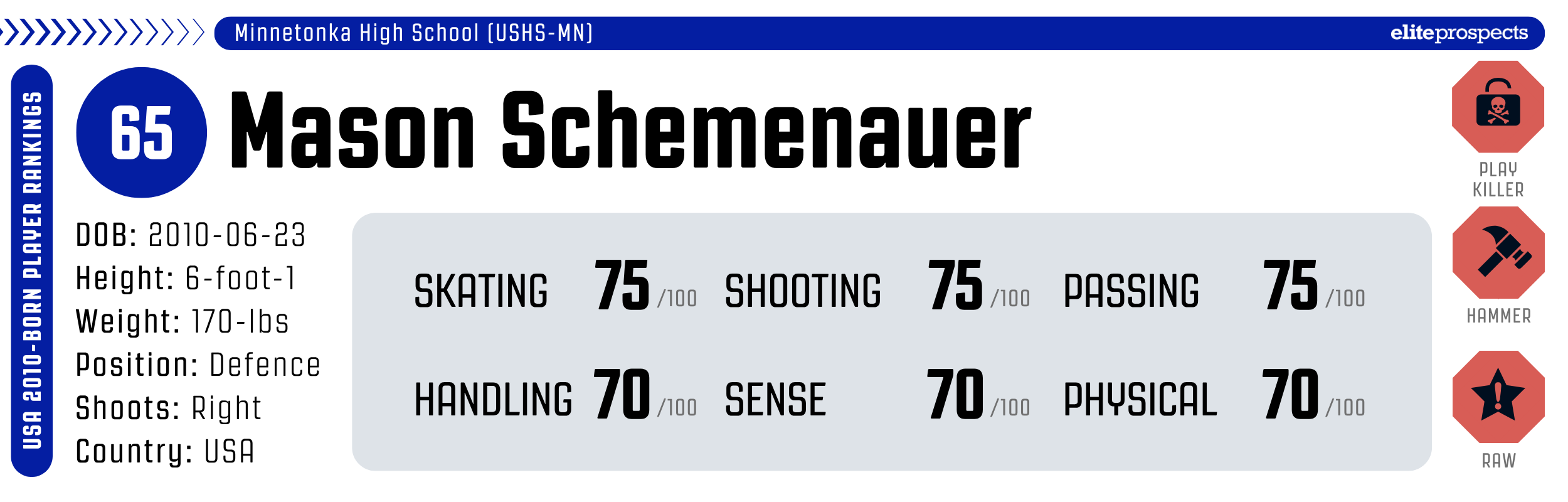
The most coveted and competitive position in all of minor hockey may be a spot on the right side of the NTDP 2010’s blue line. The position group is as strong as it has been in program history. Mason Schemenauer earned a selection by playing as the steadiest, most consistent version of himself all year long. He’ll have to plug in more consistent reads, which should likely come with the insulation of the National Program. Schemenauer has size and smarts, the potential to be a really consistent defender at the next level.
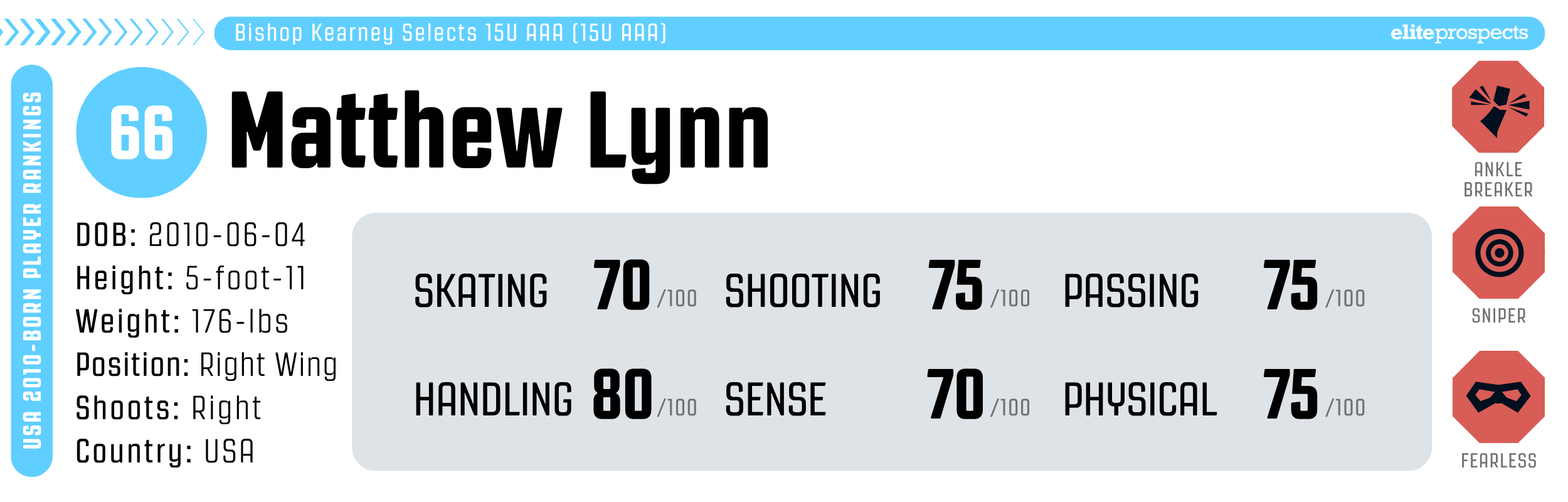
Omaha Lancers tender Matthew Lynn slots in at 66th on our board after leading his Bishop Kearney Selects team to a National Championship Game appearance. There are a ton of power elements in his game. Lynn is just 5-foot-11, but he has a thick build and can get his weight behind all of his movement patterns. He explodes on pucks and has a contact game along the walls. Next steps for him will be to continue getting a bit quicker and more explosive. Lynn could become a middle-six scorer for Omaha pretty quickly.
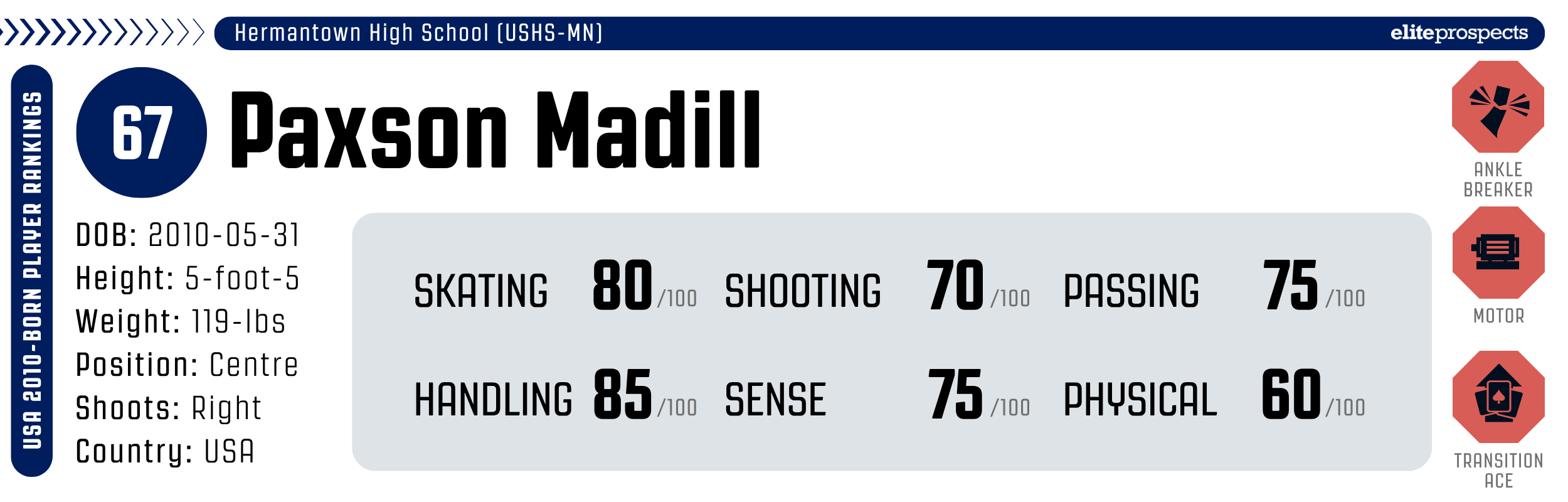
Paxson Madill made waves when he lit up the National Selection camp last summer, posting eight points in just four games. This year, at Hermantown High School, he continued to break out. Madill potted 34 points in 27 games and immediately became the most dynamic creator on his team, even as the youngest forward. Madill has been, and likely will continue to be, written off for his size, but the skill and smarts are too strong to ignore. He can manipulate at pace and handle as efficiently as some of the players atop this board. Dismiss Madill at your own risk.
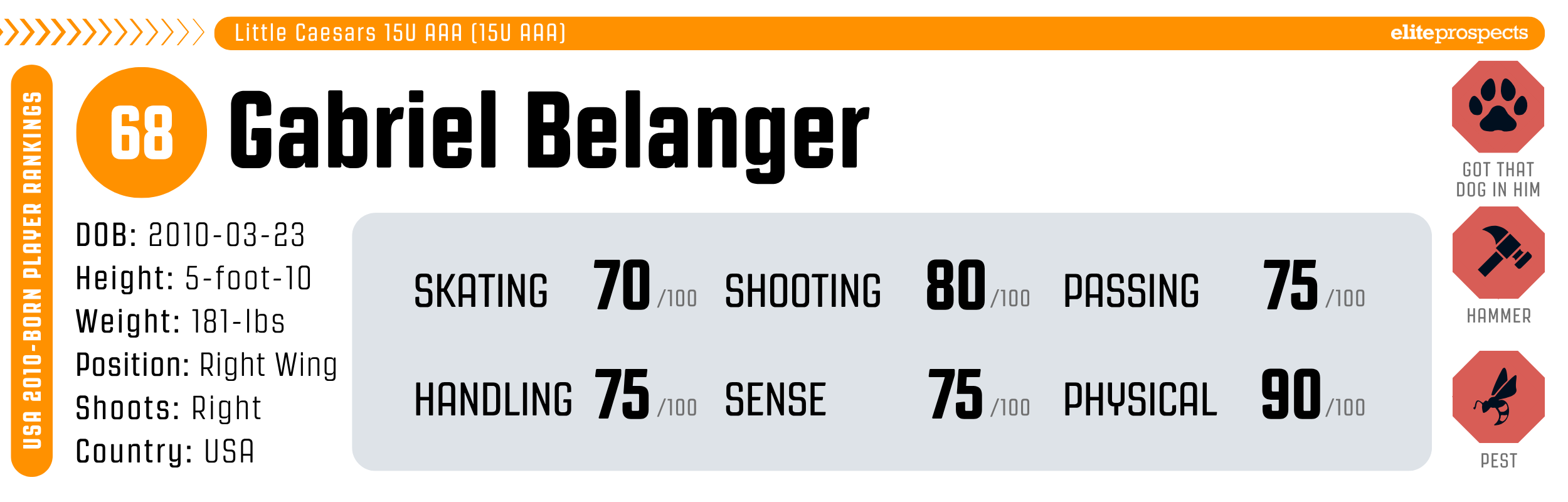
Another product from the loaded Little Caesars group, Gabriel Belanger slots in at 68th on our list. He’s an Alaskan native and was selected 21st by the Calgary Hitmen last spring, a strong potential landing spot for him next season. Belanger is one of the best checkers on this entire list. He finishes booming hits and constantly works through contact. Belanger sheds checks and runs defenders hard on the forecheck; he’s a player who could become quite valuable in a playoff series. There may not be as much offensive upside with Belanger, but he could be an effective player in a major junior lineup.
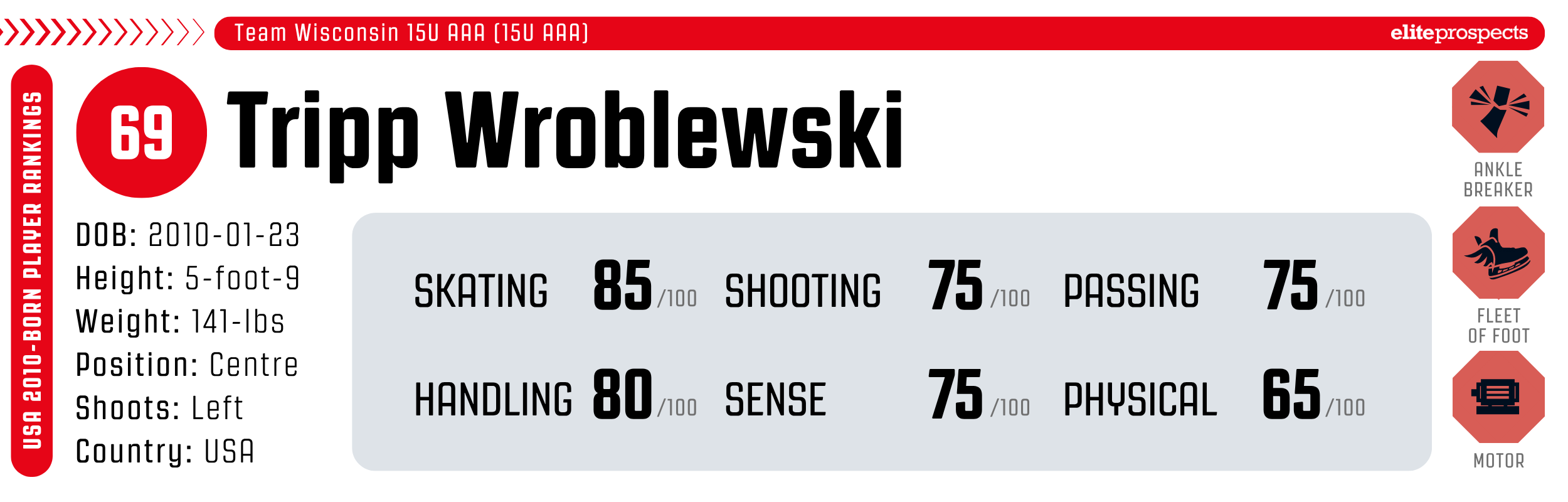
The best player this year out of the Wisconsin High School League, Tripp Wroblewski, earned an invite to the NTDP selection camp after a really strong season. There are a ton of dynamic qualities in his game. He’s constantly churning his feet, re-engaging on pucks to generate offence. When he is on the puck, Wroblewski fearlessly attacks the inside of the ice with triangle slips at pace. He’s still a bit undersized, but remains a violent mover. The projection will likely depend on physical growth, but it's easy to love the way this kid plays the game.
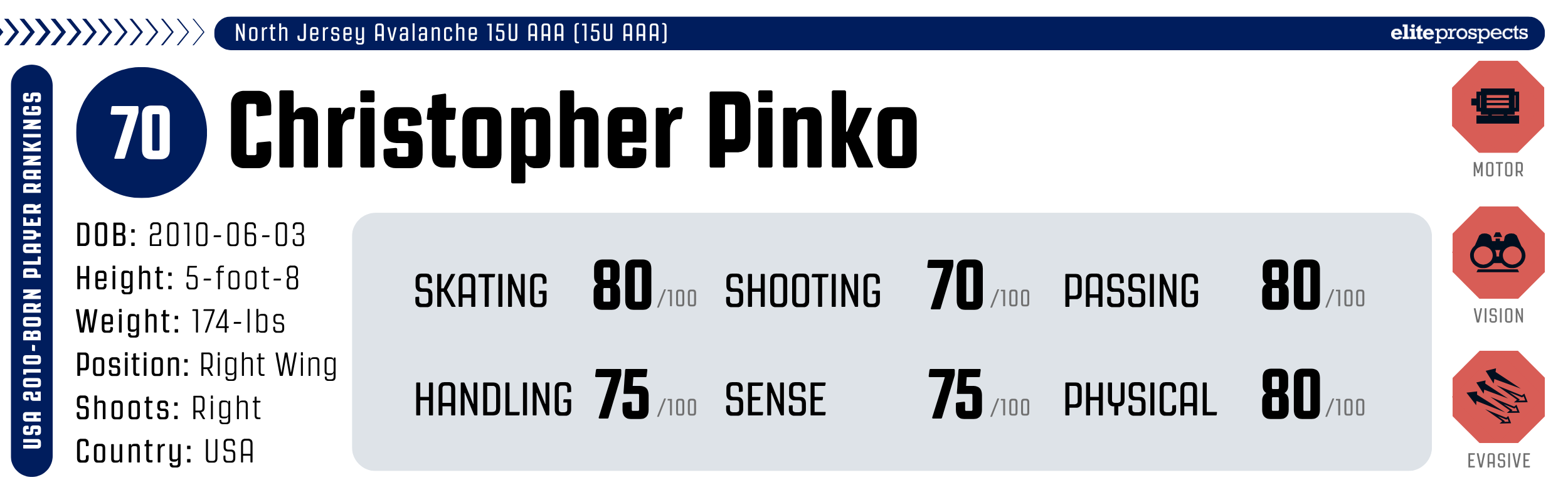
Christopher Pinko plays with a strong motor that drives his overall effectiveness. Despite a smaller stature, his sturdy frame allows him to engage physically and operate comfortably in contested areas. He combines that effort level with creativity, using his handing and vision to generate offence for his North Jersey team. His performance at the USHL American Cup highlighted his ability to stand out in a high-level competition. While his projection remains somewhat uncertain, his skillset aligns with that of a potential top-six forward down the line if his pace and energy remain consistent.
Read More: Standouts from the 2026 USHL American Cup
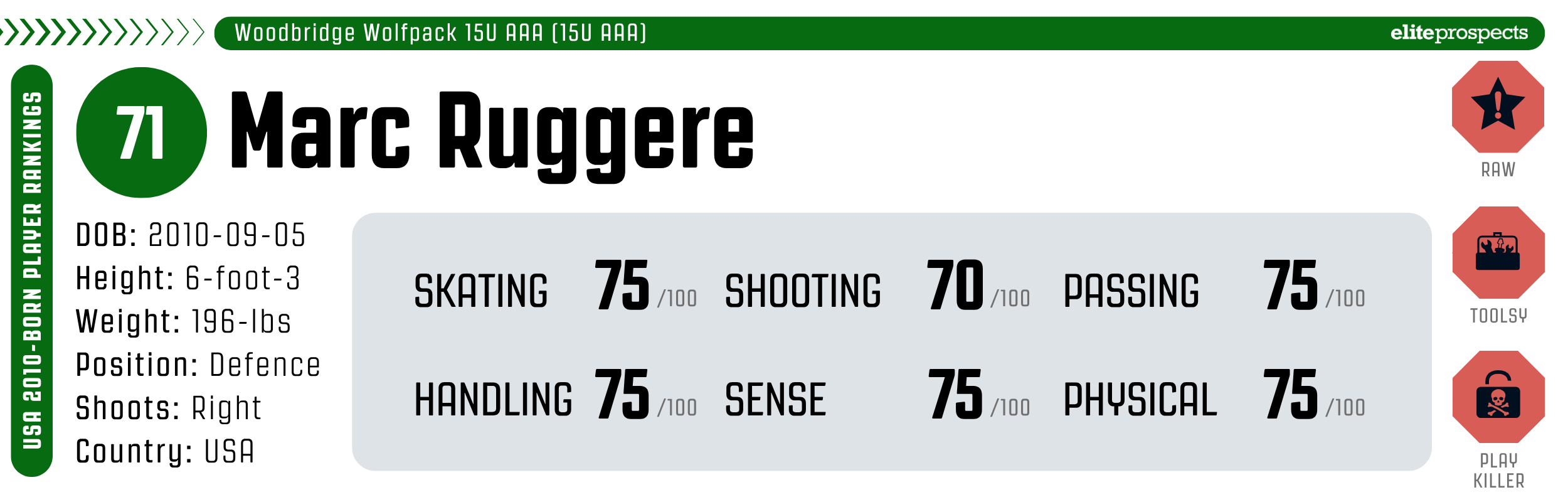
Marc Ruggere offers a shutdown profile from the backend, supported by size and mobility. He closes space quickly and maintains strong gaps against opposing attackers. His overall game remains raw, particularly with the puck, where handling coordination can appear inconsistent. However, those traits are not uncommon for a larger defencemen at this stage of development. Ruggere projects as a defensive specialist at the junior level, with his long-term role dependent on improvements in puck play and overall coordination.
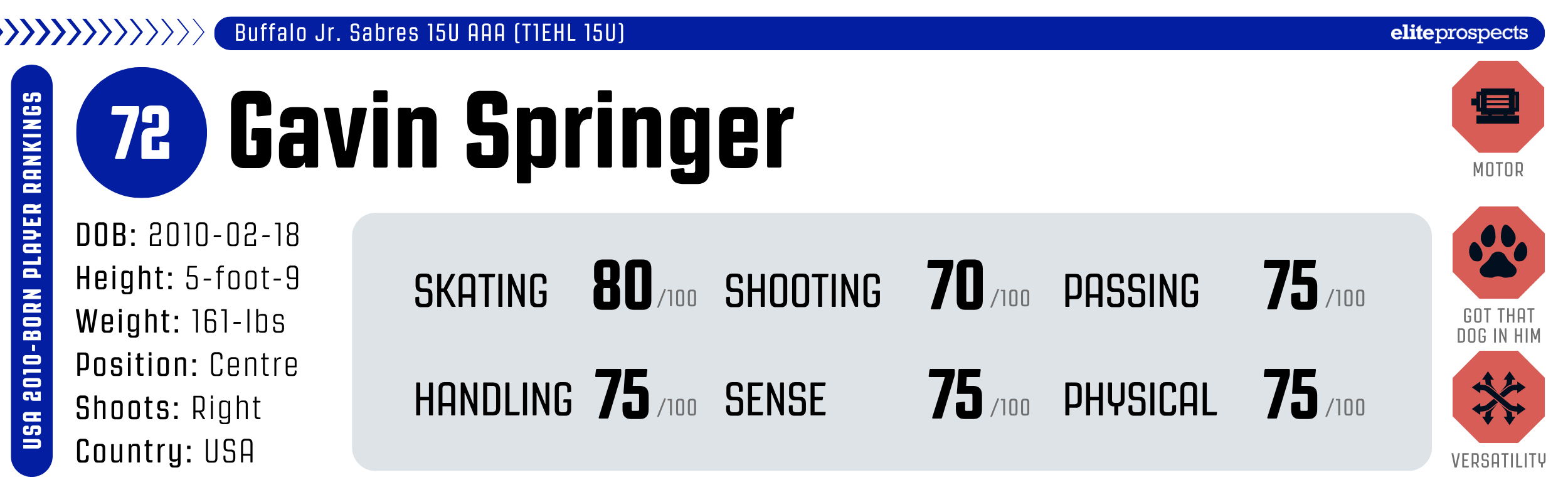
Bringing a mature, well-rounded game, Gavin Springer supports play effectively across all three zones and consistently looks to create opportunities through movement and positioning. His skating allows him to change pace and attack open ice, while his puckhandling supports his ability to facilitate offence. The next step in his development will be adding a more dynamic element to his game. With his current foundation, he projects as a middle-six forward at the next level.
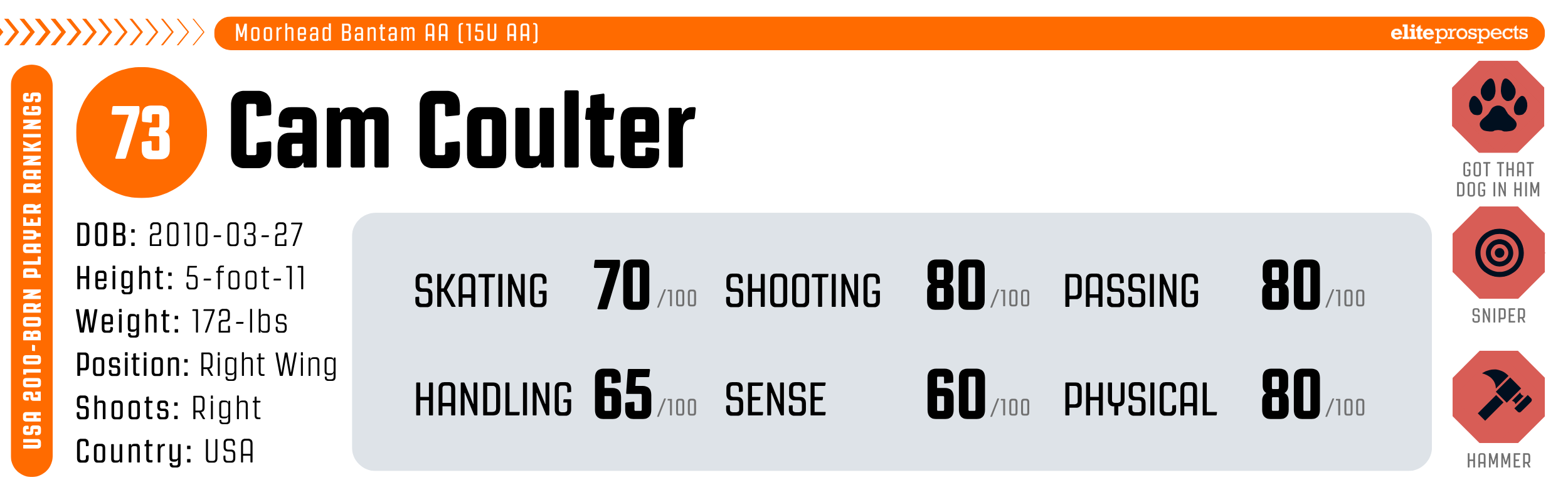
The second Moorhead Bantam player on this list, Cam Coulter finished the year with 93 goals and 68 assists, good for 161 points in just 54 games. A stacked high school lineup kept him at the bantam level, which may serve him best long term. Coulter ran the top power play unit and dominated all year long. He’s a thick pro-style winger with a heavy shot. There aren’t many players in this draft who can sprint down the wing and beat a goalie clean the way Coulter can. It’ll likely be a long development path for him as a bantam player, but one that could lead to major dividends down the road. He could become a versatile checking winger with scoring upside anywhere in the lineup.
Benjamin Art has been one of the most impressive athletes in this U.S. 2010-born class, with good skating and showing occasional flashes of good flexibility. Art has also improved a lot across viewings, going from a purely reactive goalie early in the season to one who has begun to layer his reads with scans. Tracking remains the biggest area for improvement for the goaltender, as he has a tendency to lose the puck after rebounds and behind the net. Art comes from a long line of reputable goalie coaches and has a history of attending development camps with USA Hockey. His profile gives a good amount of confidence to project to the junior level and likely beyond.
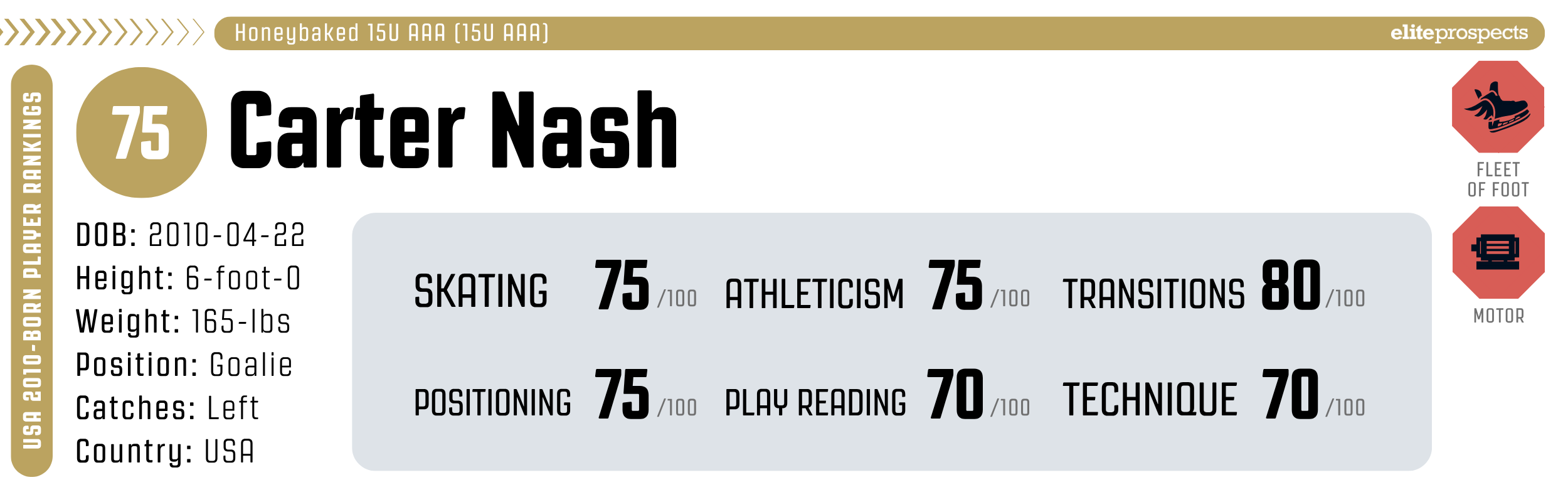
At the OHL Cup, Carter Nash was comfortably the best goalie at the tournament, backstopping Honeybaked to the championship. He's a high-speed, strong technique goaltender; he’s fast, but not chaotic. The foot speed jumps off the page as he darts around the net and snaps up and down in the blink of an eye. Every move is intentional. His technique is refined for a goalie his age, and his intelligent play reading informs each step he takes. The decision to leave Nash at home for the NTDP evaluation camp had many scratching their heads, but he'll have plenty of interested teams. The WHL's Edmonton Oil Kings hold his CHL rights.
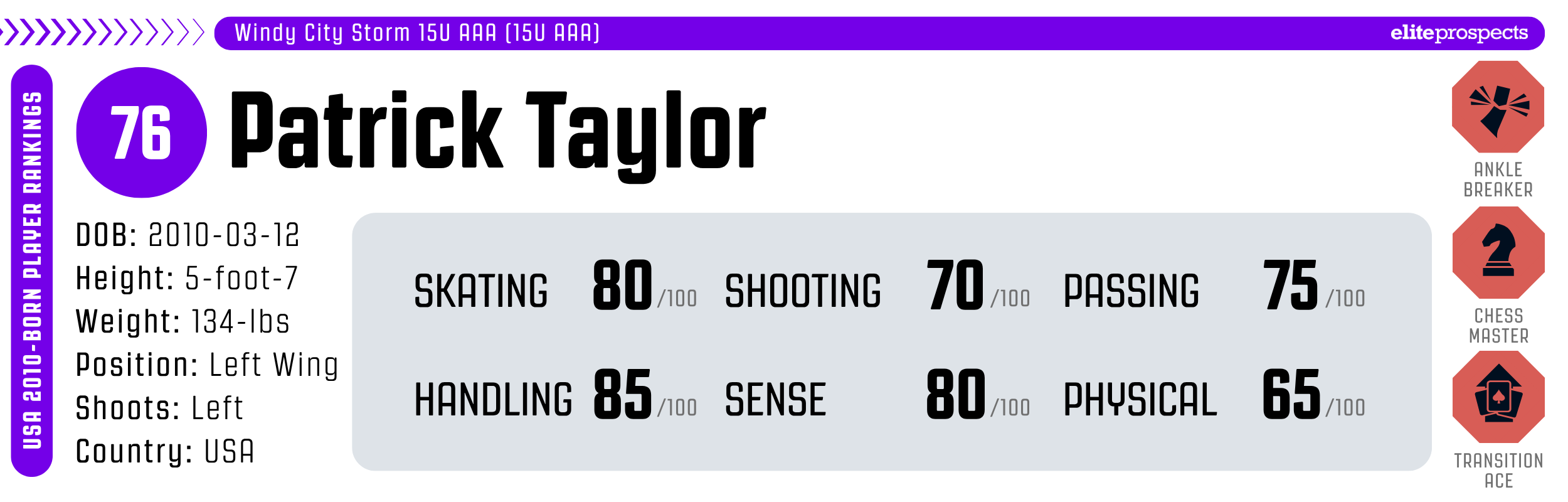
Patrick Taylor’s production – back-to-back 100-point seasons – reflects his offensive skillset. He is a dynamic transition player, capable of creating off the rush through quick hands and deceptive movement. He effectively reads defensive movement and will manipulate himself to create the space he needs. He combines that with strong playmaking instincts and a finishing touch, making him a dual offensive threat. At 5-foot-7, size will be a factor in his projection, but his upside remains high if his offensive tools can translate to higher levels of competition.
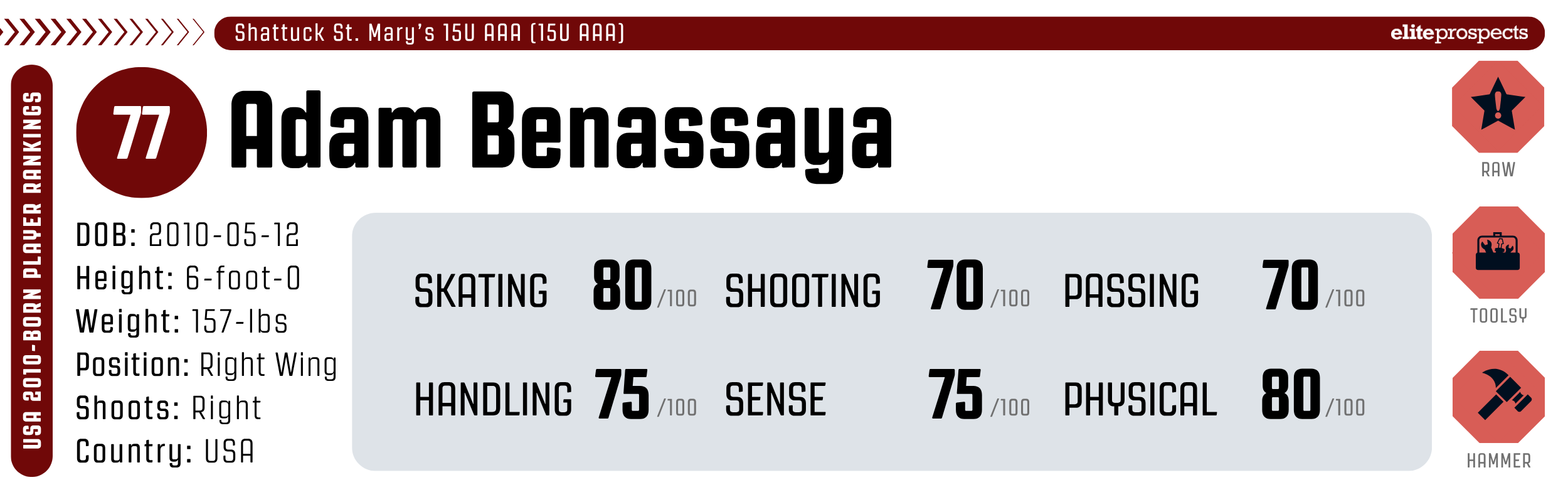
Adam Benassaya is a favourite for our scouts, dating back to last year at the bantam level. He was a gangly kid with handling flashes, eventually drafted in the sixth round by the Medicine Hat Tigers. While his frame is still developing, Benassaya has blossomed into a power forward with legitimate offensive upside. He finished a ton of hits all year and accessed the middle lane by using his reach to protect pucks. Benassaya sets his body up tactically to keep his frame in front of pucks. He’s a potential middle-six power forward who can provide secondary scoring in a checking role.
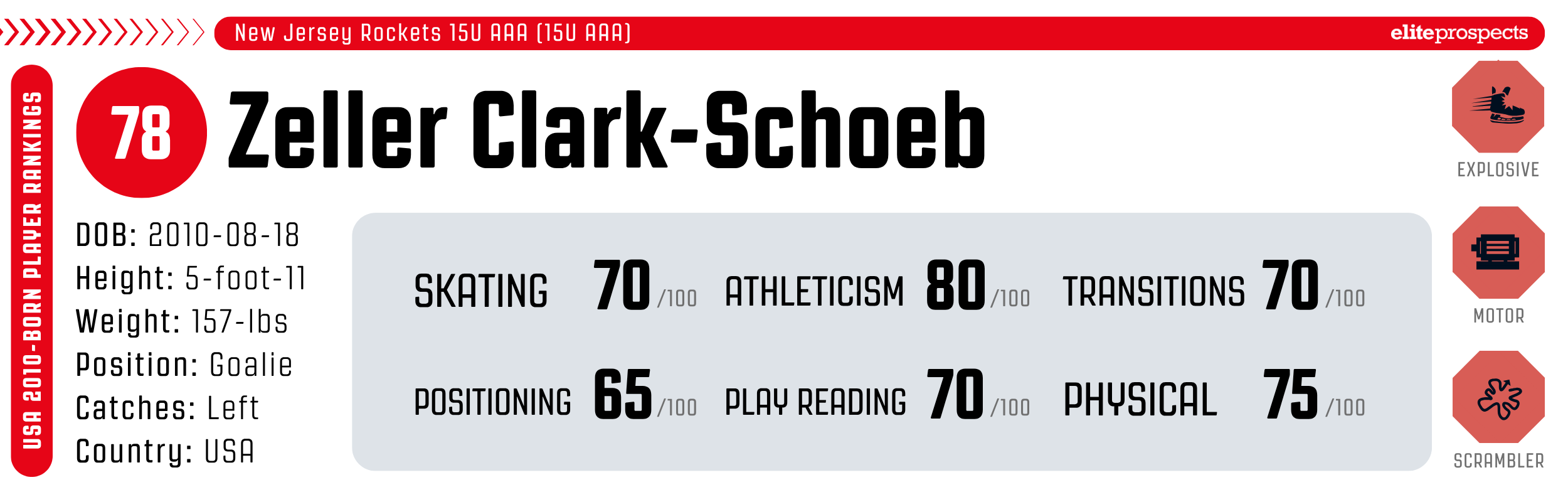
Zeller Clark-Schoeb was a bit of a late find, playing in New Jersey, but once we got eyes on him, he immediately stood out. Clark-Schoeb has impressive athleticism, with strong push power and good control of his limbs. The Rockets' goaltender also showed off great form on challenging and in his butterfly, maximizing his frame while remaining composed. He has also shown the ability to chain multiple saves together, with impressive compete and commitment to keeping form. He should aim to improve his positioning, as he tends to give up additional depth and find himself off-angle when challenging. Still, Clark-Schoeb should be an easy high upside bet for any OHL or USHL team to take a chance on.
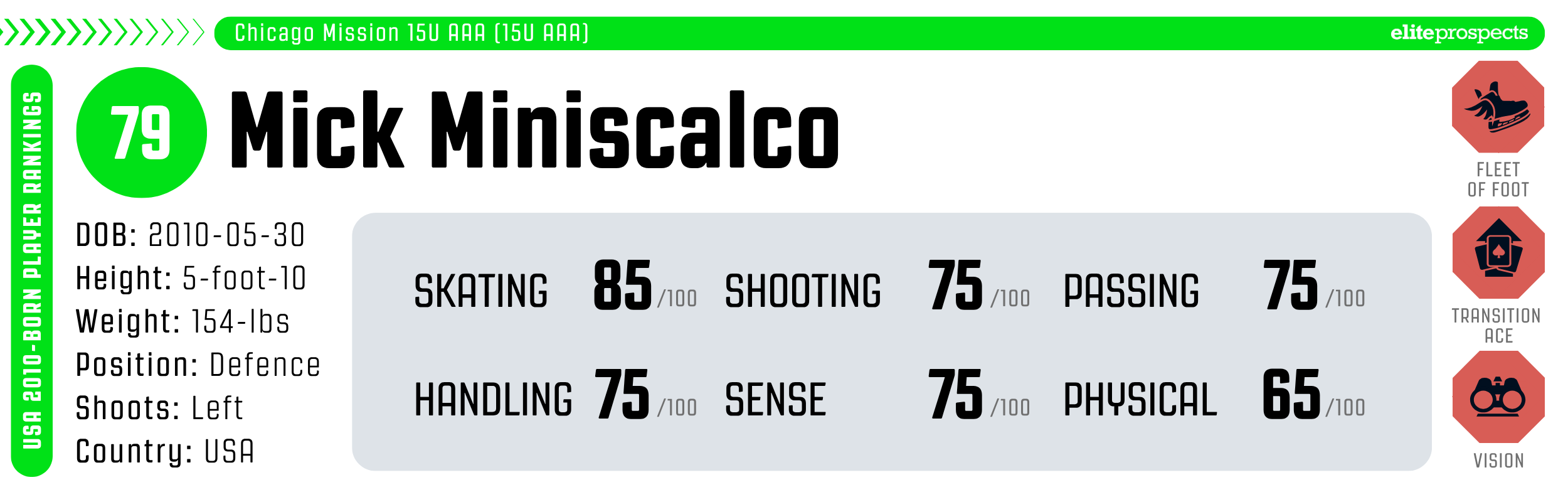
Scouts across all our teams saw Mick Miniscalco this season, and they consistently had favourable reviews. The activation sequences and bursts of offensive brilliance separated him from so many defenders below him on this list. Miniscalco is a constant creator, looking to push the limits of the game with his offensive decisions. His skating is going to continue to be an asset well into his junior hockey career. Miniscalco looks like a top-four defender who could run a power play sooner than expected.
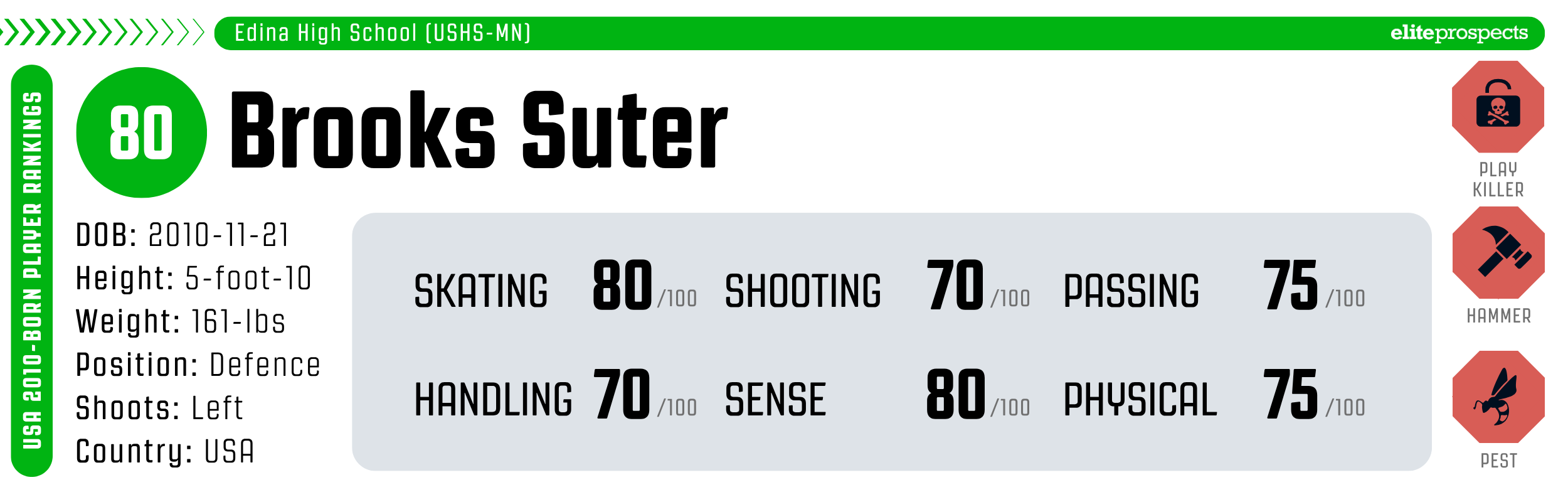
Brooks Suter made his way around the circuit this year, starting the season with the Madison Capitols 15O group in the fall before heading to Edina High School for the winter season. Suter and his Edina Hornets qualified for the state tournament. Shortly after, he made the NTDP. Suter ran the Hornets' power play through the playoffs and has nice play-killing upside. Suter has a calculated stick, plugging lanes and using his body to suffocate ice. He’ll require some refinement at the National Program, but he has an exciting toolkit already.
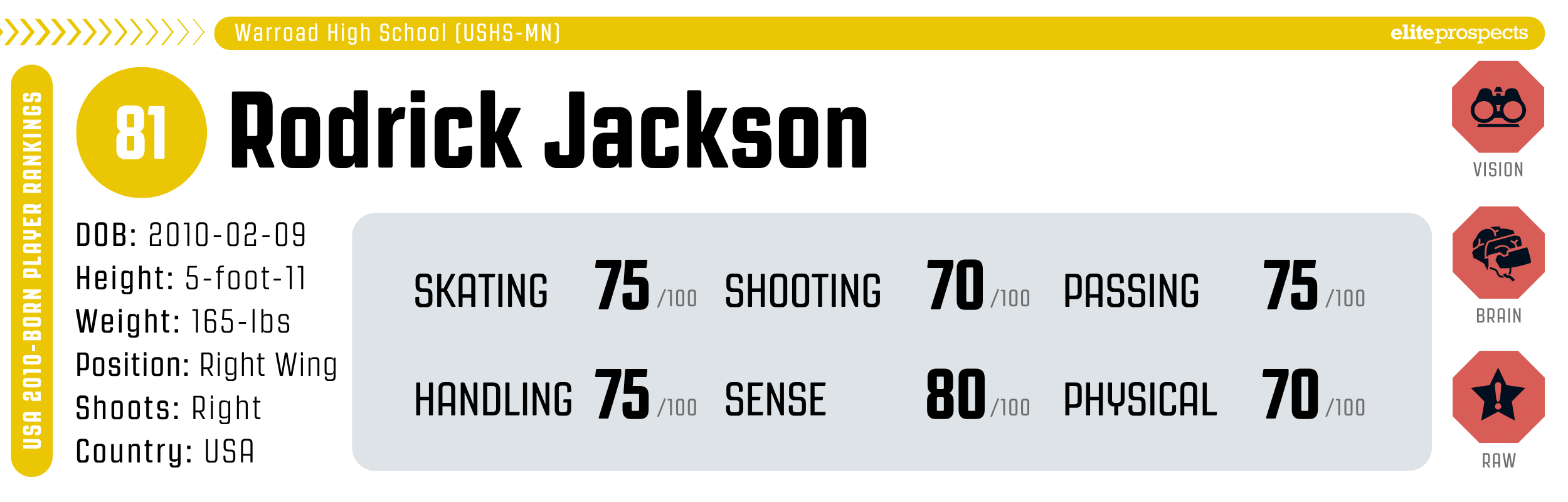
Rodrick Jackson just got better and better with every viewing this season. He capped his season with perhaps the best performance of all, a four-assist display in a state championship game. Jackson learned how to consistently make plays in motion into the middle of the ice, developing translatable skills. He’s a strong puck handler and showed flashes of brilliant skill. Jackson is still a thin kid with physical upside. He has a really intriguing trajectory - we would not be surprised if a junior team jumped on him.
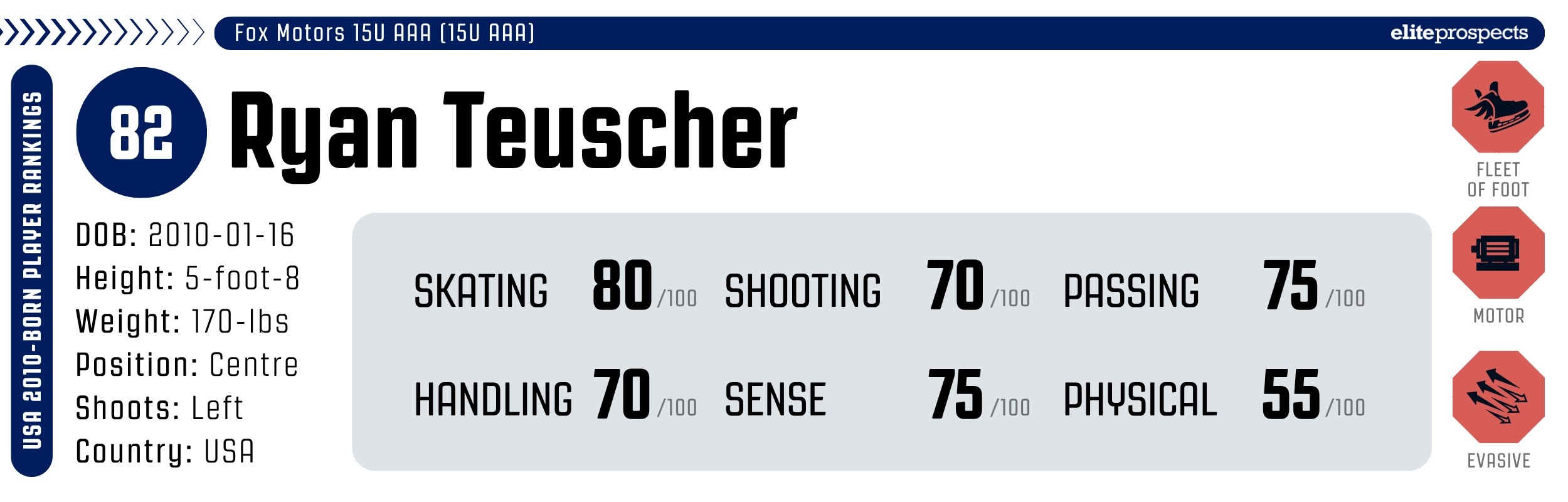
Another NTDP forward with offensive flashes, Ryan Teuscher slots in at 82 on our board. He’s a bit undersized, at just 5-foot-8, but he has the pace and foot speed to create gaps in the gap. Teuscher can separate off a step, bursting in and out of holes with explosiveness. There will be room for development at the next level with him, finding a physical game and a real identity as a player. Will Teuscher become a cycle guy who makes plays inside contact? And does he have the burst to get into the middle of the ice in transition? He’ll be an intriguing case study to watch.
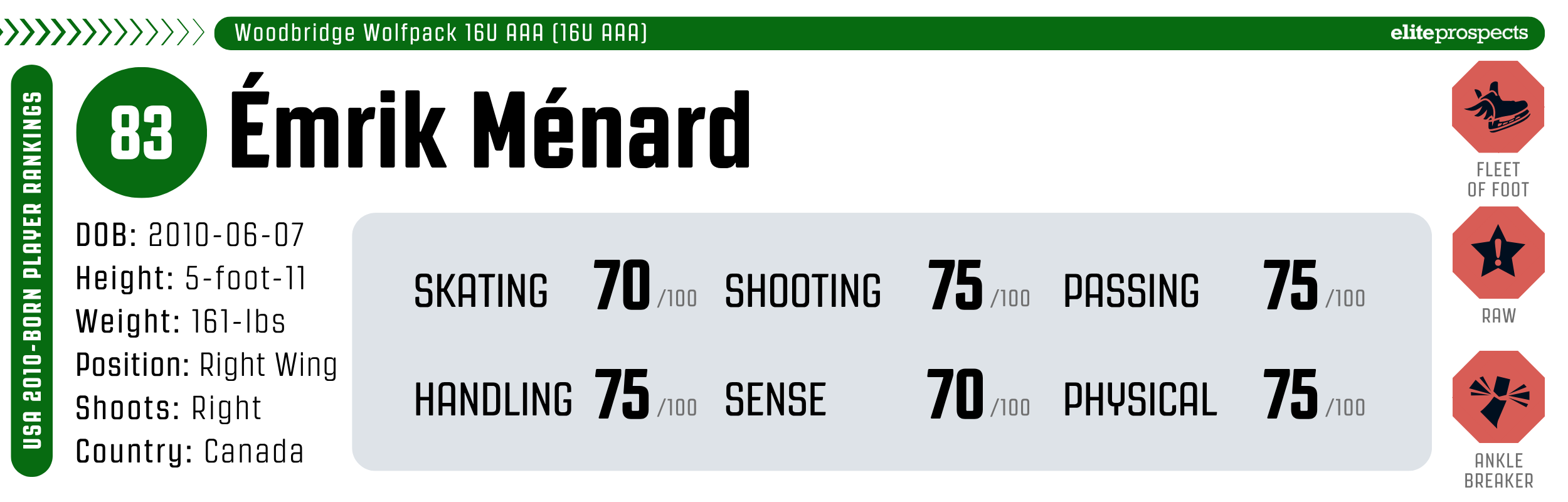
Although his season ended early due to injury, Émrik Ménard still showed significant promise. He’s a lively attacker, adept at faking out defenders with rapid moves. Unafraid to crash the net, Ménard enjoys creating scoring opportunities around the crease, often positioning himself to redirect or deflect pucks into the goal. Ménard is one of the more active forecheckers as well, as he loves to win as many battles behind the net as possible. While the injury concern raises questions, he has the potential to become a top-nine power forward in juinior if everything develops smoothly.
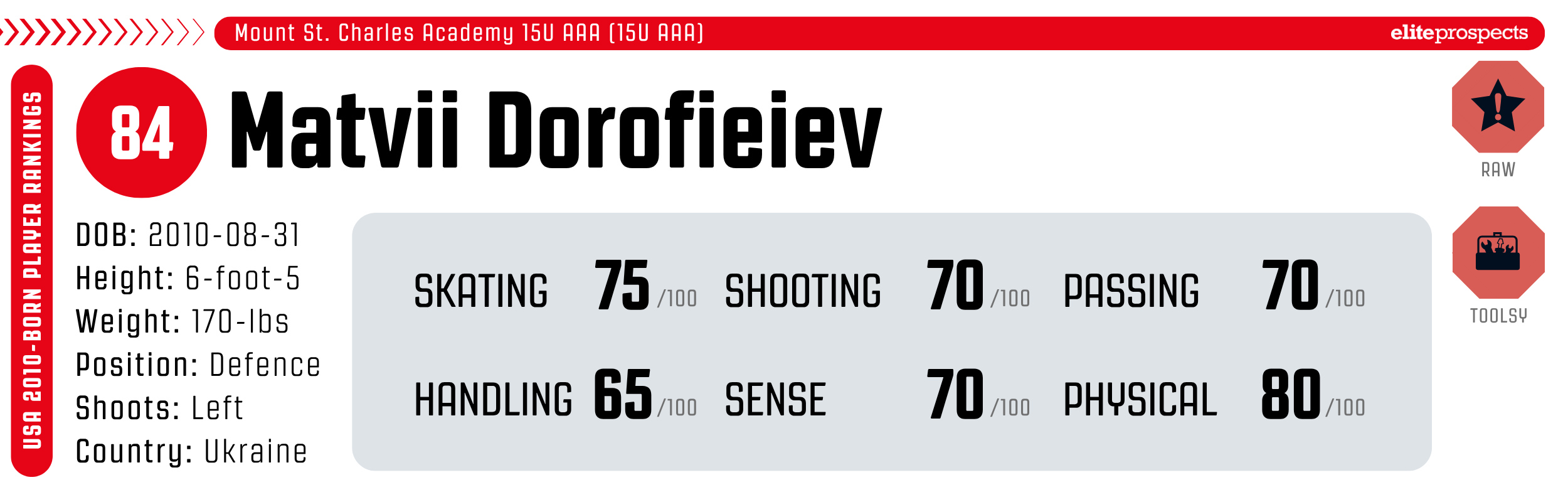
Matvii Dorofieiev is a long-term bet, but he’s one our team is really interested in. He’s massive, at 6-foot-5 already, and is beginning to develop the skill necessary to become a real prospect. The skating isn’t refined by any means yet, but he’s adding mechanics and improving with every viewing. Dorofeiev consistently found ways to exit the zone and facilitate for the rest of his team. Ranking him here is a long-term play, as we feel strongly he could become a coveted NHL draft pick by the end of his junior career.
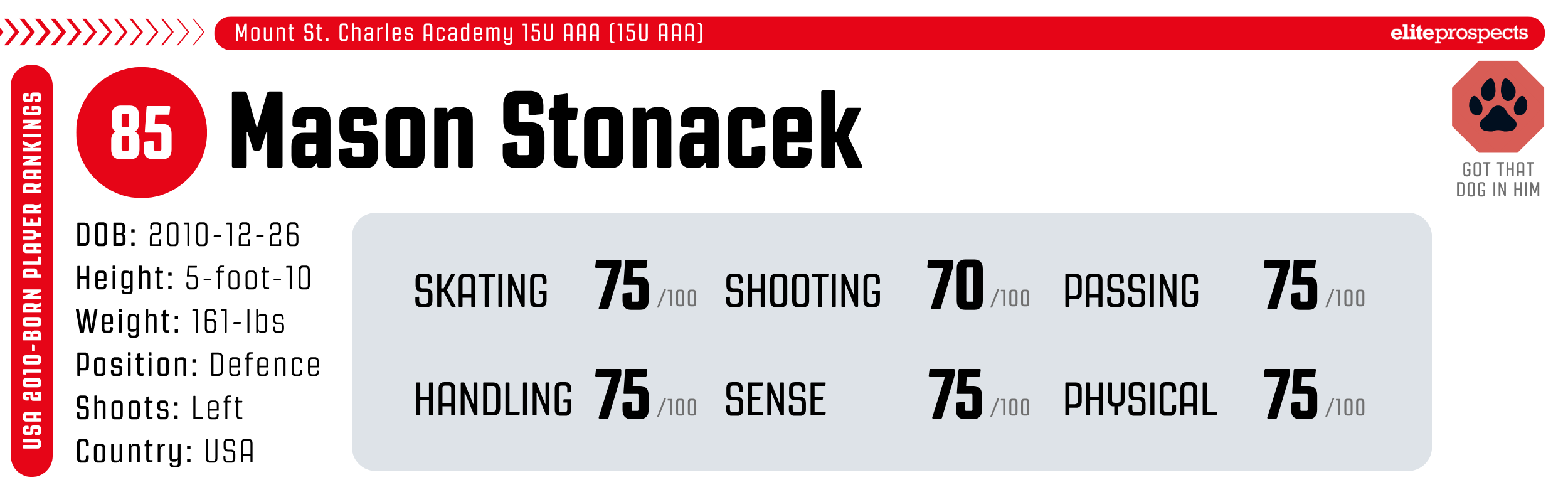
Mason Stonacek appears to be the kind of defender every team needs in a shutdown role. His stock began to climb quickly at the QMJHL New England Showcase, earning him an invite to the QMJHL Cup in Shawinigan. He controls the blue line on entries as if he owns the defensive zone, always looking to shut down the attack in any way he can. His gap control is solid, thanks to his great mobility and composure, which help him break up plays and regain possession. He’s especially strong on the breakout, seldom panicking under pressure, often using cutbacks and finding the right outlet to exit the zone. With more emphasis on adding offence and sharpening his skills, he could be ready for junior hockey sooner rather than later.
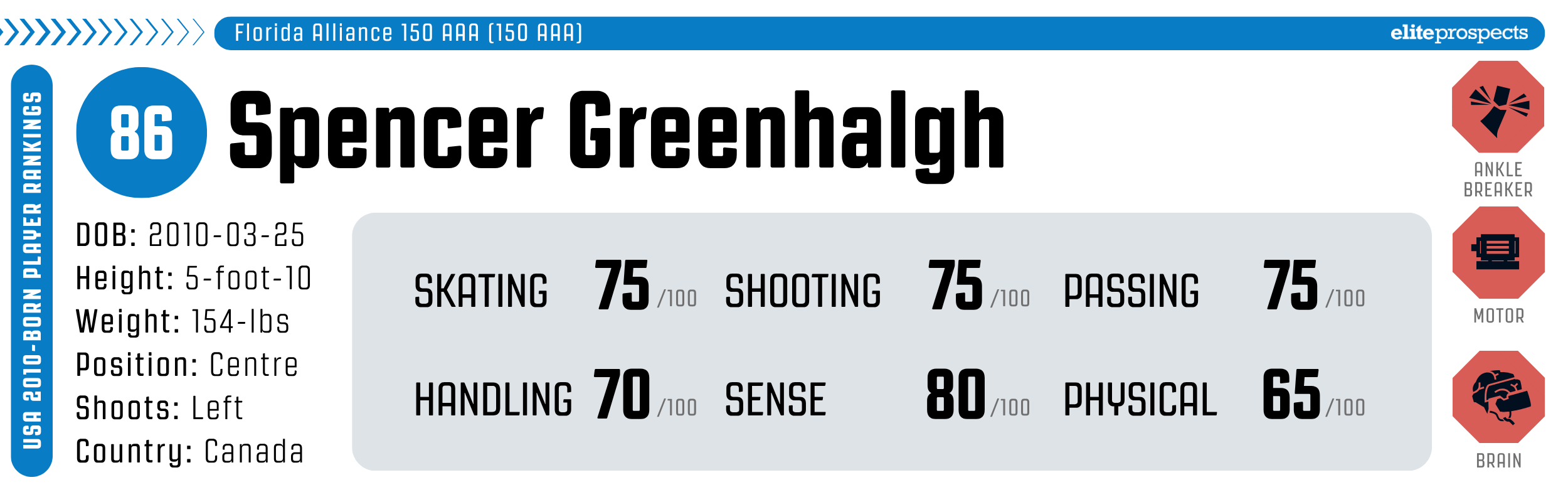
Spencer Greenhalgh stood out at the Florida Exposure Cup, driven by his skating and motor. He consistently pushed play in transition, using speed to create advantages. His puckhandling adds another layer, allowing him to attack defenders off the rush and generate scoring chances. He is a very intelligent player who has flashes of manipulation to dictate the defender’s movement. His off-puck effort further supports his effectiveness, as he is a player who doesn’t shy away from the physical aspect of the game. As a smaller player, continued development away from the puck will be key, but his skillset suggests top-six upside.
Read More: Standouts from the 2026 Florida Exposure Cup
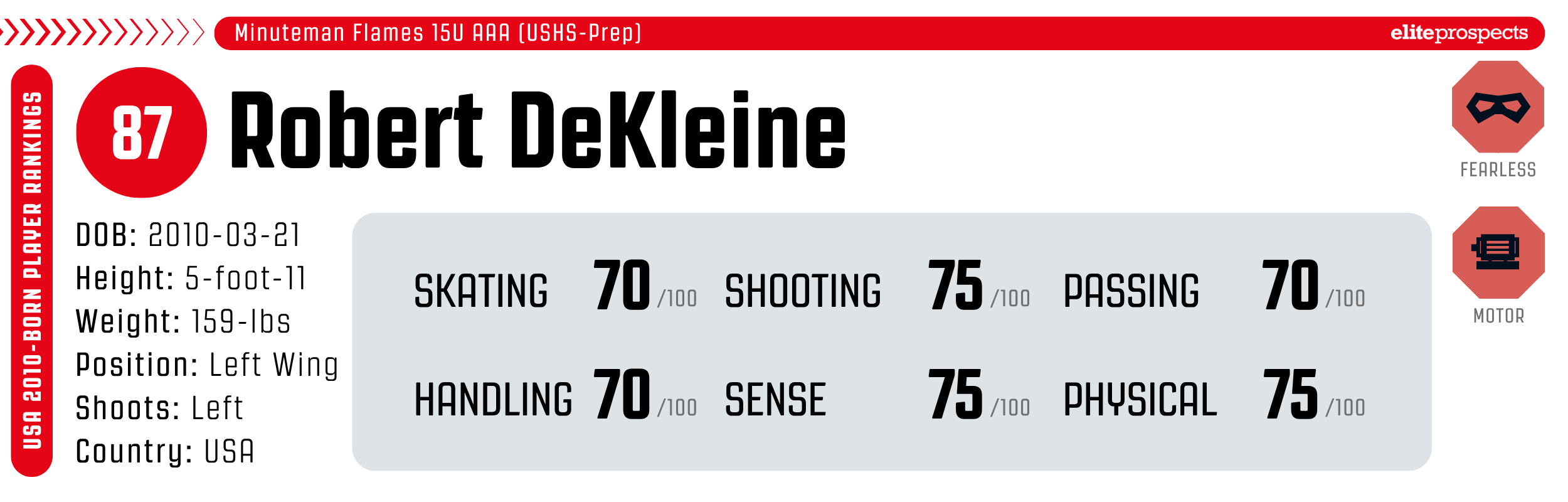
Robert DeKleine has been a constant threat in front of the net for Belmont Hill and the Minuteman Flames this season. His exceptional hand-eye coordination allows him to deflect shots past any goalie, as he had multiple deflection goals all year. DeKleine is quite physical, willing to take hits to make plays, engage along the boards, and battle in front of the net. He also shows skill by deking defenders and making smooth passes to teammates across all three zones. If he can improve his skating, he has the potential to become a reliable support forward in the middle-six role in the future.
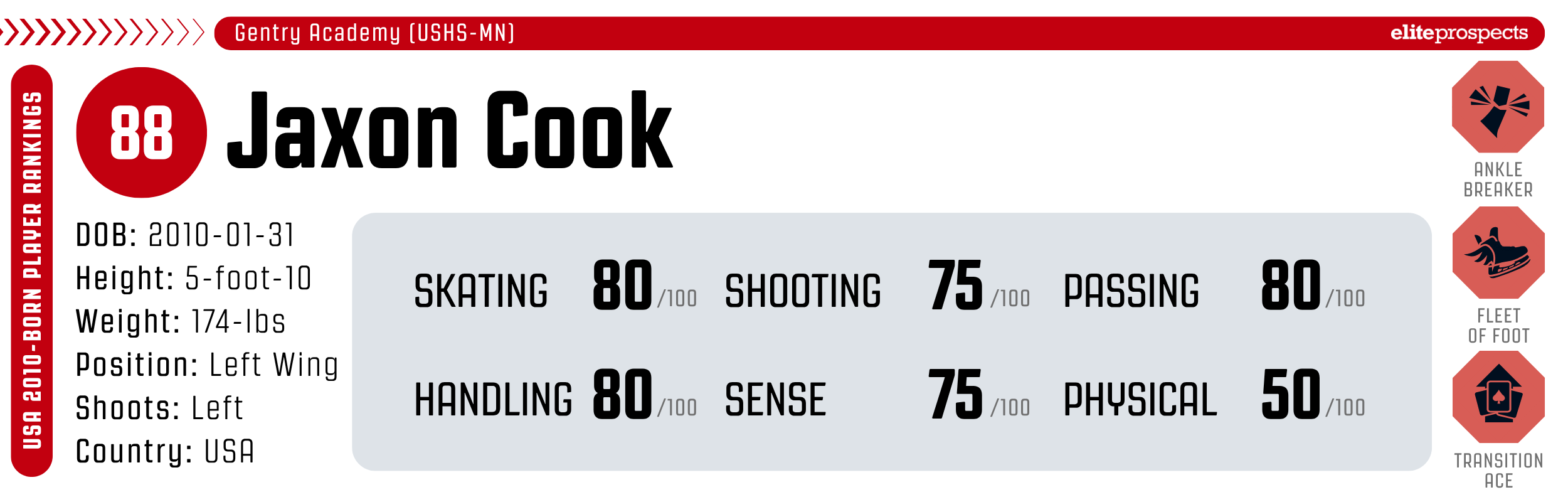
Jaxon Cook has quietly become one of the most impressively productive players on this entire list. He went for two points-per-game this year en route to a surprise state tournament berth with his Gentry Academy team. Cook isn’t the biggest kid in the world, but he has a really strong level of skill. He has swift handling mechanics and navigates carries with his head up, scanning for options. Cook ran the top power play for Gentry and could eventually find a similar opportunity in junior hockey. There may be struggles at first if he enters junior this fall, but Cook is a kid who could find success with time.
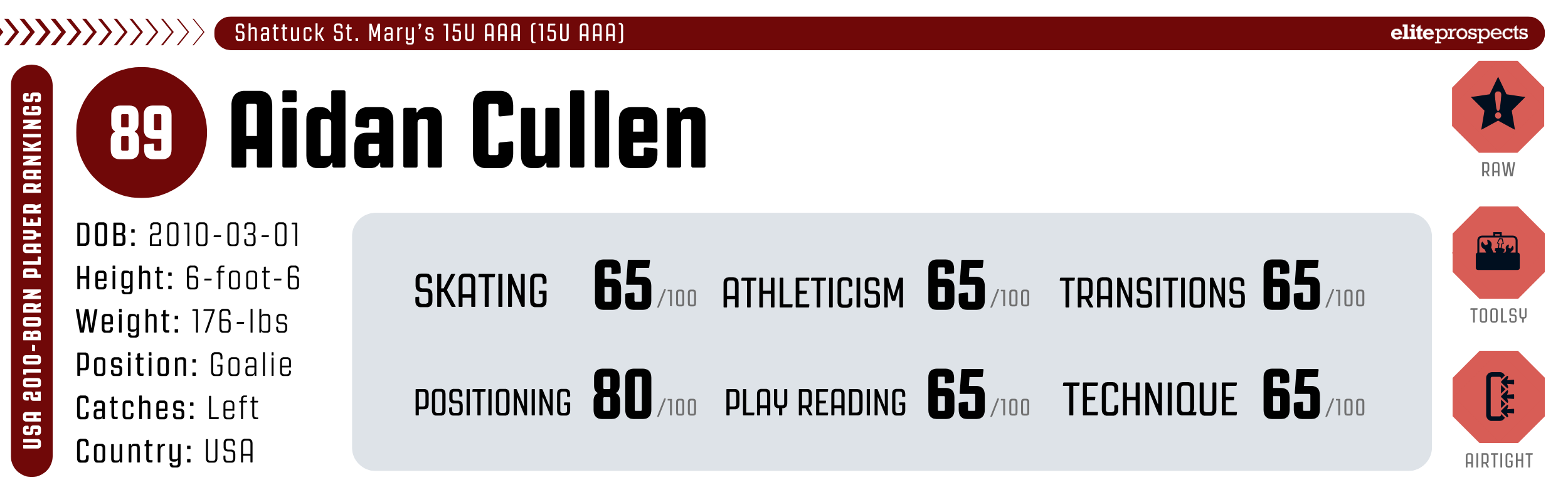
Aidan Cullen was Shattuck St. Mary’s starter this year, a 6-foot-6 behemoth in net. This season, he was undefeated, made the U15 Nationals All-Tournament Team, and won the National Championship. Positioning and play reading are the two most important traits for a big goaltender. Cullen’s scanning habits and hockey sense already appear to be advanced for his age, which are great signs for his development. His height and flexibility combination gives him a big leg up in lateral coverage and sealing off the base of the net. His athleticism is also above average for his size, and he’s shown a lot of improvement over the course of the season.
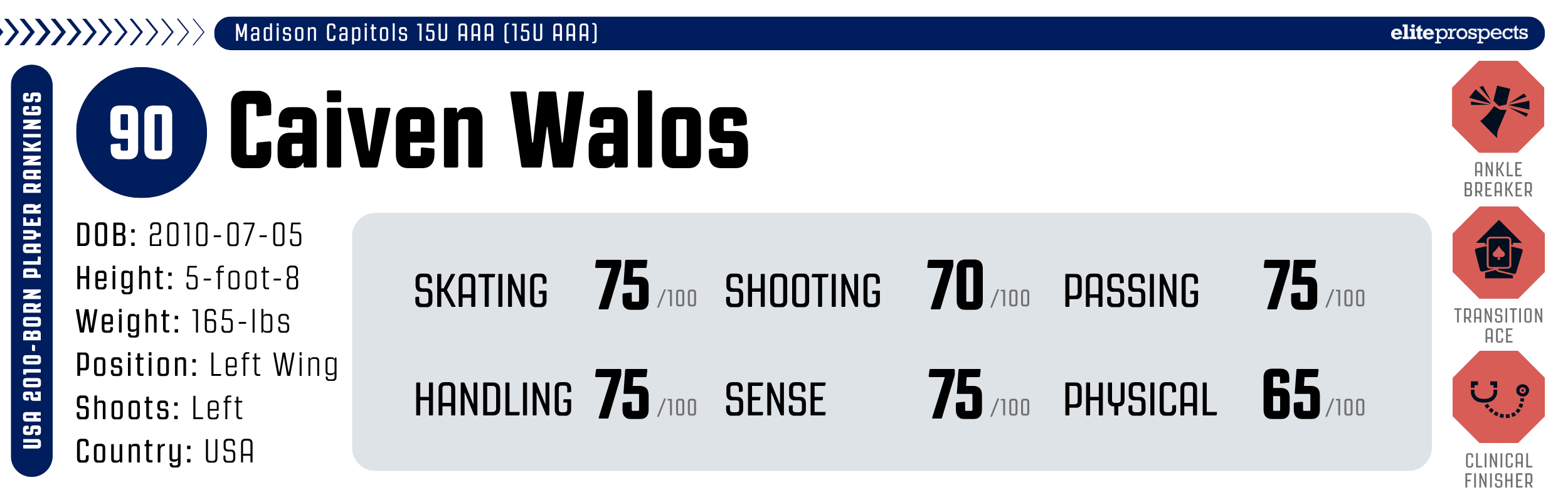
As we near the end of the list, Caiven Walos was a name we felt we had to keep on, due to his offensive upside. There were flashes at times where his impacts came and went, but his great moments were really high-end for this class. Walos handles the puck with his head up and carries play through neutral ice, attacking fearlessly into the middle. He came just shy of 100 points for Madison this past year. He's just 5-foot-8, so he could use a growth spurt, but there’s likely a nice player here. He has dynamic offensive potential.
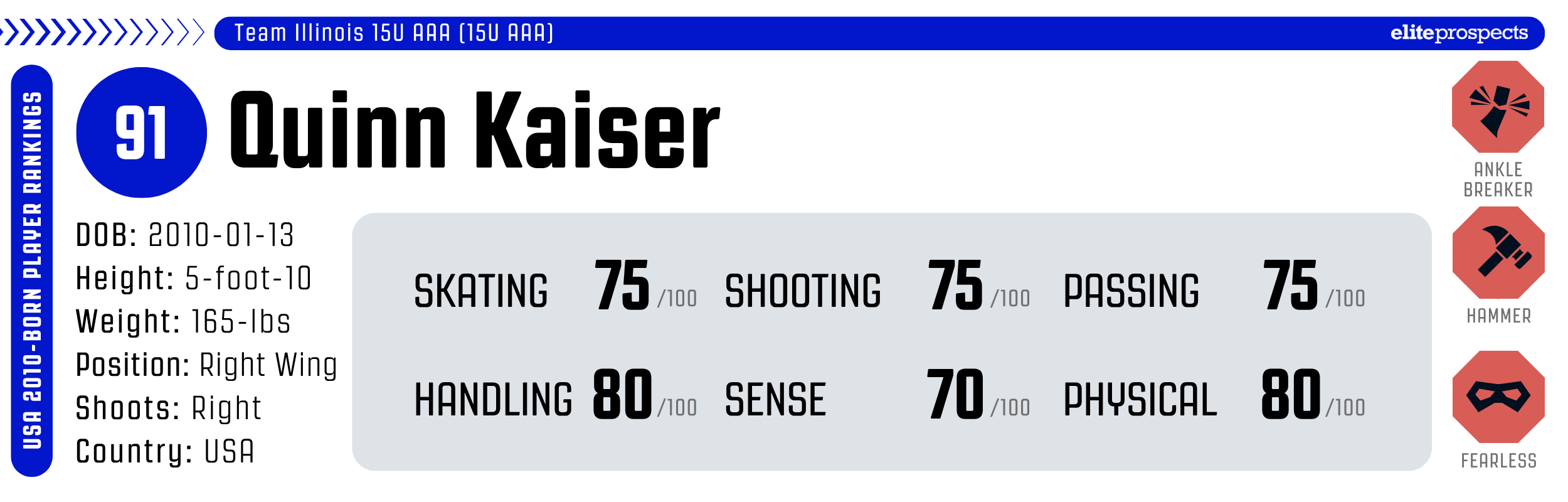
A handful of American kids got an opportunity to participate in the OHL Cup on a select TPH Academy team this spring, and perhaps none made a bigger impression than Quinn Kaiser. He produced eight points in five games, flashing the offensive skill and handling upside we saw all year long. There may not be the most dominant skater here, but Kaiser finds ways to produce, earning ice in hard areas and finishing on his chances. All year long, he found ways to create offence. He projects as a middle-six finisher for Madison in the USHL, where he’s tendered for next season.
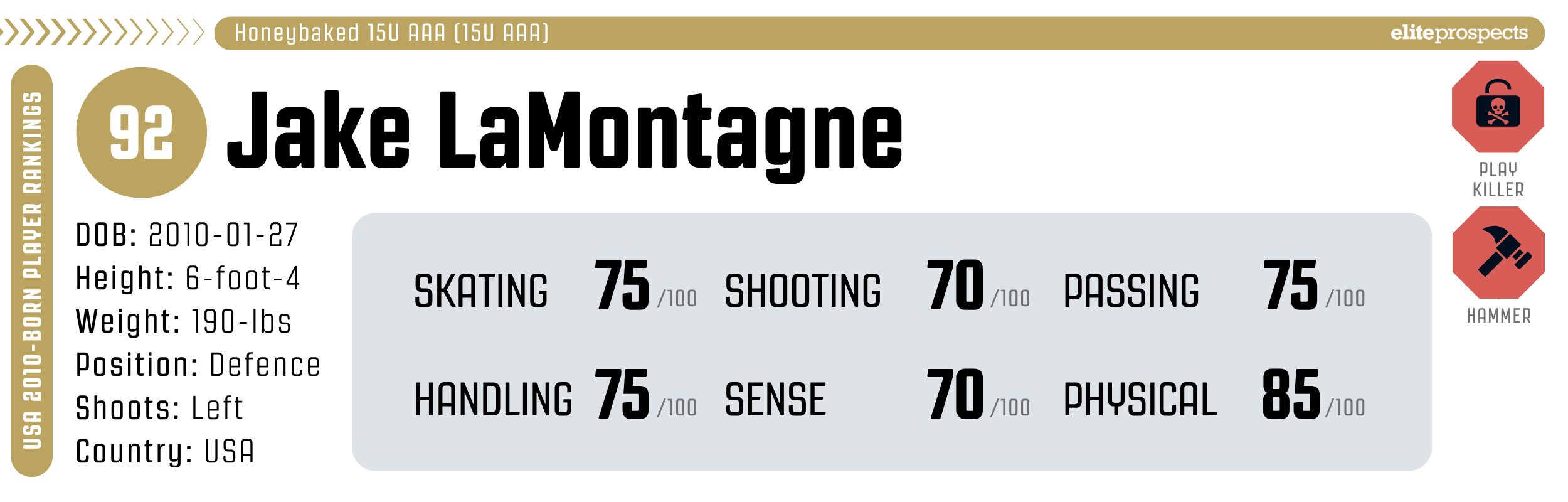
Jake LaMontagne is a raw prospect whose potential is rooted in his size and reach. He plays physically, maintains strong gap control, and limits space effectively. His skating and puck handling remain areas for development, though he has shown flashes of puck-moving ability in transition. LaMontagne projects as a defensive, play-killing defenceman at the next level.
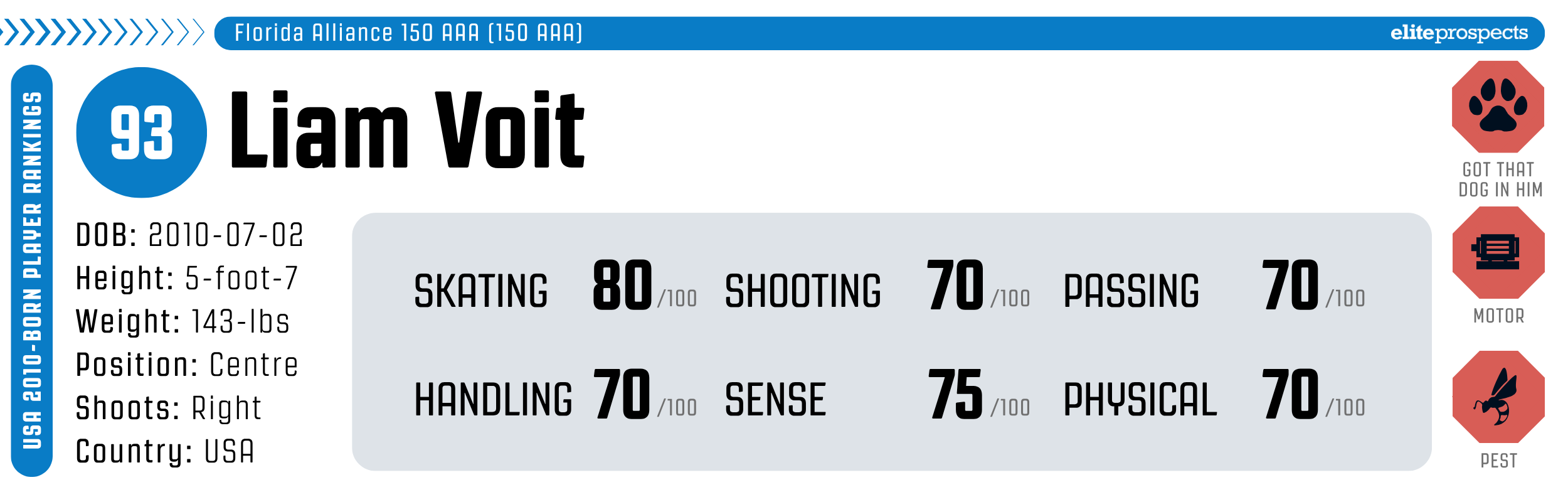
Liam Voit emerged as a late riser, largely due to his performance at the OHL Cup after joining Honeybaked from Florida Alliance. His energy and motor immediately stood out. He consistently pressures players, forces turnovers and chases down pucks to be the first player to them. His offensive tools may not be high-end, but they still prove to bring a lot of value as he capitalizes on his off-puck habits. Despite size concerns, his relentless style gives him a strong chance to carve out a middle-six role at the junior level.
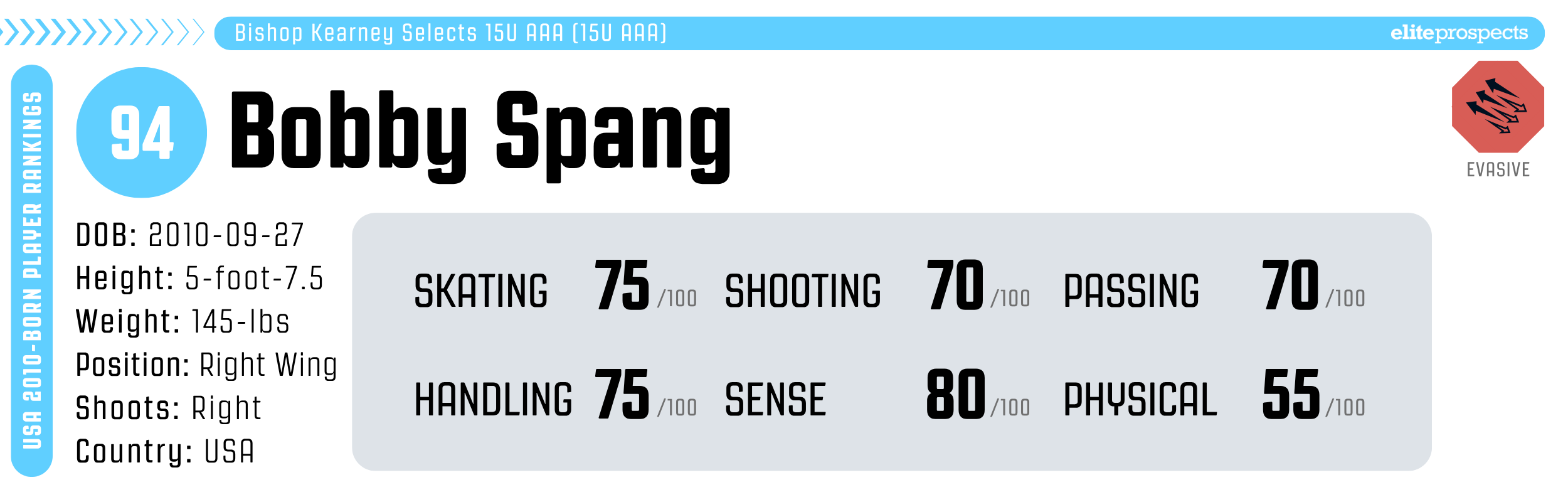
As we put together the end of this list, scouts advocated that we couldn’t leave Bobby Spang off. There aren’t a ton of standout physical traits with his game, but he found ways to get involved and produce every time we watched. Spang is just a shade under 5-foot-8, but he plays way bigger than his frame and is fearless in the way he enters the middle of the ice. He could blossom as a scorer in the USHL or OHL, wherever he chooses.
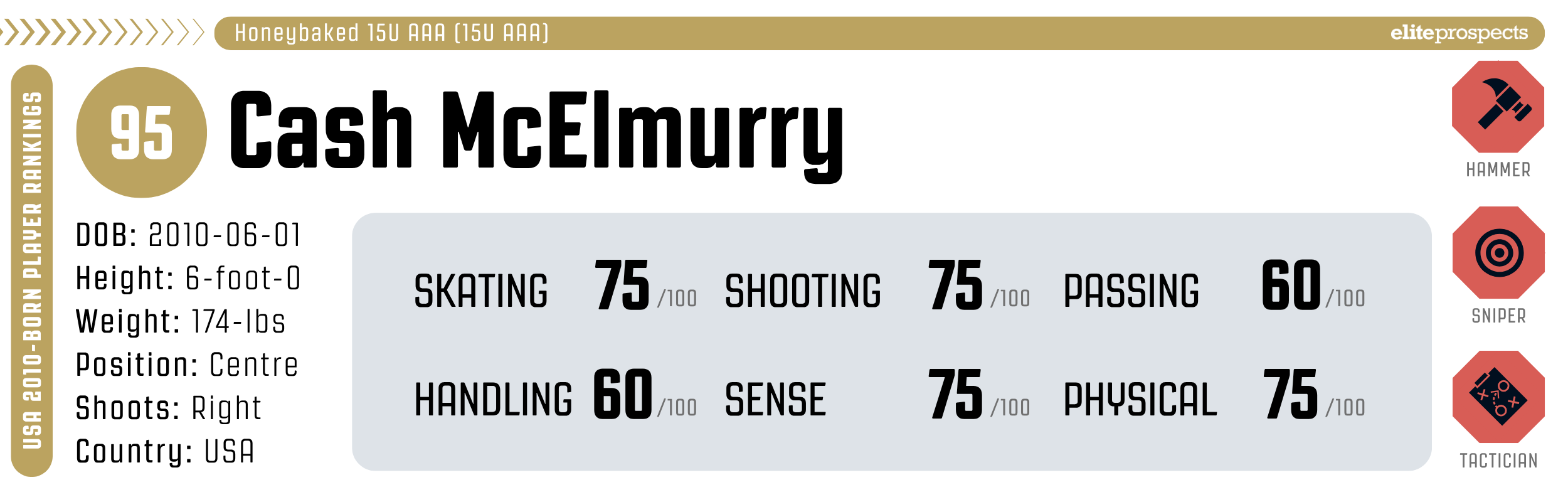
Amid a stacked Honeybaked roster, Cash McElmurry’s impact was defined by consistency. He contributed 54 goals in 89 games, ranking him among the nation’s top scorers. Beyond the production, his value lies in his engagement. He supports teammates in puck battles, contributes on the forecheck and backcheck, and creates space for more offensively dynamic players. Along with a physical edge to wear down his opponent as he looks to finish his checks all over the ice. That profile supports a projection as a middle-six centre at the junior level.
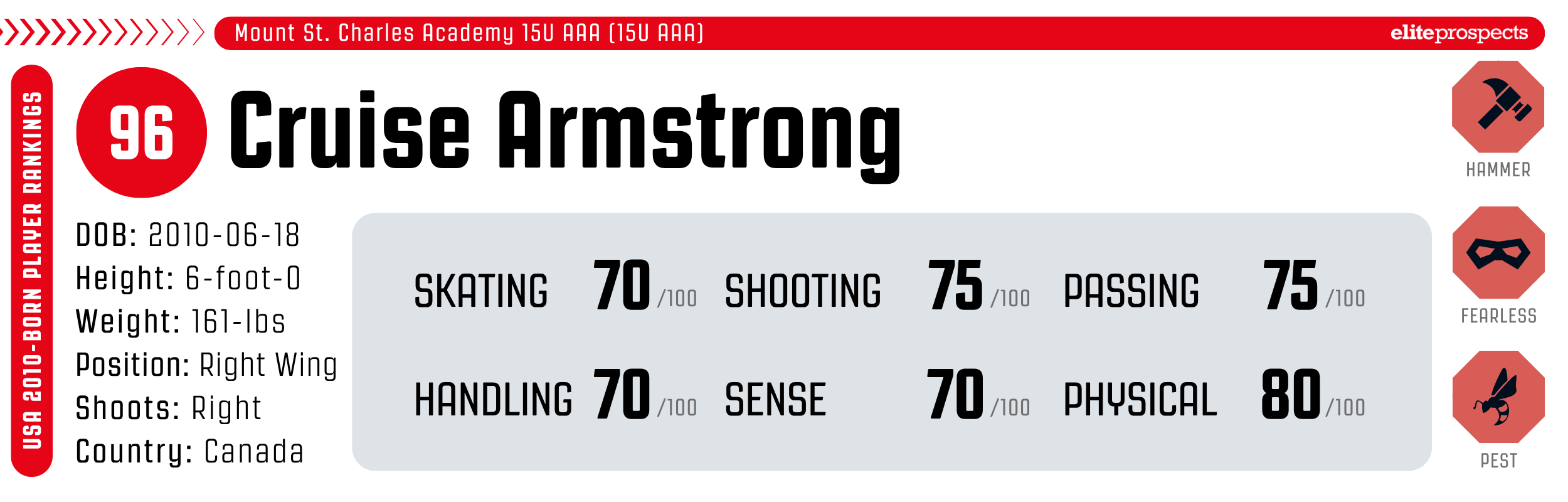
The final player on our board from Mount St. Charles, Cruise Armstrong, left his impact with a skillset that’s a bit rare for this age group. He doesn’t have the dynamic on-puck skill that others do, but he worked hard and had a compete level through the roof in our viewings. Armstrong played up on Mount’s top line at times and connected plays constantly with top-end linemates, digging pucks out and creating new possessions. He has the potential to fill anywhere in a junior hockey lineup, a versatile player that coaches will love.
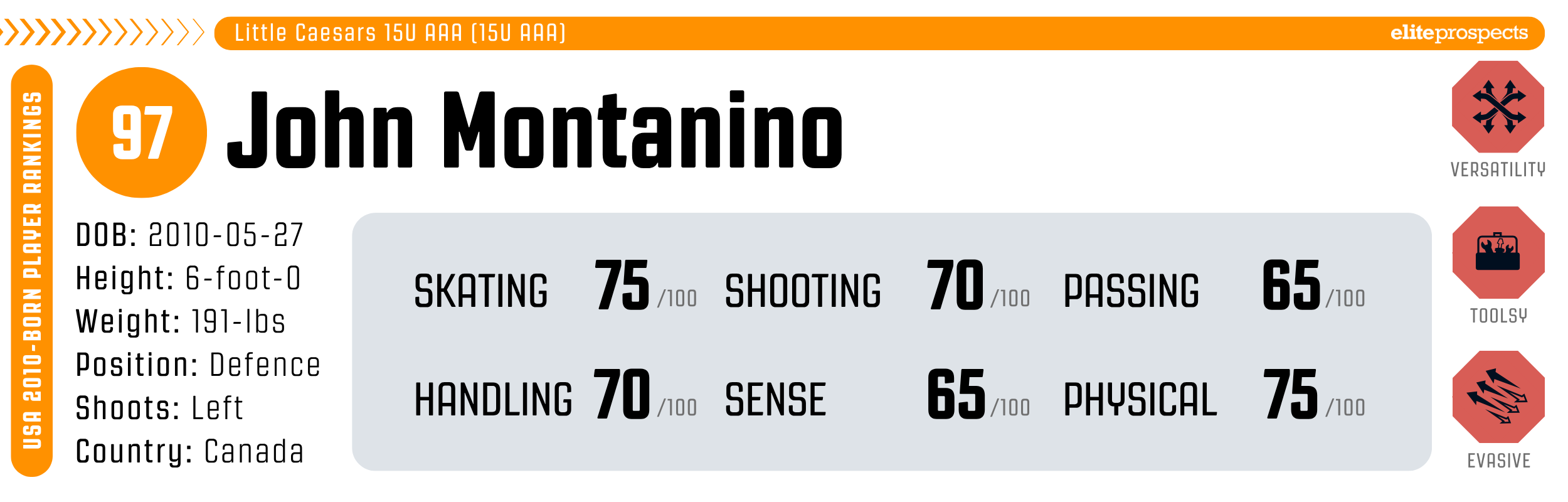
John Montanino is a player who had fans across our OHL scouting team throughout the year. He’s a thick, strong kid who is an easy projection to fill some sort of defensive role in junior hockey. Montanino isn’t particularly toolsy, but he can kill plays and steadily advance the game. There’s enough to work with here for a team to likely take a bet on at some point in either the OHL or USHL draft. He may need a year of development before stepping into junior.
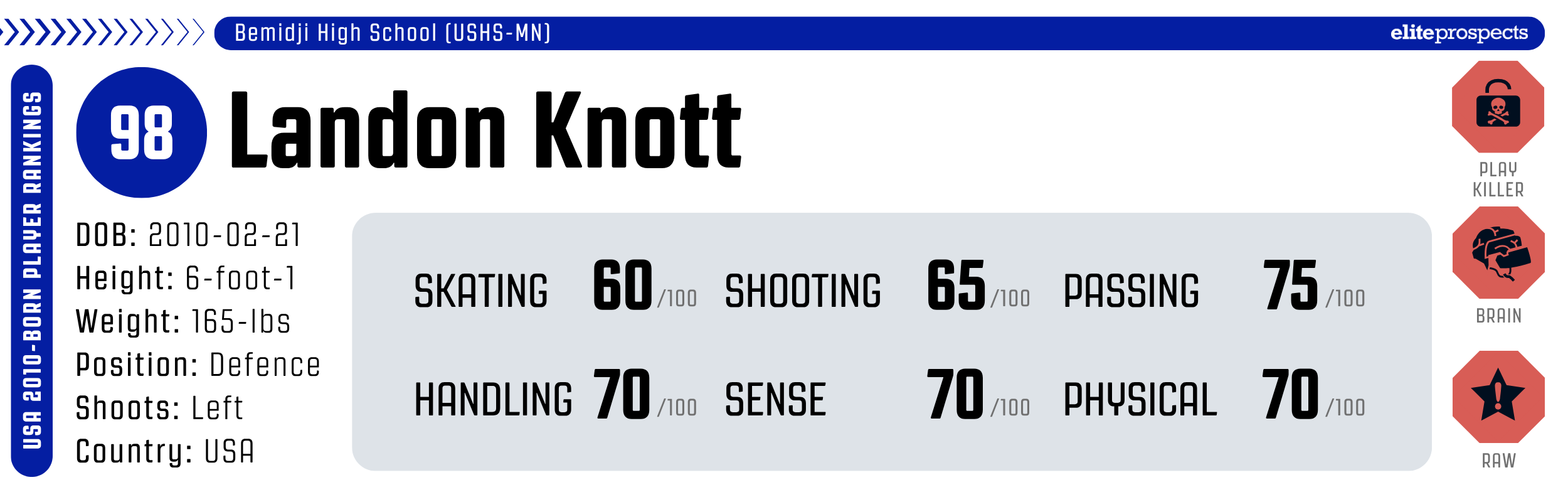
Landon Knott finds his way onto our list at 98 after a solid year of high school hockey for Bemidji. Knott is a rangy defender with a slick stick and potential to become a play killer at the next level. He can take players' space away at the high school level, closing out with efficient routes. He’ll be at the NTDP next season, an incredible opportunity for growth. Knott will have to add growth in both his skating and puck-moving to really blossom at the next level. He’s an intriguing two-way defender.
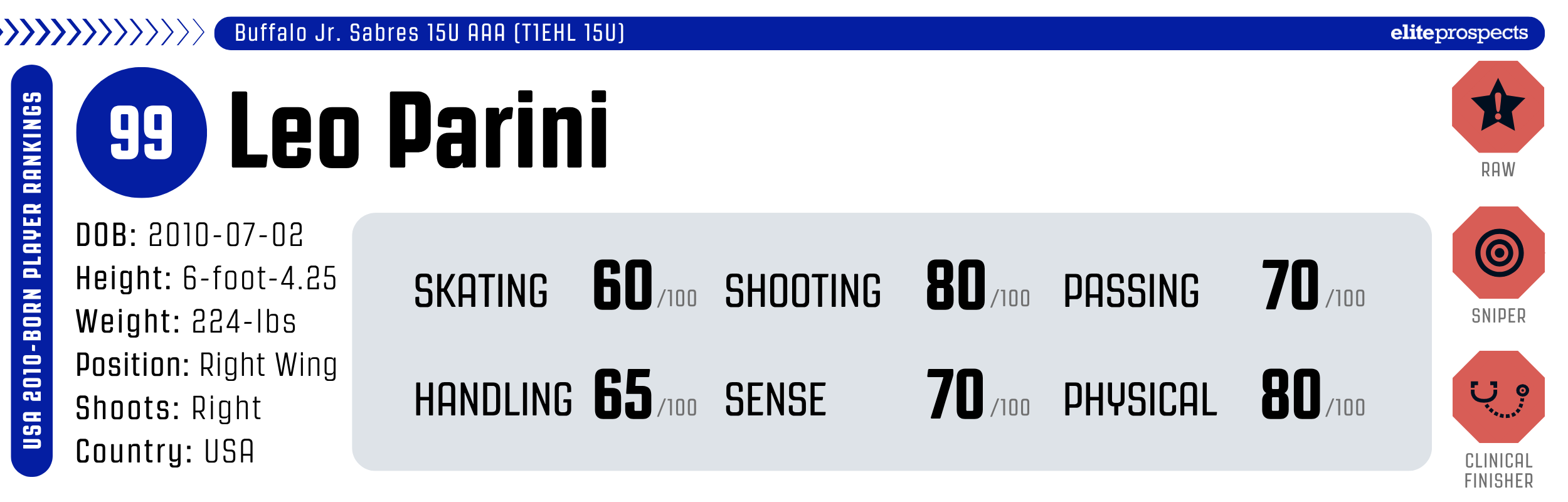
Leo Parini fits the mould of a developing power forward. His size and reach allow him to be effective along the boards and in contested areas, where he is able to move the puck into scoring positions. His shot is a notable weapon as well, using his size to generate a lot of power behind his release, complemented by a solid puck-handling foundation. Skating remains the primary area of improvement, but his overall profile supports a projection as a middle-six winger at the next level.
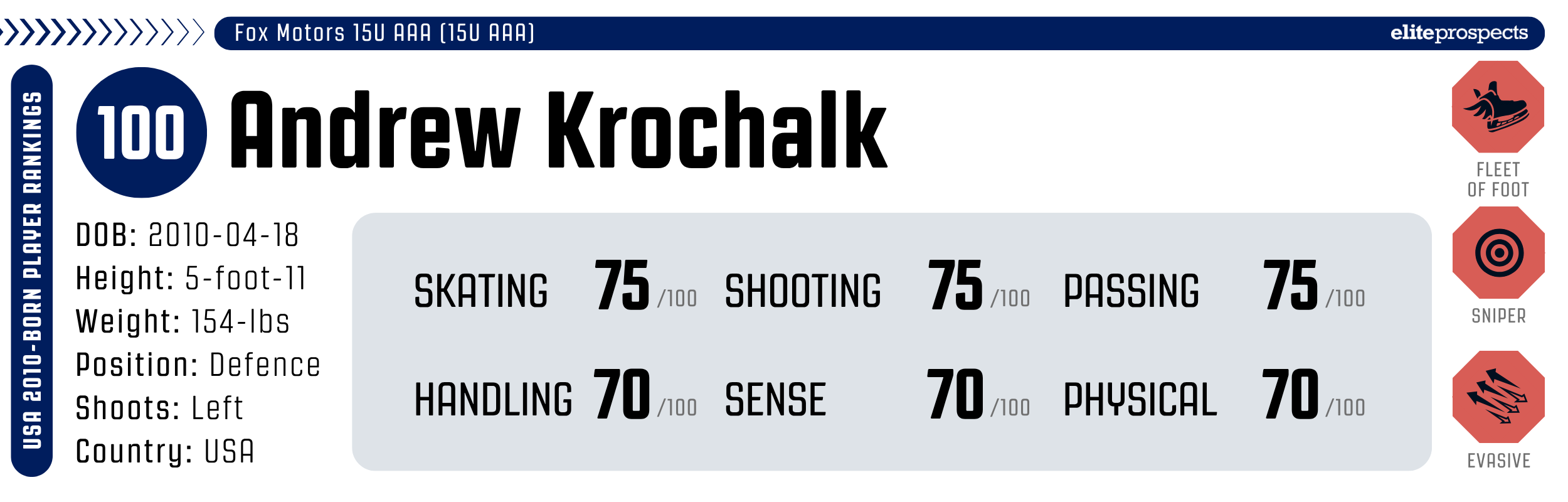
Another defenceman selected for the NTDP, Andrew Krochalk, will be an interesting player to track over the next two years. The foundation of his game is his skating. Krochalk accelerates well and can easily recover pucks on retrievals, gaining first touch to make a play. He’s not the biggest defender, at 5-foot-11, and could use a growth spurt just to really round out the projection. Krochalk looks the part of a potentially solid NCAA defender with time and development at the program.
Honourable Mentions
Jake Hall, D, Notre Dame HA 15U AAA
Soren Saumweber, C, Cretin-Derham Hall HS
Micah Socha, D, Buffalo Jr. Sabres 15U
AJ Foyt, D, Mount St. Charles Academy 15U
Jackson Conroy, C, Bishop Kearney Selects 15U
Tobias Lednicky, LW, Windy City Storm 16U AAA
Pavel Volsinski, F, Dallas Stars Elite 15U
Luke Hartman, C, South Kent School 15U AAA
Artem Glukhikh, LW, New Jersey Rockets 16U AAA
Jake Mintenko, LW, Colorado Rampage 16U AAA
Sam Fishbone, D, Minutemen Flames 15U
Luke Sherlock, G, Grand Rapids High
Our Team
Whittaker Heart, Dir. of USA Scouting
Robert Chalmers, USA Regional Scout
Matthew Burns, USA Regional Scout
Jacob Titus, Head Goalie Scout
Max Lee, Goalie Scout


