Ivan Demidov highlights standouts from the Montreal Prospects Showdown
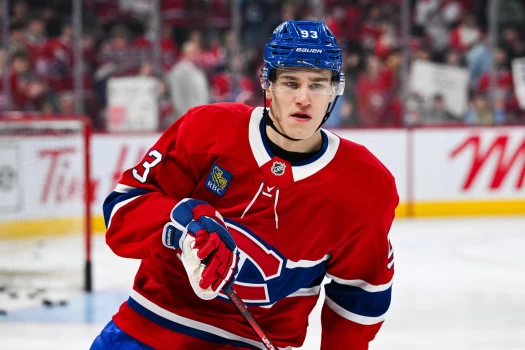


The Montreal Prospects Showdown featured the Montréal Canadiens, Ottawa Senators, Toronto Maple Leafs, and Winnipeg Jets top prospects in a weekend two-game slate. This allowed all four teams to get a better grasp on the progression of their respective talent, while giving a chance to some unsigned prospects to make a name for themselves.
The stakes for the majority of these prospects, combined with the iconic Bell Centre atmosphere, made high-intensity hockey inevitable.
We'll work through all four teams' standout prospects, break down the key progressions in their skills that helped them impress, and what this means for each team moving forward.
Montréal Canadiens
Ivan Demidov, RW
The name on everyone’s lips heading into the weekend was Ivan Demidov. The Canadiens’ fifth-overall pick in 2024 is all but guaranteed a roster spot in Montreal this fall, but just like Lane Hutson did last year, Demidov showed up for the rookie-on-rookie tournament… and dominated.
With one goal and two assists in Montreal’s 4-3 loss to the Winnipeg Jets on Saturday, Demidov displayed the full extent of his handling skill. Deft curls around defenders’ sticks, elite misdirection and manipulation, quick cutbacks and spinoffs to rid himself of pressure… No move was out of the question. On two occasions, Demidov sent top prospect Brayden Yager scrambling to the ice, including one play where he spun off Yager’s pressure behind the opposing net while banking the puck off the back of it.
In front of a sold-out Bell Centre, Demidov put on a phenomenal display, but he also showed some of the details that scouts love, as I highlighted in my game report on Demidov’s Saturday clinic:
“The details in his game keep growing, too — he back-checked with effort and purpose in a game he could clearly coast through, did a fantastic job getting open in the neutral zone through quick acceleration into pockets, and frequently supported his defencemen below the puck.”
Demidov’s outside edge usage also seems to have improved — he can explode out of cutbacks with more velocity, and carry speed through turns and inside drives with more efficiency. This’ll allow him to further leverage his already-phenomenal handling skill into a game-breaking dynamic element of his game.
After his dominant display on Saturday, Laval Rocket Head Coach Pascal Vincent sat Demidov for the Sunday match against Toronto — a wise decision given how violent that game turned out to be. However, the contact skills Demidov also displayed against Winnipeg should allow him to fend off the same level of violence from NHL defenders. Shoulder leans and reverse hits are nothing new for Demidov, and should allow him to comfortably free his hands to create. He is ready for full-time NHL action.
Florian Xhekaj, C/LW
The biggest riser in the Canadiens’ prospect pool, Florian Xhekaj had a phenomenal game on Saturday. The 6’4”, 200-pound forward played with unmatched edge, bulldozing through defenders on the forecheck and grabbing someone in every scrum. When it came down to creating chances, however, Xhekaj showed a tonne of growth, which I highlighted in my recent game report:
“His growth in the processing and timing departments is the key difference since his draft year — so much better at recognizing gaps, layering his routes with pace adjustments, weaponizing his frame in more intelligent ways at the net-front (spin/push offs, side switches on D’s sticks, timely shoulder shrugs)... “
Xhekaj still lacks upper-echelon coordination and skill, making his ceiling quite limited — a lot of the ideas he comes up with end up falling short due to execution issues. However, with his understanding of timing having improved, the Canadiens’ fourth-round pick in 2023 get better at creating easier scoring chances for himself.
With the amount of polish and intensity Xhekaj has started to display, the Canadiens could end up benefitting from his services a lot sooner than anticipated — maybe even this fall.
David Reinbacher, RD
After missing a full season to a knee injury that required extensive surgery and rehabilitation, the main question surrounding David Reinbacher was whether he would be able to make up for lost ground.
Watching him this weekend, there was very little to indicate Reinbacher had missed an entire season at all.
The Canadiens’ fifth-overall pick in 2023 suppressed rushes with alluring ease, timing his stick checks with opposing shots to neutralize them while also displaying an impressive ability to pivot and disrupt in one motion. When carriers overwhelmed him wide, he was able to use his mobility and immense reach to stick-sweep and disrupt play, before securing the puck under pressure and finding an easy outlet. Overall, Reinbacher’s stick defence genuinely seemed like the best it’s ever been at this point in his development.
Physically, Reinbacher didn’t particularly engage in the reckless abandon with which various rookies threw their bodies around, but he was far from intimidated. At times, the 6’3” defenceman even threw up a glove or two when opposing rookies finished their checks on him late.
He had a few hiccups here and there on the positional side, but the core of his game — skating and shutdown skill — remains incredibly effective.
Honourable mentions: Filip Mesar, Vinzenz Rohrer, Adam Engström
Ottawa Senators
Carter Yakemchuk, RD
Carter Yakemchuk only played one of the two games the Sens had on their schedule this weekend — but what a game it was.
Ottawa’s seventh-overall pick in 2024 scored two goals and added two assists against Toronto in a 4-3 win, dominating through phenomenal offensive instincts. He activated incredibly comfortably, displayed his high-end release on his first goal and on subsequent occasions, and distributed the puck with purpose and deception from both his own end and the offensive-zone blue line.
Above all, however, Yakemchuk impressed through his handling deception and manipulation — his signature skill:
“Most impressive among his handling skills are his reactive first-touch dangles”, I wrote in this game report. “He quickly sets up his moves off the wall, and immediately thinks of his next play. Scored another ridiculous goal this way — puck bounced to him with Akhtyamov scrambling in net, he faked the one-timer and quickly went to his backhand before roofing it into an open cage.”
Later on in that same report, I highlighted the improvements in Yakemchuk’s defensive game: “He’s still a unique and phenomenal offensive defenceman, and his defensive angling has become more than just a tool for violence as well. Decent reactions, in-pivot pokes… He’s developing (...).”
In the end, Yakemchuk’s skating might limit his dangling effectiveness in the NHL — his upper-body noise creates a decent amount of instability in his movements — but with the quality of his reads, the deception with which he sets up his dekes, and his innate sense of timing, he might just overcome his mechanical shortcomings and pull off these moves against pro competition.
Oskar Pettersson, RW/C
A defence-first winger whose production has yet to pop off in pro hockey, Oskar Pettersson was by far Ottawa’s best forward in both games against Toronto and Winnipeg. The Sens’ third-round pick in 2022 showed an impressive array of details to create chances and secure loose pucks, working give-and-gos off the rush, using his arms and legs in tandem to fend off stick checks, and attacking pockets of space with purpose.
Displaying high-end compete on every shift, Pettersson made quick work of forechecks, using his hips and shoulders to separate from defenders pre-retrieval before using his foot speed and edgework to escape. He orchestrated attacks — not with high-end dynamic skill, but with high-end functional reads and decisions. He anticipated aggressive pinches, got ahead of defenders’ routes off the rush, and frequently utilized his teammates to triangulate.
Pettersson could very well play in the NHL this upcoming season — he has the speed, will and details to challenge for a fourth-line role as soon as this fall.
Tomas Hamara, LD
The road to pro hockey hasn’t exactly been smooth for Tomas Hamara — his progression halted for a while in the OHL, especially after a tough stint in Kitchener where he tallied only 20 points in 74 games. He then found his footing in Brantford, putting up 55 points in 58 games last season and setting the table for a jump to the AHL.
Hamara showed a plethora of translatable skills across both games this weekend, which I highlighted in his game report from Saturday’s bout against Toronto:
“Great breakout poise — drew pressure and made passes through it, faked outside rims with look-offs before finding middle outlets, and even led the rush as a carrier on more than a few occasions. (...) Great defensive angling flashes in 1-on-1 scenarios — was taking carriers to the boards pretty consistently, doing a great job deterring/defending against cutbacks by keeping a skate behind theirs on partial holds while closing his gaps.”
Hamara’s improved breakout and rush defending games allowed him to shine against high-pace, high-skill forwards, but his physicality is still a work in progress. Working on his contact skills — especially on retrievals — will give him a bit more room to work with along the boards, at which point his on-puck composure and awareness will take over. A full year focusing on strength training in Belleville could very well be the remedy to this hurdle.
Honourable mentions: Tyler Boucher, Jackson Parsons, Xavier Bourgault
Toronto Maple Leafs
Ben Danford, RD
A sturdy shutdown defenceman who excels in suppressing rushes, Ben Danford displayed an impressive level of on-puck comfort in his game against Ottawa on Saturday. Frequently jumpstarting breakouts with quick heads-up reads and middle-outlet usage, Danford showed growing comfort drawing in pressure before dishing off. His game against Montreal saw him return to his shutdown roots, especially after one of his passes was picked off for the Habs’ lone goal. He erased rushes, kept attacks to the outside, boxed out hard, and formed great chemistry with Noah Chadwick on the Leafs’ first pair.
Danford’s understanding of opponents’ rush patterns allows him to keep up comfortably with scissor plays and neutralize more advanced carriers. Although he still doesn’t create chances on a consistent basis, Danford’s ability to find outlets for pressure and bomb the occasional stretch pass across seams offers promise to his ability to scale up his passing game. We saw glimpses of that on Saturday against Ottawa — building on that is the next step.
Jacob Quillan, C/LW
Jacob Quillan was consistent, engaged and highly effective for Toronto this weekend. The 23-year-old forward led the forecheck, got back on defence, patrolled the high cycle, and created through his offensive positioning — all while bringing some impressive physical details, as I highlighted in his game report from Saturday’s bout against Ottawa:
“The effort was the key standout — he outmuscled 6’7" defenders down low, using their reach against them by ducking under their arms and leveraging his edges to counterweight their checks. If this game is any indication of the game Quillan brings on a nightly basis, wouldn’t be surprised at all if he sees NHL action.”
The effort level was sustained as well against Montreal, as the 6’0”, 205-pound forward hunted down the Habs’ defenders and created turnovers with relentless energy.
Quillan might not have the skill to become a top-of-the-lineup player, but if he continues showing the impact he displayed against Ottawa and Montreal this weekend, he’ll secure himself an NHL spot in no time.
Easton Cowan, C
Although Easton Cowan only played one game of the weekend, he still displayed his marquee skills — pace, effort, and two-way intelligence — in Saturday’s bout against Ottawa:
“He made a fantastic defensive play in the second period”, I wrote in that game’s report on Cowan, “preventing a cross-slot pass with a timely stick poke before getting in position on the retrieval and blocking two high-danger shots. He did a lot of the defensive heavy-lifting for the variety of winger combinations he pivoted, and although he had a couple of wasteful puck touches here and there, he mainly looked like the most seasoned player on the team.”
Set to graduate to pro hockey, Cowan will be fighting for a spot in Toronto’s lineup this month. On the table is a potential middle-six role, supporting the likes of Matthew Knies and John Tavares. Cowan already plays at an NHL pace, and sits at a sturdy 5’11”. Fending off NHL-calibre defenders’ tight gaps will be a challenge, but if Cowan’s progression to date in the pace and physical skills departments is any indication, he’ll adapt quickly and efficiently.
Honourable mentions: Luke Haymes, Noah Chadwick, Ryan Tverberg
Winnipeg Jets
Danny Zhilkin, C
On a star-studded forward roster featuring Brayden Yager, Colby Barlow, Nikita Chibrikov and more, Danny Zhilkin managed to stand out as the Jets’ top forward.
Using his straight-line and deception, Zhilkin attacked Montreal and Ottawa’s defences, created skating lanes for himself, and then executed with smart passing and scoring decisions. He contributed to both game-winners, scoring the first against Montreal and setting up the overtime-winner against Ottawa.
Zhilkin still isn’t refined mechanically — his feet struggle to overlap, which makes his NHL projectability as a skater difficult. His positioning, sense and decision-making project as above-average, however — he instinctively knows when and where to push the puck, or attack pockets of space. He could very well make his combination of smarts, offensive timing and energy work in the NHL without polishing his mechanics, but if he manages to polish them, he’ll be in a great position to produce above a fourth-line rate for the Jets in the near future.
Elias Salomonsson
Watching Elias Salomonsson this weekend was a treat. The smoothness with which he carries his 6’2” frame feels almost surreal. He frequently left forecheckers in the dust, reading pressure on his back with impressive ease before using a quick cut or pivot to explode up the ice. Defensively, he used backwards lateral crossovers to comfortably maintain his gaps, mirror defenders’ footwork, and get stick on puck. He played phenomenal system hockey in both games — he anticipated rotations, boxed out the net front, and comfortably detached from crease threats to intercept carriers below the goal line.
He also plays with a physical edge, stepping up at the blue line to challenge carriers while also stepping up for teammates when required.
Although Salomonsson is unlikely to be a high producer from the back-end — his playmaking serves more of a functional, pressure-escaping role, and his hands mainly operate in tandem with his feet rather than independently — the mobile right-shot blue-liner could play NHL minutes as currently constructed.
Domenic DiVincentiis
By far Winnipeg’s best prospect on Saturday, Domenic DiVincentiis stonewalled high-danger chance after high-danger chance as the Jets got almost doubled for shots by the Habs. By the midway point of the game, it was clear that if Winnipeg were to win this game, they had to keep DiVincentiis in the crease. It was more than a fluke, too — the Jets’ seventh-round pick in 2022 displayed some truly impressive, NHL-scalable tools, as I highlighted in that game’s report:
“Equally distributed reaction speed on either side of him, great glove and blocker hand awareness — rarely gets caught with his hands too low. His feet are a bit heavy, which limits how much blue paint he can cover side-to-side, but he makes up for it incredibly well with his positioning, anticipation, and awareness. The positioning, especially, was impressive — he never got caught out of place. Square to pucks, never overgliding on lateral adjustments, quickly and fluidly transitioned from post coverage to base posture to screen-solving…”
This upcoming season will be a great test of DiVincentiis’ development as a reaction-based stopper. A full season in the AHL could help him adapt to bounces and direction changes, rewiring his sense from pattern identification to react-and-respond goaltending. If he makes that switch comfortably, the rest of his game could very well lend itself to an NHL role.
Honourable mentions: Nikita Chibrikov, Kevin He, Reese Hamilton